Reading guide
Content guideOverview
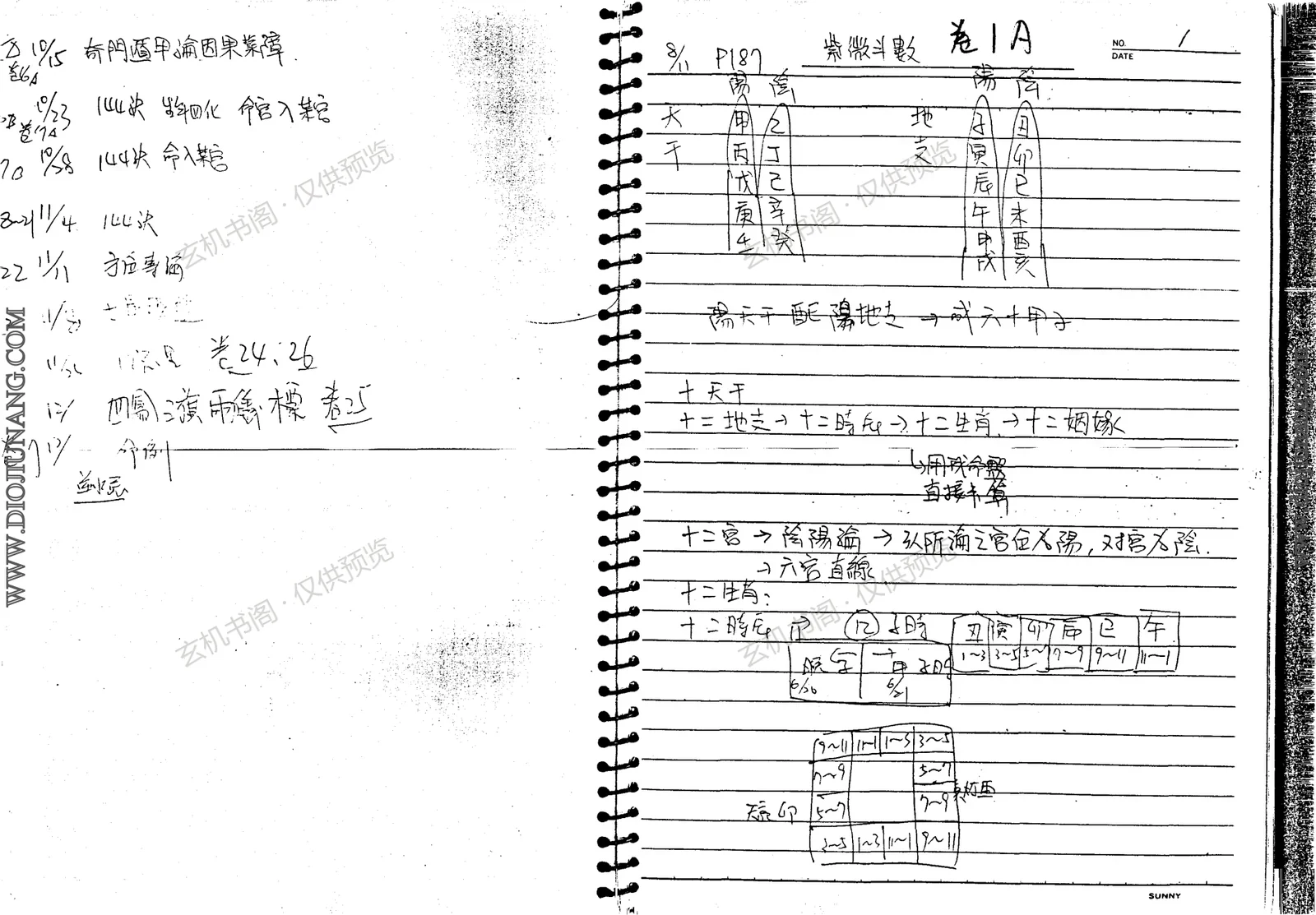
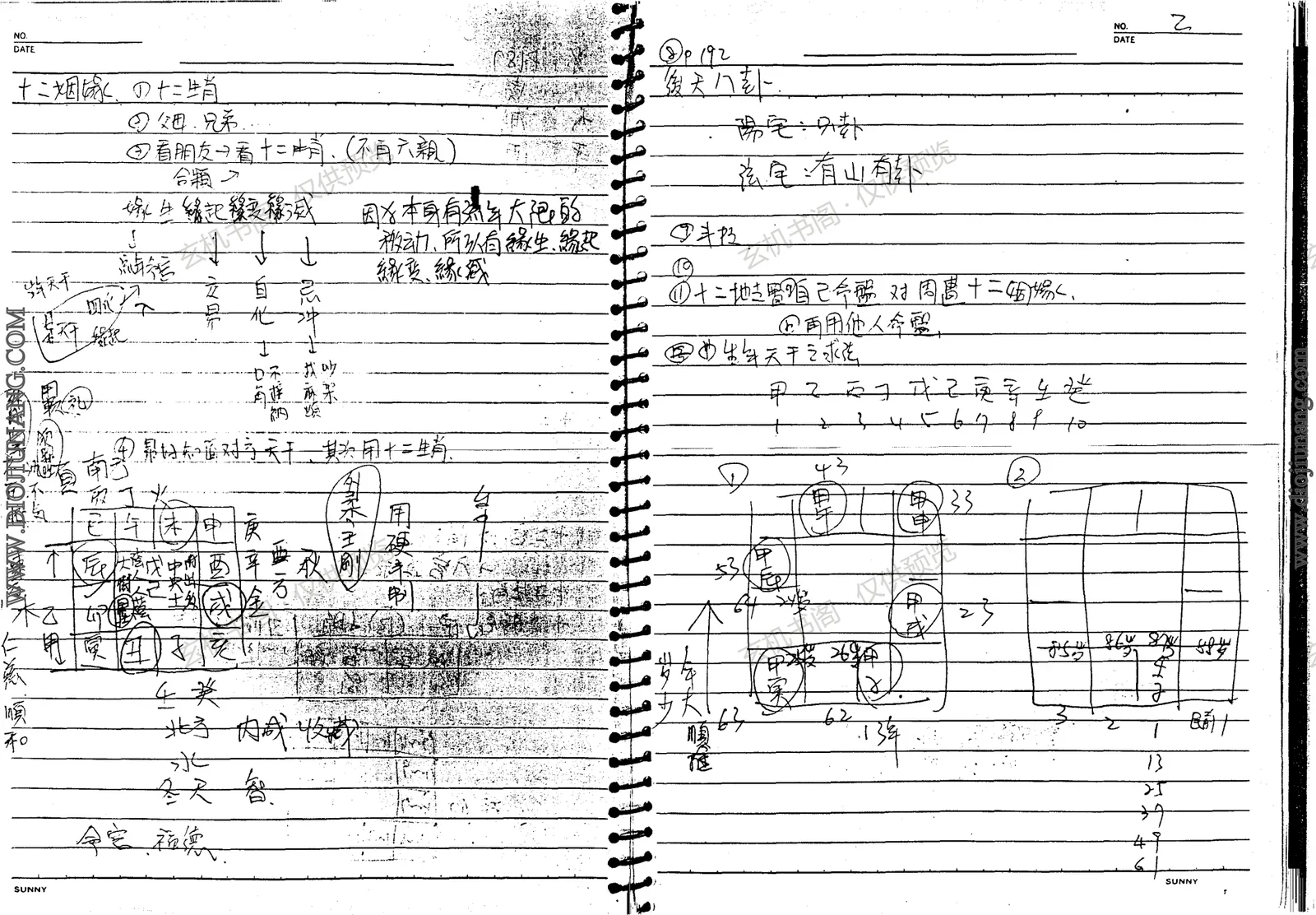
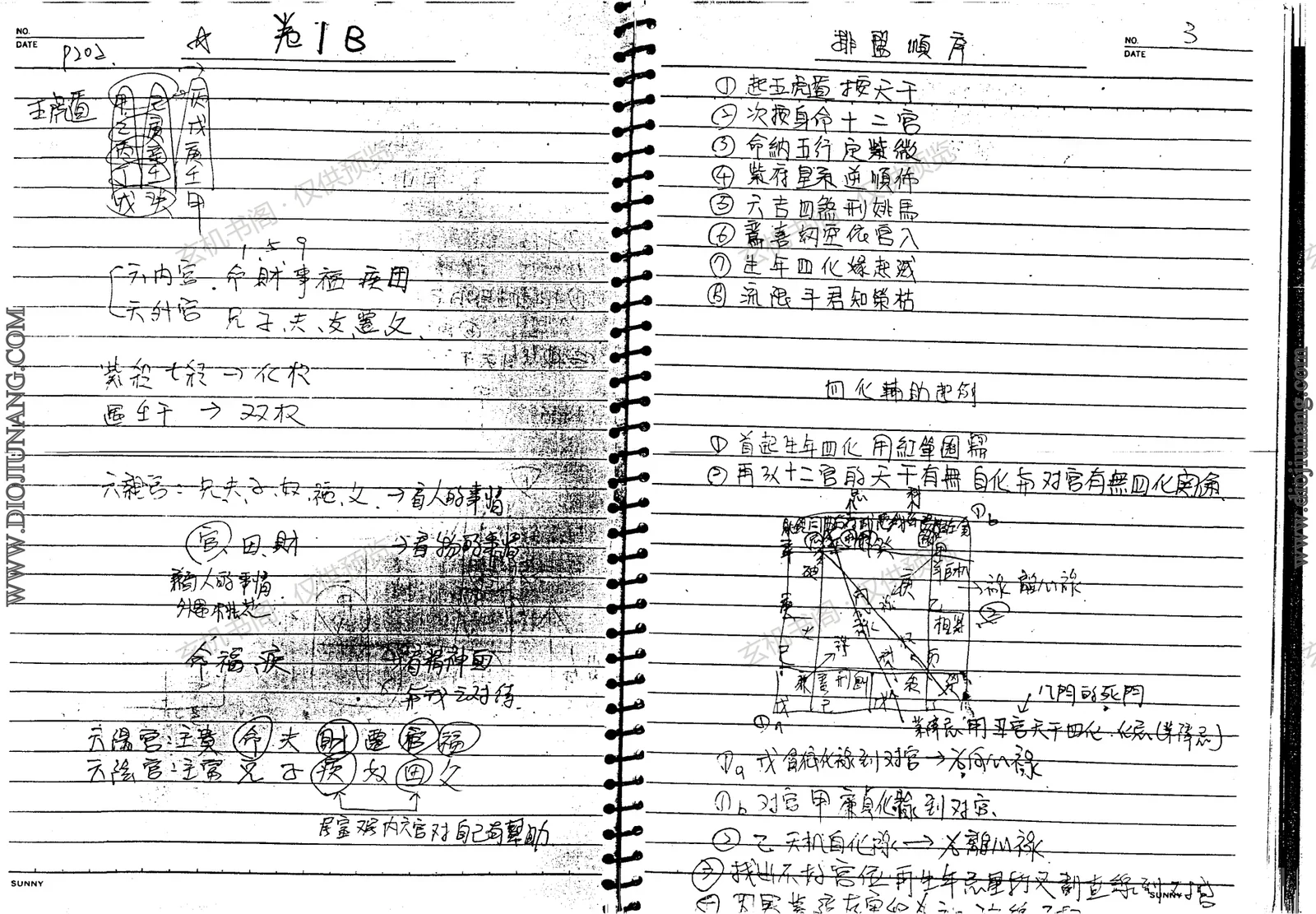
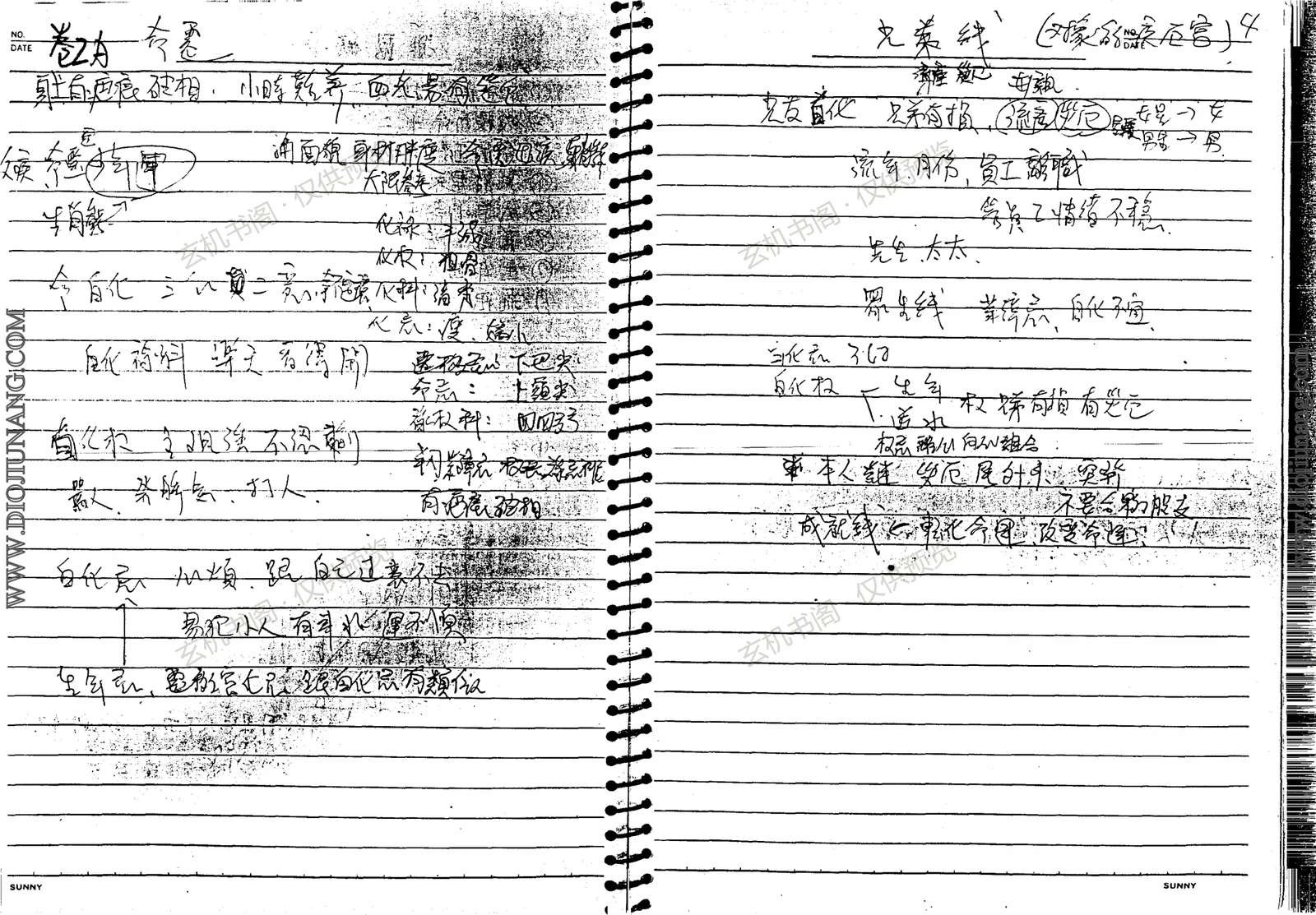
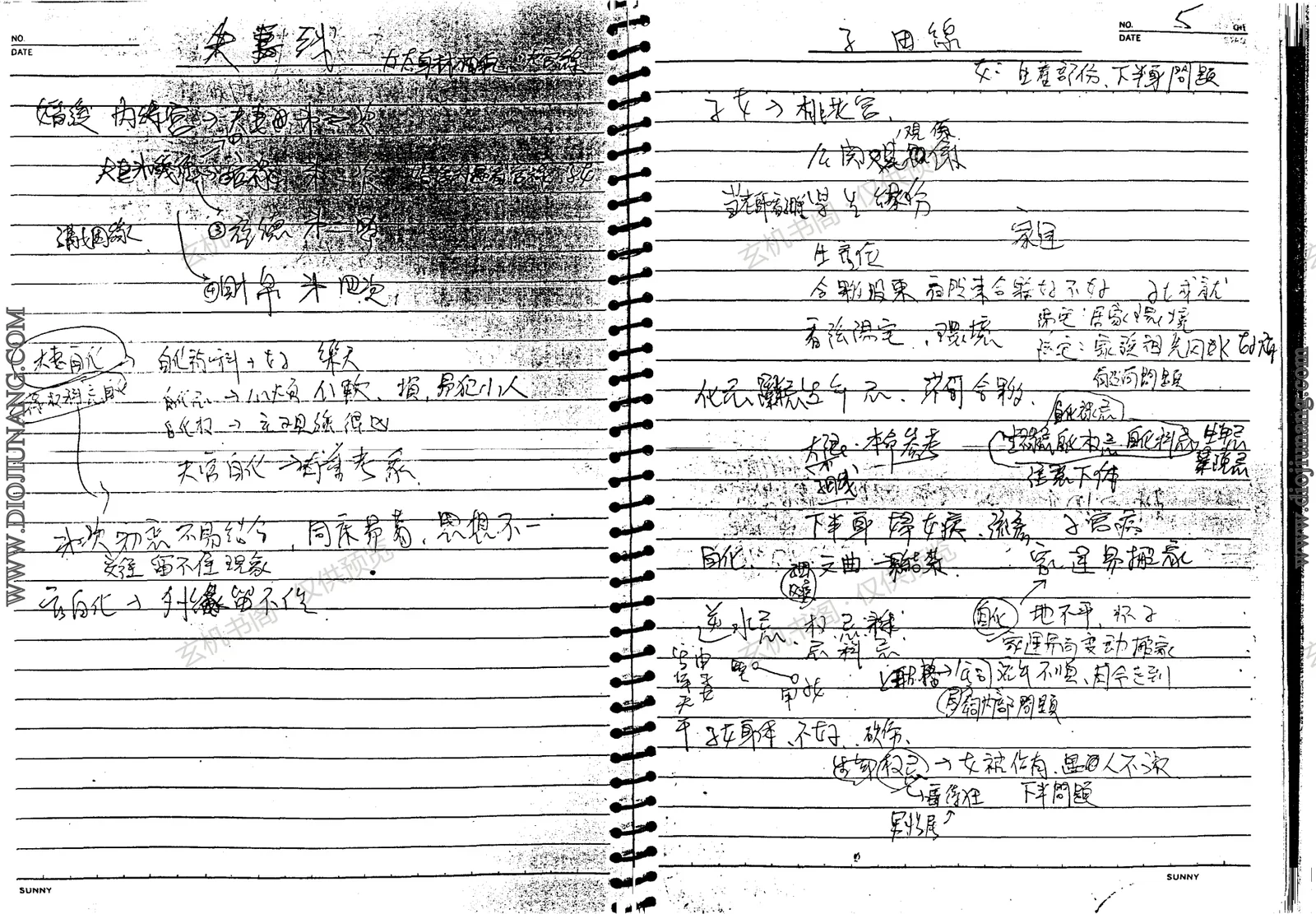
This is a handwritten notebook by Wu Qiurong, titled Qintian Four Transformations Lecture Notes, Volumes 1–50. The pages move from basic correspondences of the ten heavenly stems, twelve earthly branches, zodiac animals, and double-hours into the twelve palaces of Zi Wei Dou Shu, explaining the functions of the life, wealth, career, and travel palaces and their opposing-palace relationships. Recurring themes include birth-year four transformations, self-transformation, flying transformation, and the sanhe triads. The notes also lay out the sequence of chart construction: determining the five-element bureau, placing stars, locating Zi Wei and the fourteen major stars, and setting major and annual limits. Later pages discuss the six kinship palaces, the meanings of self-transformed ke, quan, lu, and ji, and correspondences between the chart and the body, home environment, and work changes. The handwriting is rough and diagram-heavy, so the notebook is best used alongside other Zi Wei Dou Shu materials.
Contents
Correspondences of stems, branches, zodiac animals, and double-hours
Yin-yang and opposing relationships of the twelve palaces
Chart construction: five-element bureau, star placement, Zi Wei and auxiliary stars
Reading birth-year four transformations and self-transformed ke, quan, lu, ji
Six kinship palaces and chart correspondences to body, home, and work
Key Points
Uses the twelve palaces as a framework for life, wealth, career, and travel
Emphasizes birth-year four transformations and self-transformation flight paths
Outlines the fixed sequence of Zi Wei Dou Shu chart construction
Links chart phenomena to kinship, health, and living environment