Reading guide
Content guideOverview
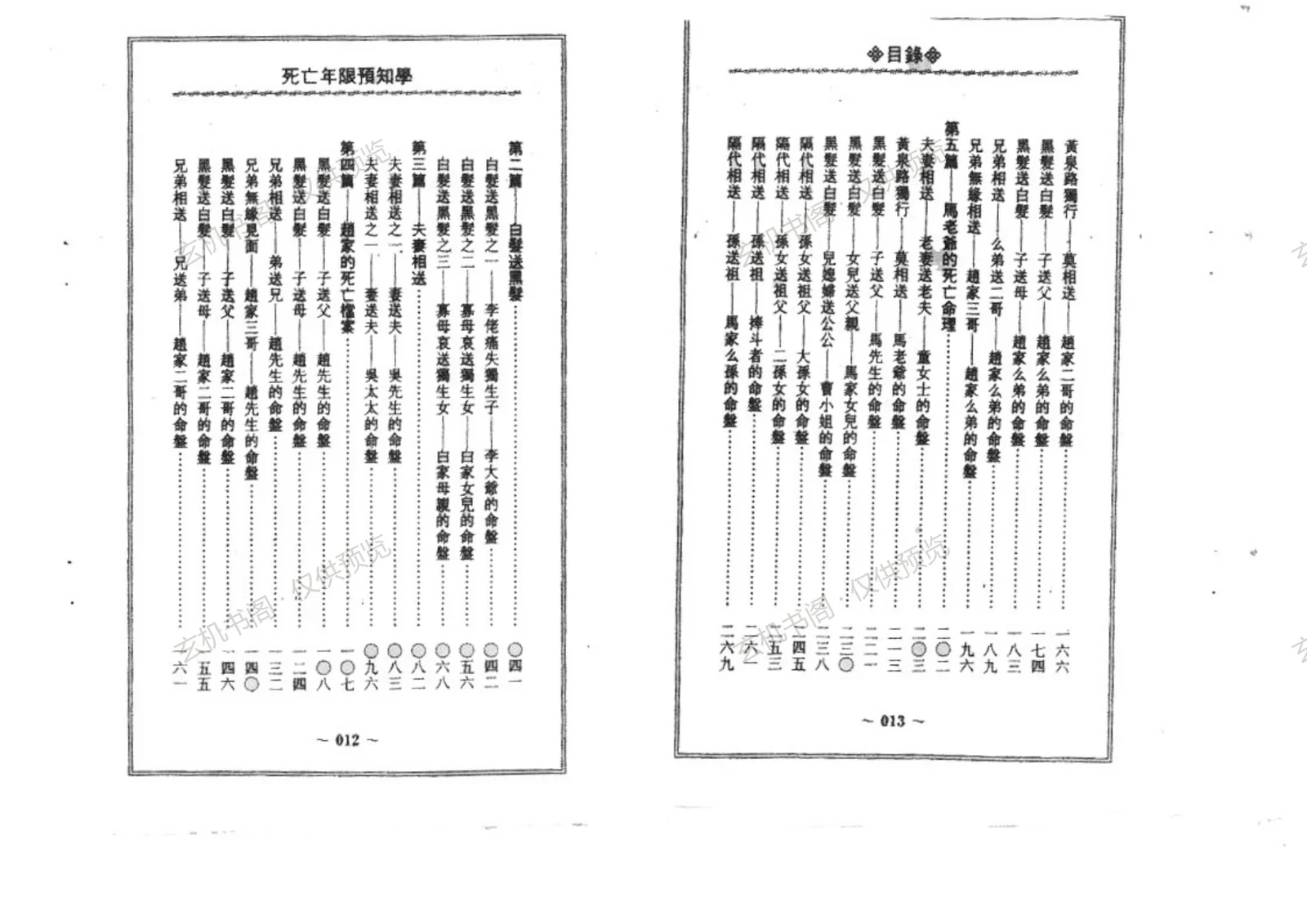
This is the third volume in Fu Geng's Zi Wei Dou Shu Psychology series, devoted to judging longevity and the year of death from a Zi Wei Dou Shu natal chart. The preface and introduction argue that knowing death in advance allows one to prevent illness and accidents and to arrange life, and the author insists on chart-based reasoning rather than relying on spirits or religion. Death is broadly classified into natural aging, illness, and accidental or violent causes. The first chapter sets out the basic method: locate the native's death limit (major decade), then search the annual transits within that limit for configurations that trigger death, following the principle that lu (prosperity) marks the limit and ji (obstruction) marks the year. Later chapters present numerous cases involving spouses, parents and children, siblings, and grandparents, showing how death events are triggered across the charts of close relatives. The table of contents is largely organized by individual case names, making the book a case-driven manual on longevity in Zi Wei Dou Shu.
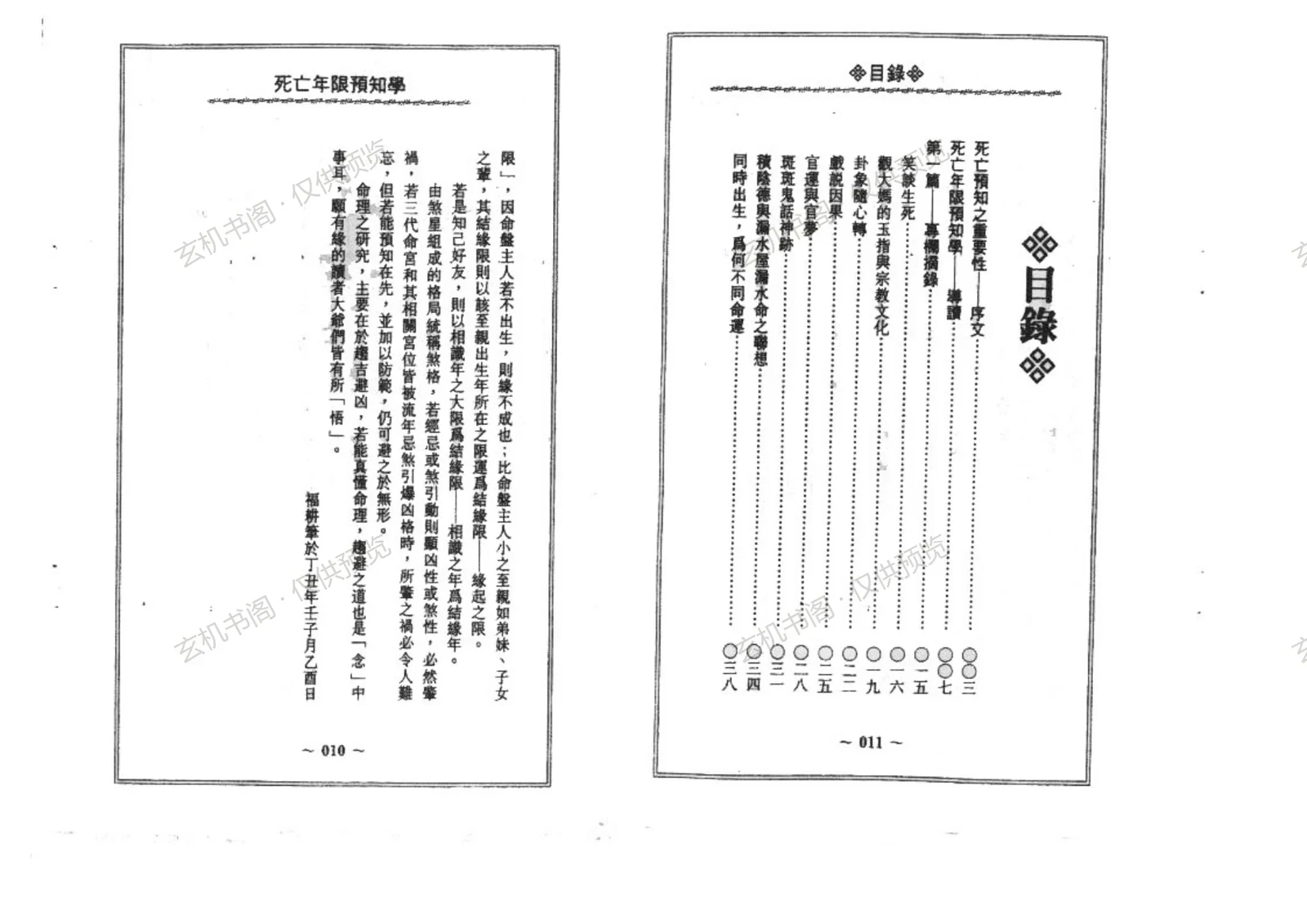
Contents
Preface: the importance of foreknowing death
Introduction: uses of death-year prediction and types of death
Chapter 1: principles of limits, transits and death configurations
Chapter 2: children and juniors dying before elders
Chapter 3: spouses seeing each other off
Chapter 4: the Zhao family death records
Chapter 5: the case of Ma Laoguo and concluding remarks
Key Points
Judges longevity from the natal chart, focusing on major limits and annual transits.
Proposes the principle that lu marks the limit and ji marks the year.
Classifies death into natural aging, illness, and accidental causes.
Rejects reliance on spirits or religion; reasoning is chart-based.
Cross-checks death events using charts of spouses, parents, children and siblings.