Reading guide
Content guideOverview
This volume collects Xu Quanren's lectures on Qintian Four Transformations Zi Wei Dou Shu, opening with three units. A01 explains the twelve palaces one by one, covering their basic and hidden meanings and their correspondence to He-Luo numerology. A02 presents the core method of combining palace, image, and star: the four transformations arise from the qi transformation of heavenly stems, and the text gives the ten-stem transformation table while distinguishing birth-year transformations as substance from flying-palace and self-transformation as application, with self-transformation tied to timing and change. A03 analyzes Hua Lu as a symbol of wealth, livelihood, blessings, popularity, talent, and the power to relieve misfortune, then demonstrates integrated palace-image reading through Hua Lu in the siblings and spouse palaces. The lecture format and worked examples make it a practical text for readers who already know the basics of Zi Wei Dou Shu and want to understand how Qintian practitioners actually reason through a chart.
Contents
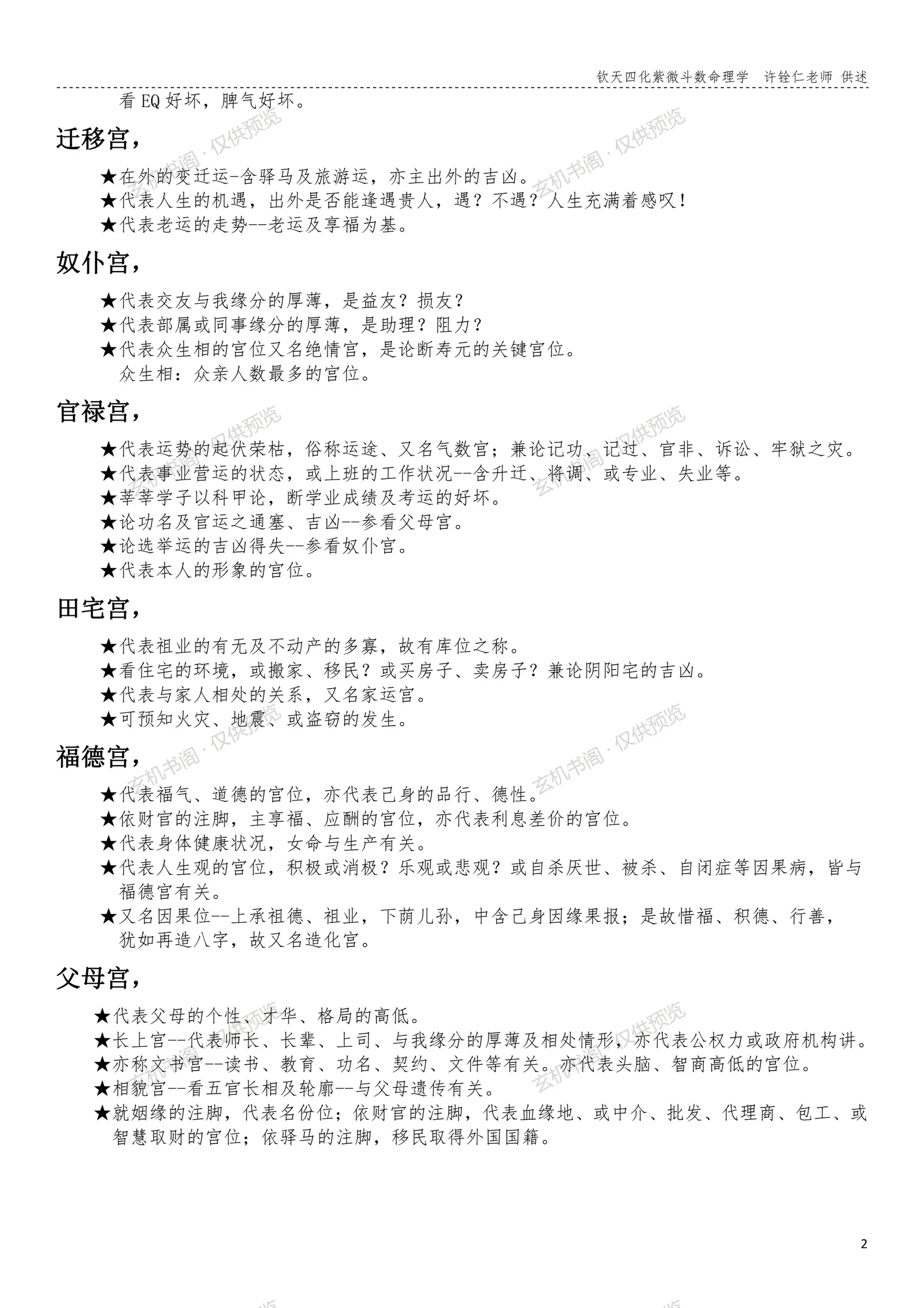
A01 basic and hidden meanings of the twelve palaces
Palace correspondence to He-Luo numerology and threefold reading
A02 palace-image-star unity and the origin of the four transformations
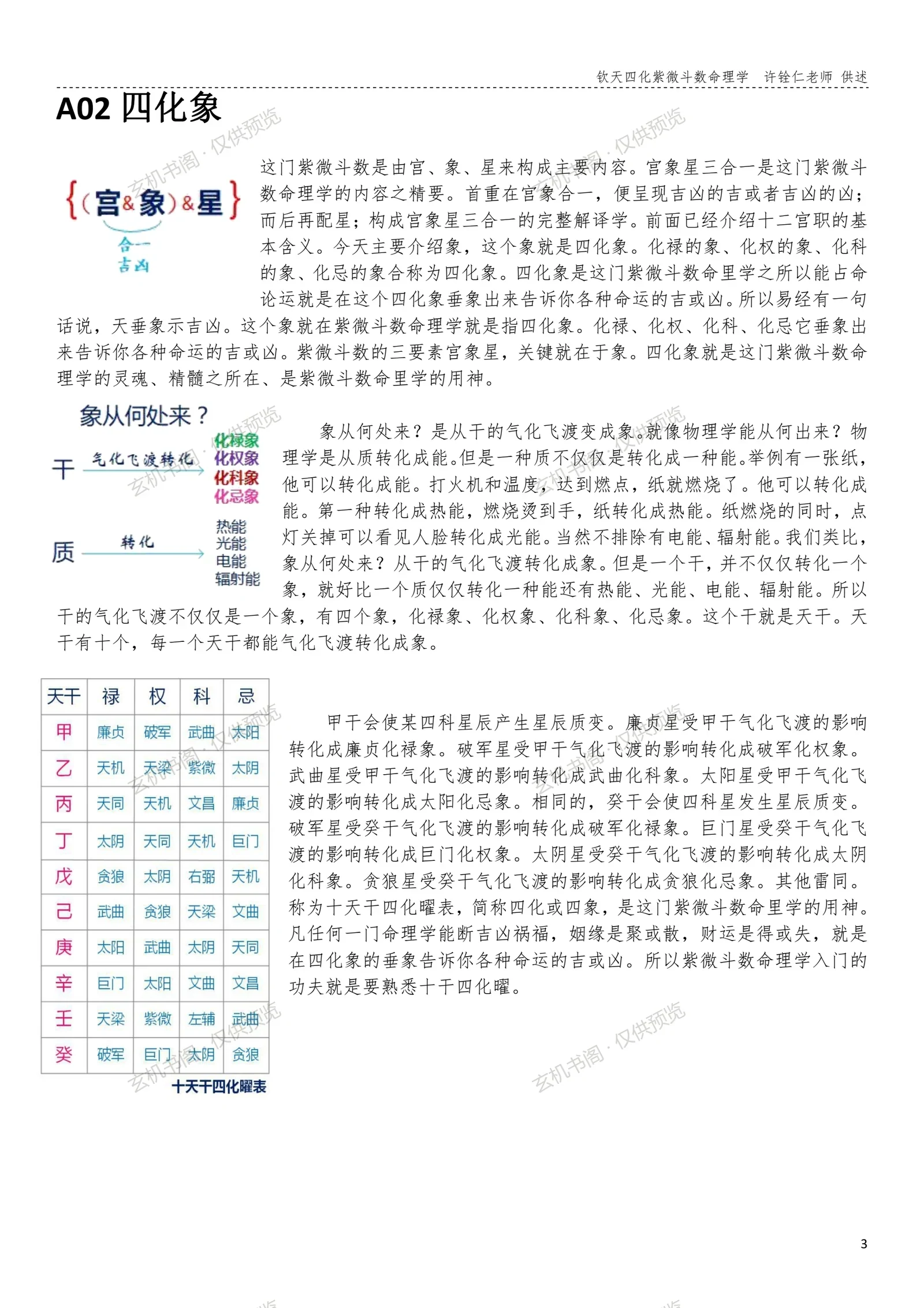
Ten-stem transformation table and birth-year transformations
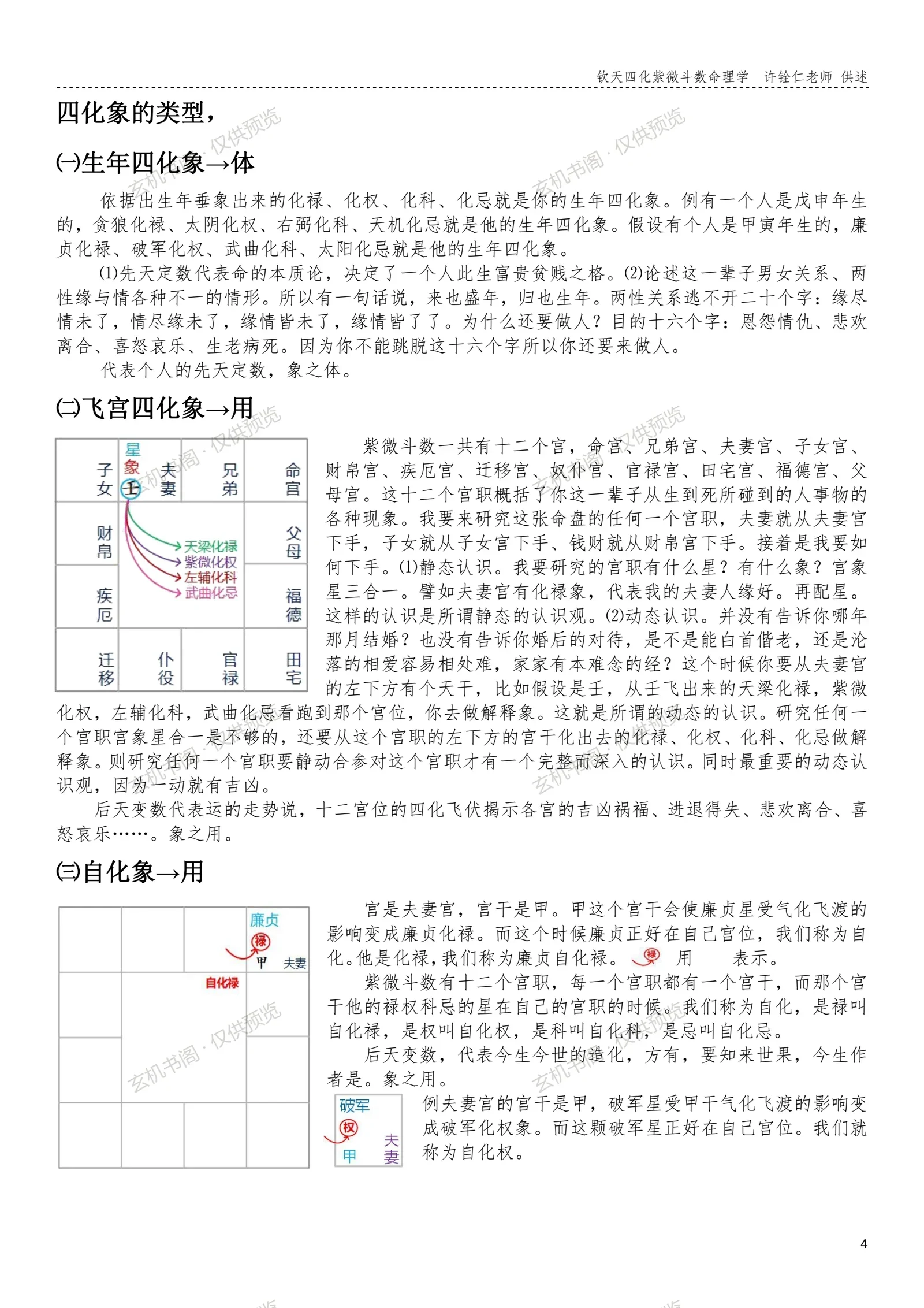
Flying-palace transformations, self-transformation, and equivalent self-transformation
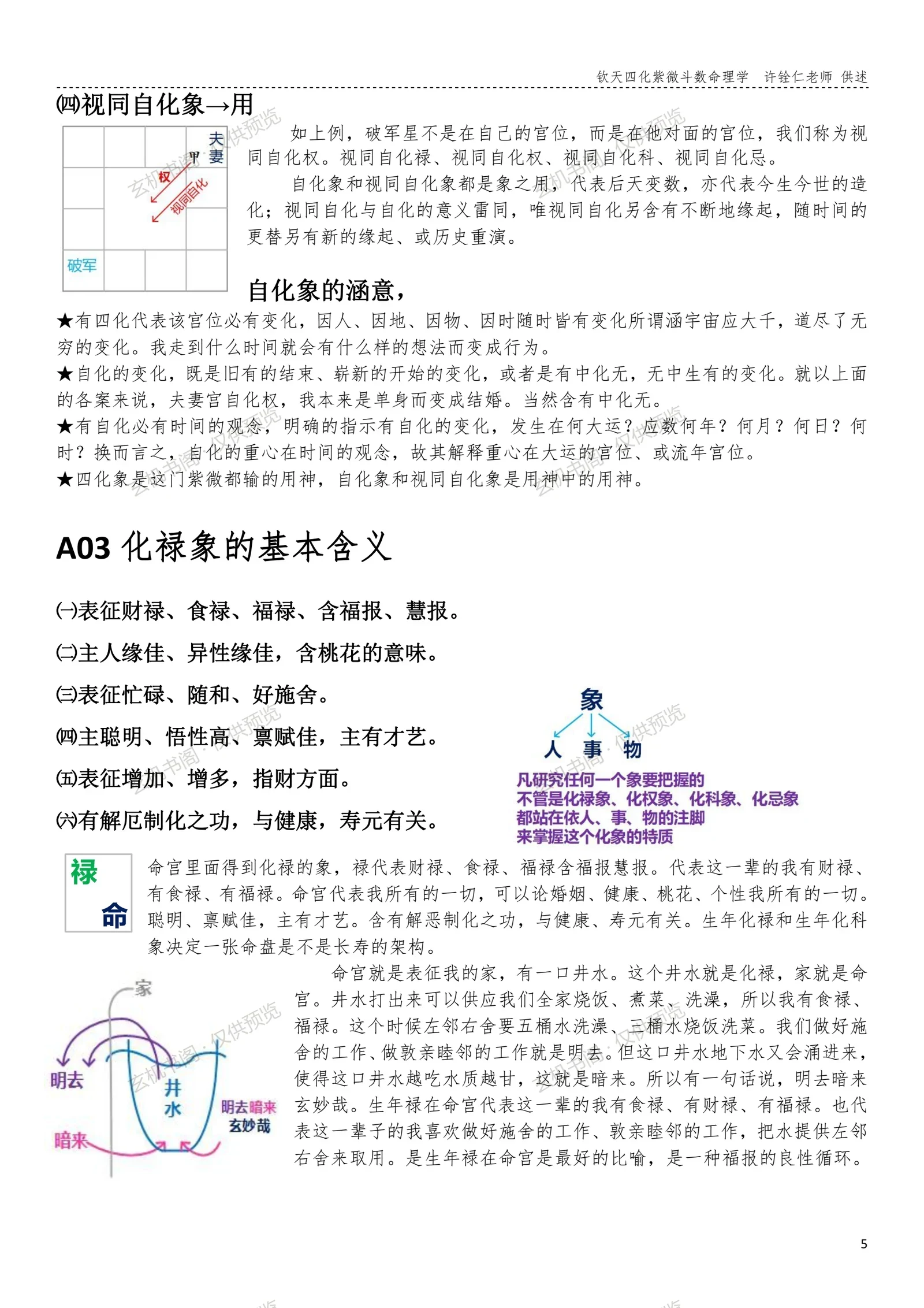
A03 the six basic meanings of Hua Lu
Worked examples of Hua Lu in the siblings and spouse palaces
Key Points
A complete reading combines palace, image, and star, with the four transformations as the key operative device.
The four transformations are generated by the qi transformation of heavenly stems, each stem mapping to Lu, Quan, Ke, and Ji.
Birth-year transformations describe innate constitution; flying and self-transformations describe later change.
Self-transformation carries a strong temporal sense and can be dated to major periods and years.
Hua Lu signifies wealth, livelihood, blessings, popularity, talent, and the relief of adversity.
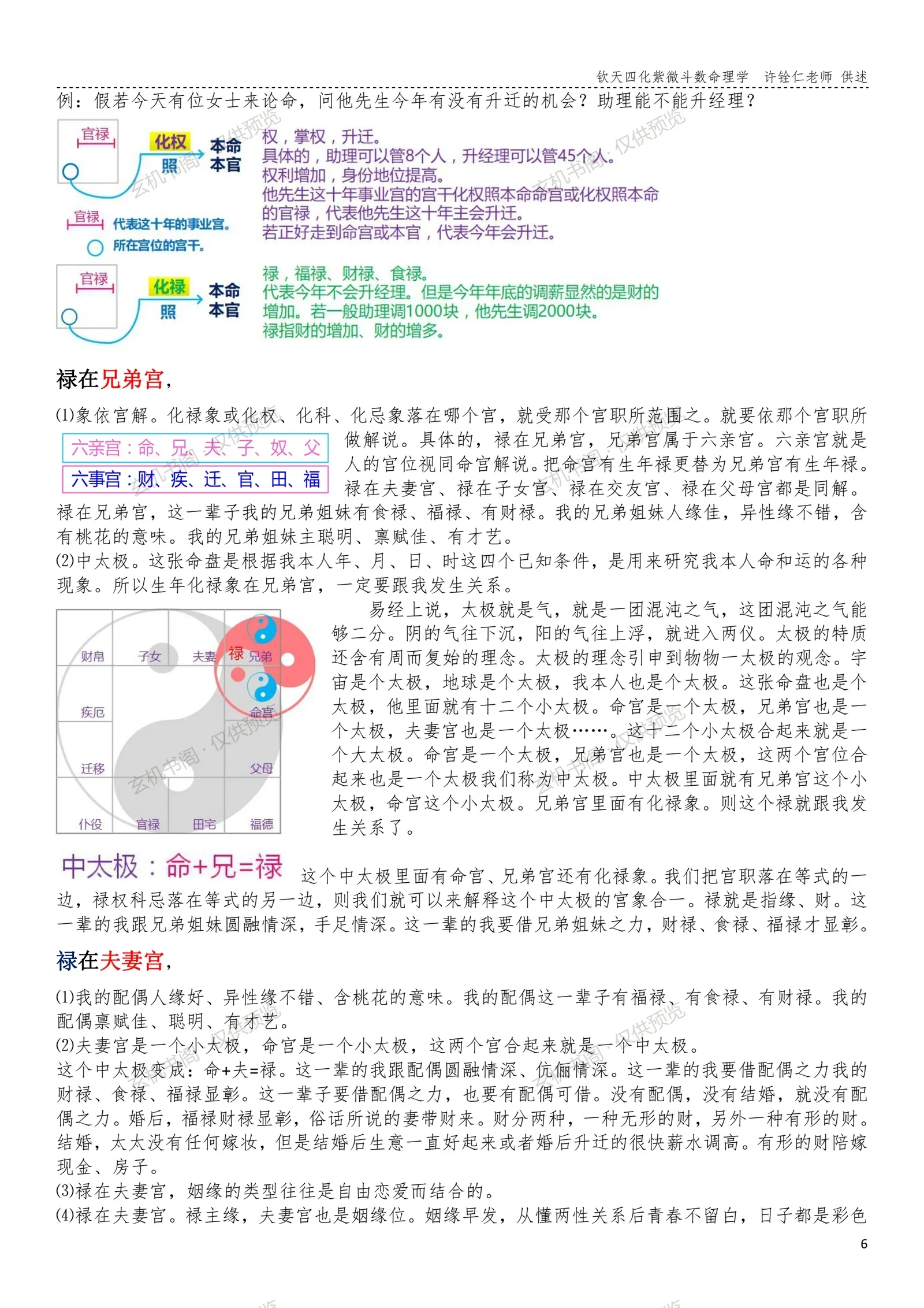
Two palaces can be read together as a larger taiji, such as the self palace plus the siblings palace yielding Lu.