Reading guide
Content guideOverview
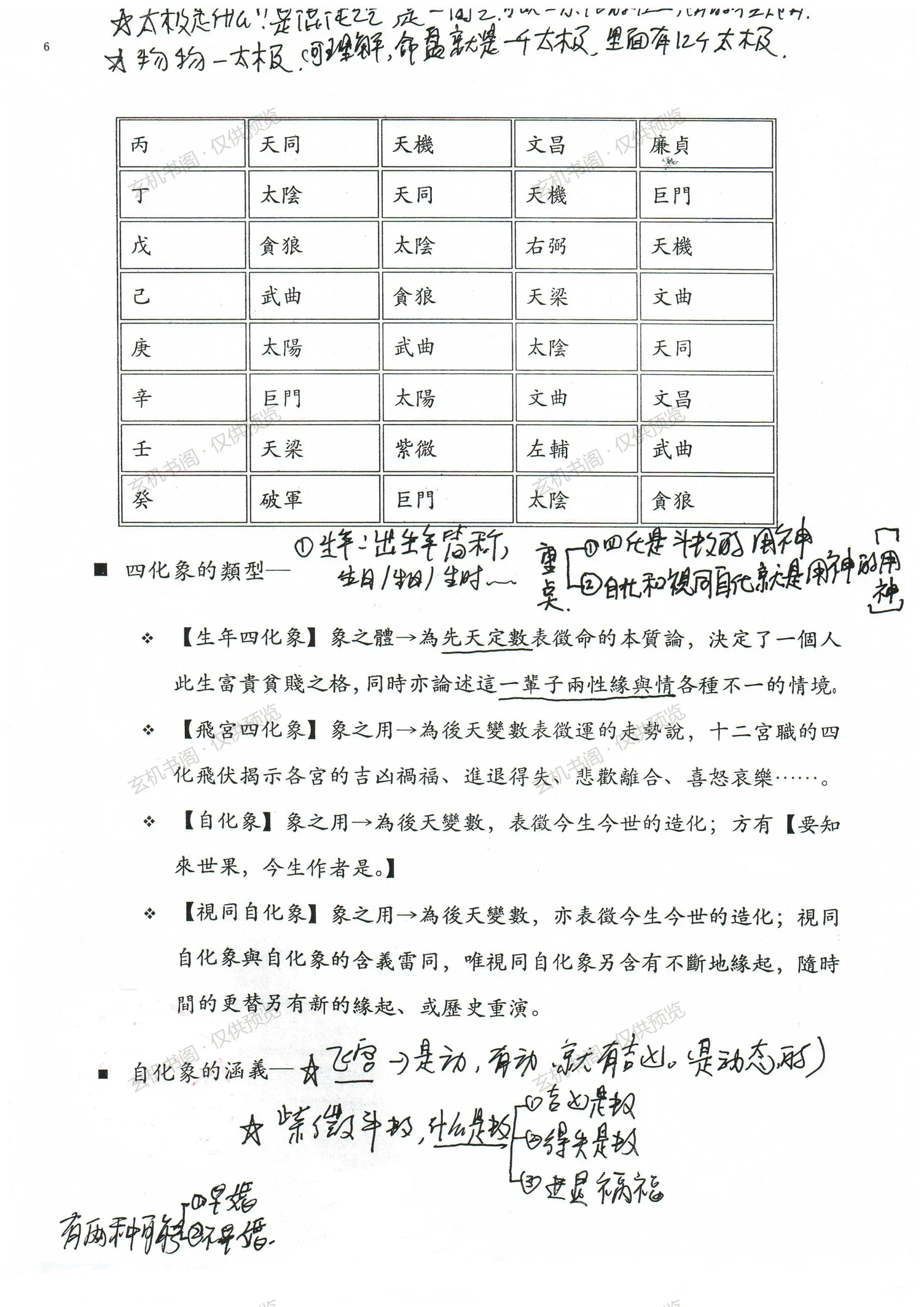
These lecture notes by Xu Quanren present the Qintian Four Transformations approach to Zi Wei Dou Shu for a beginner course. The opening sets out the principle that fate study rests on substance, image and qi, and that palace and image must be read together. The main body explains the twelve palaces one by one—Life, Siblings, Spouse, Children, Wealth, Health, Travel, Servants, Career, Property, Fortune and Parents—each with its basic meaning, hidden meanings and related palaces to cross-reference, such as reading the Spouse palace alongside Fortune and Wealth, or treating the Parents palace as the Documents and Appearance palace. The later section turns to the four transformations, explaining that images arise from the transformation of stems and branches, providing a ten-stem transformation table, and distinguishing birth-year, flying-palace, self-transformation and quasi-self-transformation images, with birth-year transformations as the innate substance and the others as postnatal function.
Contents
Two elements of fate study and palace-image unity
Three levels of interpreting palace duties
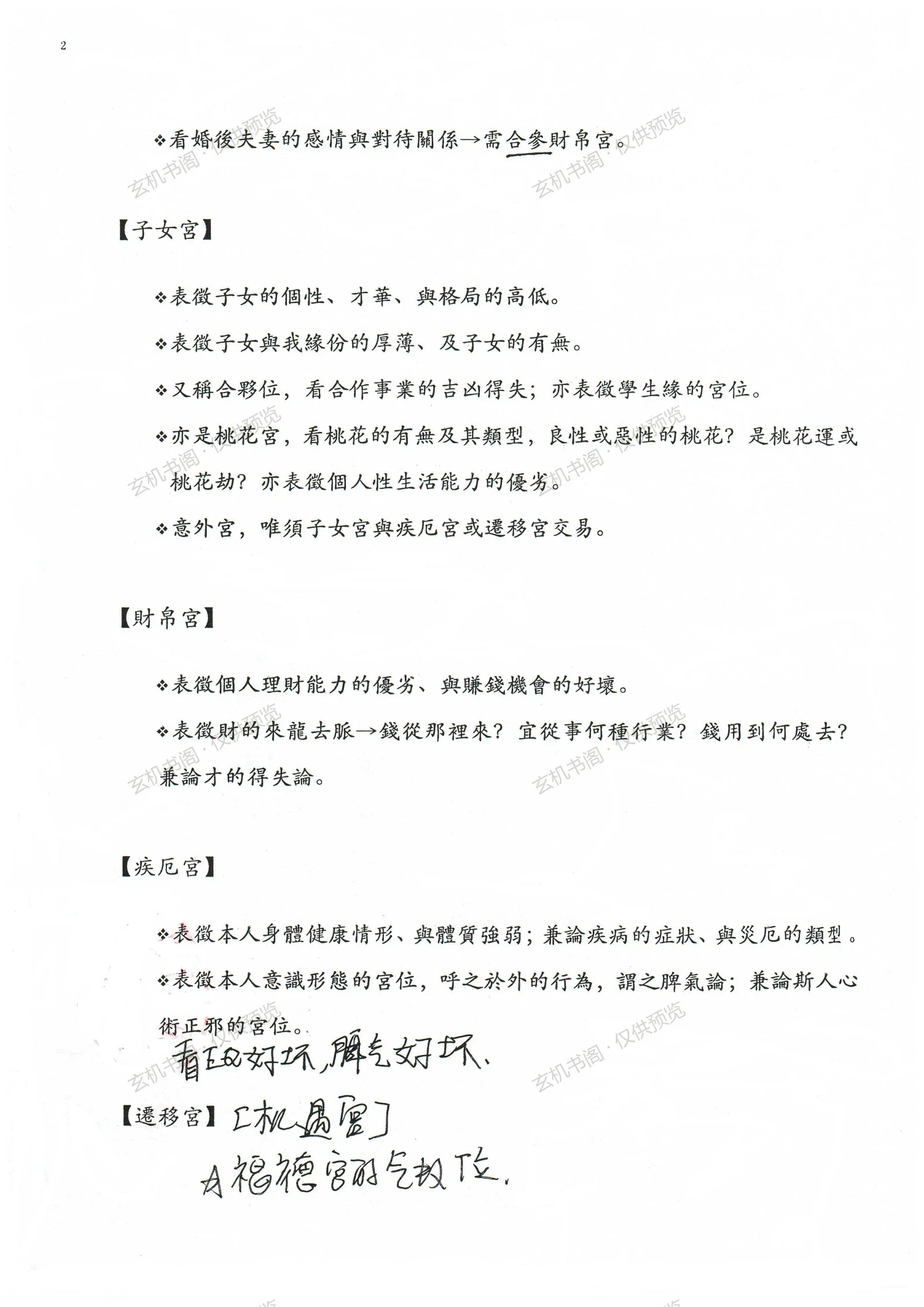
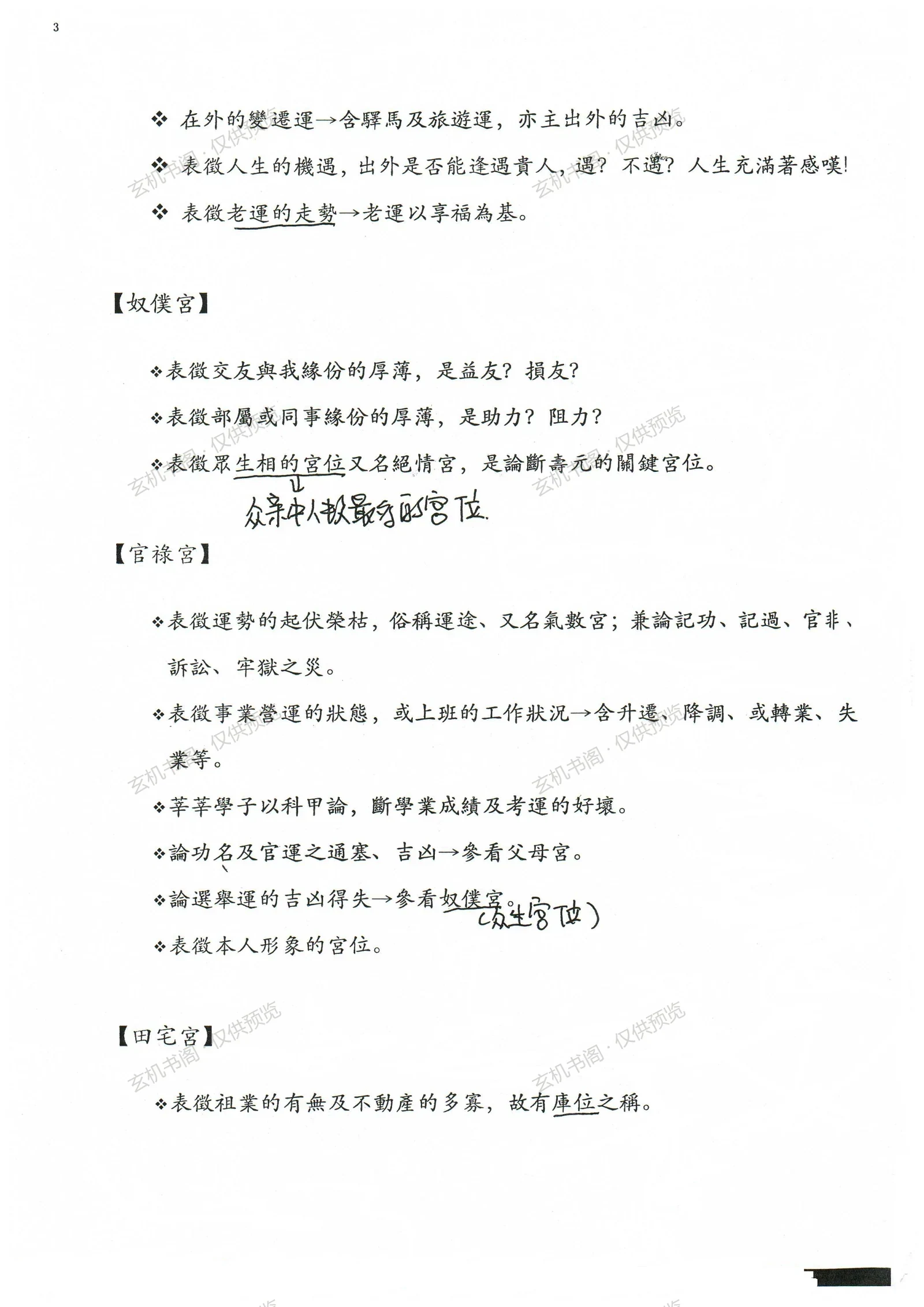
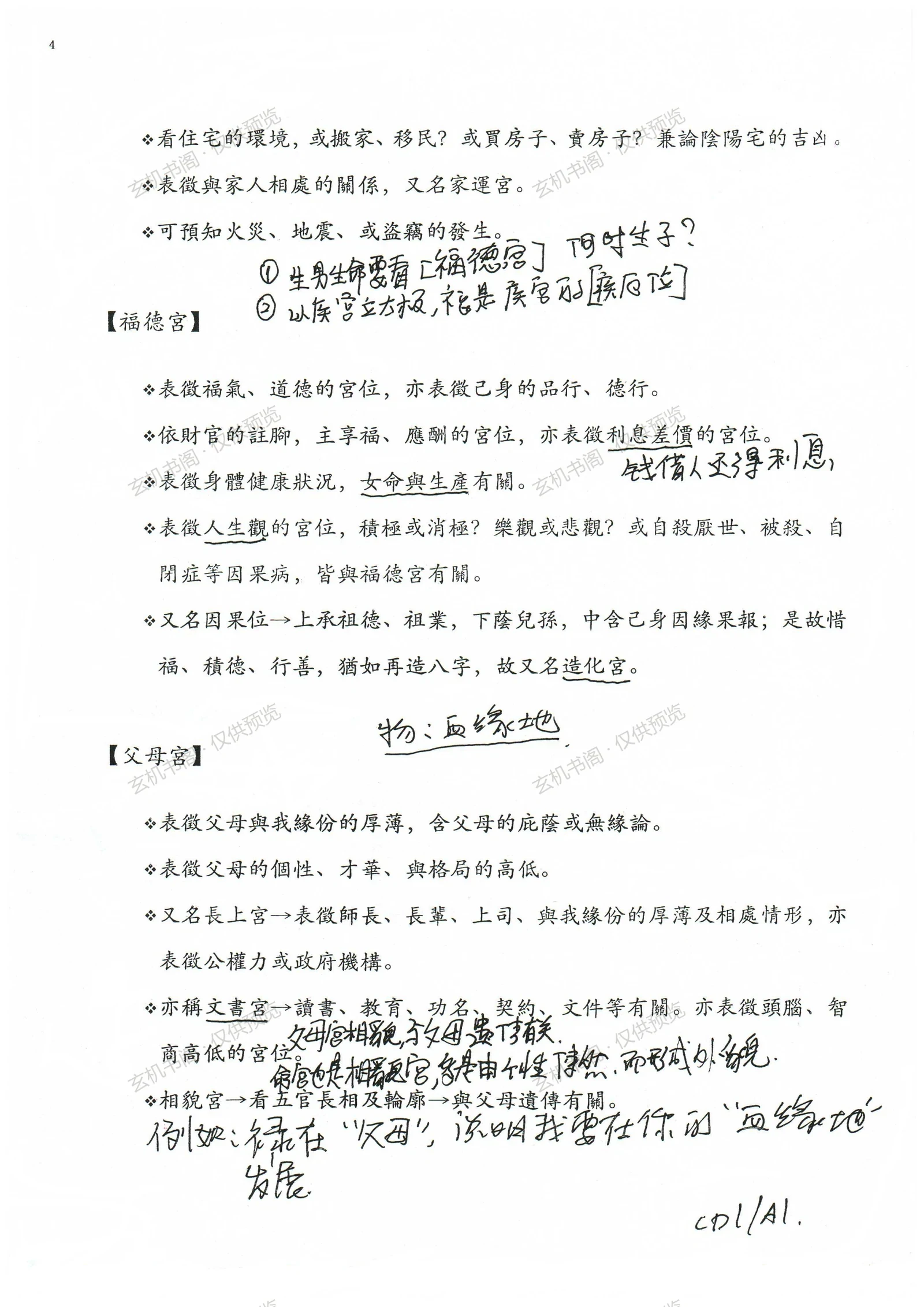
The twelve palaces explained one by one
Cross-referencing and hidden meanings
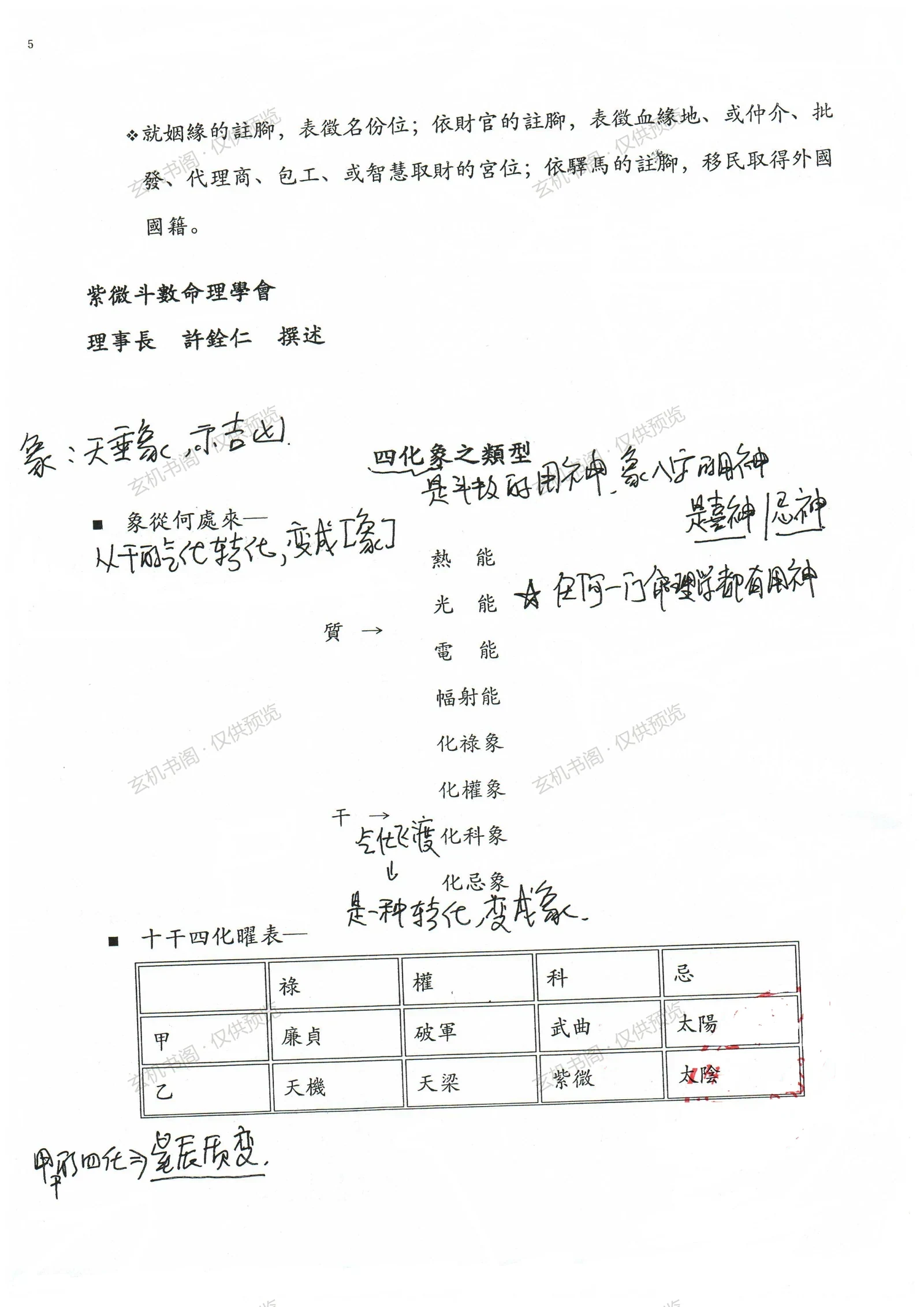
Where images come from: stem-branch transformation
Ten-stem four transformations table
Birth-year, flying, self and quasi-self transformations
Key Points
Establish substance, image and qi before judging fortune.
Each palace has basic, hidden and numerology layers.
The Spouse palace is read with Fortune and Wealth palaces.
The Children palace also covers romance, partners and students.
Four transformations split into birth-year, flying, self and quasi-self.
The ten-stem table is the lookup basis for lu, quan, ke and ji.