Reading guide
Content guideOverview
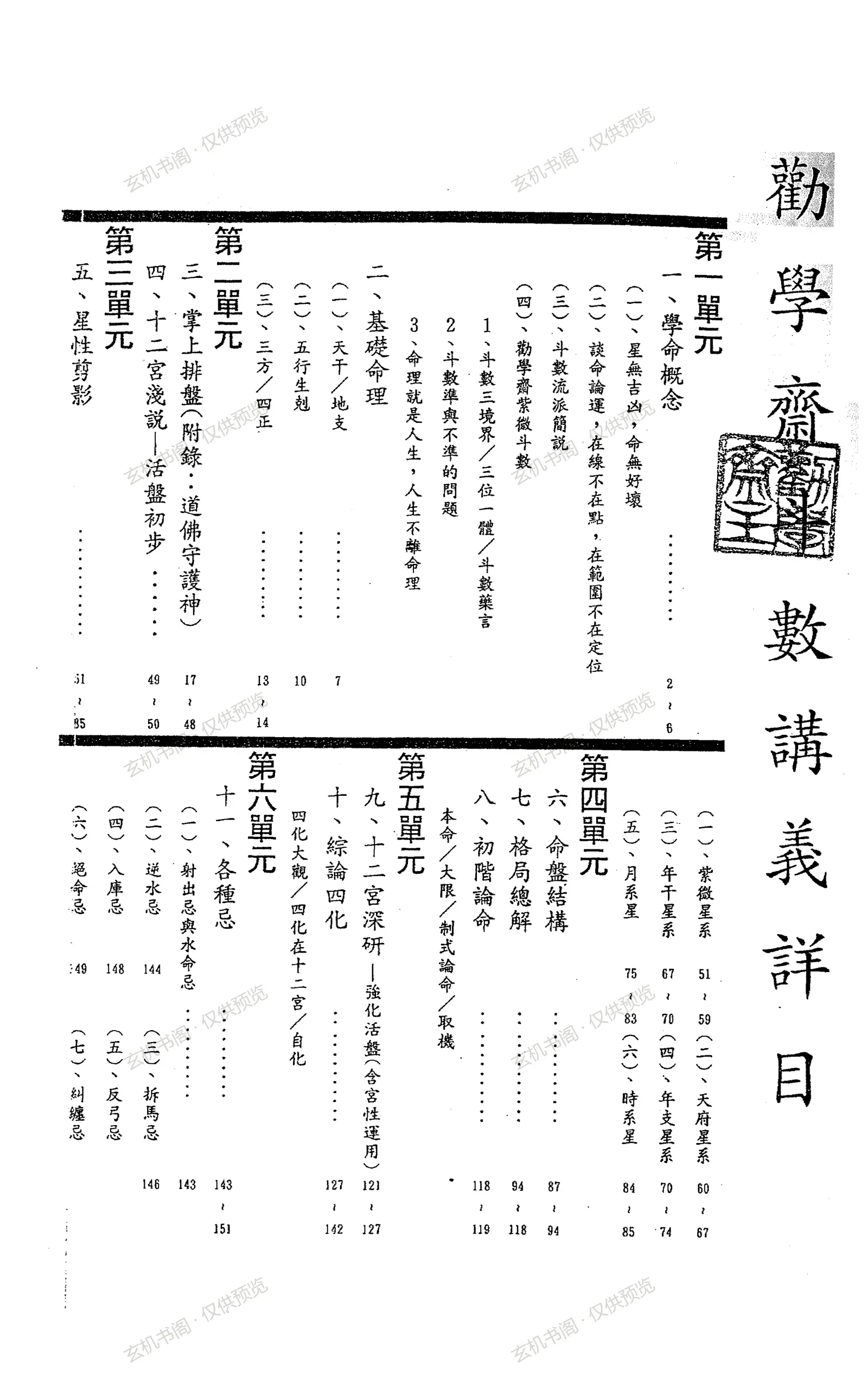
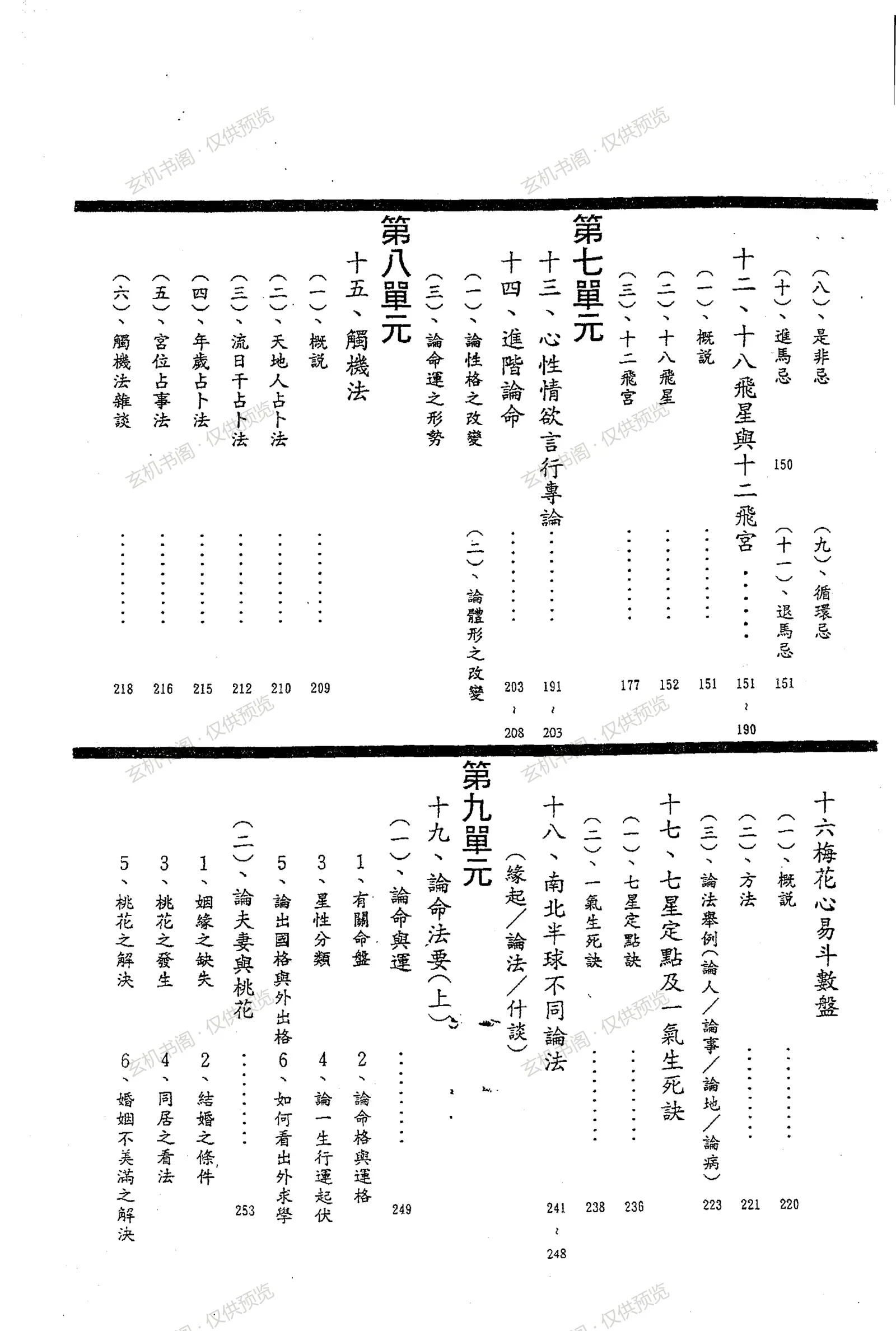
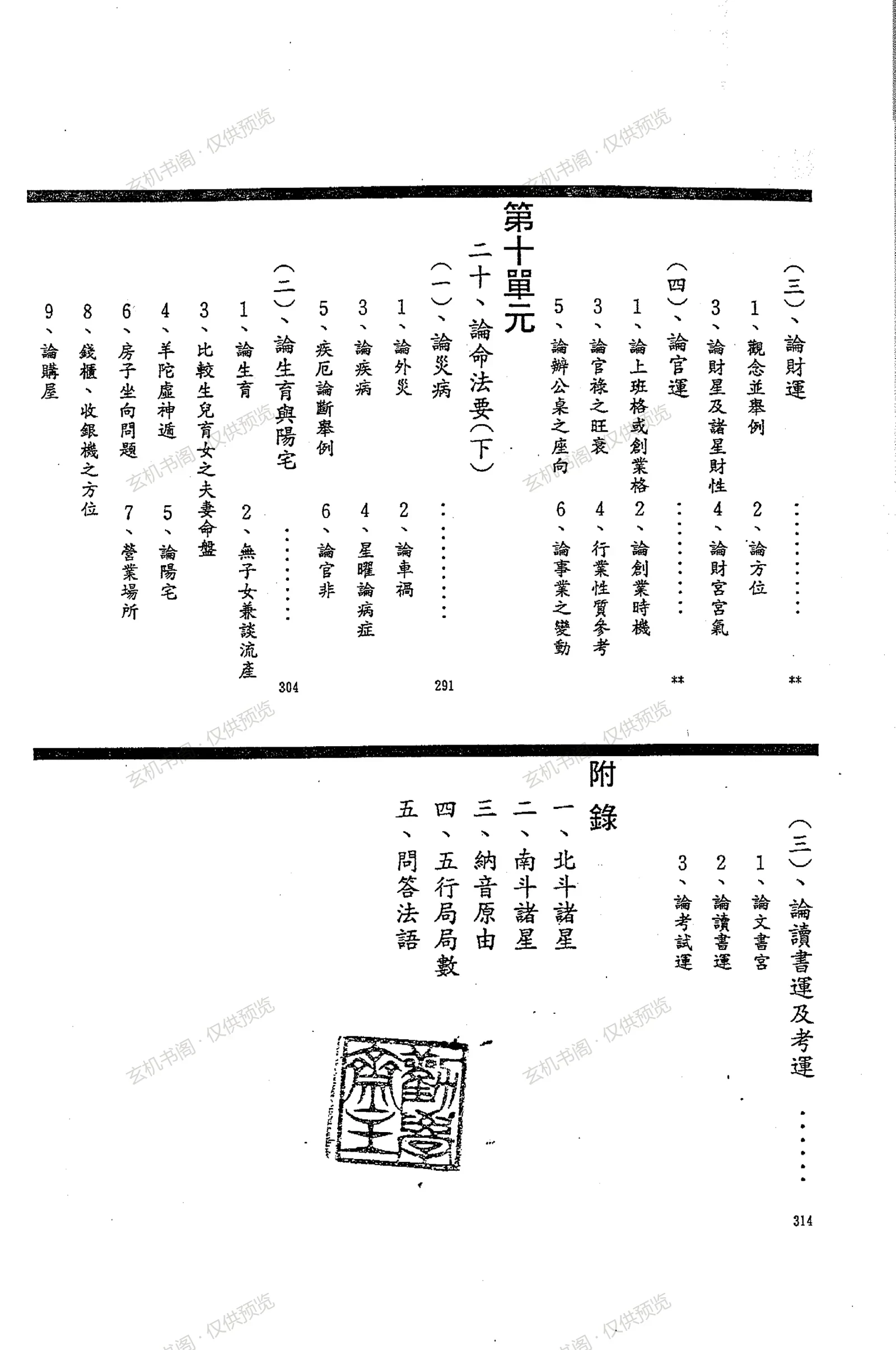
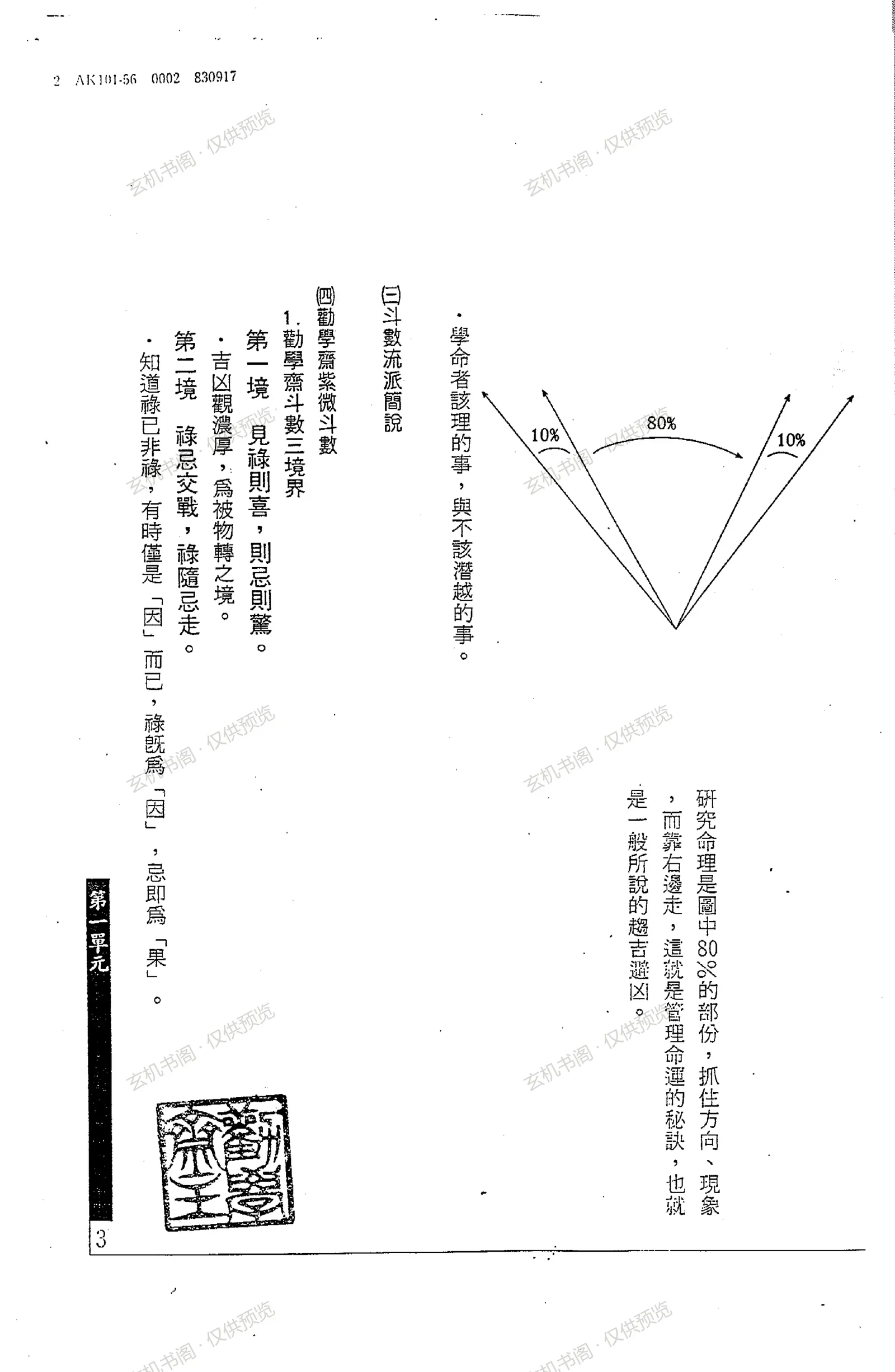
The cover reads "Quanxue Studio, Doushu Lectures," and the contents page titles it a detailed table of contents for the Quanxue Studio Doushu lectures, indicating a Ziwei Doushu textbook compiled under the Quanxue Studio name. The book is organized into ten units plus an appendix. Unit One covers concepts of fate study, including the ideas that stars carry no inherent good or bad and that fate has no fixed好坏, along with the studio's "three realms of Doushu" and related teachings. Unit Two covers basic fate theory: stems and branches, five phases, and the three directions and four corners. Unit Three deals with palm-based chart casting, the twelve palaces, and live-chart basics, with an appendix on Daoist and Buddhist guardian deities. Unit Four turns to chart structure, pattern interpretation, and beginning-level judgment. Unit Five examines the twelve palaces in depth, including the four transformations and self-transformation. Unit Six is devoted entirely to various kinds of ji (taboo/affliction), such as reverse-water ji, storage ji, reverse-bow ji, split-horse ji, and entanglement ji. Unit Seven discusses temperament, desires, speech and conduct, and advanced judgment. Unit Eight covers heaven-earth-human divination methods and miscellaneous brief techniques. Unit Nine presents essential judgment methods, including different approaches for the northern and southern hemispheres, seven-star chart setting, the single-breath life-death诀, and topics such as marriage and romance. Unit Ten, the lower part of essential methods, treats wealth, career, study and exams, illness, childbirth, and dwelling feng shui. The appendix lists the stars of the Northern and Southern Dippers, the origins of nayin, the numbers of the five-phase bureaus, and a question-and-answer section. The overall style is that of classroom lecture notes, with emphasis on the four transformations and the judgment of ji stars, and on applying Doushu to concrete life matters.
Contents
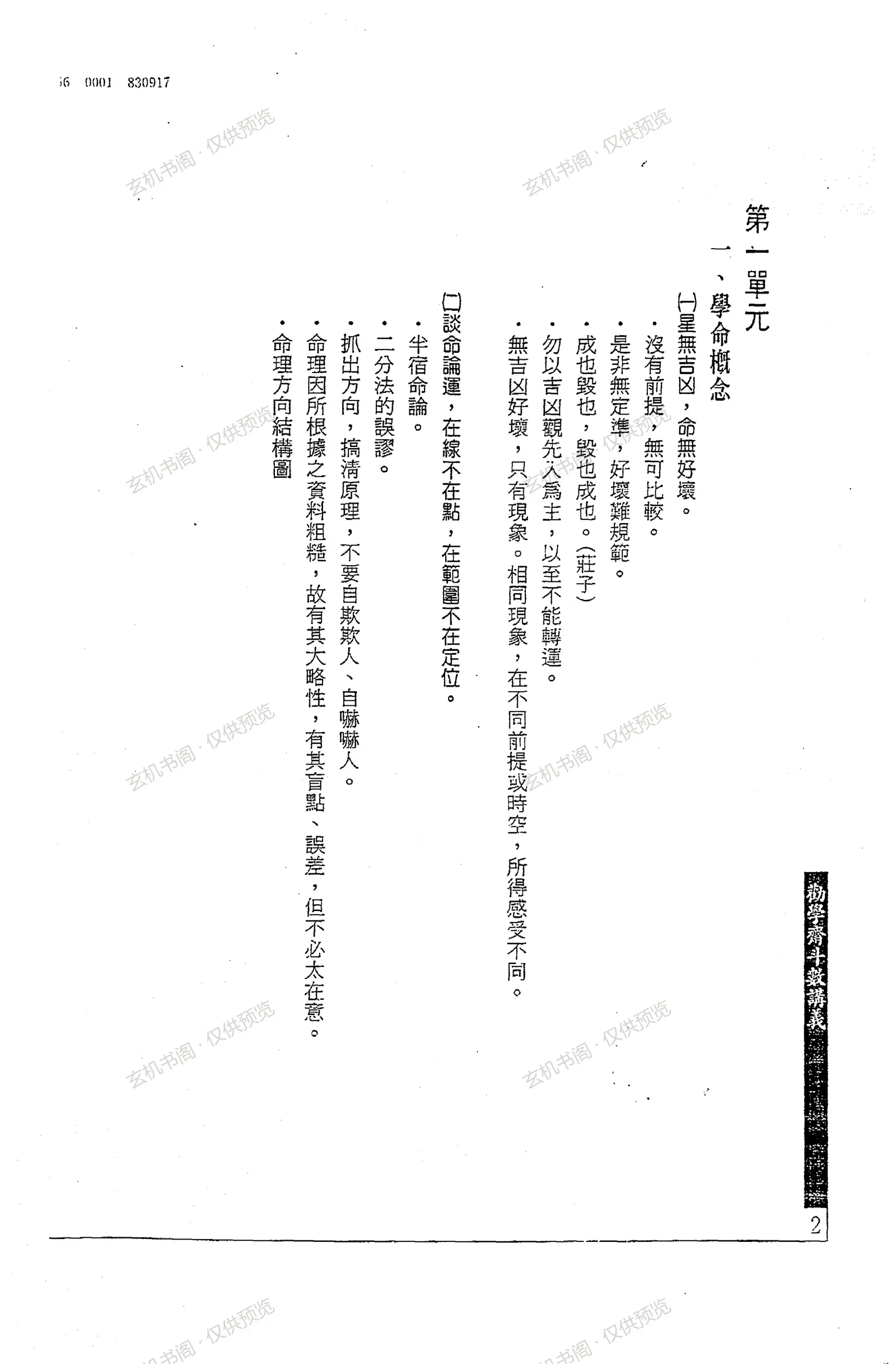
Unit 1: Concepts of fate study and the three realms of Doushu
Unit 2: Basic fate theory, stems-branches and five phases
Unit 3: Palm chart casting and the twelve palaces
Unit 4: Chart structure and pattern interpretation
Unit 5: The twelve palaces in depth, four transformations and self-transformation
Unit 6: Judging the various ji
Units 7-8: Temperament and conduct, advanced judgment and divination methods
Units 9-10: Essential methods, covering marriage, wealth, illness, and dwelling
Appendix: Northern and Southern Dipper stars, nayin, five-phase bureaus, Q&A
Key Points
Unit-based lecture format, progressing from basics to practical judgment.
Stresses that stars have no inherent good or bad and fate is a tendency, not a fixed decree.
The four transformations and the various ji are the core, with an entire unit on ji.
Units 9 and 10 apply Doushu to marriage, wealth, career, illness, and dwelling.
The appendix gathers Dipper stars, nayin, and five-phase bureau data for reference.