Reading guide
Content guideOverview
Co-authored by Wu Xiangyi and Xie Mingdao, this book works within the San Yuan school of feng shui and focuses on the technique of chou yao huan xiang, or drawing yao and changing images, as applied to siting yin and yang dwellings. It begins with foundational diagrams such as the Hetu, Luoshu, Earlier and Later Heaven bagua, and the sixty-four hexagrams, then moves into summary tables and specific hexagram-by-hexagram explanations. The preface presents the method as a relatively hidden and difficult part of San Yuan geomancy, intended to correct errors found in common circulated texts. The book is organized into two sections: one on the general method and hexagram examples, and one on the meaning of each of the sixty-four hexagrams. It is suited to readers who already have some grounding in San Yuan feng shui and wish to deepen their understanding of siting and hexagram transformation.
Contents
Preface and author introductions
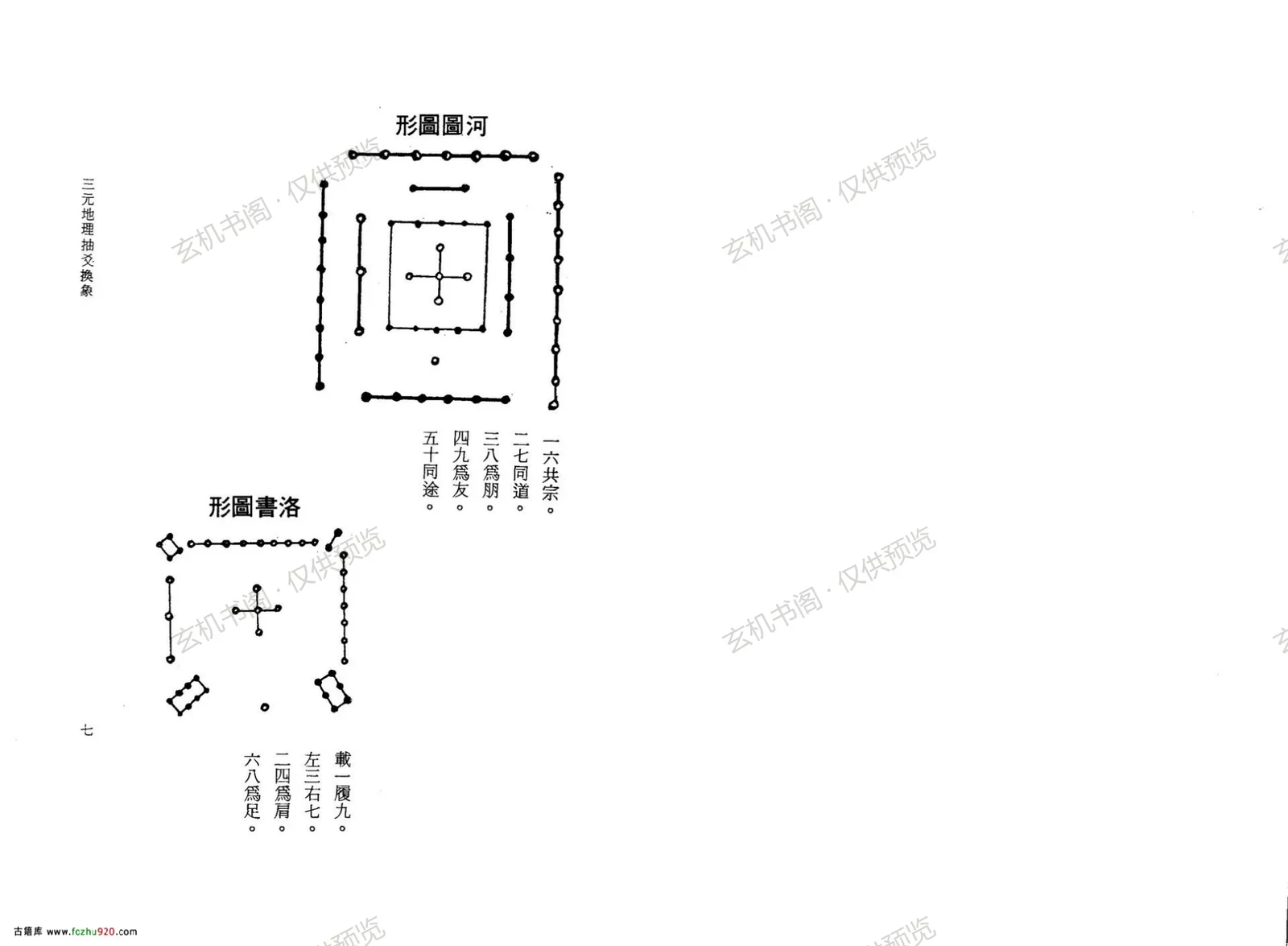
Hetu and Luoshu diagrams
Earlier and Later Heaven bagua diagrams
Table of the sixty-four hexagrams
General table of drawing yao and changing images
Part One: drawing yao and changing images, with hexagram examples
Part Two: meanings of the sixty-four hexagrams
Key Points
Grounded in Hetu, Luoshu, and Earlier/Later Heaven bagua theory.
Core subject is drawing yao, changing images, and siting dwellings.
Includes summary tables for yao transformation and the sixty-four hexagrams.
Divided into hexagram examples and explanations of hexagram meanings.
Preface stresses correcting errors in circulated editions.