Reading guide
Content guideOverview
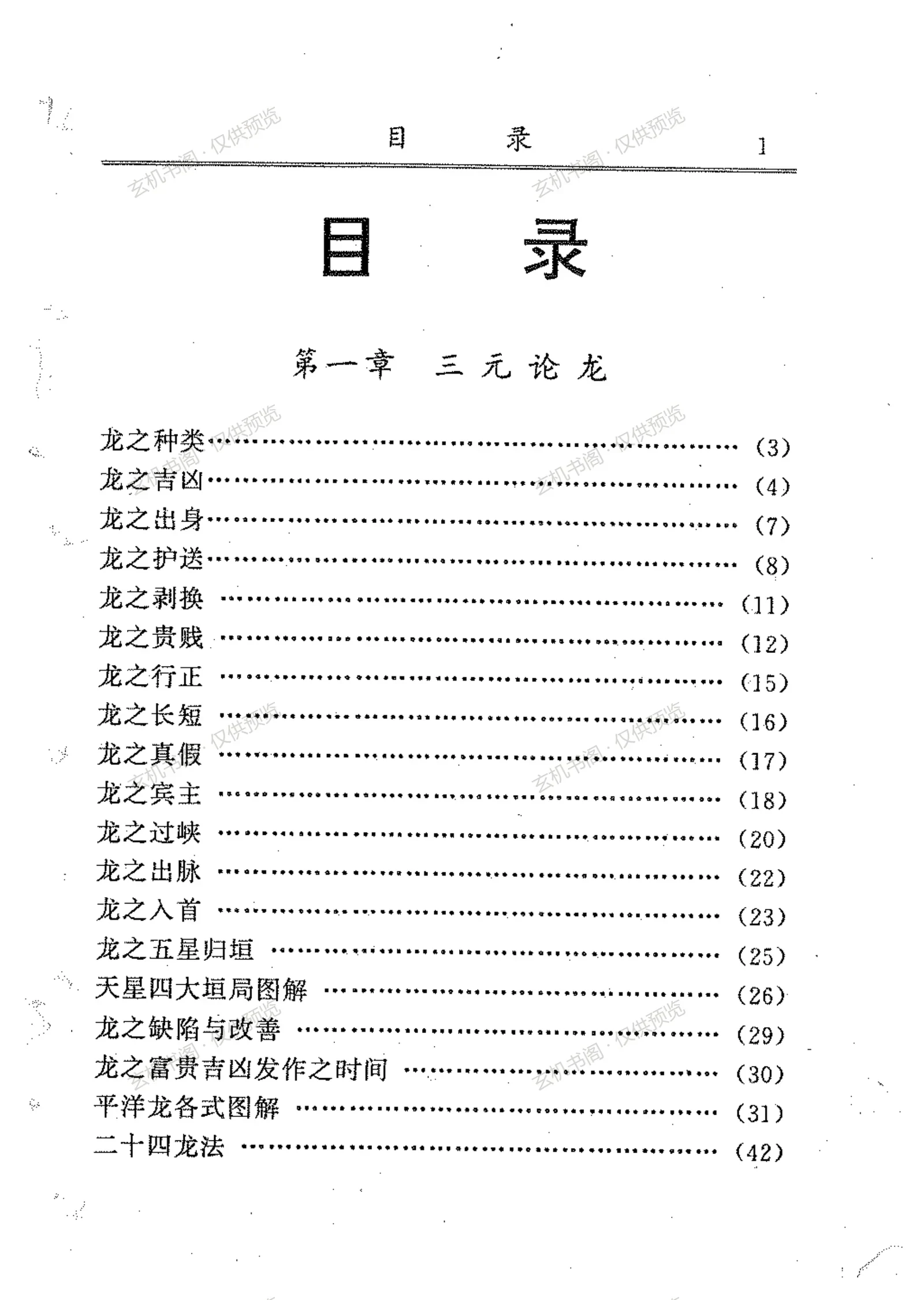
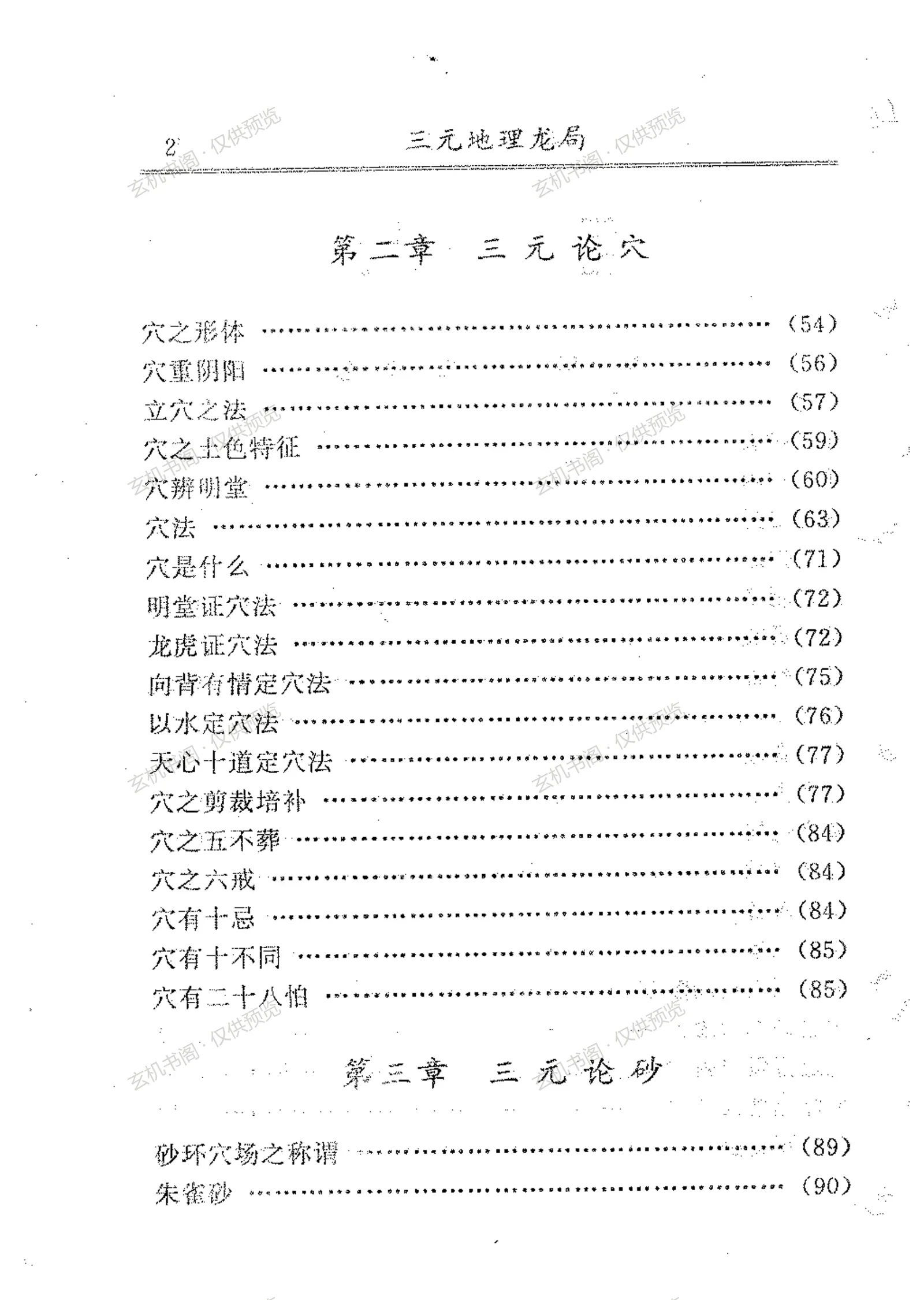
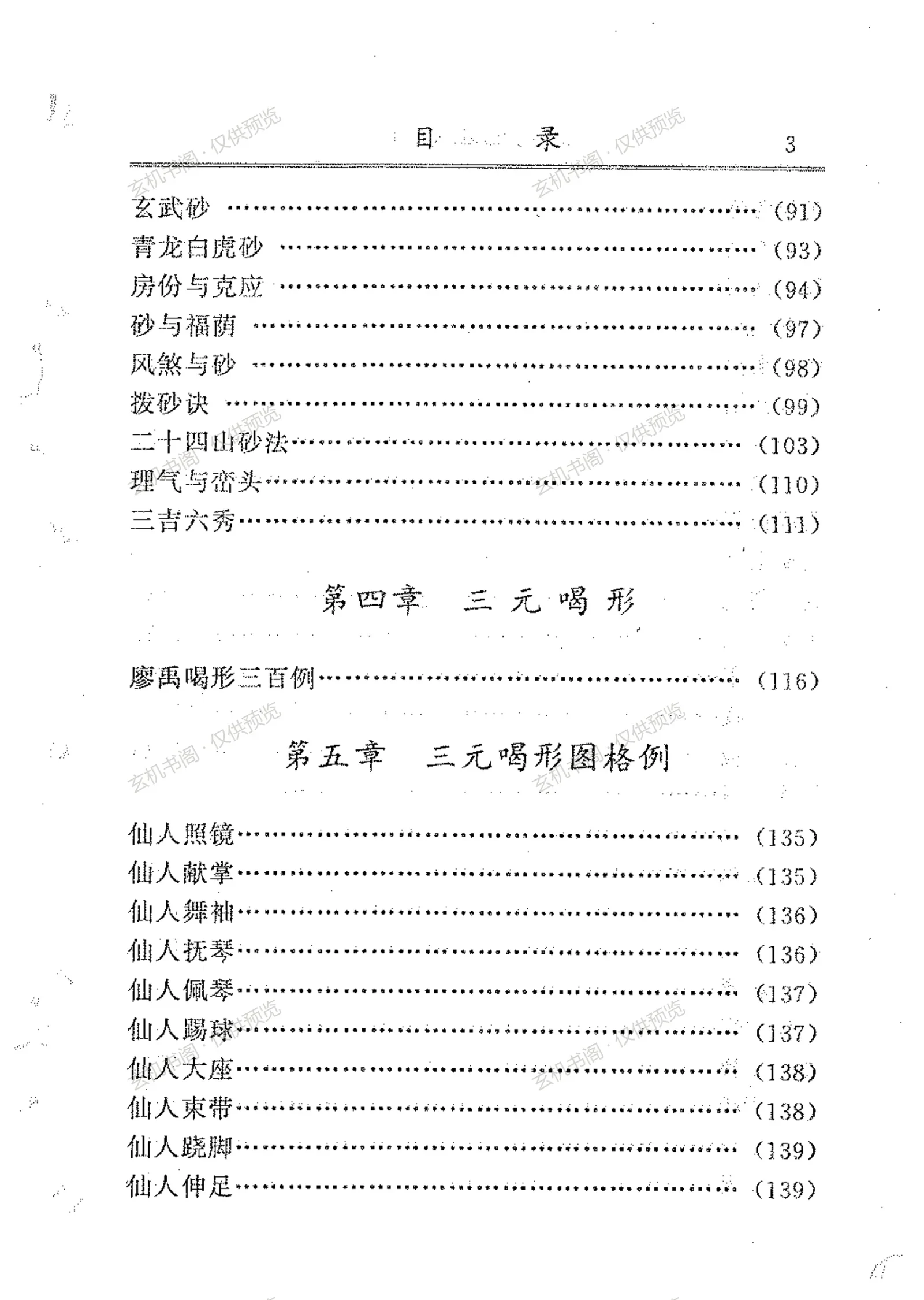
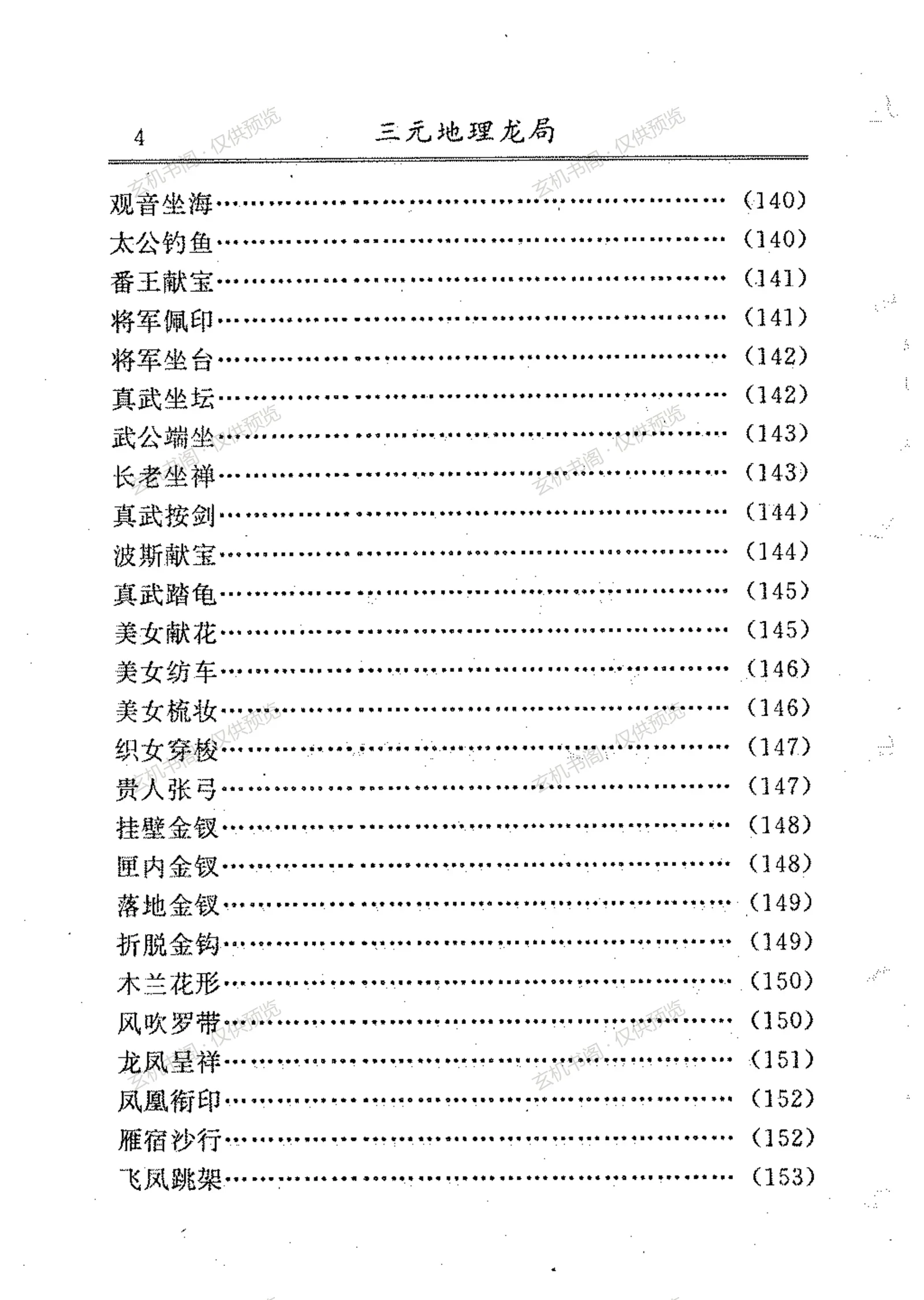
Compiled by Wu Mingxiu and published by Inner Mongolia People's Publishing House, Three-Phases Geographical Dragon Formations is a roughly 208-page manual of San Yuan (Three Phases) feng shui. The table of contents shows a traditional sequence organized around dragons, sites, sand, water, and facing. Chapter One, on dragons, is the longest: it covers types, auspiciousness, origin, escorting hills,剥换 transformation, nobility, movement, length, authenticity, host-guest relations, passes, emerging veins, and entering heads, then moves to the Five Stars Returning to the Hall, diagrams of the Four Great Celestial Enclosures, remedies for flawed dragons, timing of fortune and misfortune, plain-and-water dragon diagrams, and the twenty-four dragon methods. Chapter Two treats site selection: site forms, yin-yang balance, placement methods, soil color, verification by bright hall, dragon-tiger hills, facing and backing, water, and the Ten-Path method, followed by lists of prohibitions such as the Five Non-Burials, Six Warnings, Ten Avoidances, and Twenty-Eight Fears. Chapter Three discusses sand: surrounding sand terminology, the four directional animals, sand and blessing, wind煞, the sand-manipulation formula, twenty-four mountain sand methods, and the relation of form and principle. Chapters Four and Five present Liao Yu's three hundred poetic landform names and illustrated examples such as the Immortal Mirroring, General Wearing a Seal, and Beauty Offering Flowers. The book combines text and diagrams and is best suited to readers with a foundation in landform feng shui who want to study San Yuan theory and imagery.
Contents
Ch.1 Dragons: types, fortune, transformation, passes, entering heads
Diagrams of celestial enclosures and plain-water dragons
Ch.2 Sites: forms, placement, verification, prohibitions
Ch.3 Sand: four animals, sand formulas, 24-mountain methods
Ch.4 Liao Yu's 300 poetic landform names
Ch.5 Illustrated landform patterns: immortals, generals, beauties
Key Points
Organized around dragons, sites, sand, water, and facing, with emphasis on dragon inspection.
Detailed dragon criteria include transformation, passes, entering heads, host-guest, and authenticity.
Site verification draws on form, soil color, bright hall, dragon-tiger hills, and water.
Sand methods combine the four animals, wind煞, and 24-mountain directional theory.
Poetic landform patterns offer a memorable way to classify landscape configurations.