Reading guide
Content guideOverview
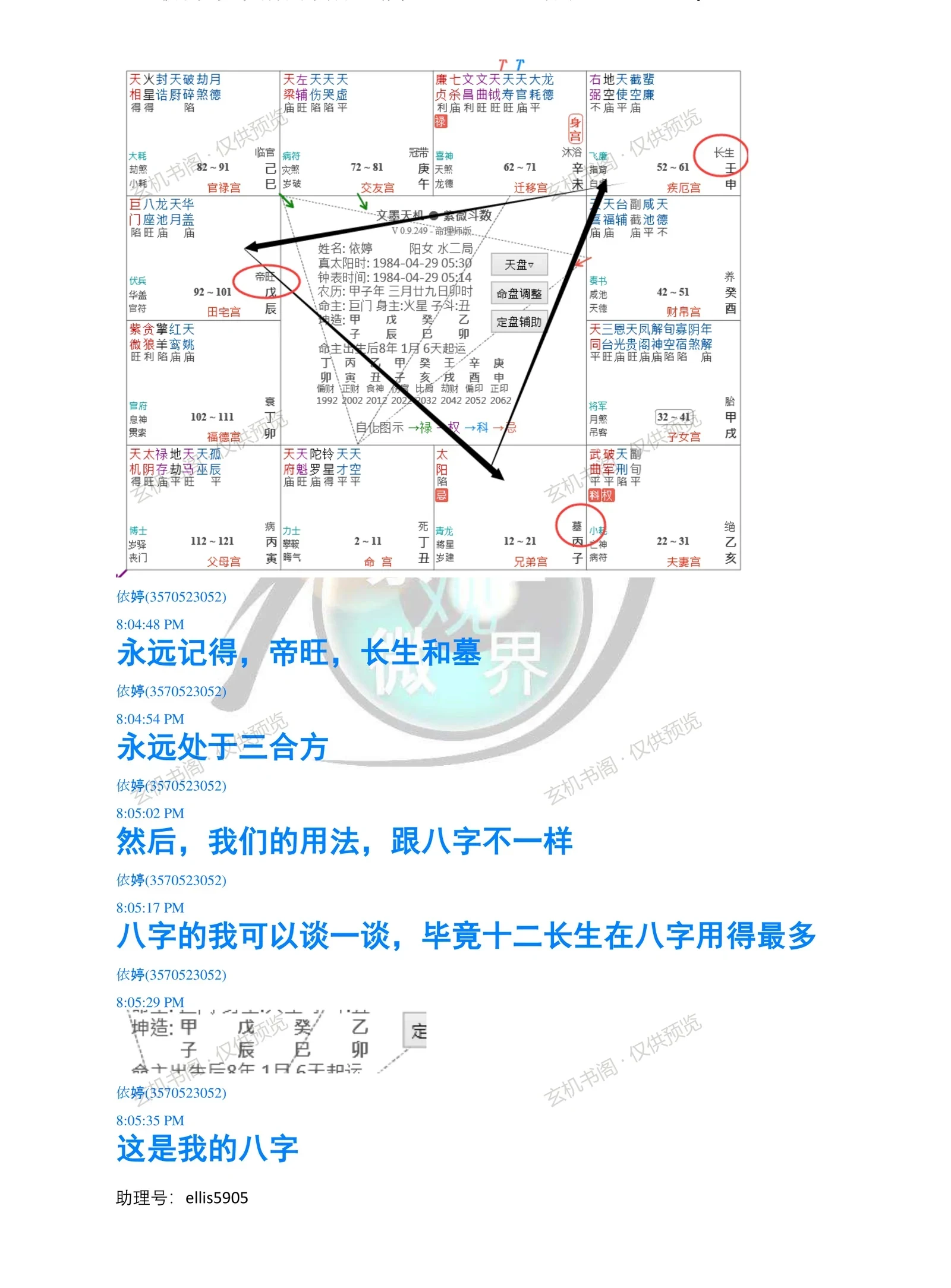
This six-page handout from Yi Ting's systematic Zi Wei Dou Shu course focuses on the Twelve Stages of Growth (shi'er changsheng). It first distinguishes these stages from shensha stars: the former stay fixed, while the latter change with periods. It then gives placement rules based on the chart's five-element bureau — Water starts at Shen, Wood at Hai, Metal at Si, Earth at Shen, Fire at Yin — with yang-male/yin-female charts running forward and yin-male/yang-female charts running backward. Two worked examples (yang male, Water bureau, forward; yang female, Fire bureau, backward) demonstrate the grid, followed by the instructor's own Water-bureau chart to locate Changsheng in Shen and trace Diwang. It notes that Changsheng, Diwang and Mu always fall on a trine, that stages after Mu carry negative energy, and compares usage with BaZi. Suitable for intermediate students learning star placement and the twelve growth stages.
Contents
Difference between the twelve stages and shensha
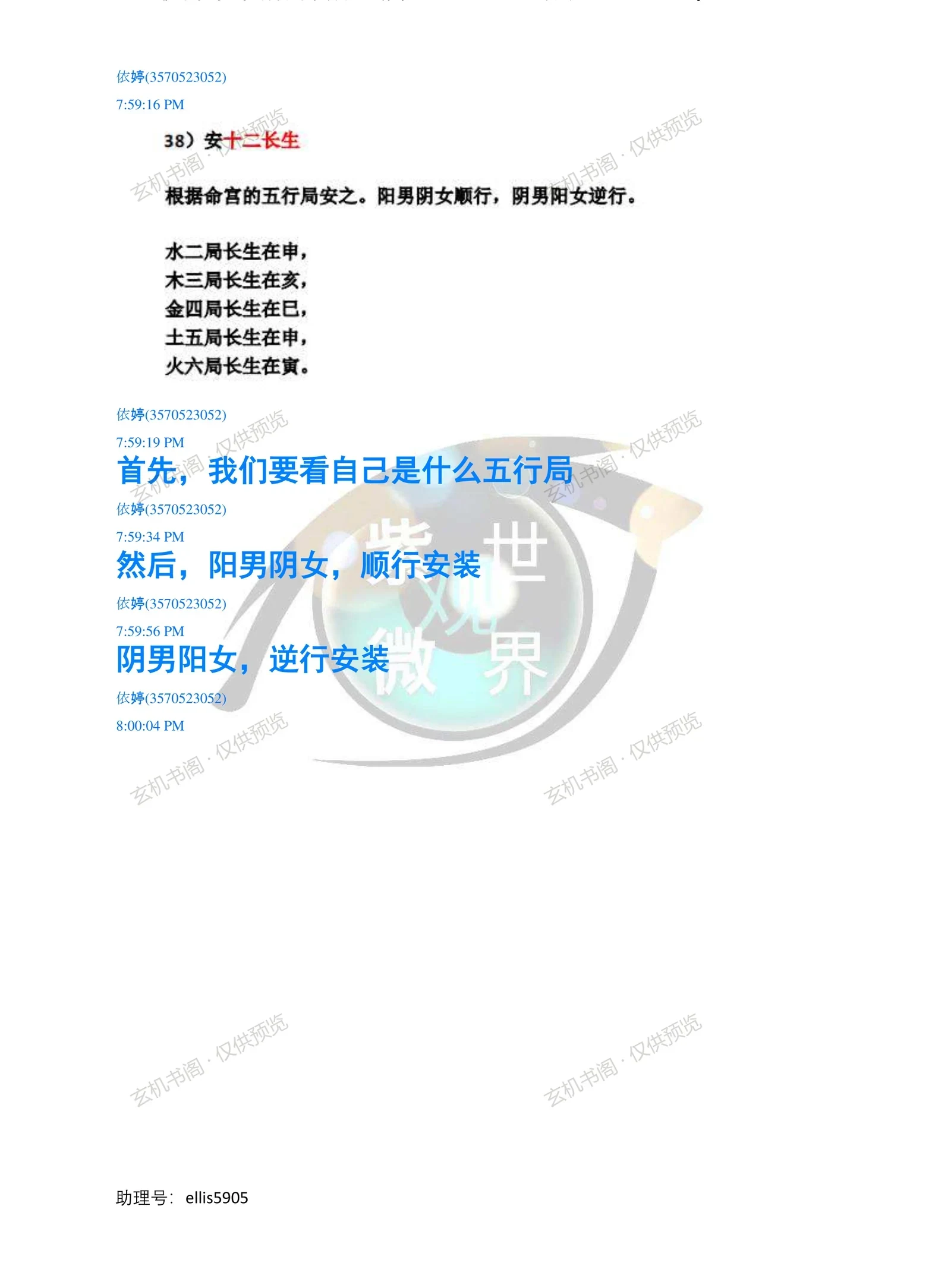
Bureau-based starting points for Changsheng
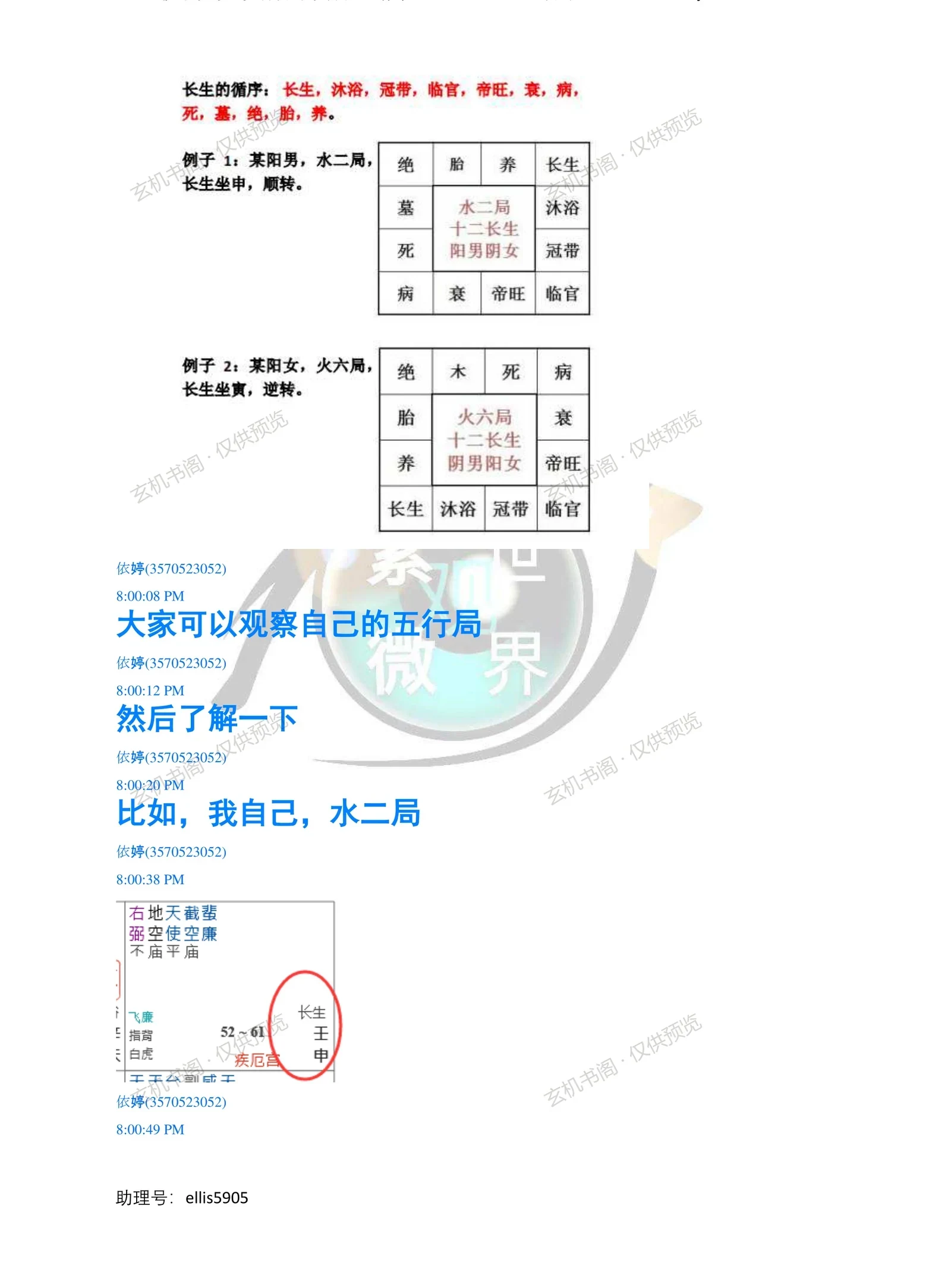
Forward for yang male/yin female, backward otherwise
Example 1: yang male, Water bureau, forward
Example 2: yang female, Fire bureau, backward
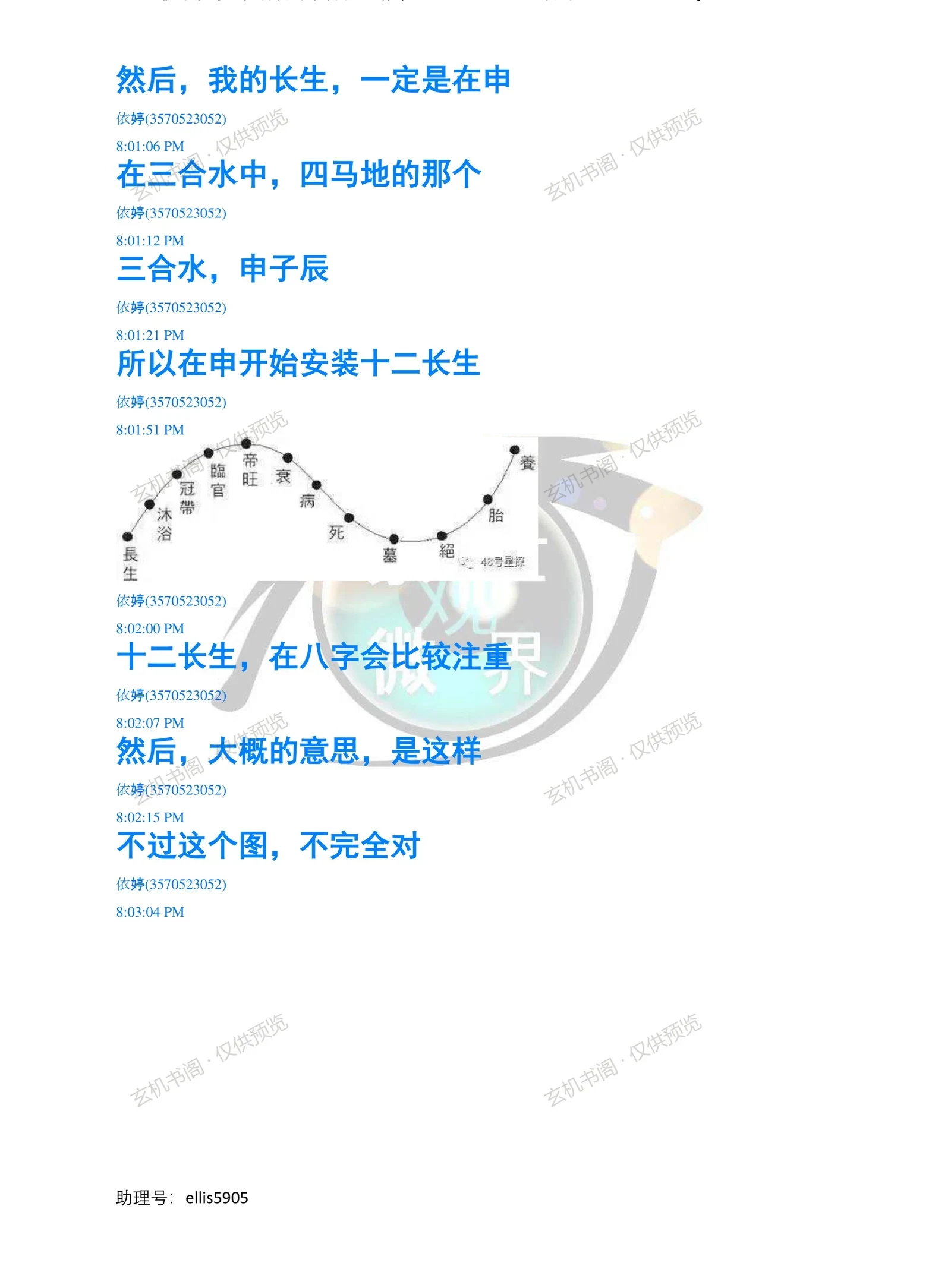
Practice: finding Changsheng and Diwang in a Water chart
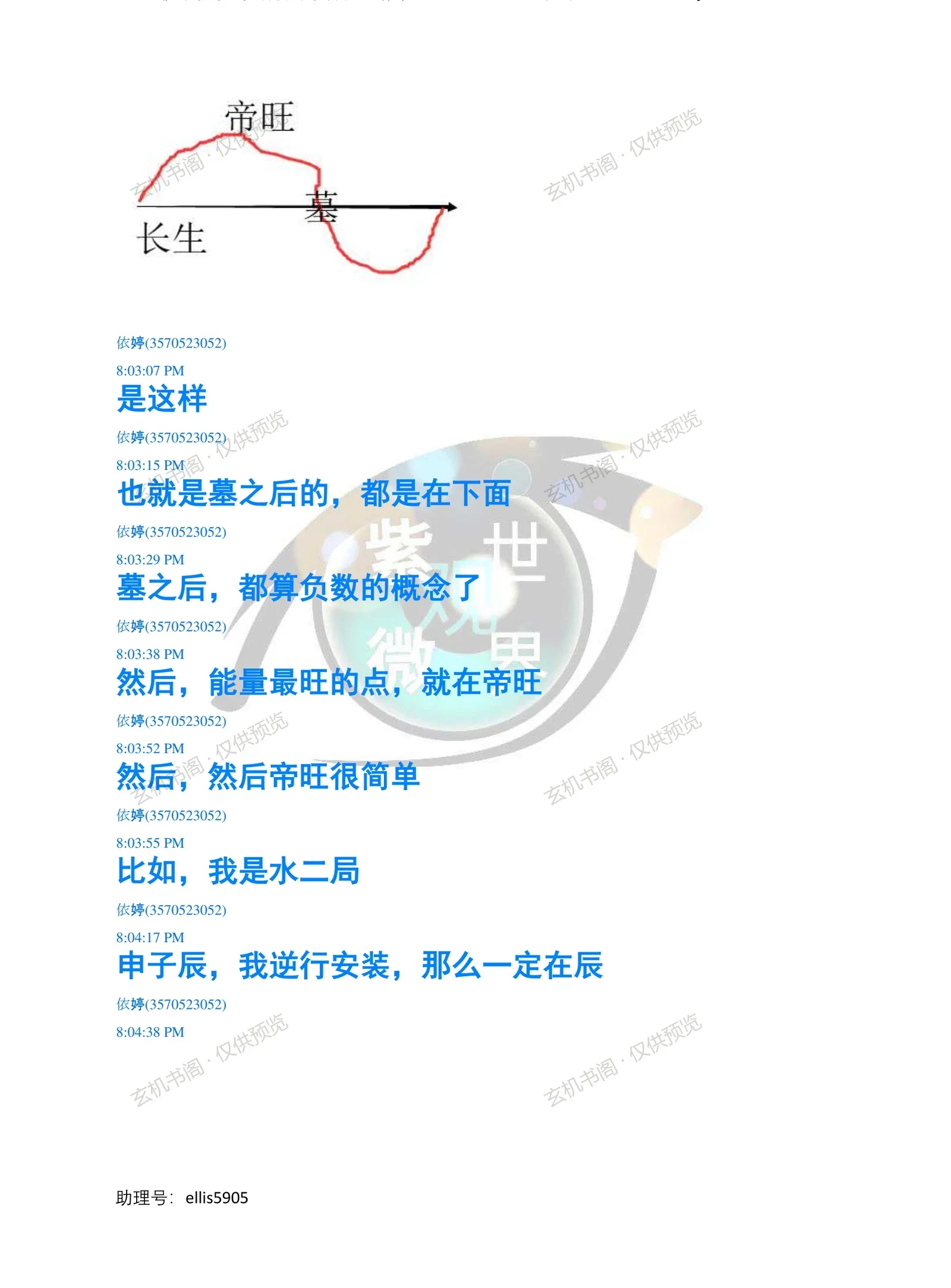
Changsheng, Diwang and Mu always form a trine
Comparison with BaZi usage
Key Points
The twelve stages are fixed; shensha change with luck periods
Starting point depends on bureau: Water-Shen, Wood-Hai, Metal-Si, Earth-Shen, Fire-Yin
Forward for yang male/yin female; backward for yin male/yang female
Changsheng, Diwang and Mu always sit on a trine
Stages after Mu carry negative energy; Diwang is the peak