Reading guide
Content guideOverview
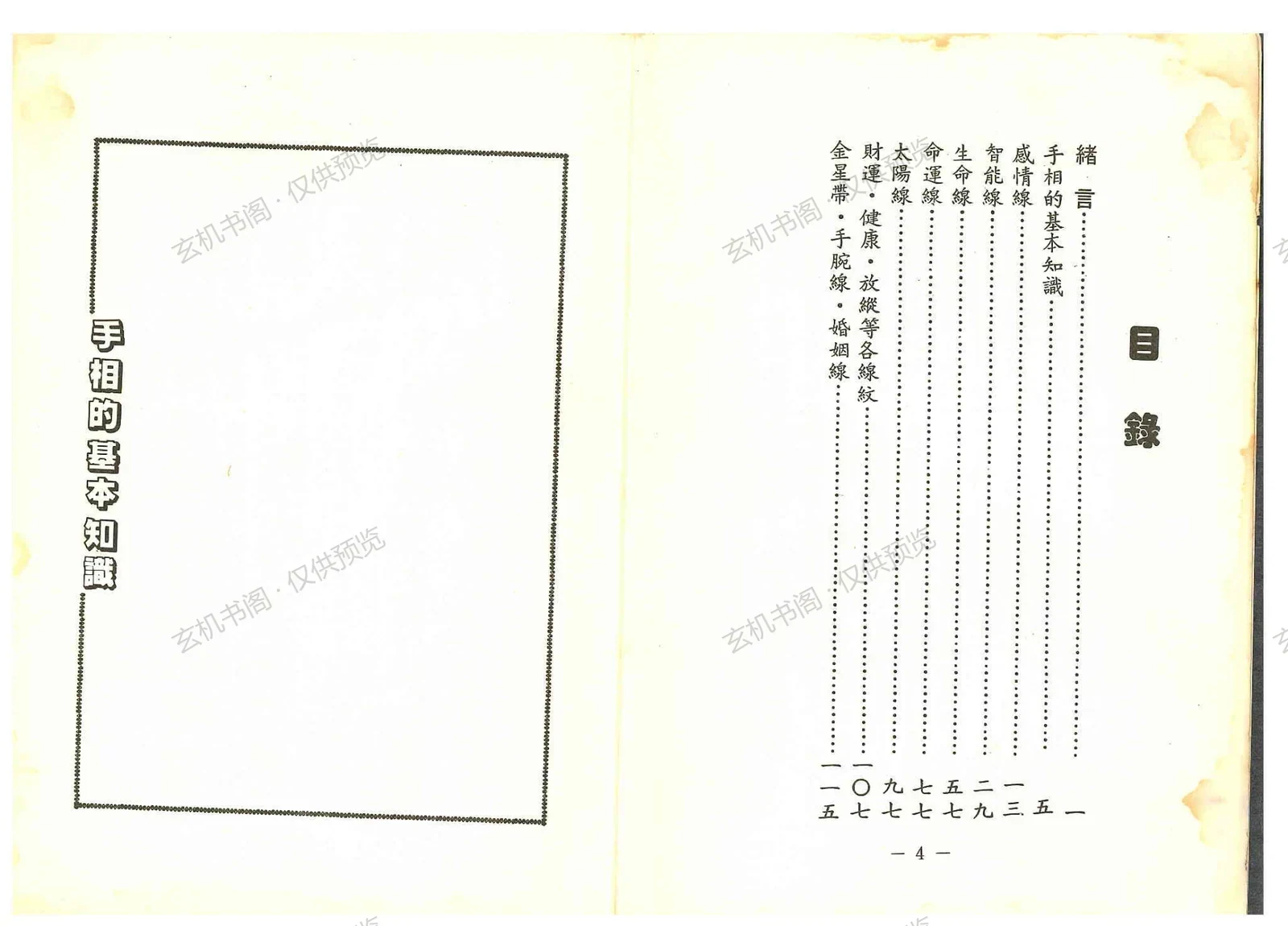
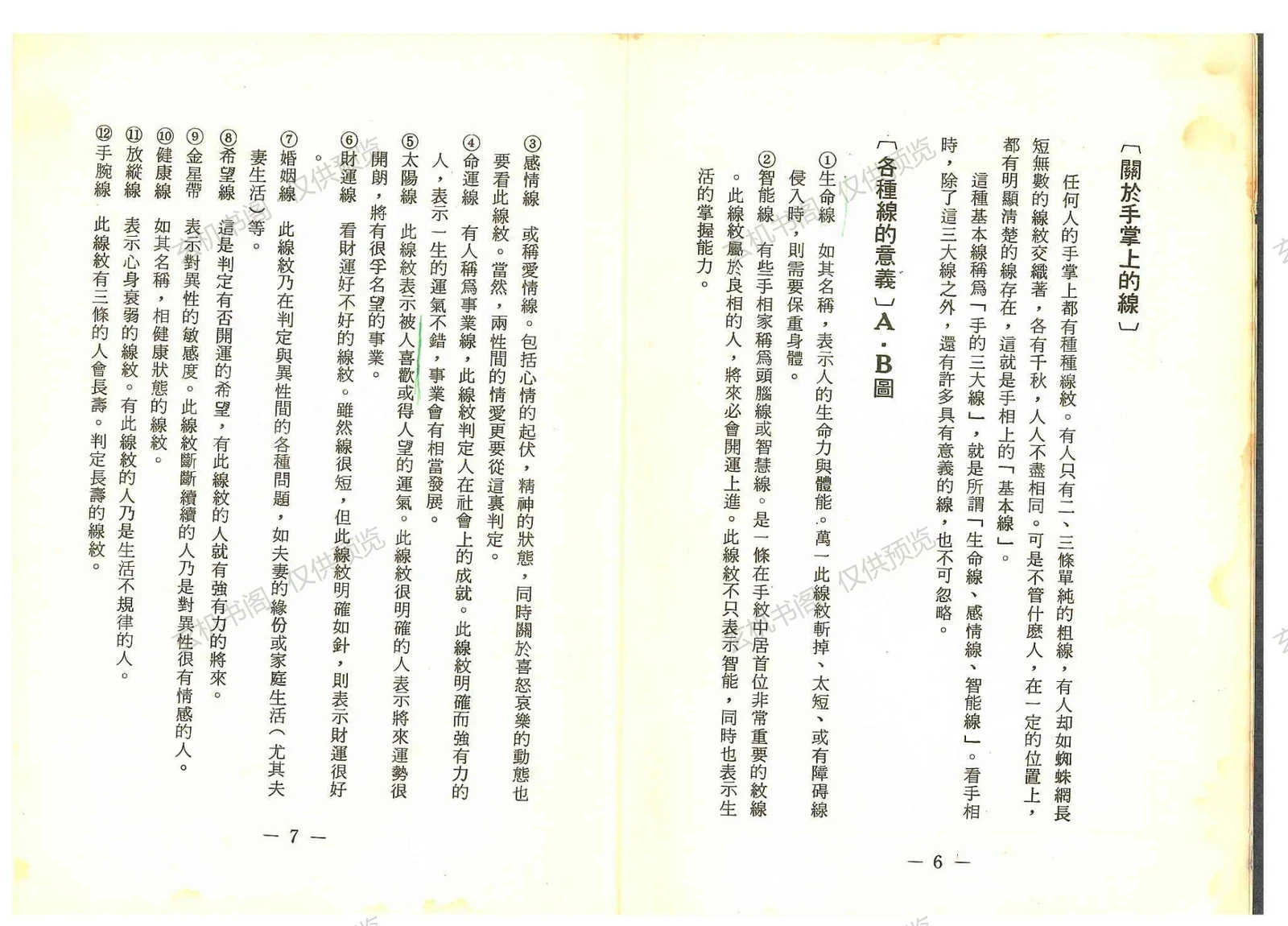
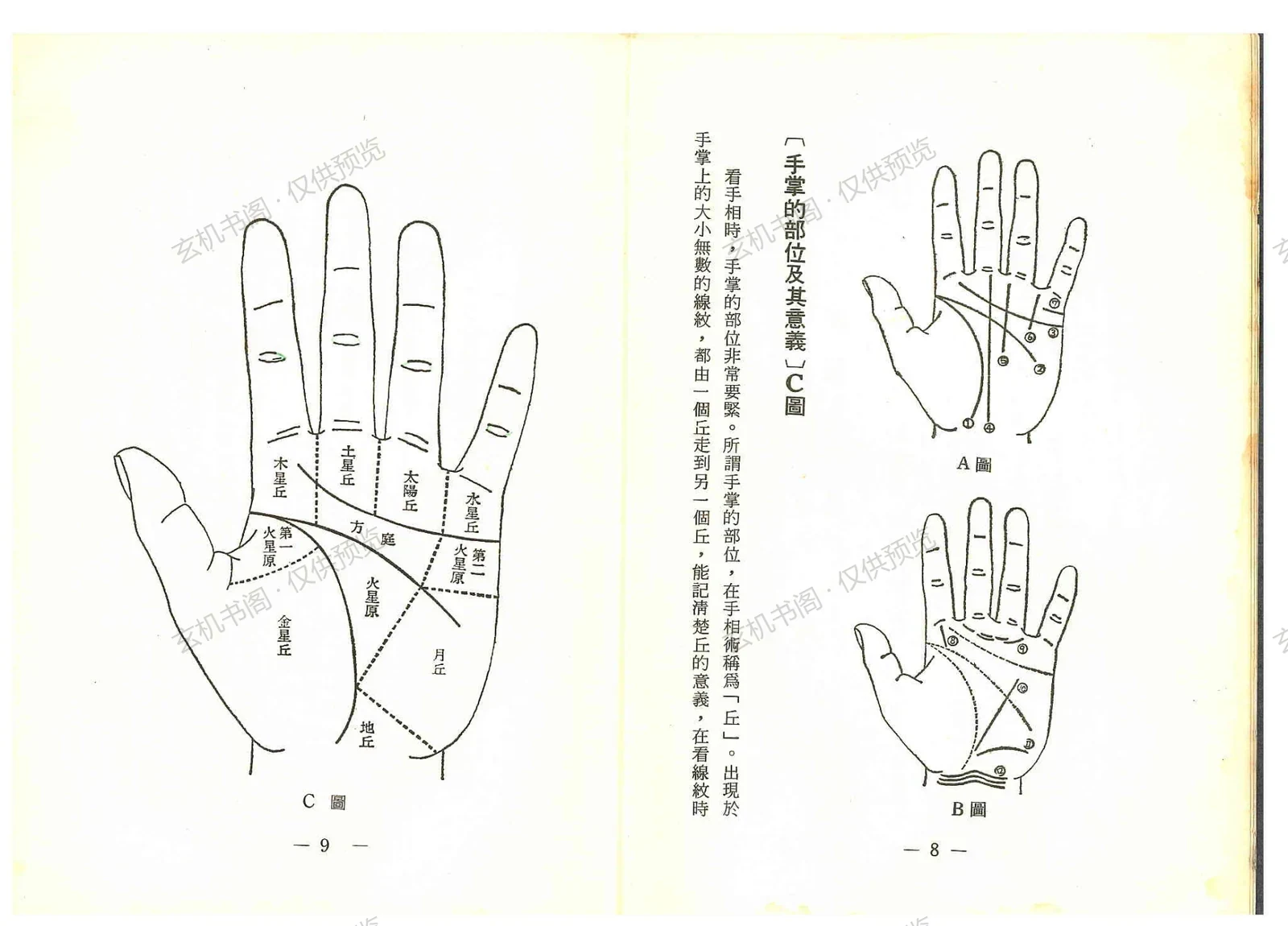
This volume is the palmistry installment of Gao Shanqing's Complete Compendium of World Physiognomy. It opens with the history of palmistry and the question of which hand to read, then explains that palm reading is not arbitrary assertion but a synthesis of the three major lines—heart, head and life—together with numerous auxiliary lines. The contents cover an introduction, basic knowledge of palmistry, the heart line, head line, life line, fate line, sun line and wealth line, plus health, dissipation and other minor lines such as the girdle of Venus, wrist lines and marriage lines. The text first establishes the three major lines as the basic lines, then explains each line's meaning and variations one by one, using three hand diagrams (A, B, C) to mark the mounts and line positions. The mounts—Venus, Jupiter, Saturn, Sun, Mercury, Moon, Earth and Mars—are presented as auxiliary indicators. The writing is plain and the diagrams direct, making the book suitable for beginners building a basic framework and for readers who wish to compare their own palms.
Contents
Introduction: history of palmistry and which hand to read
Basic knowledge: three major lines and auxiliary lines
Meaning of the heart, head and life lines
Reading the fate, sun and wealth lines
Health, dissipation, marriage and other minor lines
Diagrams of the mounts and line positions (A, B, C)
Key Points
Treats the heart, head and life lines as the three basic lines
Stresses reading both hands and combining major with auxiliary lines
Explains the auspicious and inauspicious meanings of each line
Uses three diagrams to mark mounts and line positions
Plain language and direct diagrams for easy reference