Reading guide
Content guideOverview
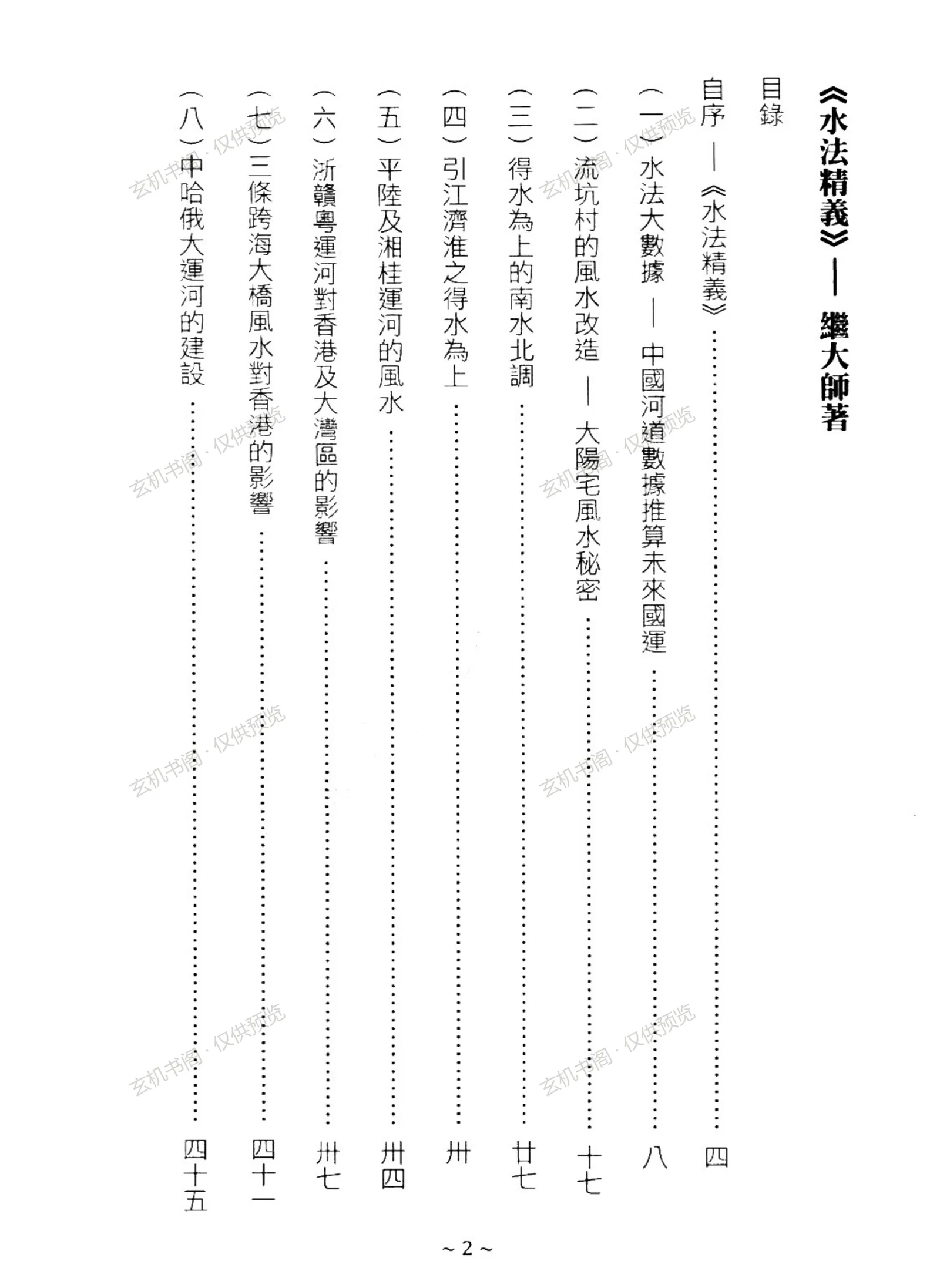
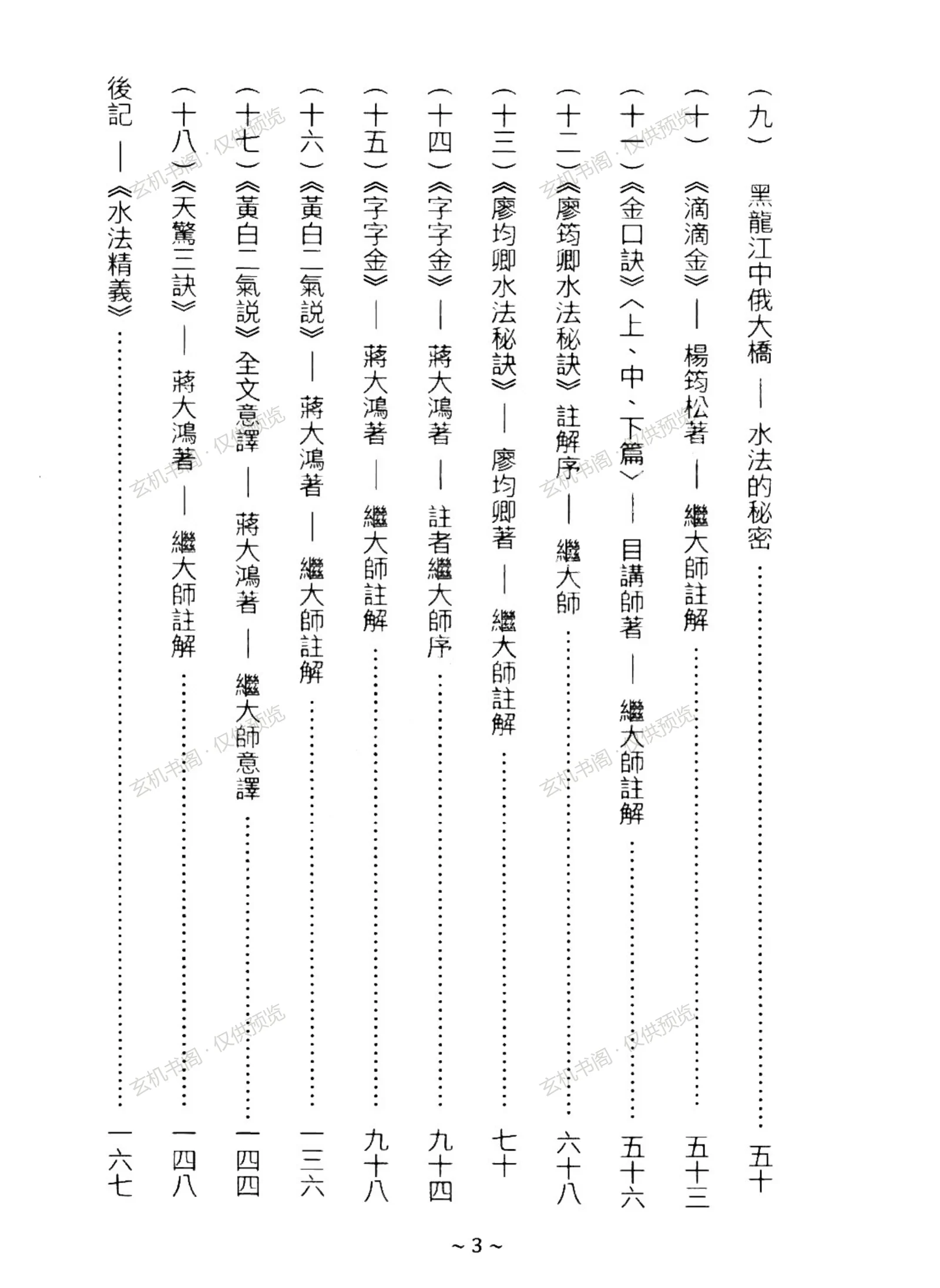
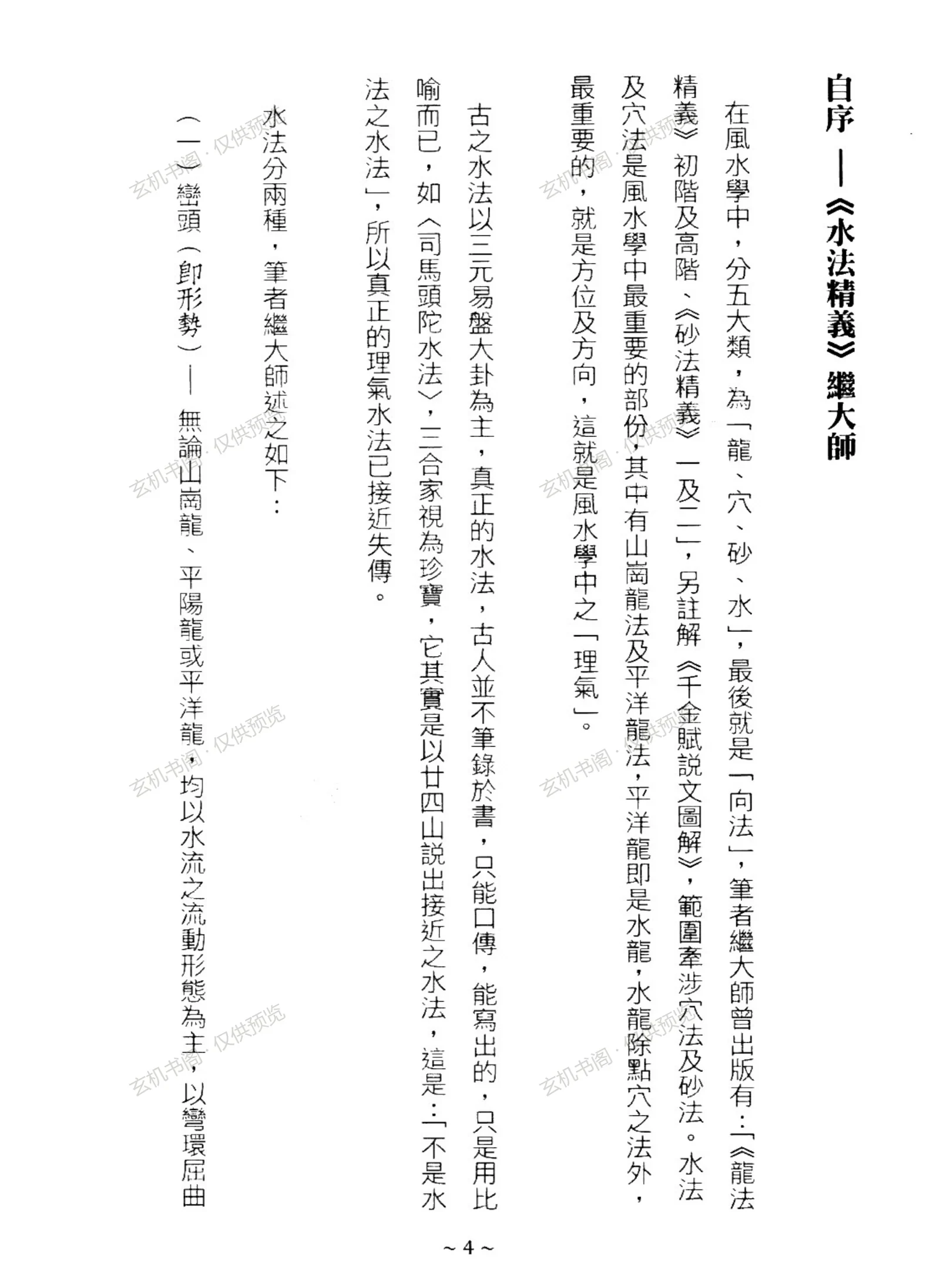
This book by Ji Dashi is a specialized study of feng shui water methods. In the preface, the author notes that feng shui comprises five categories—dragons, cavities, sand, water, and facing—and that water methods are a crucial part. He divides water methods into two types: landform (xingtou), which focuses on the flow patterns of water and favors winding, embracing, and restrained forms regardless of mountain or flatland dragons; and directional principle (liqi), which centers on the Three-Element (Sanyuan) compass and great hexagrams and also touches on Sanhe and sixty-four hexagram schools. The table of contents shows a self-preface, discussions of water-method data, the Fengshui renovation of Liukeng Village, the South-North Water Diversion, the Yangtze-Huai River Diversion, the Pinglu, Xiang-Gui, and Zhe-Gan-Guangdong canals, cross-sea bridges, the China-Kazakhstan-Russia Grand Canal, and the China-Russia bridge over the Heilongjiang River, along with annotations on classical works such as Dīdī Jīn, Jīnkǒu Jué, Liào Yúnqīng's Water Method Secret Formula, Zìzì Jīn, Huángbái Èrqì Shuō, and Tiānjīng Sānjué, plus an afterword. The book combines modern hydraulic engineering with traditional water methods and is suitable for readers studying feng shui landform and directional principles.
Contents
Preface: five feng shui categories and two water-method types
Water-method data and Liukeng Village renovation
South-North Water Diversion and obtaining water
Pinglu, Xiang-Gui, and Zhe-Gan-Guangdong canals
Cross-sea bridges and the China-Kazakhstan-Russia canal
Annotations on Dīdī Jīn and Jīnkǒu Jué
Explanations of Zìzì Jīn and Huángbái Èrqì Shuō
Afterword
Key Points
Water methods divided into landform and directional principle
Landform stresses winding, embracing, and restrained water flow
Directional principle centers on Sanyuan great hexagrams, with Sanhe involved
Combines modern hydraulic engineering cases with water methods
Annotates classical water-method texts such as Dīdī Jīn and Jīnkǒu Jué