Reading guide
Content guideOverview
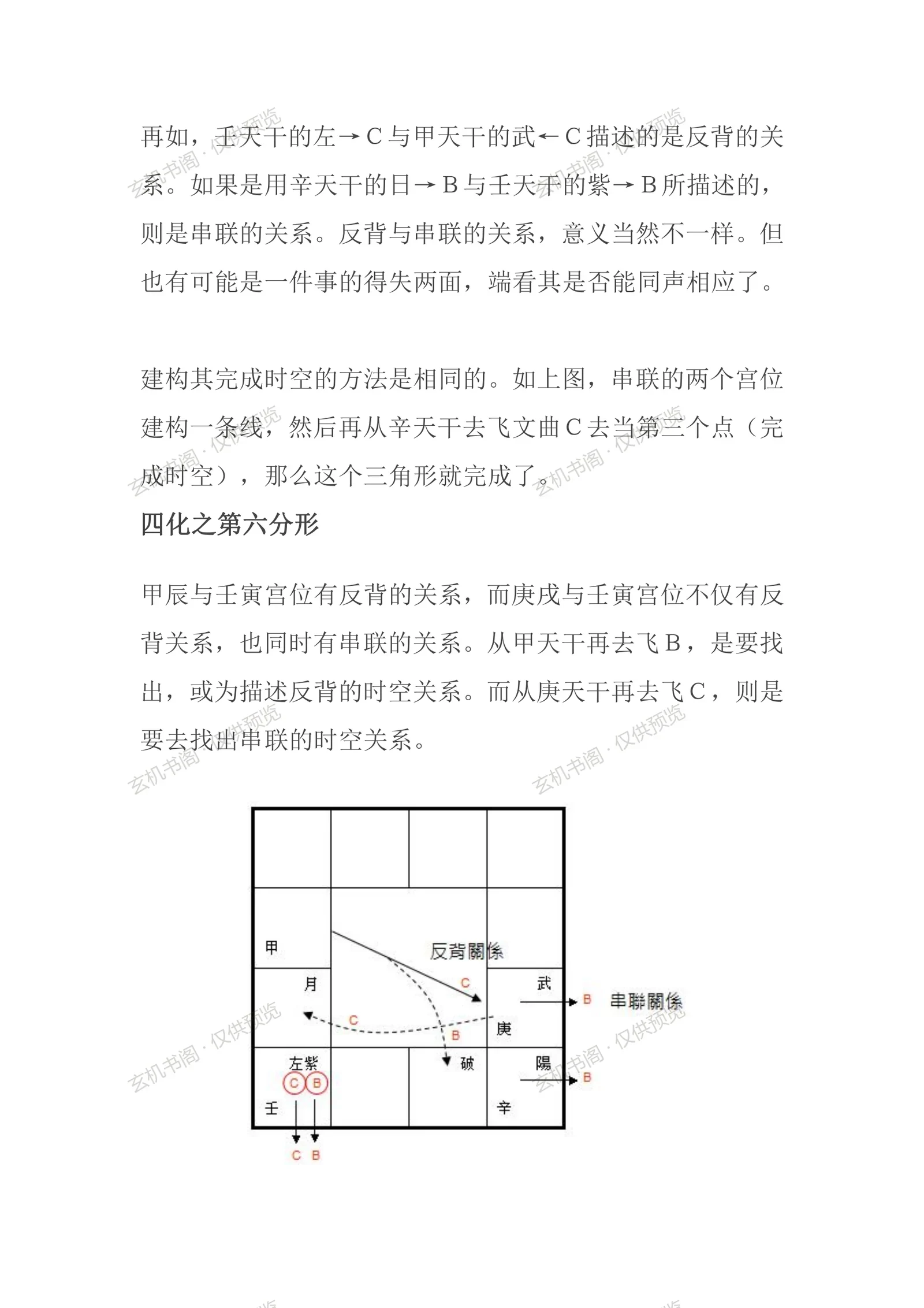
This volume is the core of the fourth book, 'Form and Intention,' in Liu Jinfu's Xin Fa series on Zi Wei Dou Shu. Borrowing the imagery of chaos geometry, the author treats the basic triangle as the smallest observable surface and uses heavenly-stem four transformations to draw lines, planes, and chains between palaces, constructing an observable and predictable space-time structure. The text covers the first through sixth fractals: the first forms a basic triangle from same-group transformations; the second adds another stem's flying transformation when a triangle cannot be formed; the third handles same-group birth-year transformations in one palace that only make a line; the fourth discusses mutations caused by Chang, Qu, Zuo, and You, requiring other stems for description; the fifth links self-transformations B and C in the same matter-palace as 'resonance'; the sixth distinguishes opposition and chaining between certain stem-palace pairs. Examples and teaching notes stress that palaces must concern the same matter before they can be read together.
Contents
Fractal 1: same-group transformations form a basic triangle
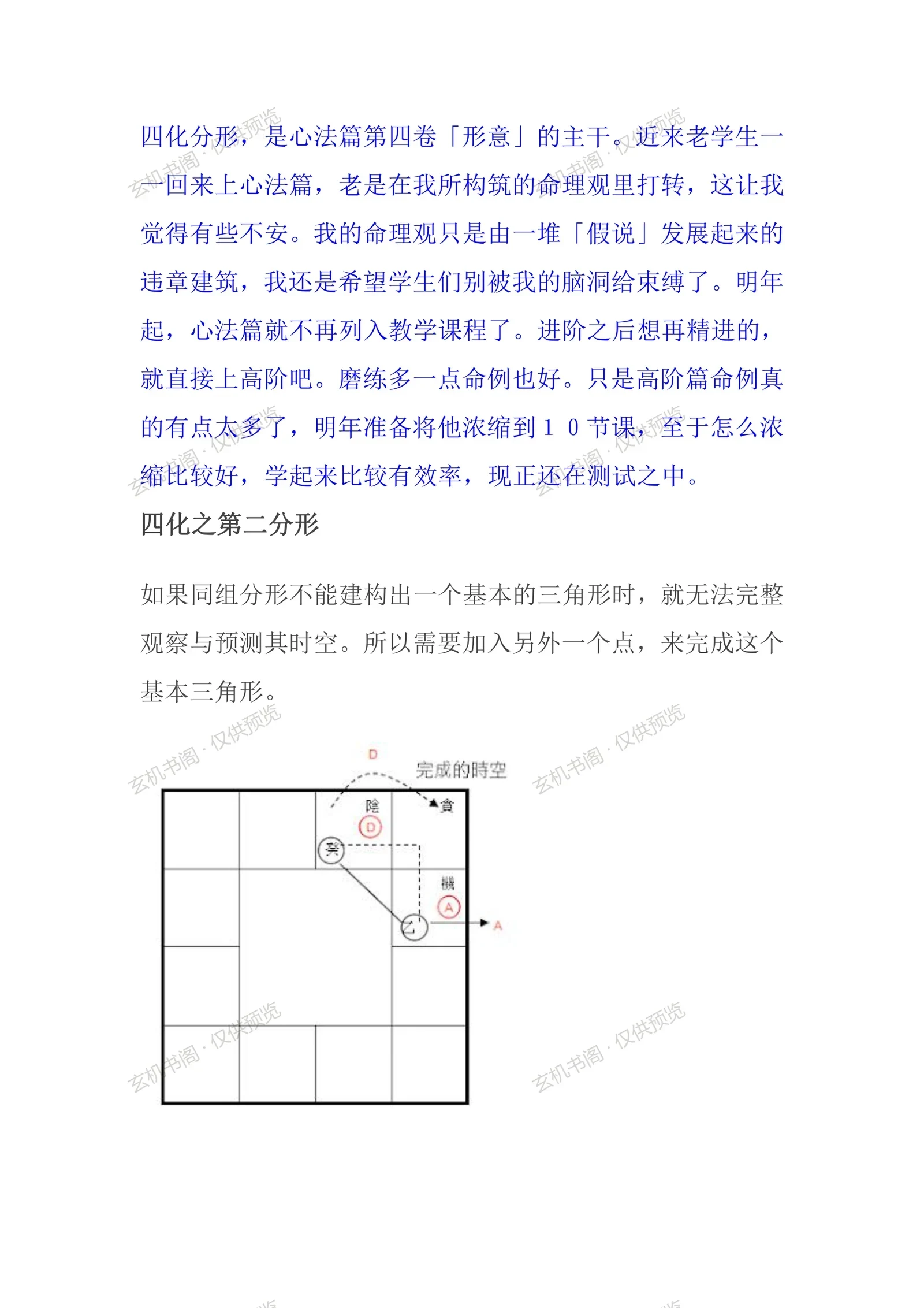
Fractal 2: adding a third point to complete space-time
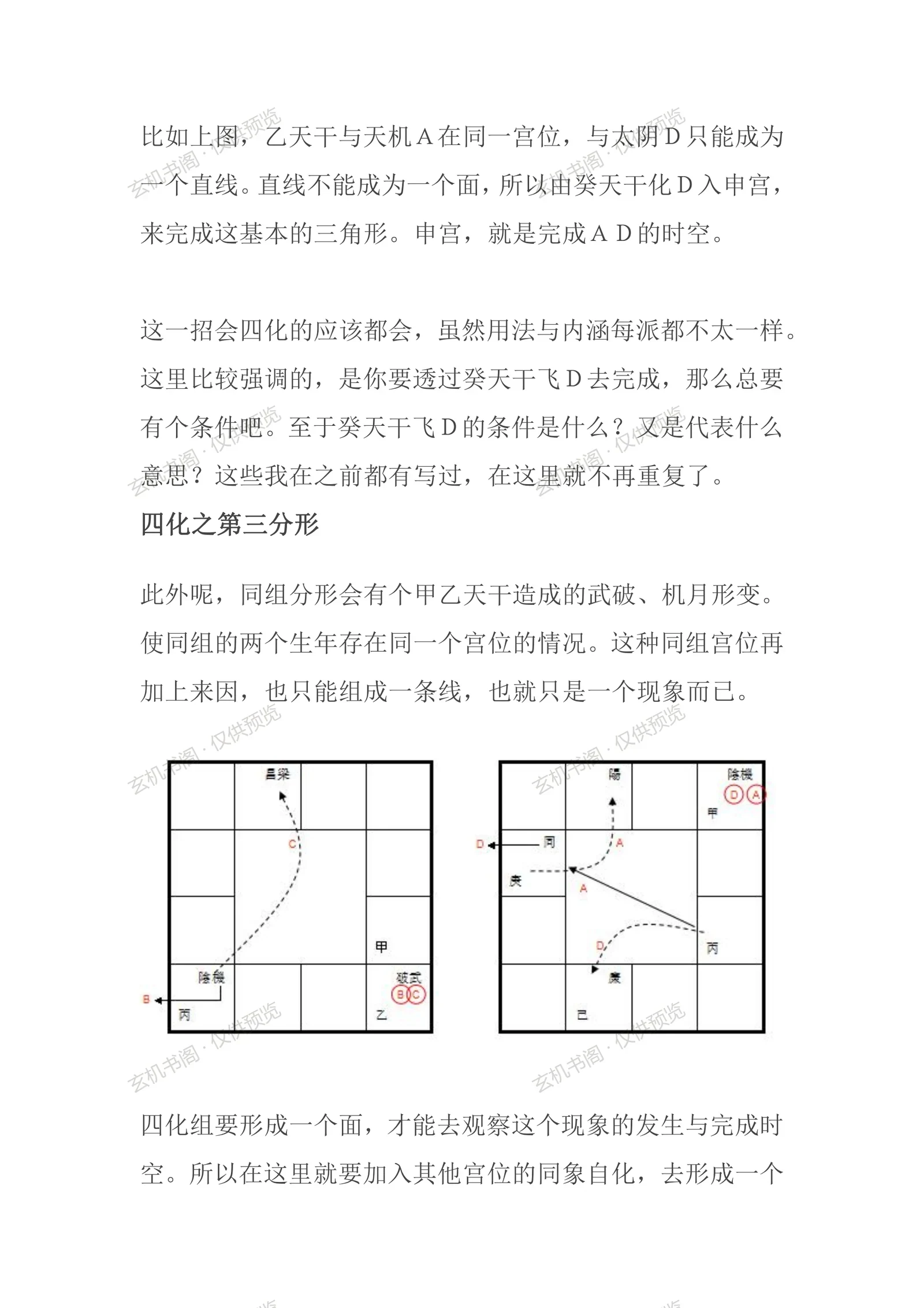
Fractal 3: same-group same-palace makes only a line
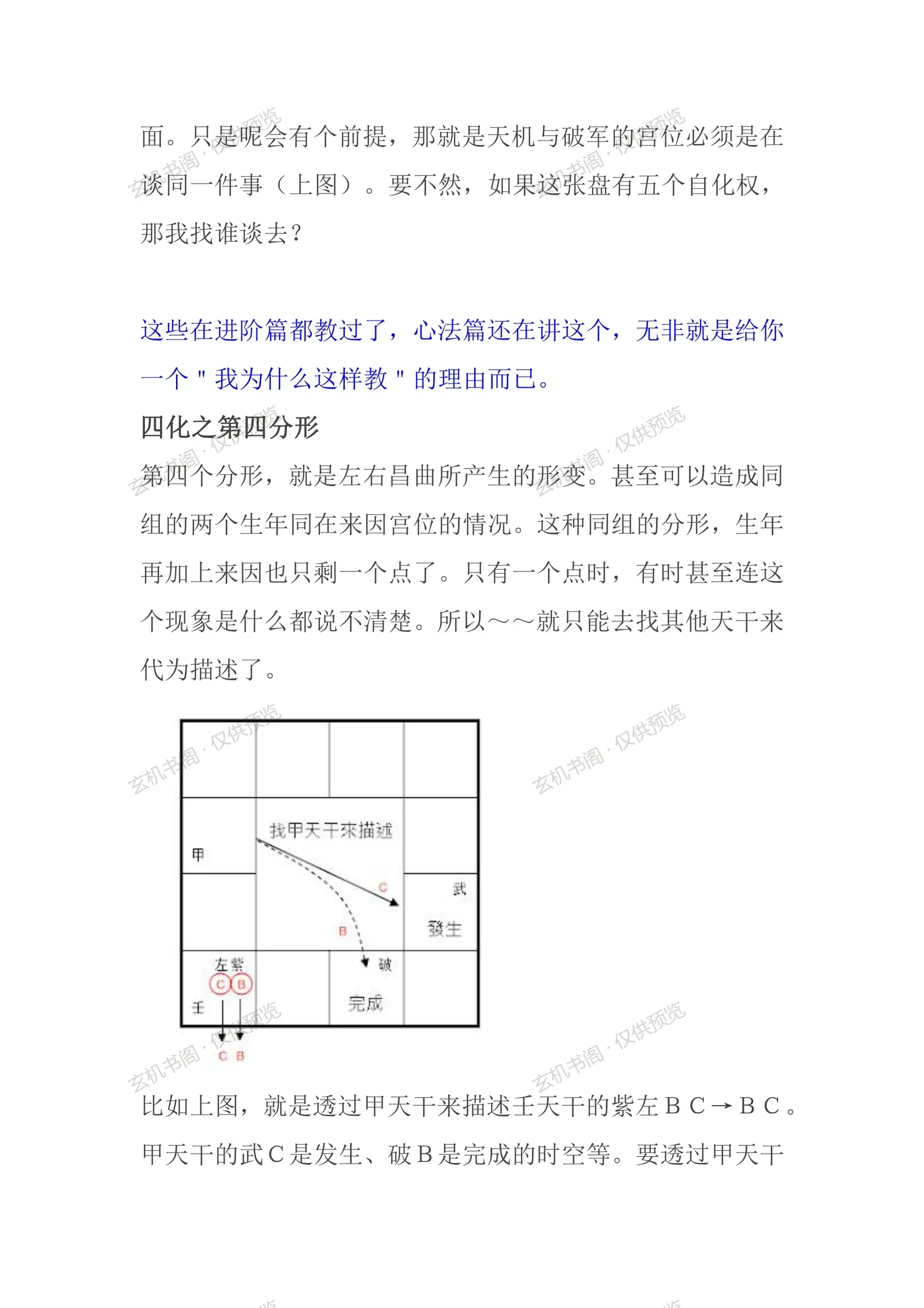
Fractal 4: mutations from Chang, Qu, Zuo, You
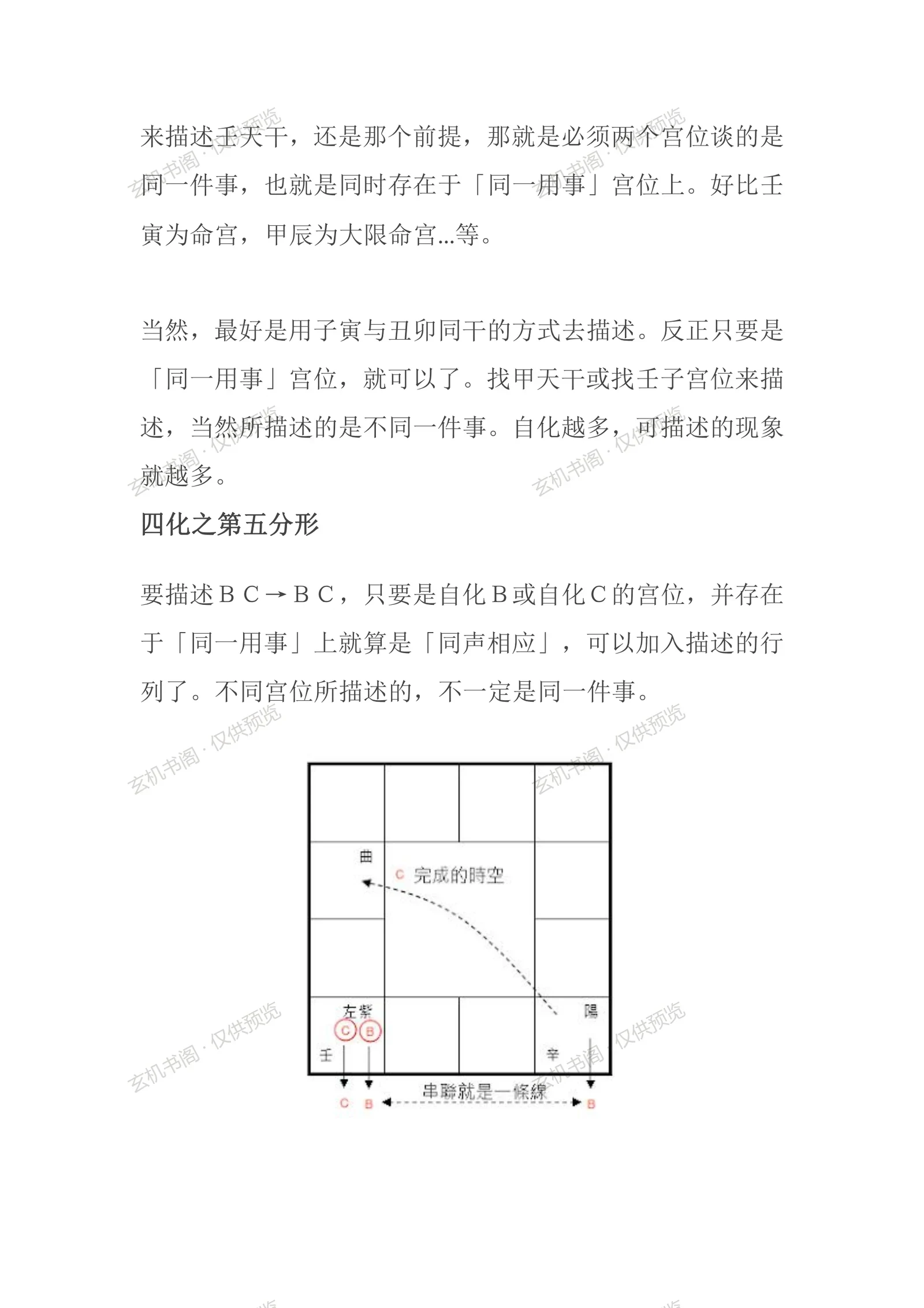
Fractal 5: self-transformations chain by resonance
Fractal 6: opposition and chaining relations
Key Points
The triangle is the smallest observable surface for building space-time paths with transformations
When same-group transformations cannot form a plane, another stem's flying transformation supplies the third point
Same-group birth-year transformations in one palace, or Chang/Qu mutations, make only a line and need another stem
Two palaces can be read together only when they concern the same matter
Self-transformations B and C in the same matter-palace can resonate and join a descriptive line
Opposition and chaining are different relations and may be two sides of one event