Reading guide
Content guideOverview
This book presents a Heluo approach to yang-dwelling (residential) feng shui. It links yin-yang, family hierarchy, and house layout: the main hall, side rooms, and auxiliary rooms are assigned yin or yang qualities and used to infer the rank, health, and fortune of household members. The text first defines yin-yang across orientation, human relations, and dwelling types; then explains how the left and right sides of the main hall correspond to odd or even birth order depending on whether parents are alive. It sets out three layout patterns—orthodox, reversed, and transformed—with rules such as the main hall being larger than side rooms and the left side larger than the right. Later sections cover person-house relations, five-phase symptoms tied to organs and illnesses, and bagua orientation judgments for theft, disease, and physical complaints. The material is organized in short entries and examples, practical for checking one's own home but reliant on oral formulas and field measurement.
Contents
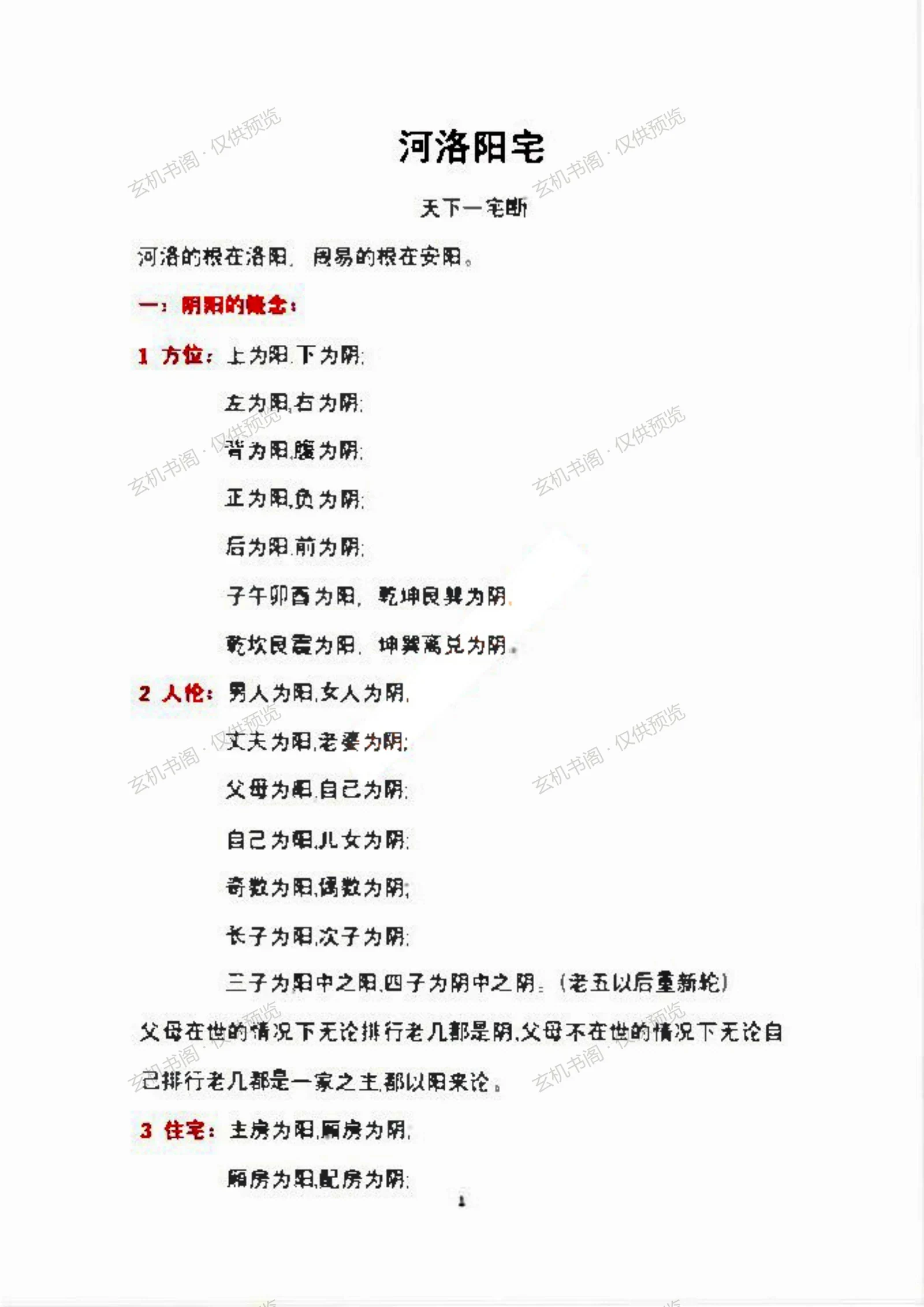
Yin-yang concepts: orientation, family, dwelling
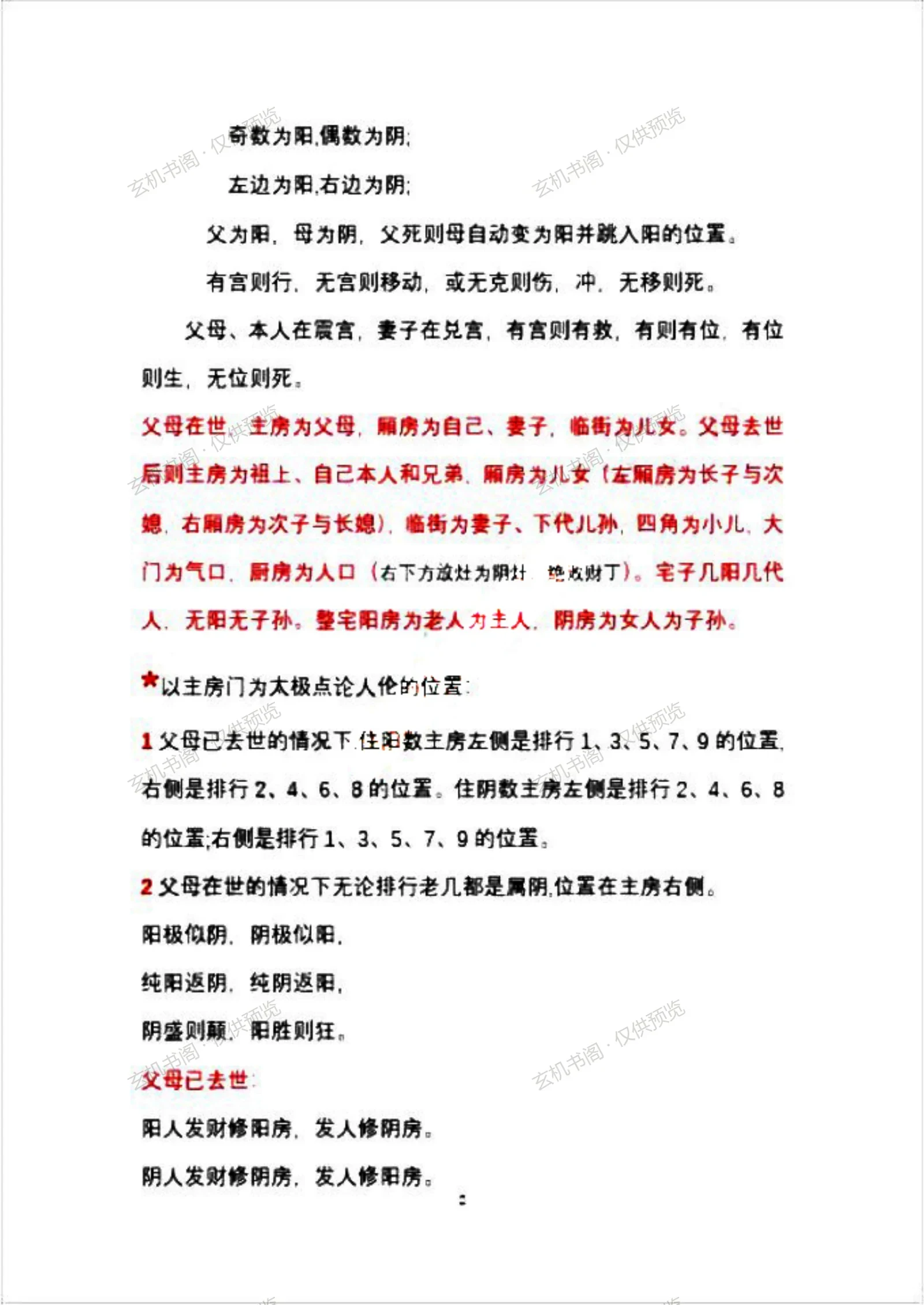
Main hall sides and birth order, parents alive or not
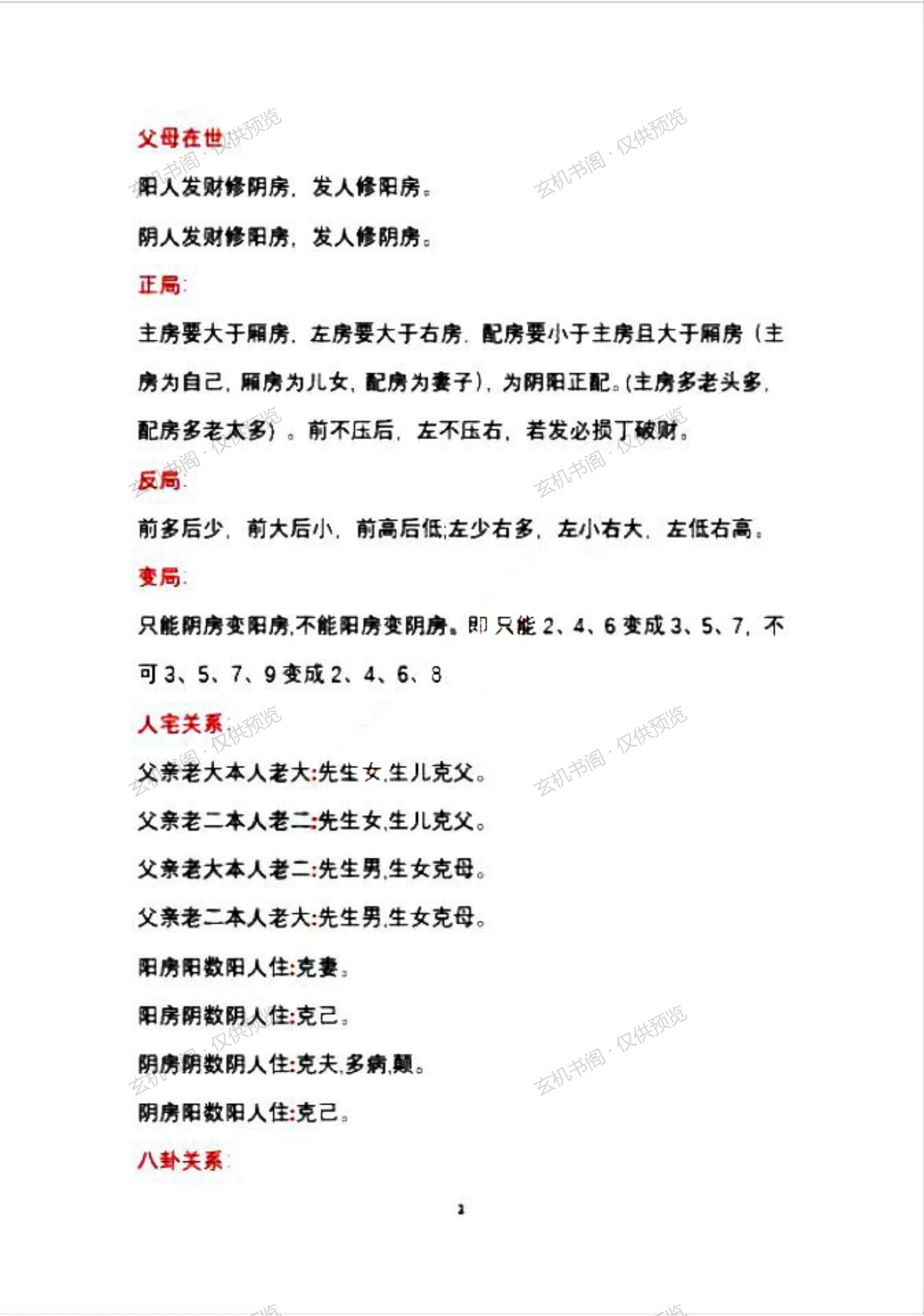
Orthodox, reversed, and transformed layout patterns
Person-house relations and clashes
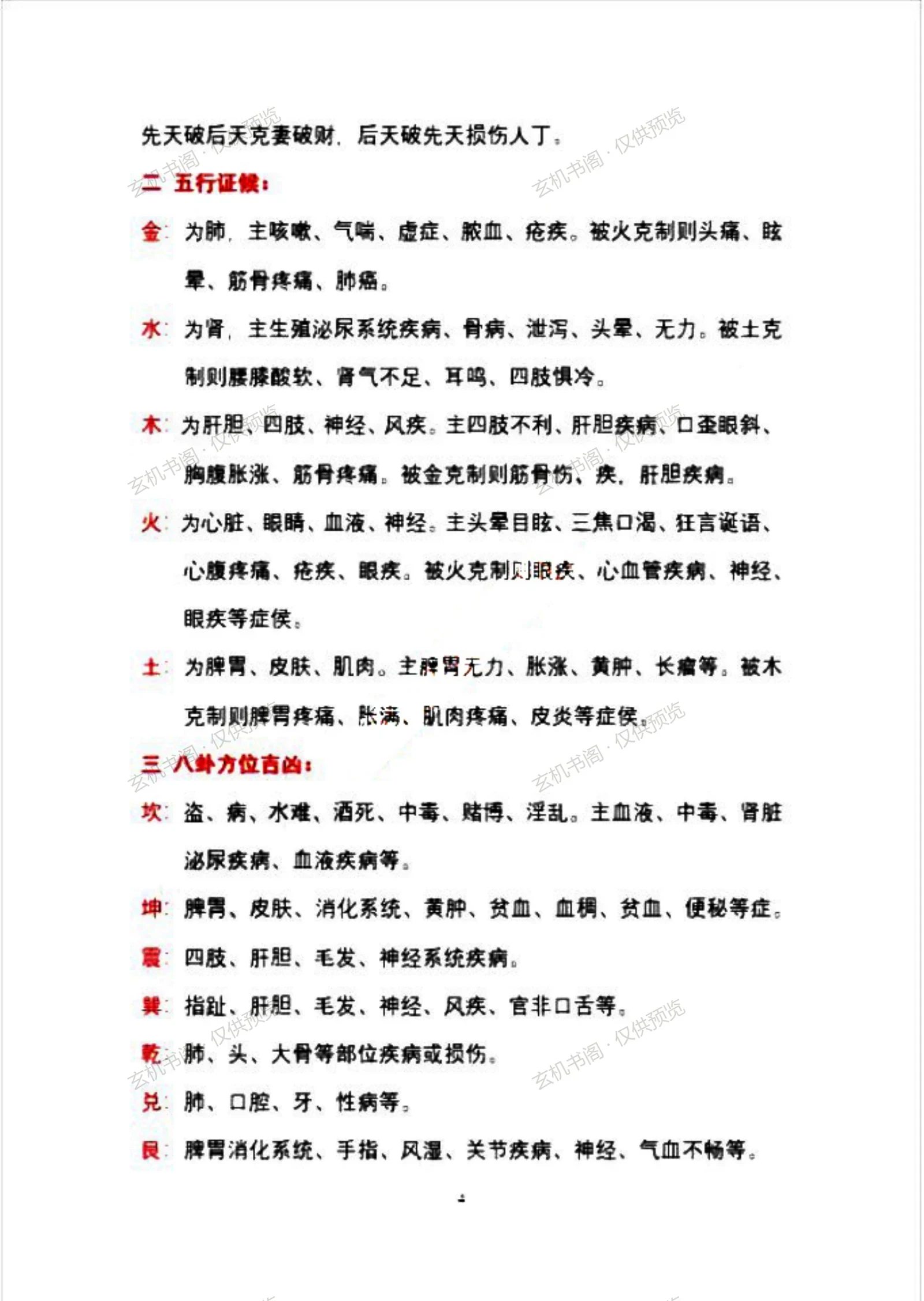
Five-phase symptoms and organ correspondences
Bagua orientation judgments for fortune and illness
Key Points
The main hall door is the taiji point for family position
Parents' status changes the yin-yang rank assignment
Orthodox layout: main hall larger, left larger than right
Transformations only go from yin to yang rooms
Five phases and bagua map to specific illnesses