Reading guide
Content guideOverview
This is an internal teaching handout for the intermediate class of the Longmen Feijia ("Dragon Gate Flying Armor") Heavenly Star Feng Shui training. The cover reads "Heavenly Star Feng Shui" with the subtitle "Longmen Feijia Intermediate Class Handout," and the compiler is Zhang Xu. Page 2 introduces the compiler, noting his study of the Liqi schools—Xuankong, Sanhe, Tianxing, Bazi, Guolu Yinyang, and Yizhai Duan—and his reading of classic landform texts such as the Hanlong Jing, Yilong Jing, Shuilong Jing, Xuexin Fu, Dili Wujue, Rudi Yan, Cuiguan Pian, Zang Jing, Dili Sitongzi, and Shanyang Zhimi. He stresses field practice over book study. From page 3 the main text, titled "Essential Knowledge in Dragon Methods," treats eight techniques one by one: Shunzhang (following), Nizhang (reversing), Suozhang (contracting), Zhuiluo (dropping), Kaizhang (opening), Lizhang (departing), Mozhang (submerging), and Chuanzhang (threading). Each section states its meaning and then lists criteria for judging the incoming vein—slow or urgent, soft or hard, high or low, broken or baleful—along with the four enclosing forms, water size versus site size, and yin-yang pairing, accompanied by diagrams marking the site, coffin placement, and rear mountain. The content is mainly landform-based site selection, with Liqi background from Heavenly Star and Guolu Yinyang, suited to readers who already have some feng shui foundation.
Contents
Introduction of compiler Zhang Xu and his training
Overview of essential dragon-method knowledge
Section 1 Shunzhang: straight vein, direct reception
Section 2 Nizhang: the reversing method
Section 3 Suozhang: contraction and withdrawal
Section 4 The meaning of dropping
Section 5 Kaizhang: the meaning of opening
Sections 6-8 Lizhang, Mozhang, Chuanzhang
Key Points
Organizes vein-to-site relations into eight zhang methods
Shunzhang covers straight veins, slow scattered qi, and water pairing
Nizhang treats urgent hard veins, clashes, and finding smoothness in reversal
Suozhang covers wind exposure on high ground and hidden nest sites
Dropping, opening, departing, submerging and threading each have stated criteria
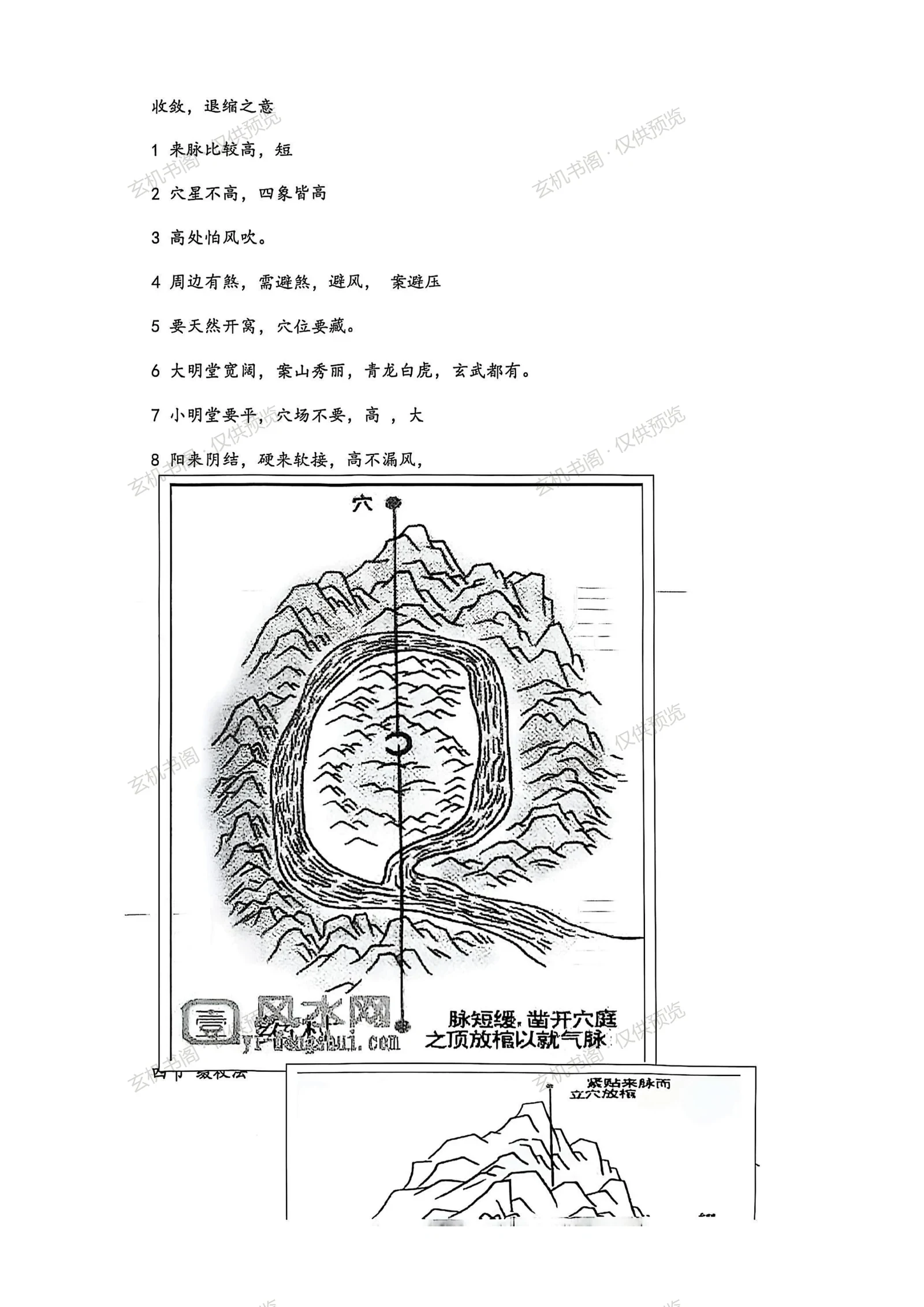
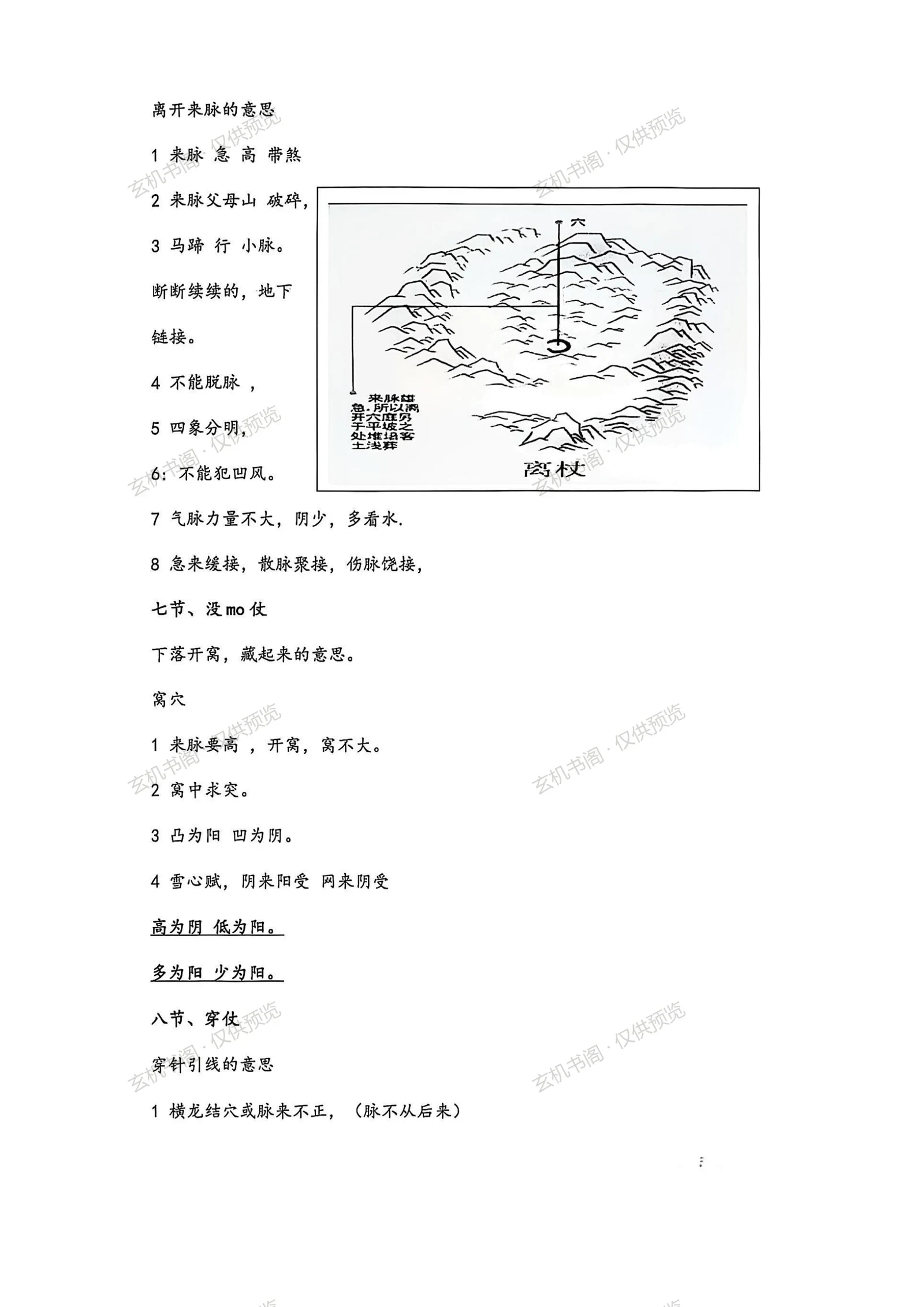
Diagrams mark the site, coffin placement and rear mountain