Reading guide
Content guideOverview
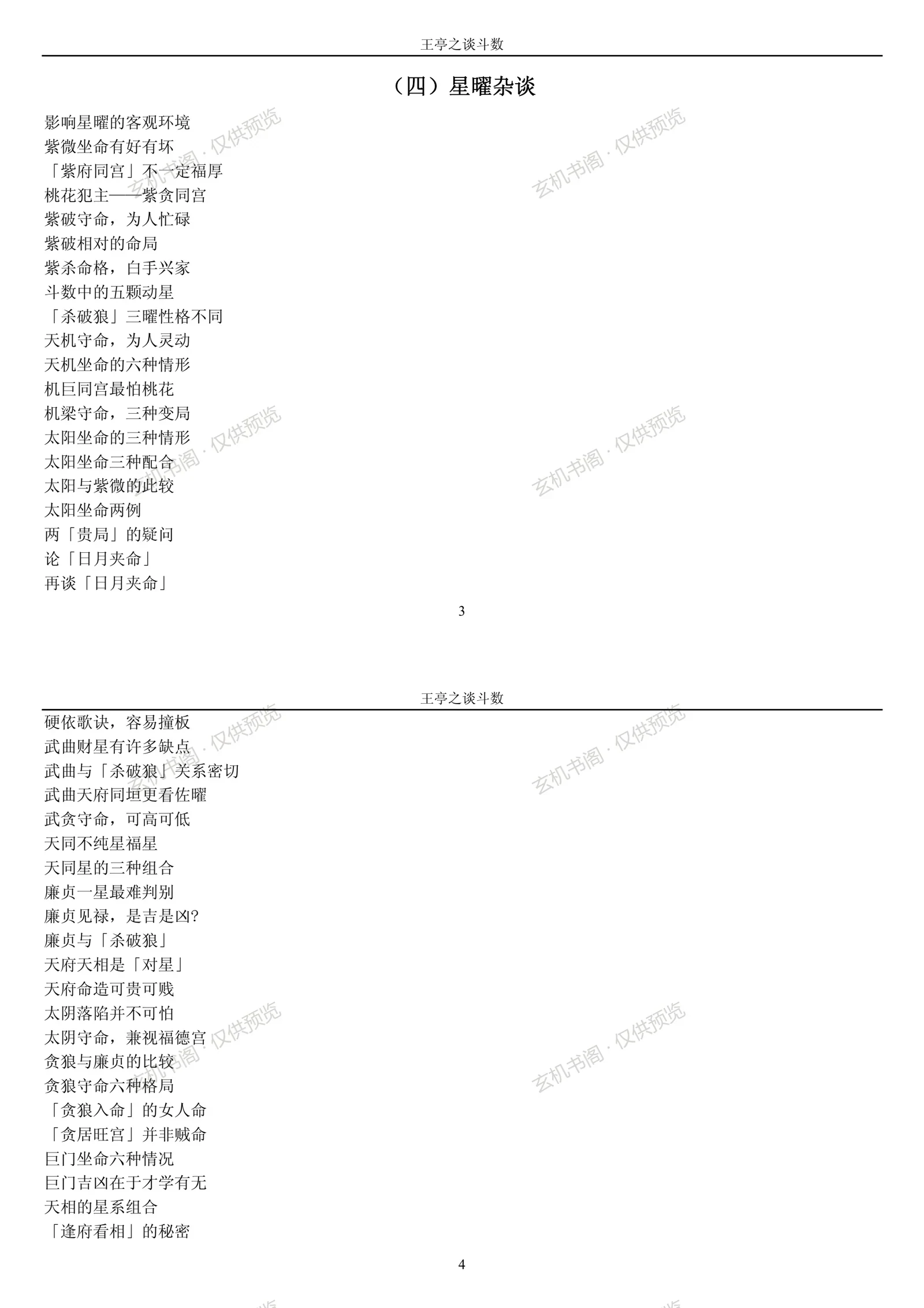
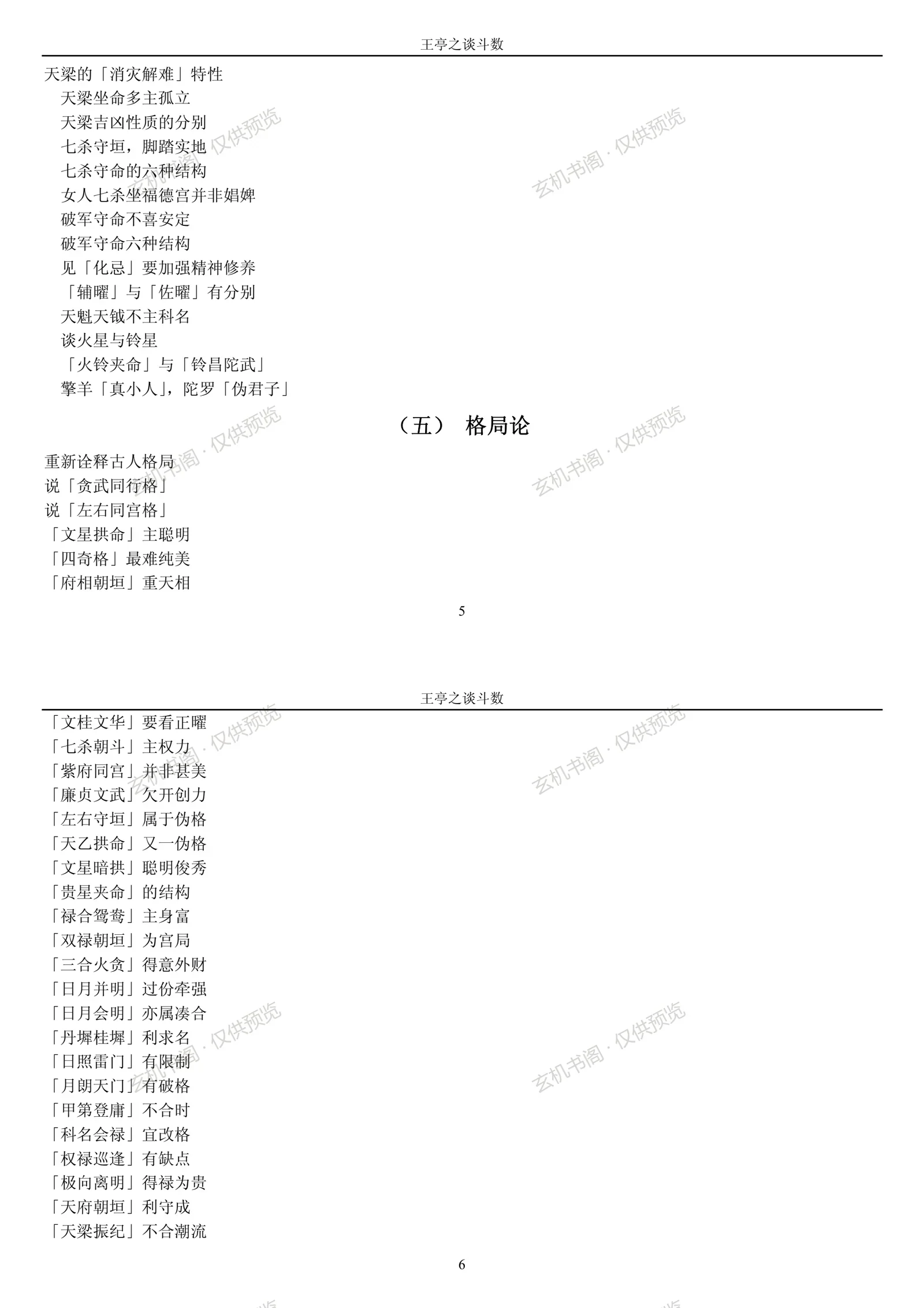
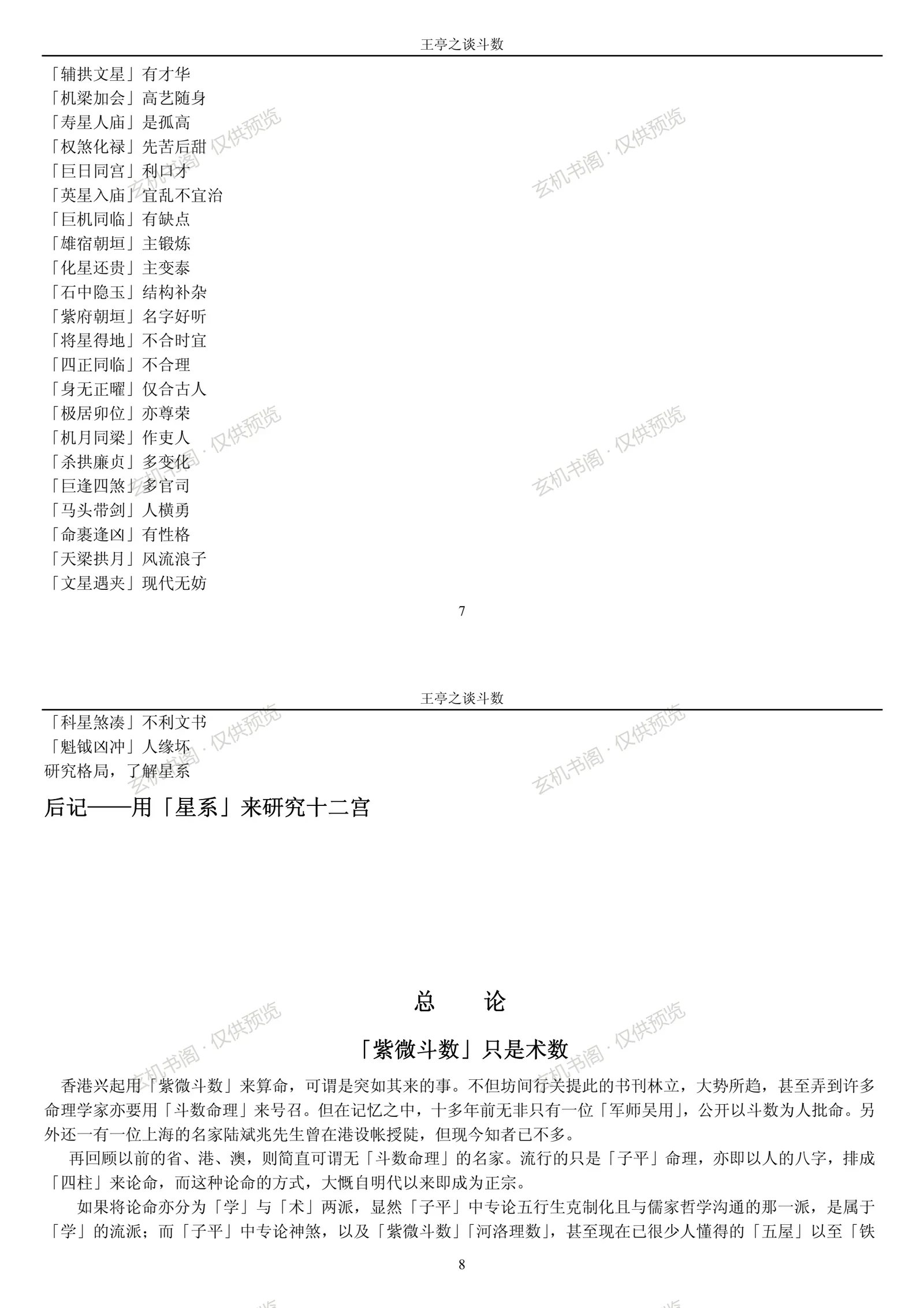
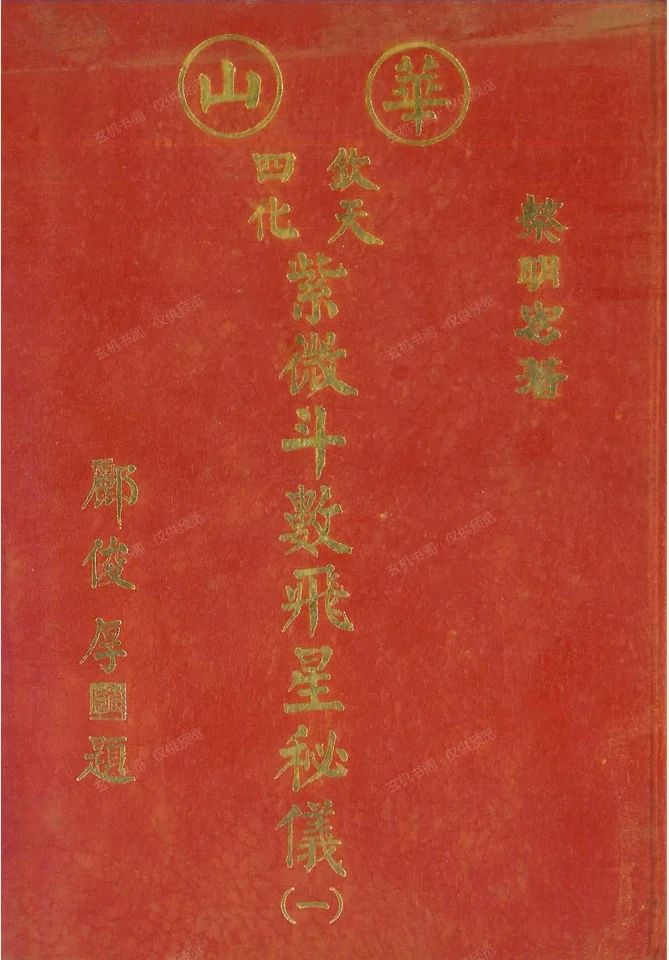
This book is Wang Tingzhi's exposition of Ziwei Doushu. Its table of contents shows sections on general principles, the transition from the Eighteen Flying Stars to Ziwei Doushu, miscellaneous remarks on judgment, miscellaneous remarks on stars, and pattern analysis, followed by a postscript on studying the twelve palaces through star systems. The general principles first clarify that Ziwei Doushu is merely a technique, trace its relation to the Five Stars and the Eighteen Flying Stars, argue that Doushu should develop with the times, and stress the need to learn the method of placing stars and to understand the organization of the whole star system. The star discussions examine the nature and combinations of the fourteen major stars and the auxiliary, assisting, transforming and miscellaneous stars. The pattern section reinterprets classical patterns and warns against mechanically following mnemonic verses. The book emphasizes conceptual clarity and empirical verification, and is suited to readers with some foundation in Doushu.
Contents
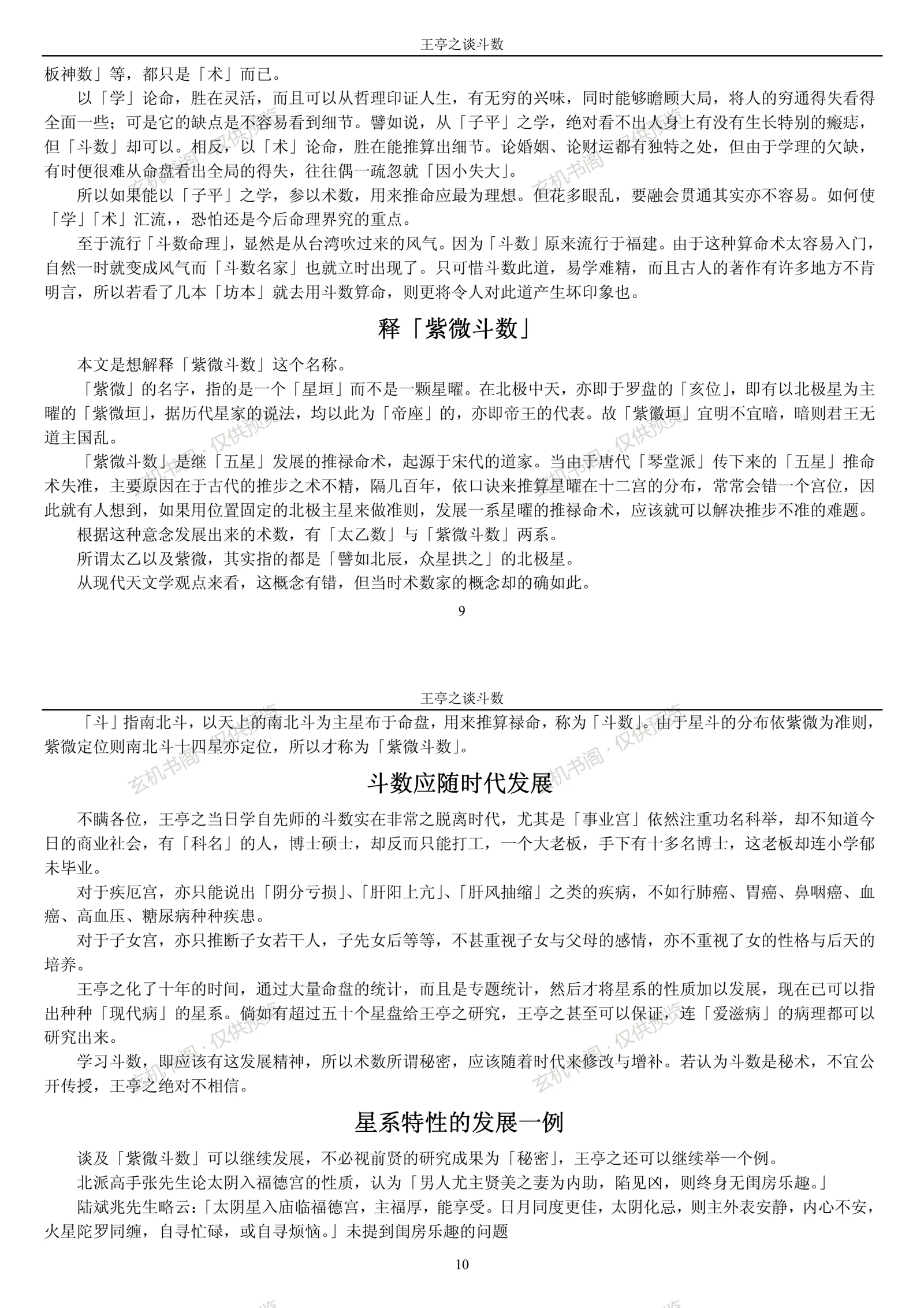
General principles: Doushu as a technique and its development
From Eighteen Flying Stars to Ziwei Doushu
Miscellaneous remarks on judgment and cultural context
Miscellaneous remarks on the fourteen major and other stars
Pattern analysis: reinterpreting classical patterns
Postscript: studying the twelve palaces through star systems
Key Points
Argues that Doushu should evolve with the times.
Stresses learning the star-placing method rather than relying on tables.
Understands stars through whole star systems, not in isolation.
Reinterprets classical patterns and warns against rigid verses.
Distinguishes scholarly learning from technical arts.
Star qualities should be verified through many charts.