Reading guide
Content guideOverview
This is an internal correspondence-course textbook on Wuji Fengshui compiled by Zhao Qinghai, marked by the Tianfo Yijing Research Association as confidential teaching material not to be circulated. In the preface, the author draws on Western geography—such as Ratzel's environmental determinism—to argue for the practical and scientific dimension of fengshui, and explains that the book arose from a critique of the Jinsuo Yuguan system, which he considers too general and theoretically unsound. The book sets out a complete Wuji Fengshui framework: the Xinglü chapter summarizes landform and sand-water theory, while treating the Jinsuo Yuguan theories in greater depth; the Mingli chapter links fengshui with fate calculation, using a person's destiny to infer the auspiciousness of their living environment. The author emphasizes simplicity, practical use and accurate prognostication, and the text is aimed at readers with some fengshui background as well as architects and designers.
Contents
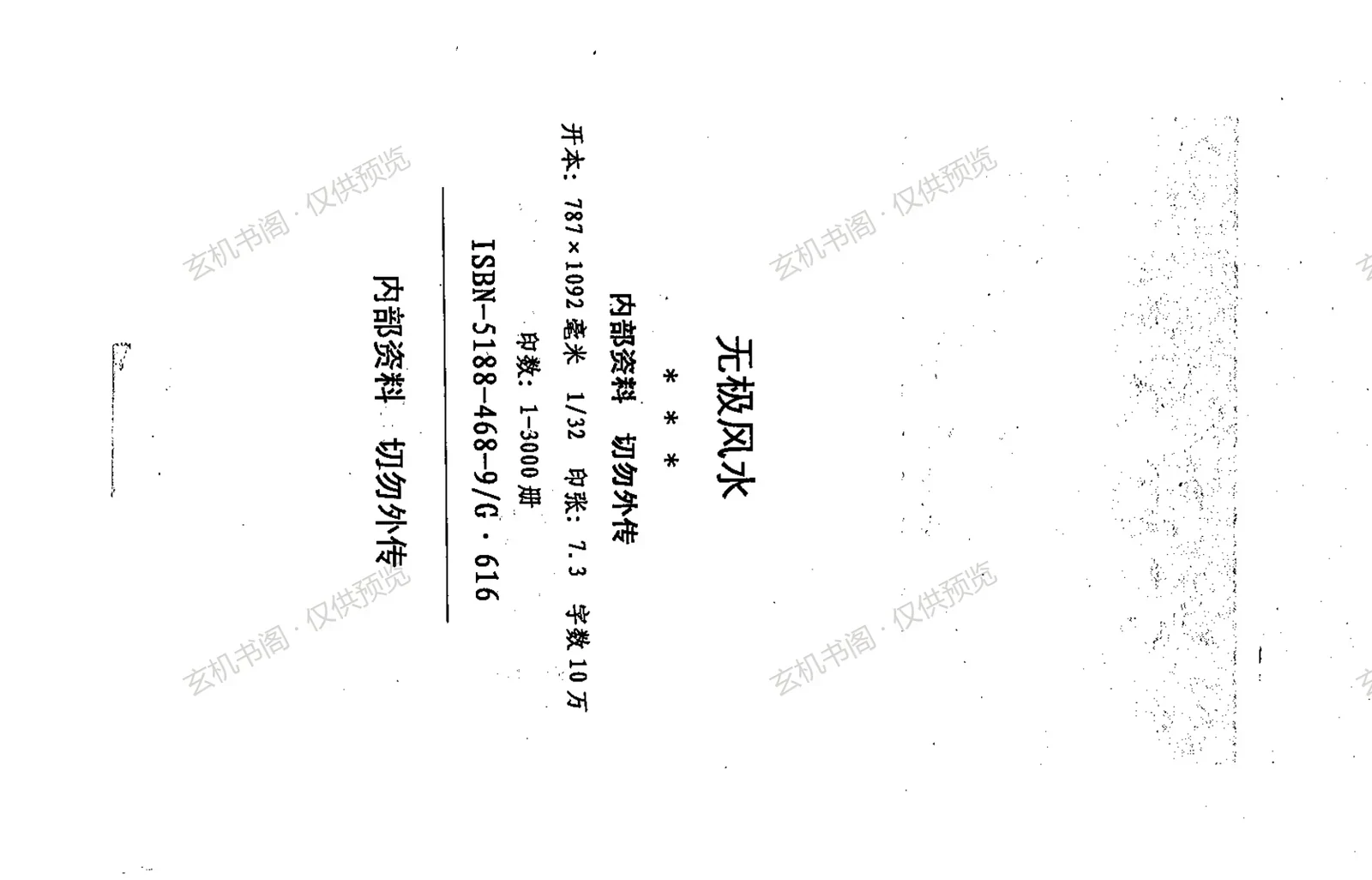
Cover: Wuji Fengshui, compiled by Zhao Qinghai
Copyright page: internal material, format and print details
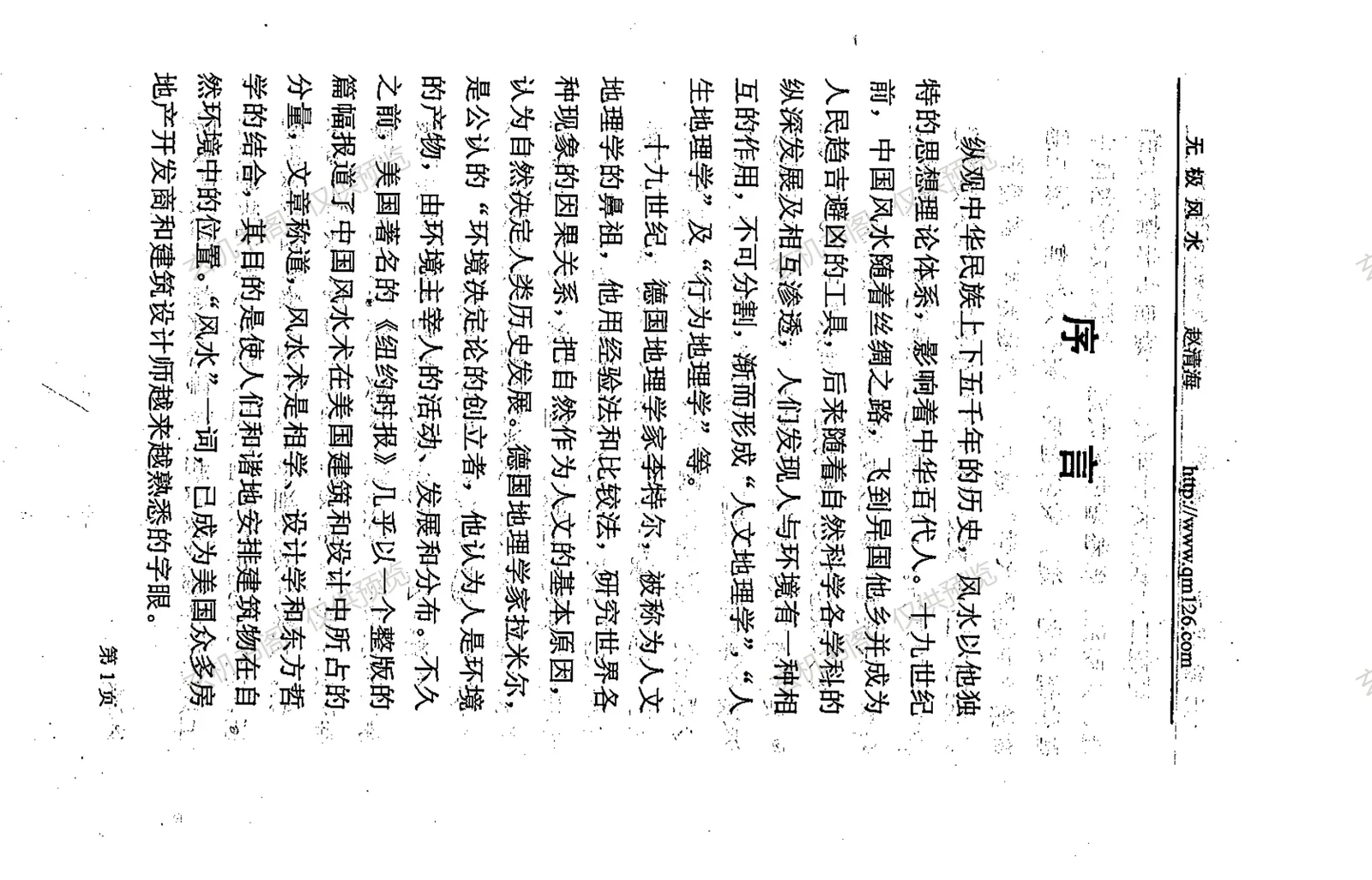
Preface 1: fengshui seen through Western geography
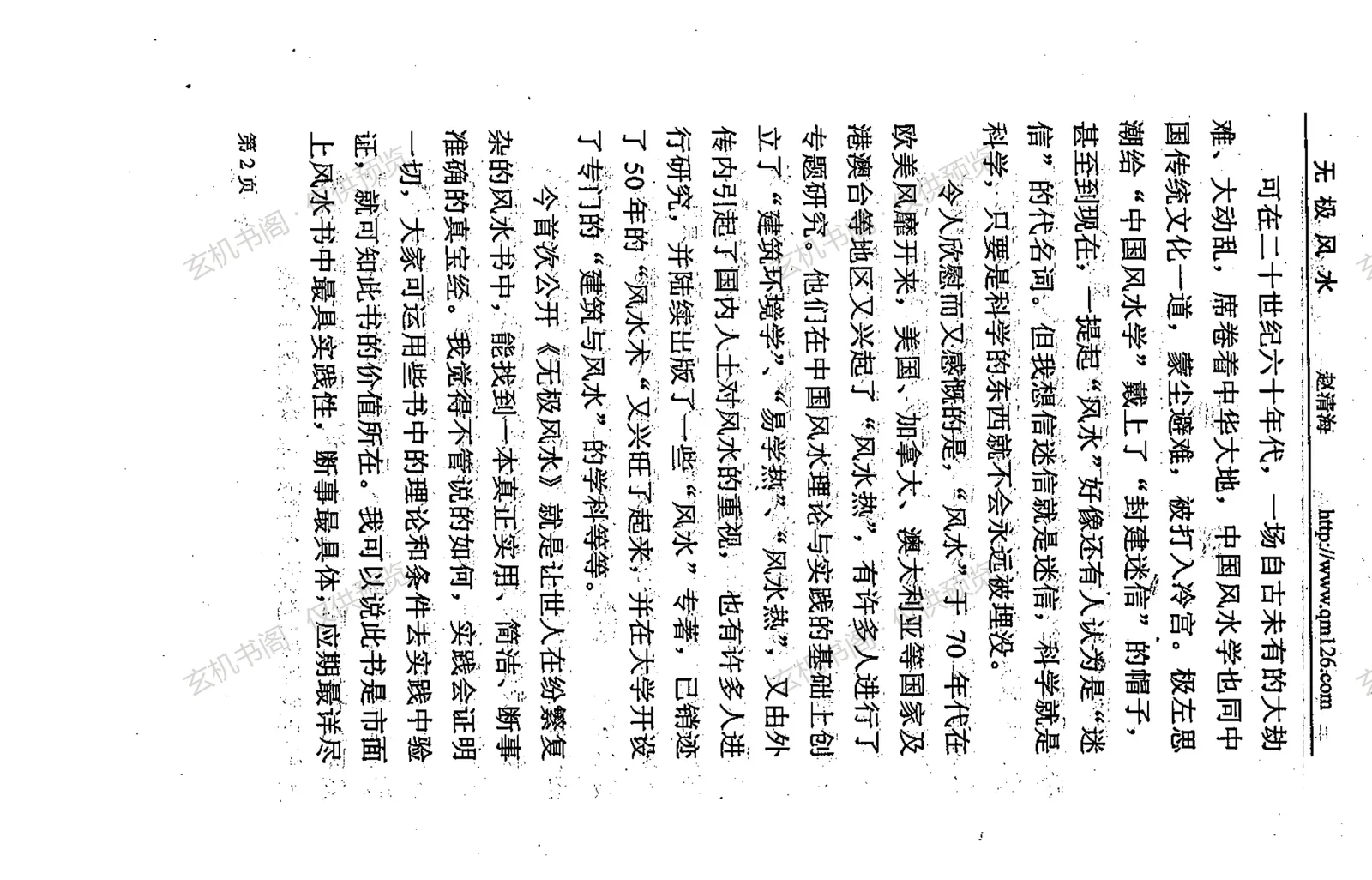
Preface 2: the fengshui boom and the book's origin
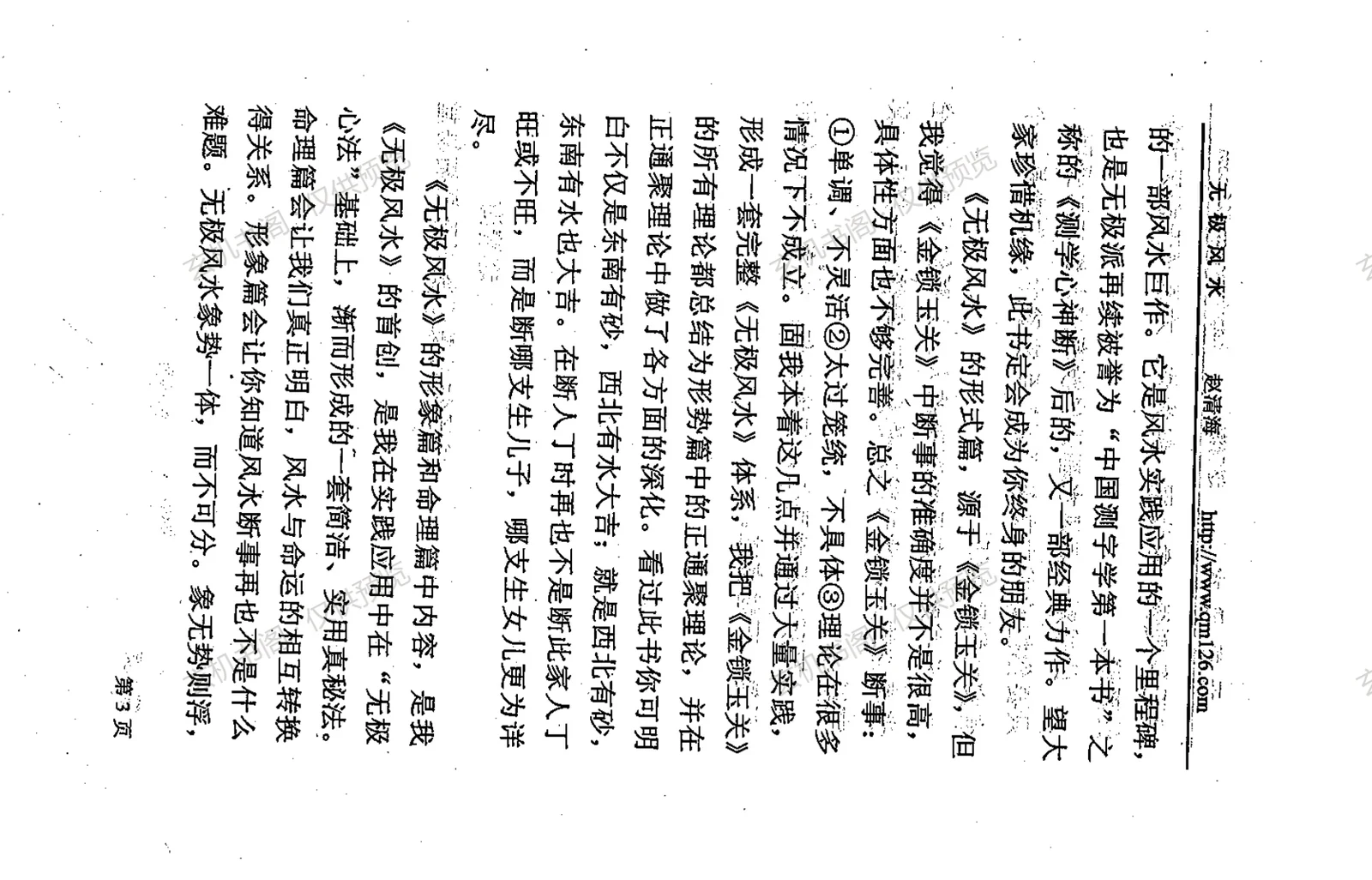
Preface 3: Wuji Fengshui versus Jinsuo Yuguan
Xinglü chapter: form, momentum and sand-water judgments
Mingli chapter: fate calculation and the living environment
Key Points
Form-school approach emphasizing form as substance and momentum as function.
Supplements and revises the Jinsuo Yuguan system, criticizing its vagueness.
Combines fengshui with fate calculation to infer environmental fortune.
Stresses practical verification and accurate prognostication.
An internal teaching text rather than a public publication; edition details need checking.