Reading guide
Content guideOverview
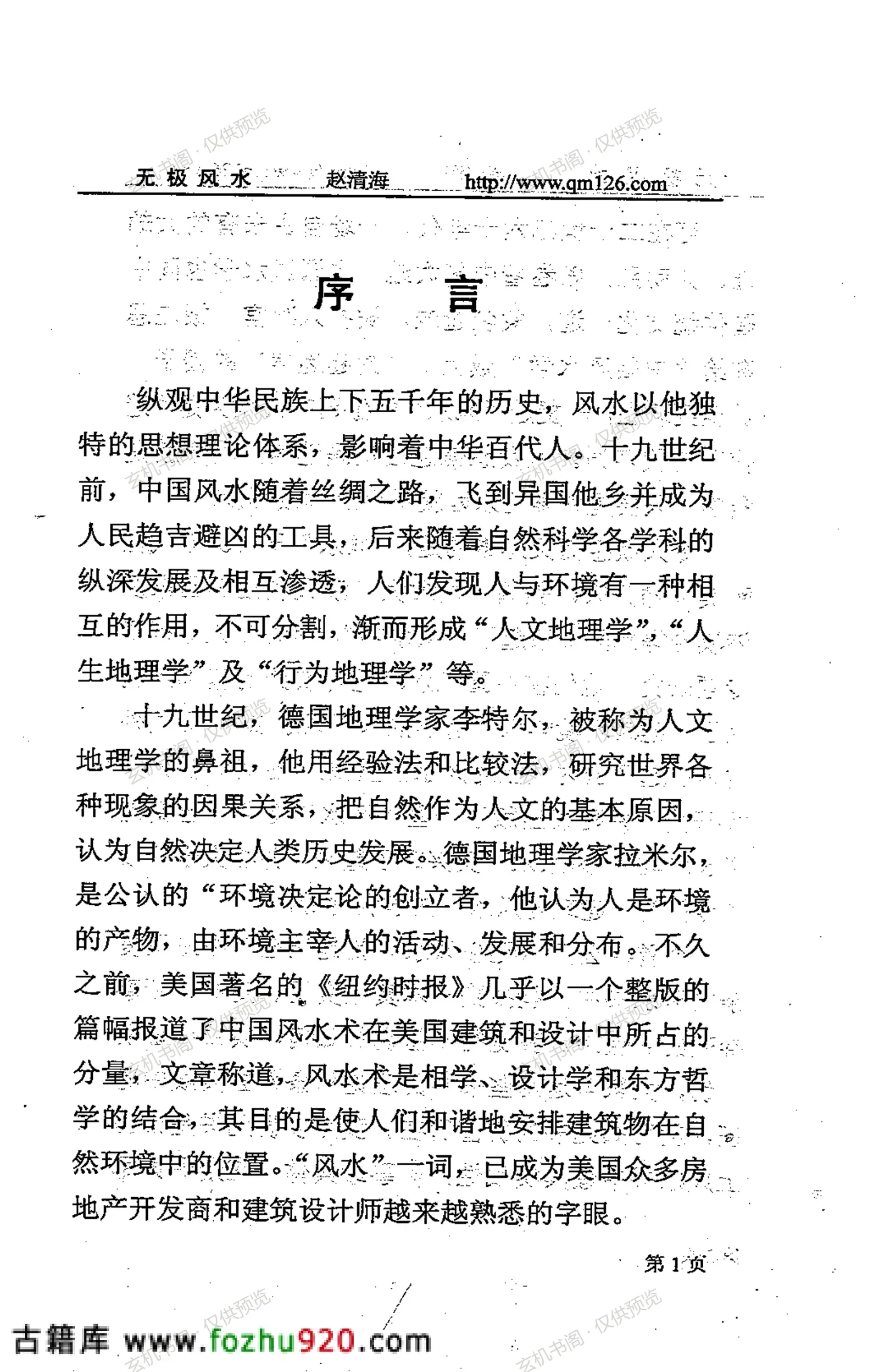
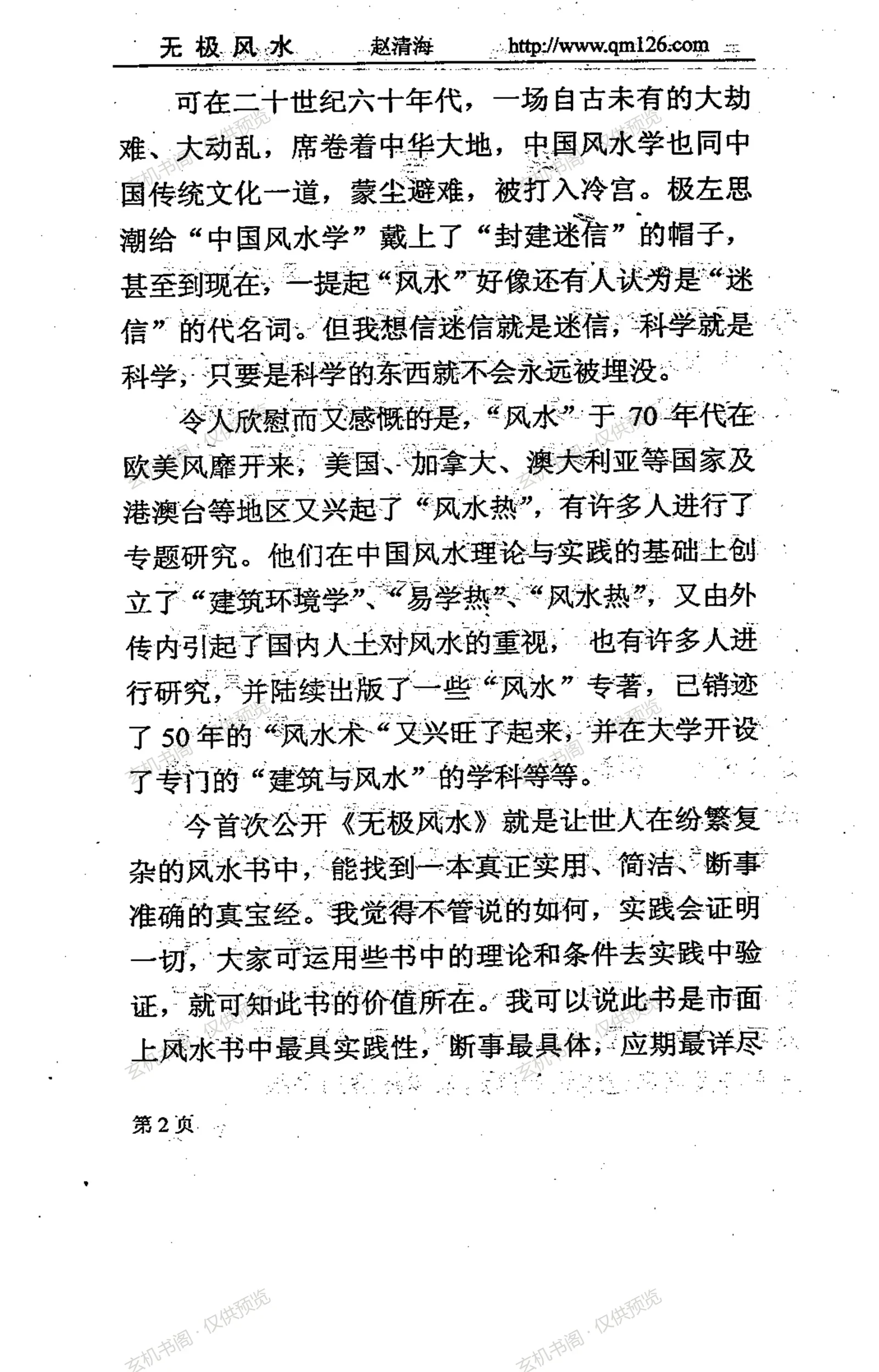
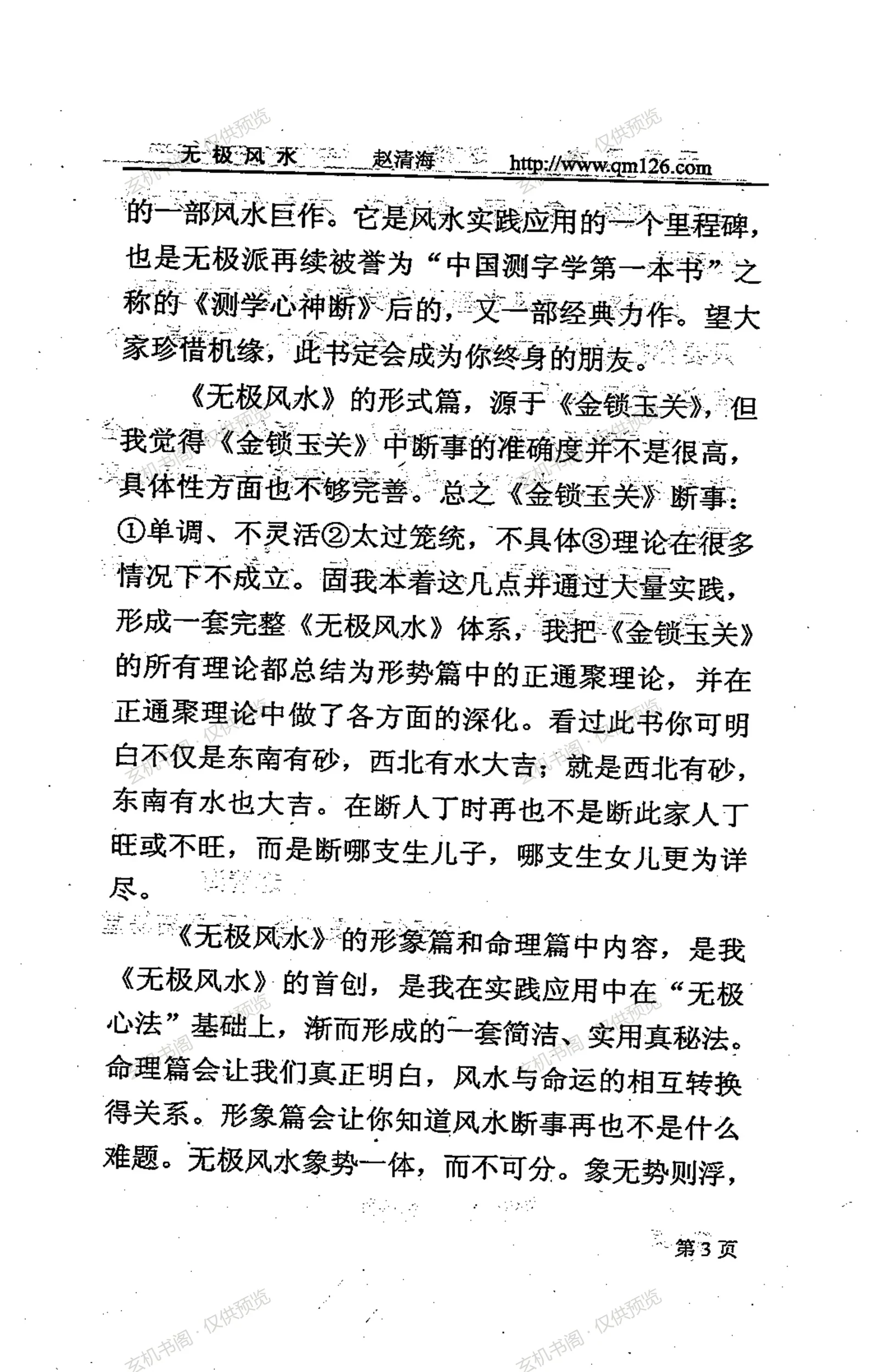
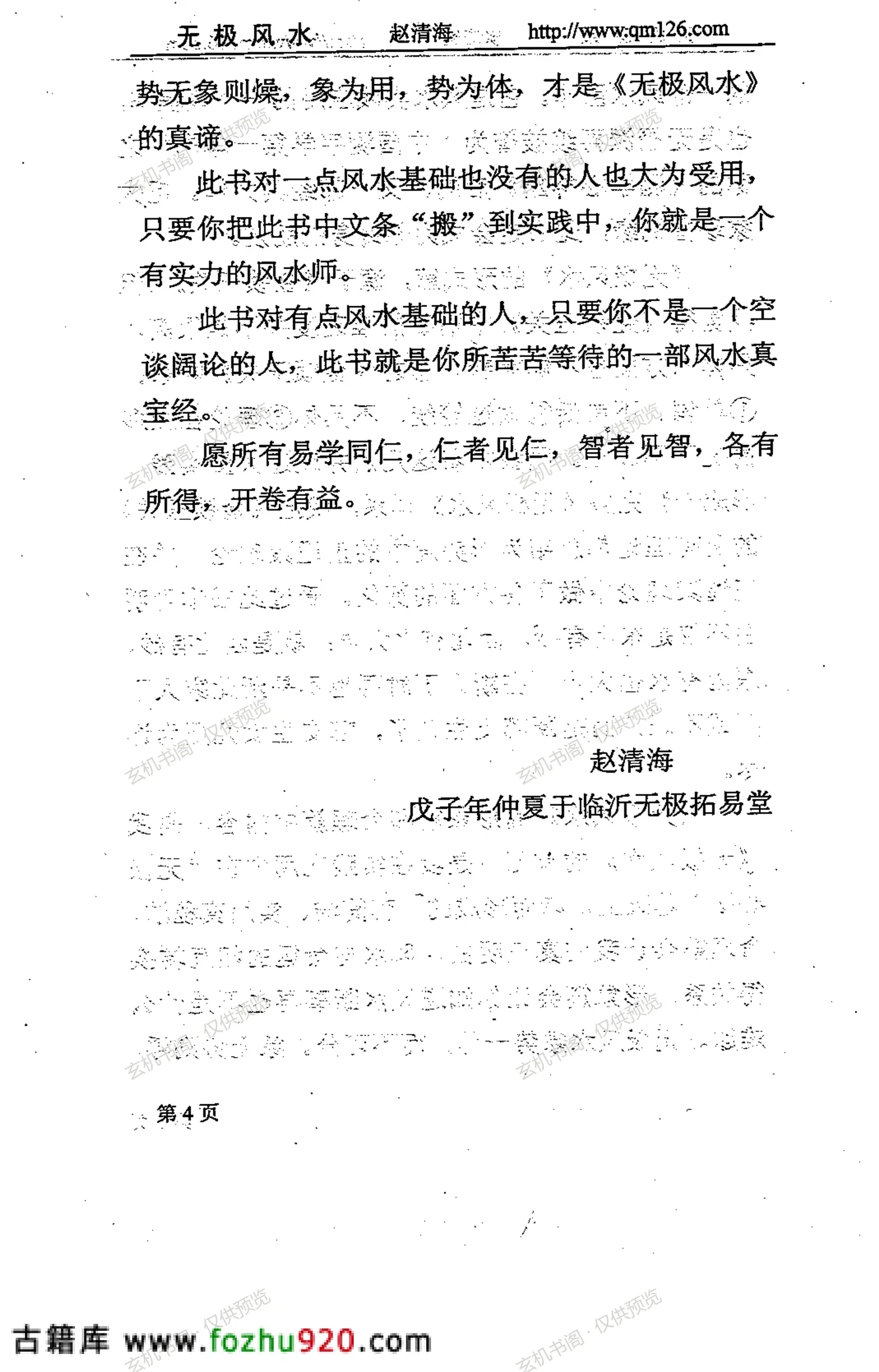
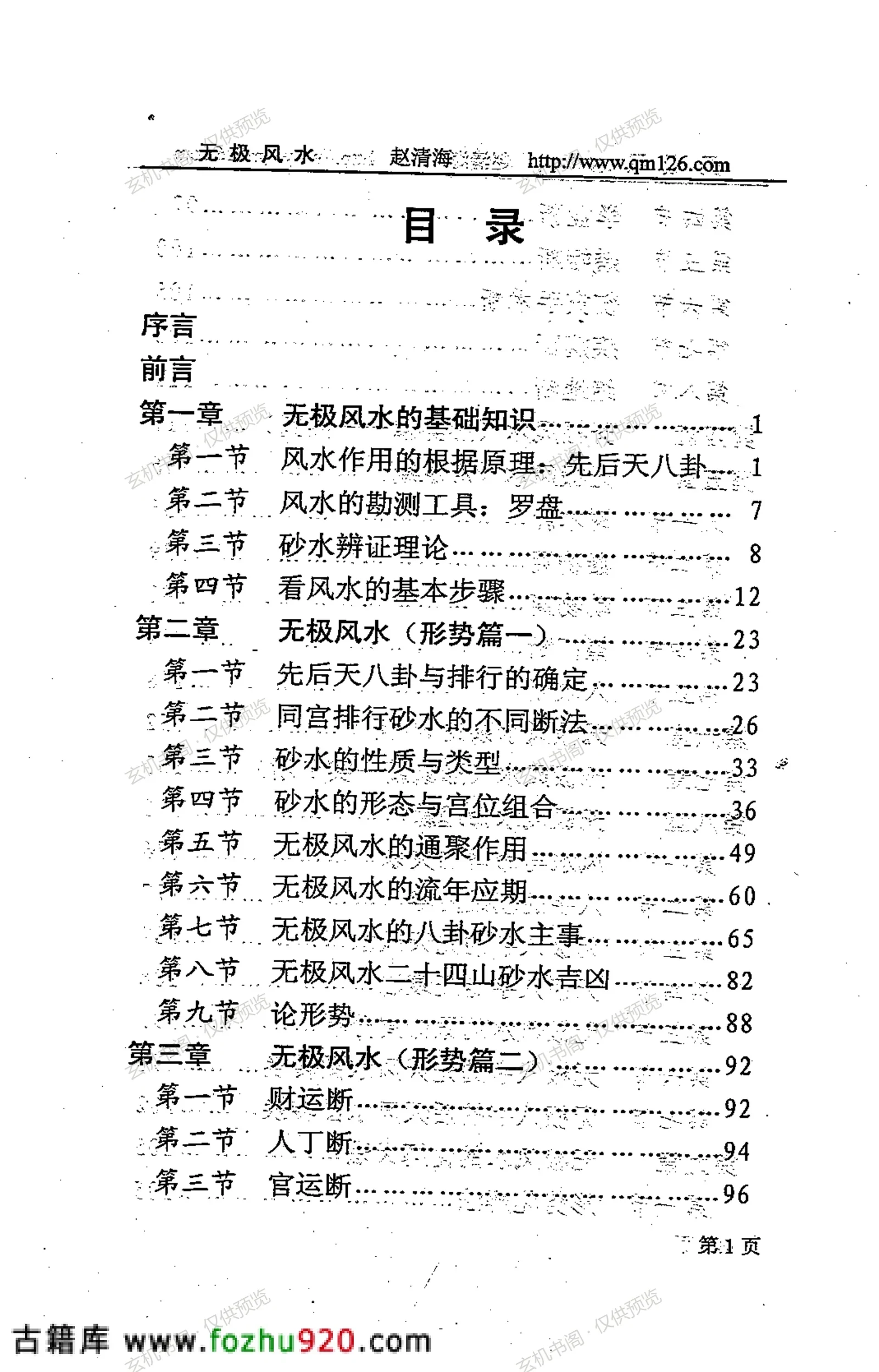
This is a course handout for Zhao Qinghai's Wuji Feng Shui, issued within the Wuji numerical prediction system of the Tianfo Yijing Research Association. The preface frames feng shui through human geography and environmental determinism, and explains that the method derives from and deepens the Jinsuo Yuguan tradition, stressing that form and image are inseparable. The contents begin with fundamentals: the Earlier and Later Heaven trigrams, the luopan, the dialectics of sand and water, and basic survey steps. The first section on form covers ranking determination, differing judgments for sand and water in the same palace, types and palace combinations, the tongju function, annual timing, the affairs governed by trigram sand and water, and the auspices of the twenty-four mountains. The second section gives judgments on wealth, offspring and official career. The preface also mentions image and destiny sections on the interplay of feng shui and fate. Practical and detailed, it suits readers learning the Wuji method and practitioners seeking case-based guidance.
Contents
Chapter 1: Fundamentals—trigrams, luopan, sand-water dialectics, survey steps
Chapter 2: Form I—ranking, sand-water types and palace combinations, timing
Chapter 3: Form II—judgments on wealth, offspring, official career
Auspices of sand and water across the twenty-four mountains
Image and destiny sections: feng shui and fate
Key Points
Earlier and Later Heaven trigrams as the operating principle
Emphasis on luopan survey and sand-water dialectics
Extends the Jinsuo Yuguan tradition with a tongju theory
Form and image are inseparable: image as function, form as substance
Judgments detailed down to wealth, offspring, career and annual timing