Reading guide
Content guideOverview
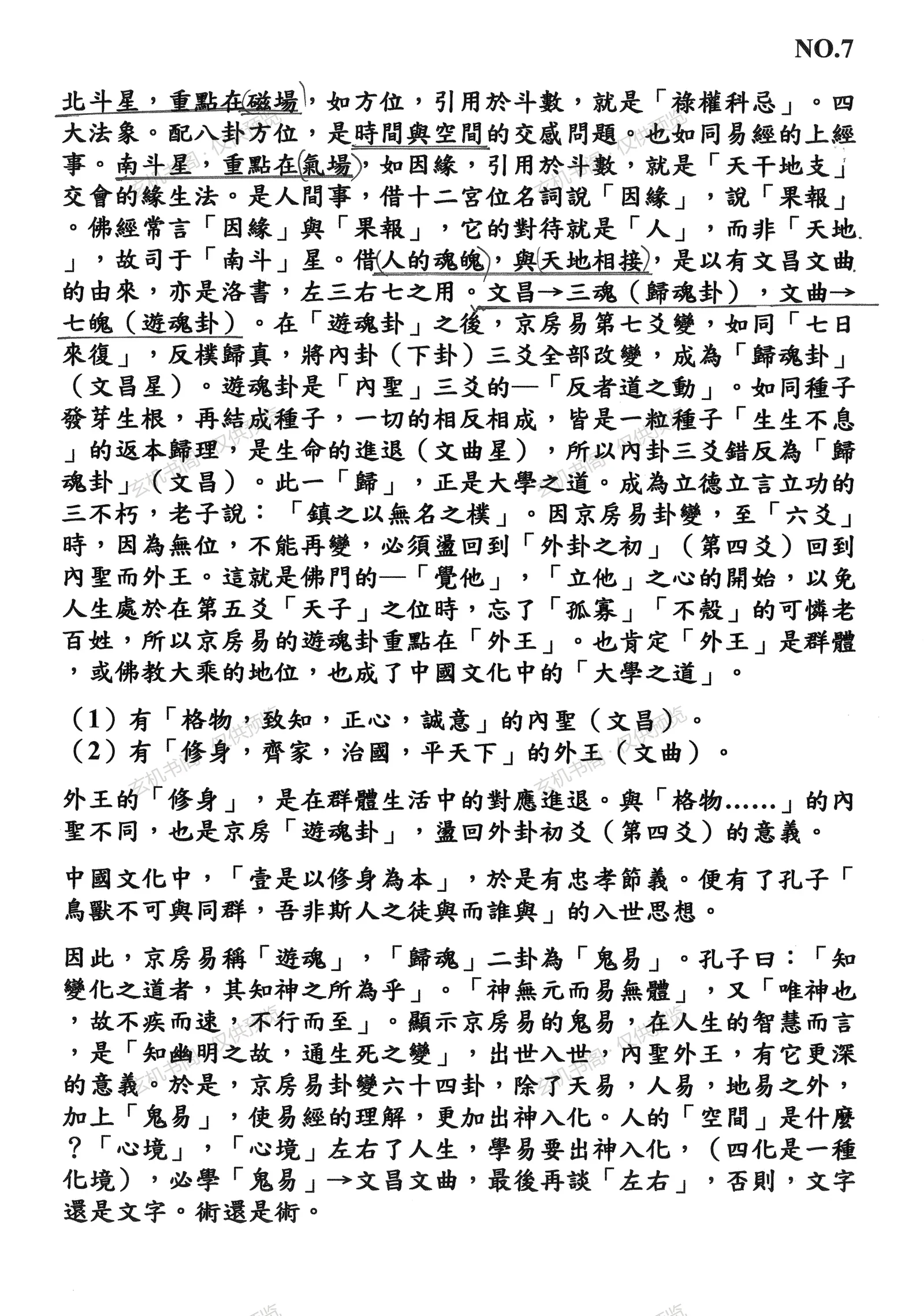
This first volume of The Wuji Gate, as far as the visible pages show, is a lecture-style work that connects the Zi Wei Dou Shu star system with Yijing numerology and Jing Fang's hexagram-change method. It begins by assigning the Northern Dipper stars to 'magnetic field' and the Southern Dipper stars to 'qi field', then explains the Four Transformations (lu, quan, ke, ji) using the code letters A to D, including self-transformation. Ten Heavenly Stems are used to trace the origins of transformations, such as Lian Zhen turning into lu and Wu Qu into ke under stem Jia. Hetu-Luoshu principles like 'one and six share the same source' and 'summing to ten' are invoked to explain the relationship between Lu Cun and Wen Qu. The later sections turn to the Yijing and Jing Fang Yi, using the Shuo Gua, Xu Gua and Za Gua to discuss the body, image and function of the Yijing, and employing the eight-palace hexagram changes, wandering soul and returning soul hexagrams to locate Wen Chang and Wen Qu. Buddhist karma and the Confucian ideal of inner sageliness and outer kingship are also woven in. It is an advanced text for readers with some Dou Shu background who want to understand the reasoning behind the transformations and hexagrams.
Contents
Seven Stars of Luoyang look to the Northern Dipper: Dippers and transformation codes
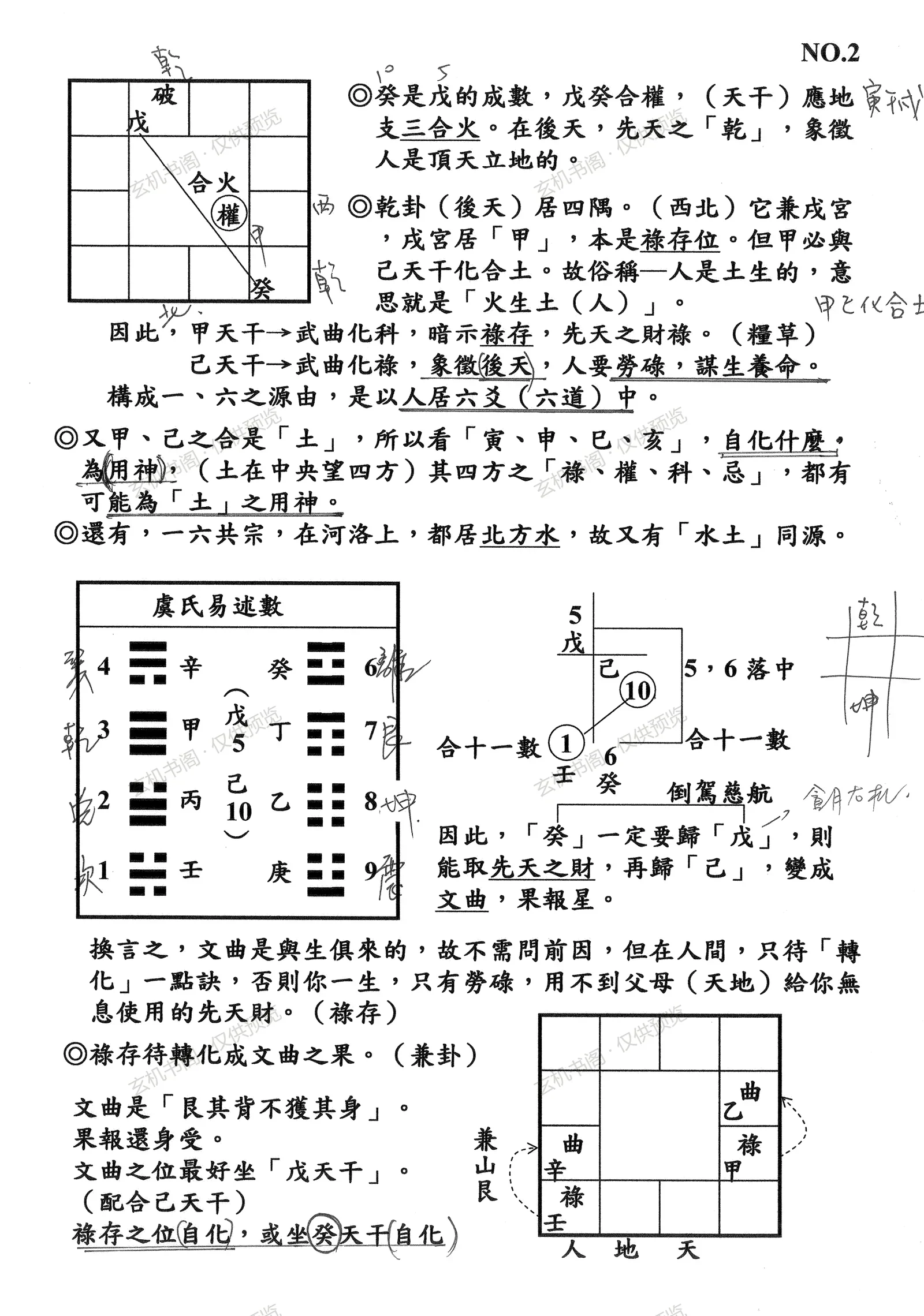
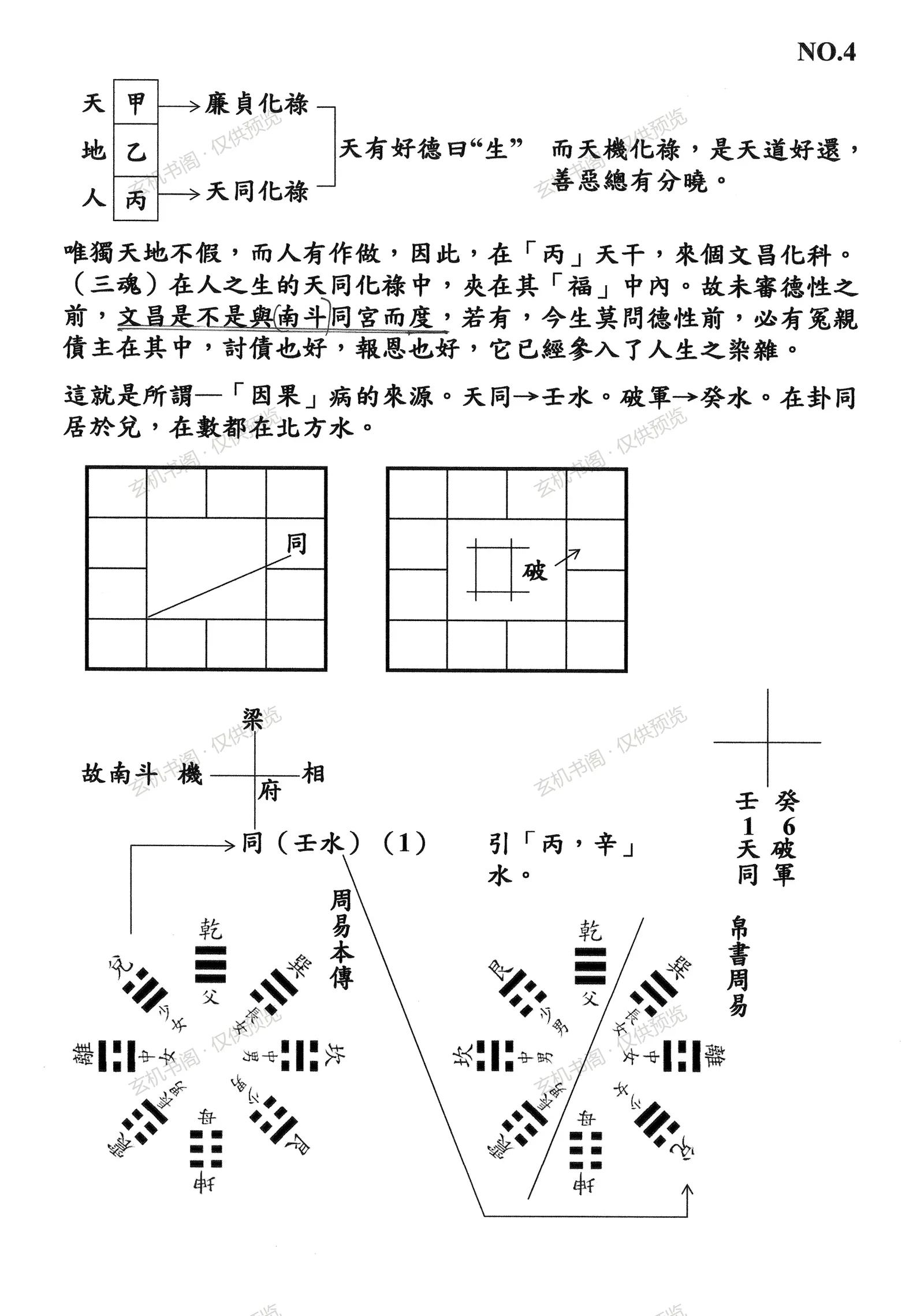
Ten stems, Four Transformations and Hetu-Luoshu number derivation
Lu Cun turning into Wen Qu and earlier/later heaven wealth
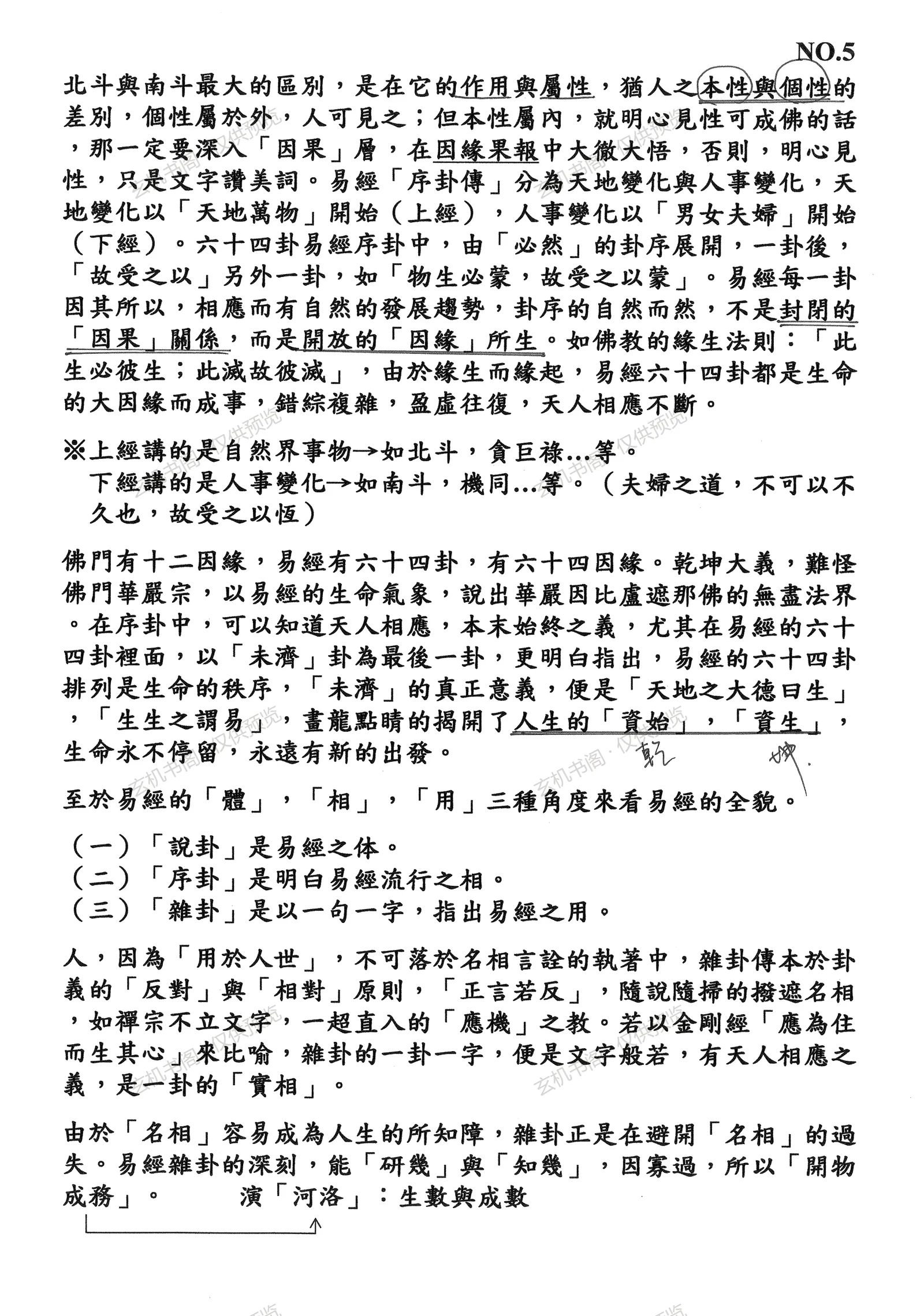
Yijing body, image and function: Shuo Gua, Xu Gua, Za Gua
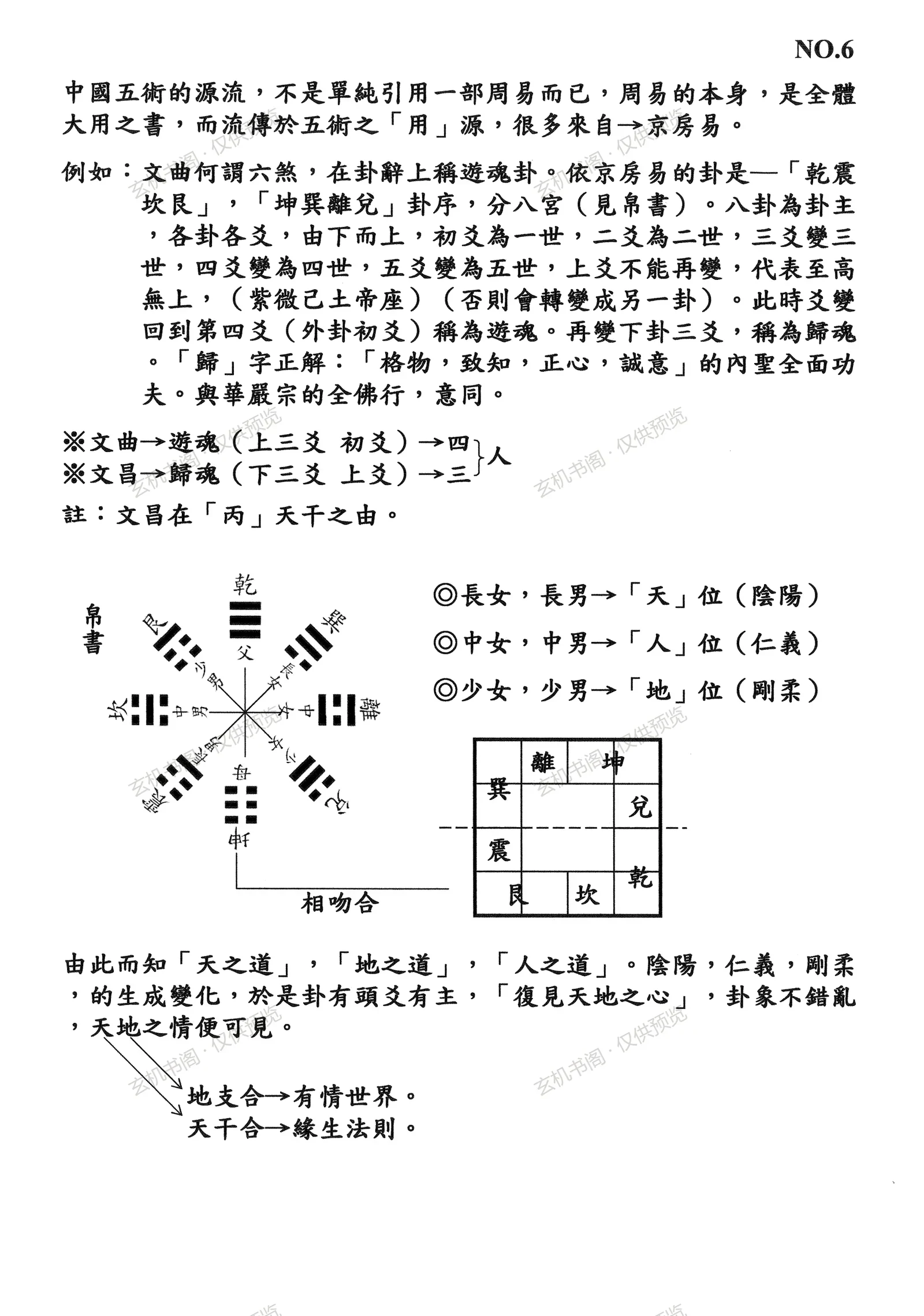
Jing Fang eight-palace changes, wandering and returning soul hexagrams
Wen Chang, Wen Qu and inner sageliness with outer kingship
Key Points
Northern Dipper relates to magnetic field, Southern Dipper to qi field
Four Transformations coded A-D, including self-transformation
Hetu-Luoshu one-six and sum-ten explain Lu Cun and Wen Qu
Wandering and returning soul hexagrams locate Wen Chang and Wen Qu
Buddhist karma and Confucian inner-outer cultivation meet Yijing thought