Reading guide
Content guideOverview
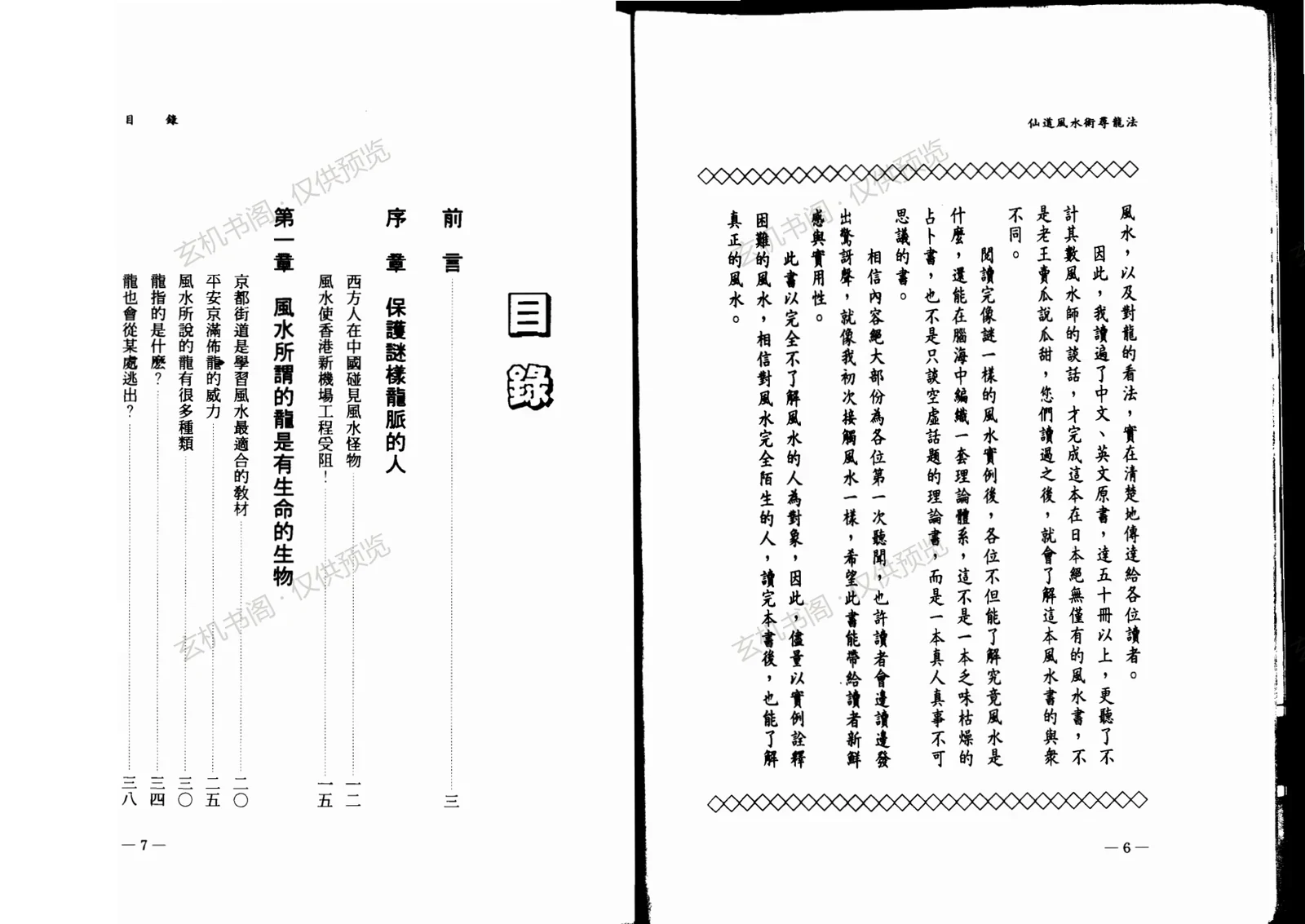
This book by Japanese author Sōichirō Takatō approaches dragon-seeking through a blend of Daoist cultivation and feng shui. The preface frames feng shui as a Chinese art for harnessing the mysterious power of the earth, practiced by feng shui masters who seek dragon acupoints to concentrate terrestrial energy. It discusses the Japanese and Chinese roots of feng shui, then cites Western encounters with 'feng shui monsters' in China, such as obstacles to railway construction in Hong Kong and the feng shui of Government House. The main chapters cover: the dragon as a living being in feng shui and its types; water retaining the dragon and sand guarding the acupoint, including bright hall, facing mountains, and the distinction between water and dragon; the mystery of the dragon acupoint as the source of the dragon's life, with ideal sites, plant and bone burial, and corpse-nourishing grounds; using the compass to detect invisible dragon qi and household feng shui techniques; and lesser-known feng shui spells such as the Seven Stars qi-drawing method and beam-cutting household rituals. The afterword links feng shui to Daoist cultivation.
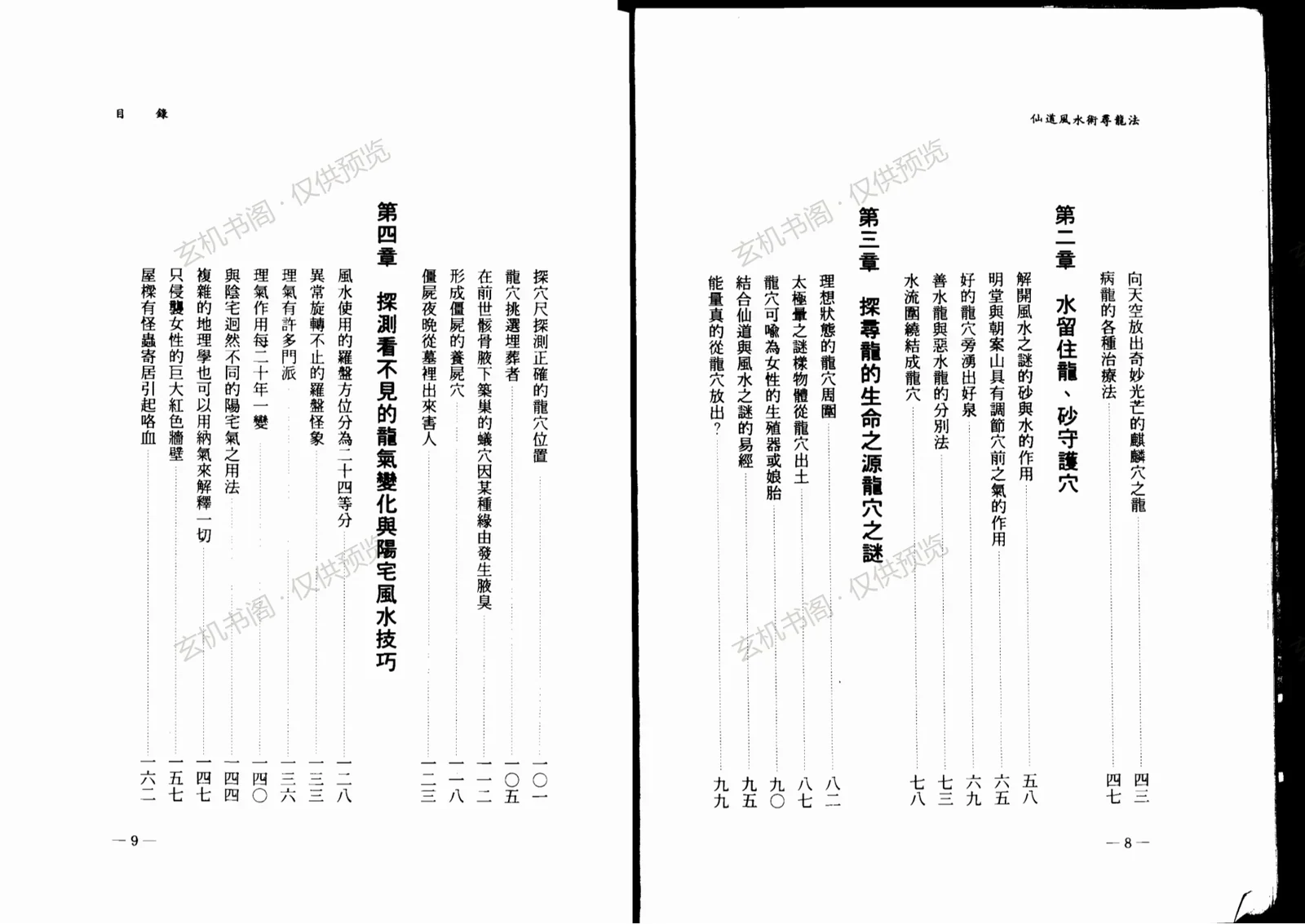
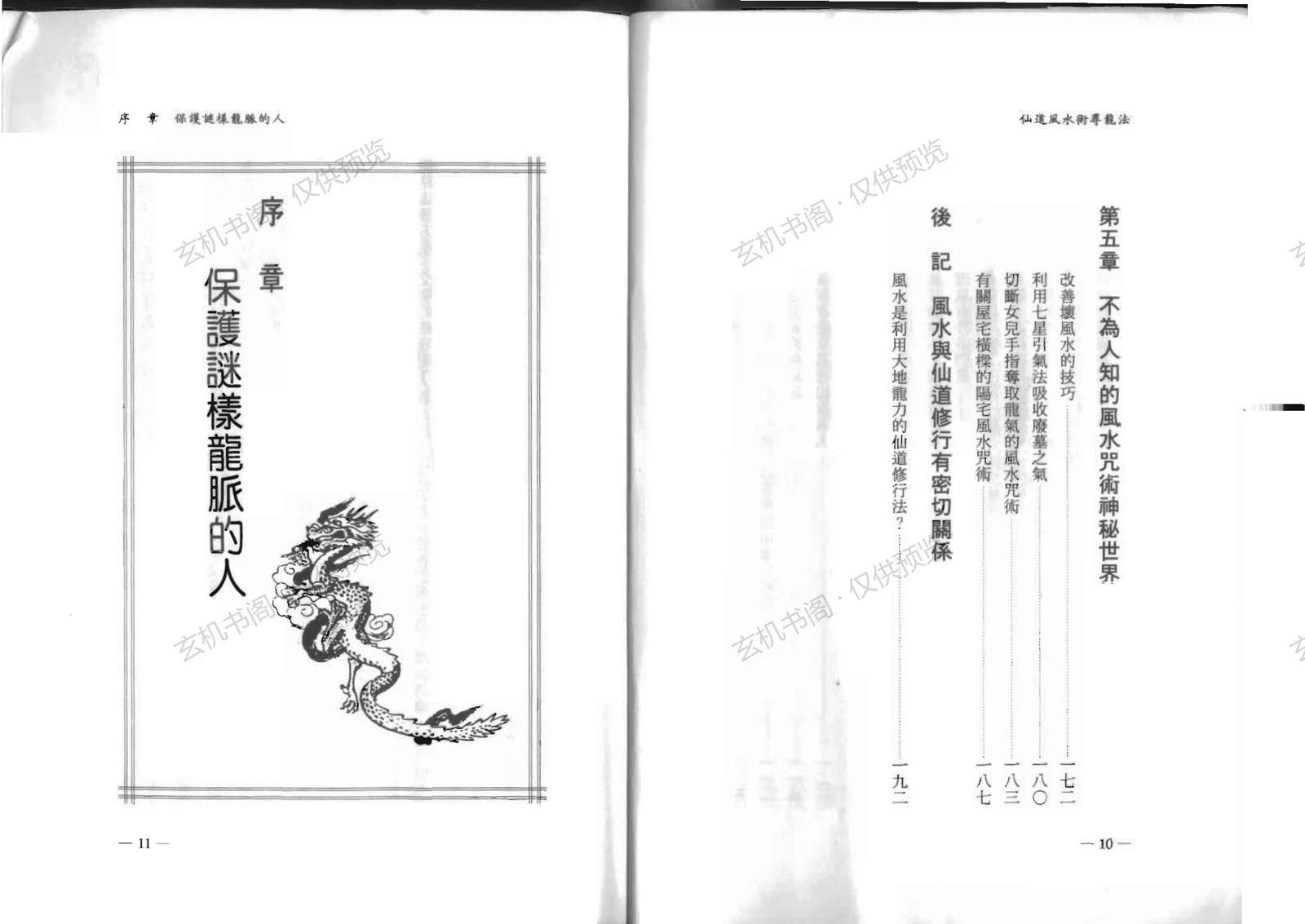
Contents
Preface: feng shui as a method to harness earth energy
Prologue: people who protect mysterious dragon veins
Ch.1 The feng shui dragon as a living creature
Ch.2 Water retains the dragon, sand guards the acupoint
Ch.3 The mystery of the dragon acupoint
Ch.4 Detecting invisible dragon qi and household feng shui
Ch.5 The secret world of feng shui spells
Afterword: feng shui and Daoist cultivation
Key Points
Explains feng shui as an art of gathering earth energy and finding dragon acupoints
Clarifies core terms such as dragon vein, acupoint, sand, and water
Uses Japanese and Chinese cases to discuss feng shui practice
Introduces compass-based qi detection and household feng shui techniques
Covers more esoteric operations such as Seven Stars qi drawing and spells