Reading guide
Content guideOverview
These notes are from a 2017 course and focus on Form School Feng Shui. The text begins with the principle that 'obtaining water is paramount,' explaining that water is yang and dwellings are yin, and that their attraction creates good Feng Shui. In cities, roads are treated as water, called 'road water' or 'virtual water,' and those who can collect road water are said to gain great wealth. The notes describe basic forms such as 'opening the door to collect water,' also known as 'collecting reverse water,' which is considered the most powerful wealth-generating form. They also discuss 'road overflow water,' where water flows along a high road and spills over at an intersection; a house at the point of overflow is said to benefit financially, while a house beyond the overflow is not. The text warns that a recess or setback in front is needed to avoid harm. A shop-front example illustrates how a west-side shop collecting reverse water, with the tiger side high and dragon side low, does better business. The notes include student Q&A and chat screenshots for practical reference.
Contents
1. Obtaining water: water as yang, dwelling as yin
2. Roads as water in cities: road water, virtual water
3. Opening the door to collect water: reverse water form
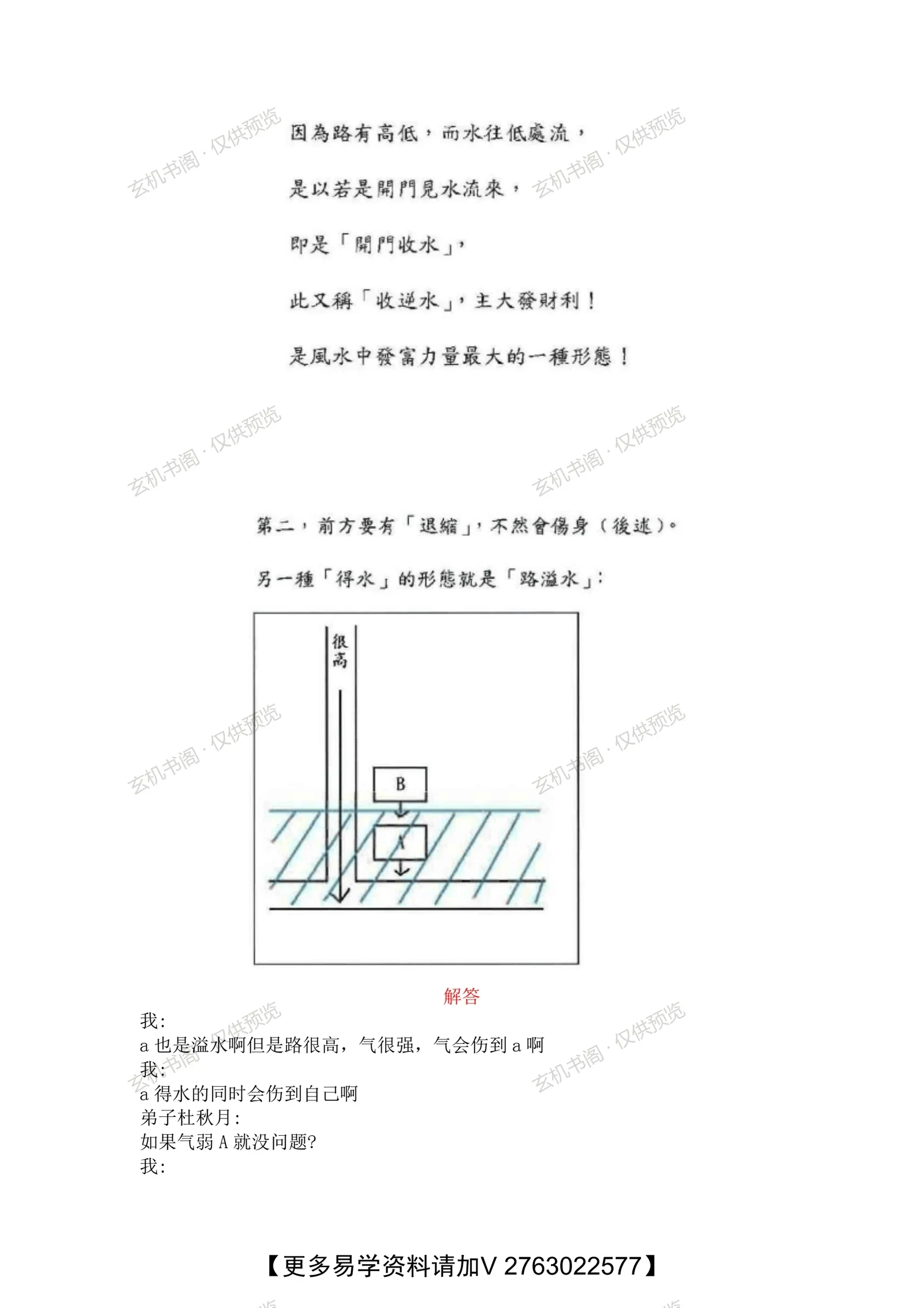
4. Road overflow water: overflow at the door brings wealth
5. Recess in front and avoiding harm
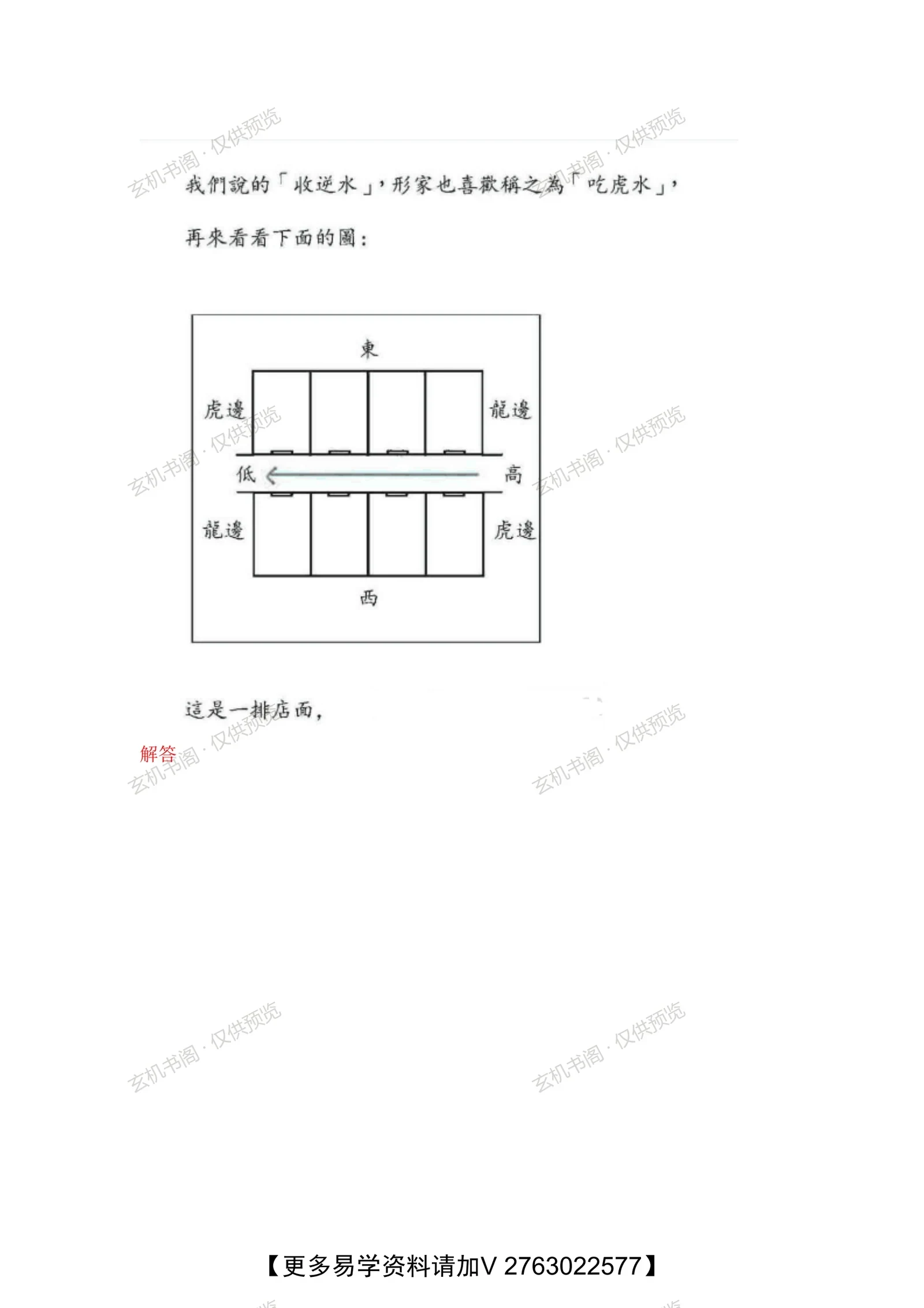
6. Shop case: west-side shop collects reverse water
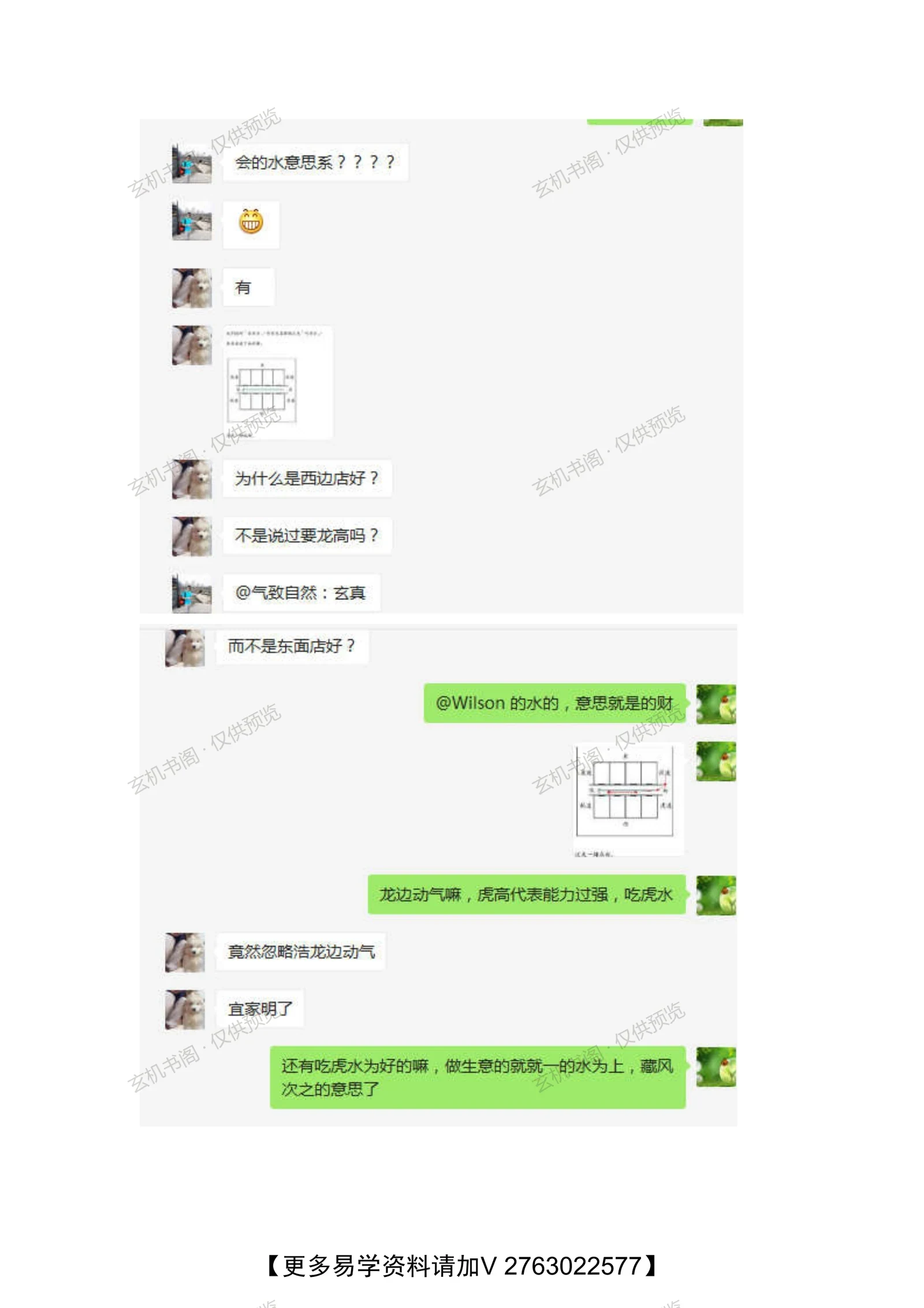
7. Student Q&A and chat records
Key Points
The first principle is 'obtaining water,' with water as yang and dwelling as yin.
In cities, roads are considered water; collecting road water is believed to bring wealth.
Opening the door to collect water, or reverse water, is the most powerful wealth form.
Road overflow water brings wealth if it reaches the door, but not if it overflows past it.
A setback in front is needed to avoid harm from reverse water.
In the shop example, the west-side shop with reverse water and a high tiger side does better business.