Reading guide
Content guideOverview
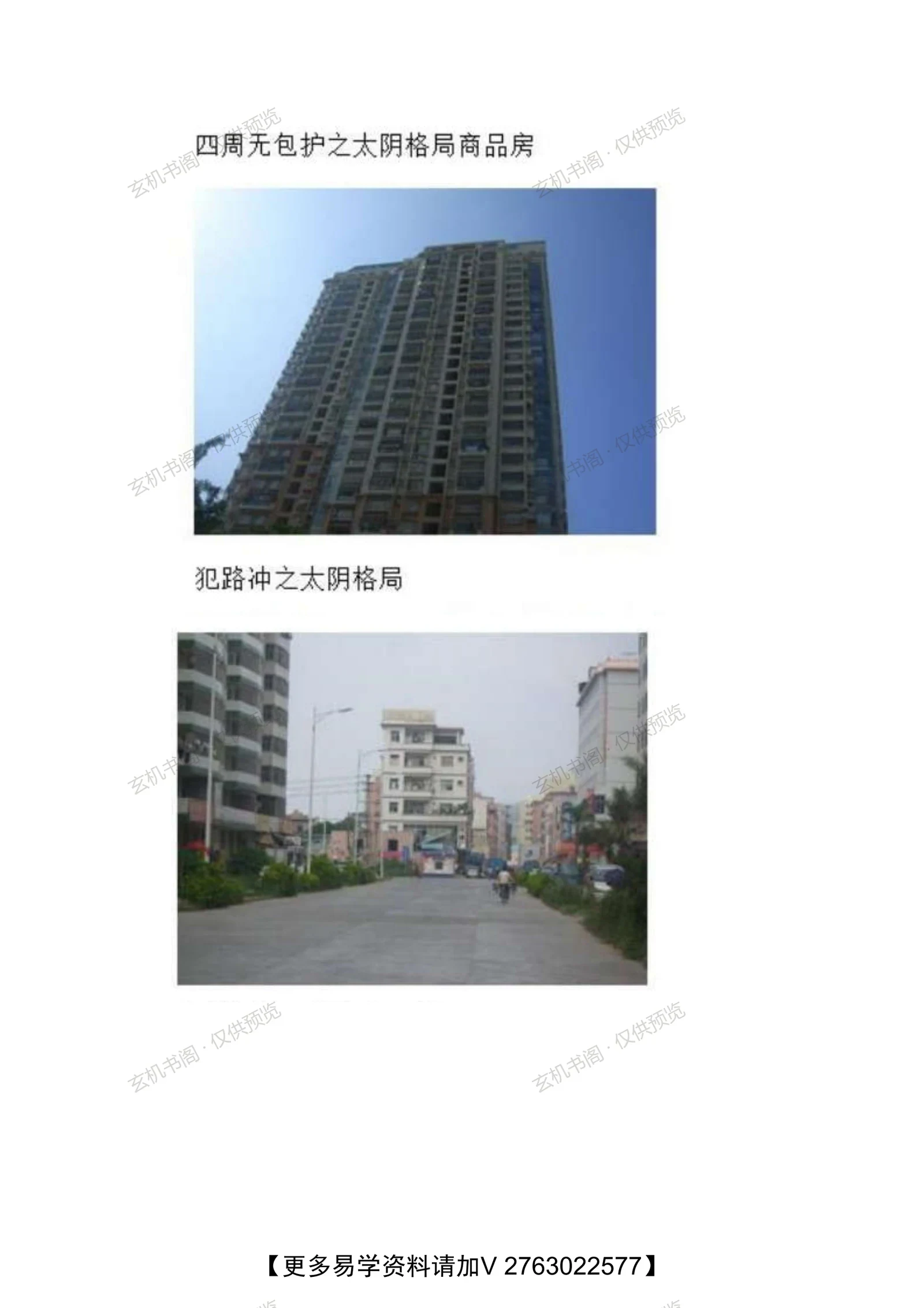
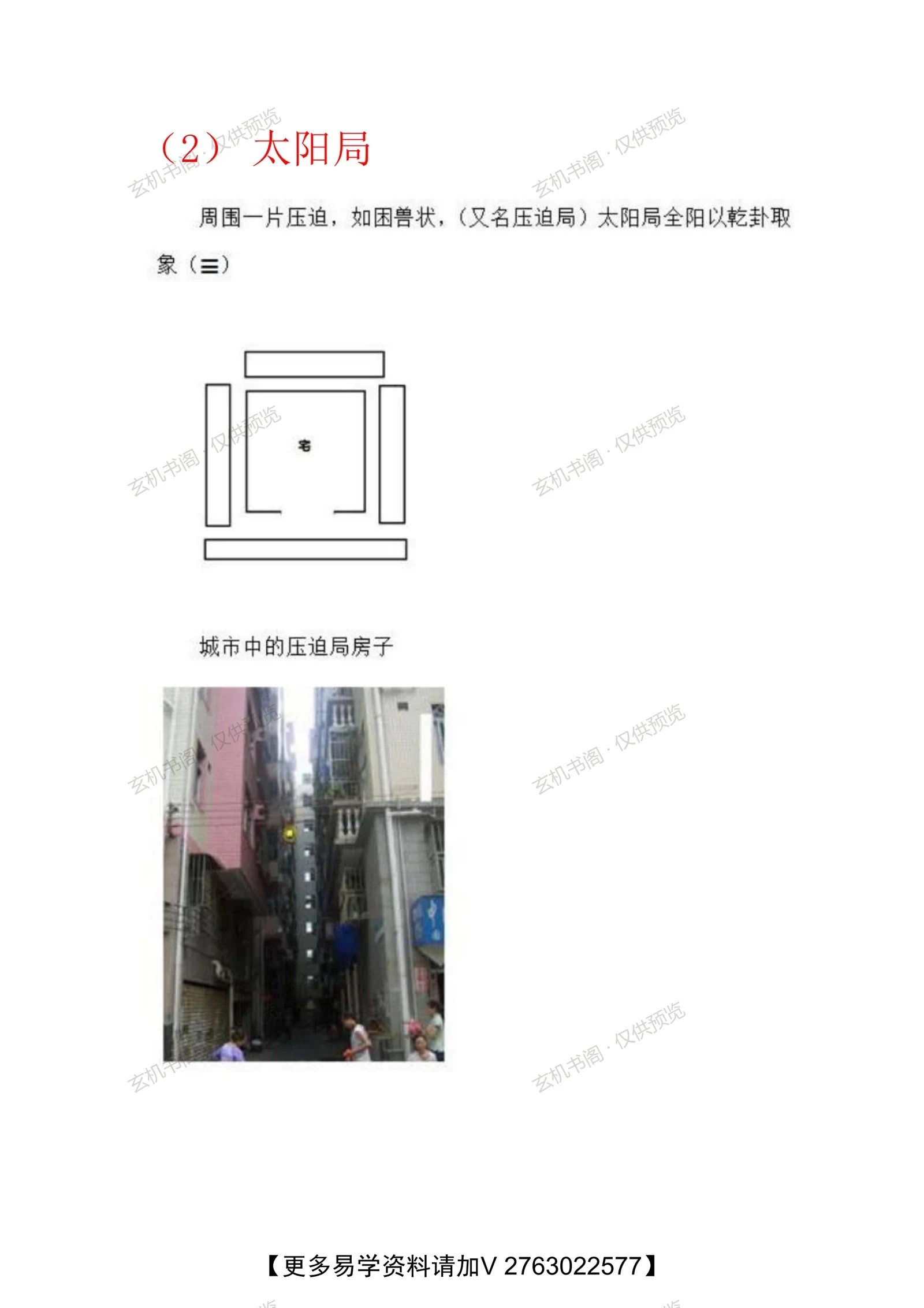
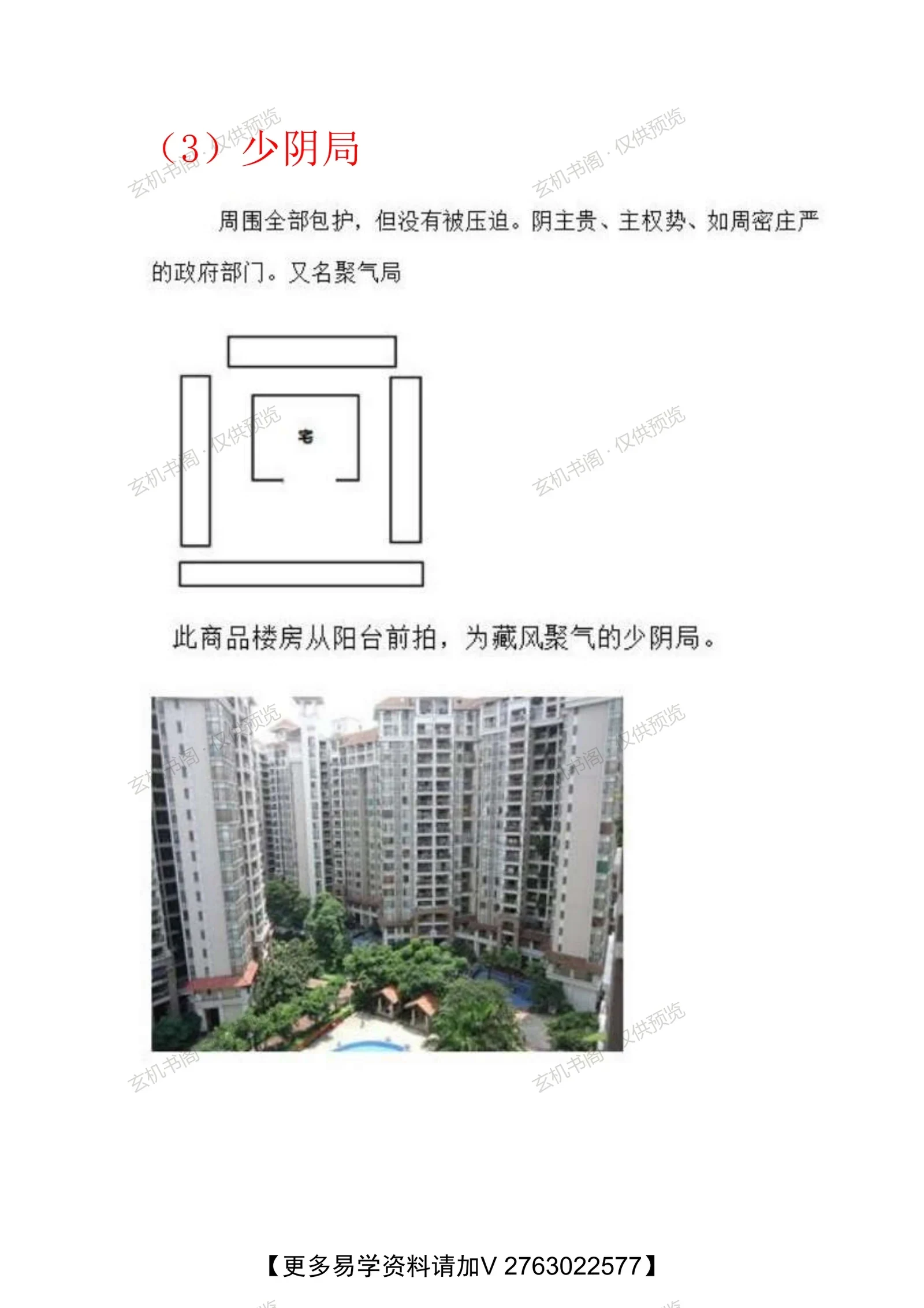
This short booklet explains the four major external layouts of yangzhai (residential) feng shui using the four images: Taiyin (Great Yin), Taiyang (Great Yang), Shaoyin (Lesser Yin), and Shaoyang (Lesser Yang). Taiyin corresponds to the Kun trigram and describes a house with no surrounding enclosure, exposed to wind gaps and road thrusts, also called the "dispersing qi" layout. Taiyang corresponds to the Qian trigram and describes a house tightly pressed in on all sides, called the "oppressive" layout. Shaoyin, by contrast, is fully enclosed without being squeezed, gathering qi and favoring status, called the "gathering qi" layout. Diagrams are paired with real urban photographs—tower blocks with open surroundings, roadside buildings facing a straight road, narrow alleys, dark ground-floor units, and balconies overlooking open distance—so readers can match the abstract categories to actual environments. The material is introductory and form-school oriented, emphasizing visual features of enclosure, obstruction, pressure, and road thrust.
Contents
Taiyin layout: open surroundings, wind gaps and road thrusts, Kun trigram
Taiyin examples: unenclosed tower blocks and roadside buildings
Taiyang layout: pressed in on all sides, Qian trigram
Taiyang examples: narrow alleys and dark ground floors
Shaoyin layout: enclosed but not squeezed, gathering qi
Shaoyin examples: enclosed residential blocks viewed from balconies
Key Points
Names four external residential layouts after the four images
Taiyin is all-yin, Kun trigram, dispersing qi
Taiyang is all-yang, Qian trigram, oppressive pressure
Shaoyin is well enclosed and gathers qi, favoring status
Real urban photos help identify each layout