Reading guide
Content guideOverview
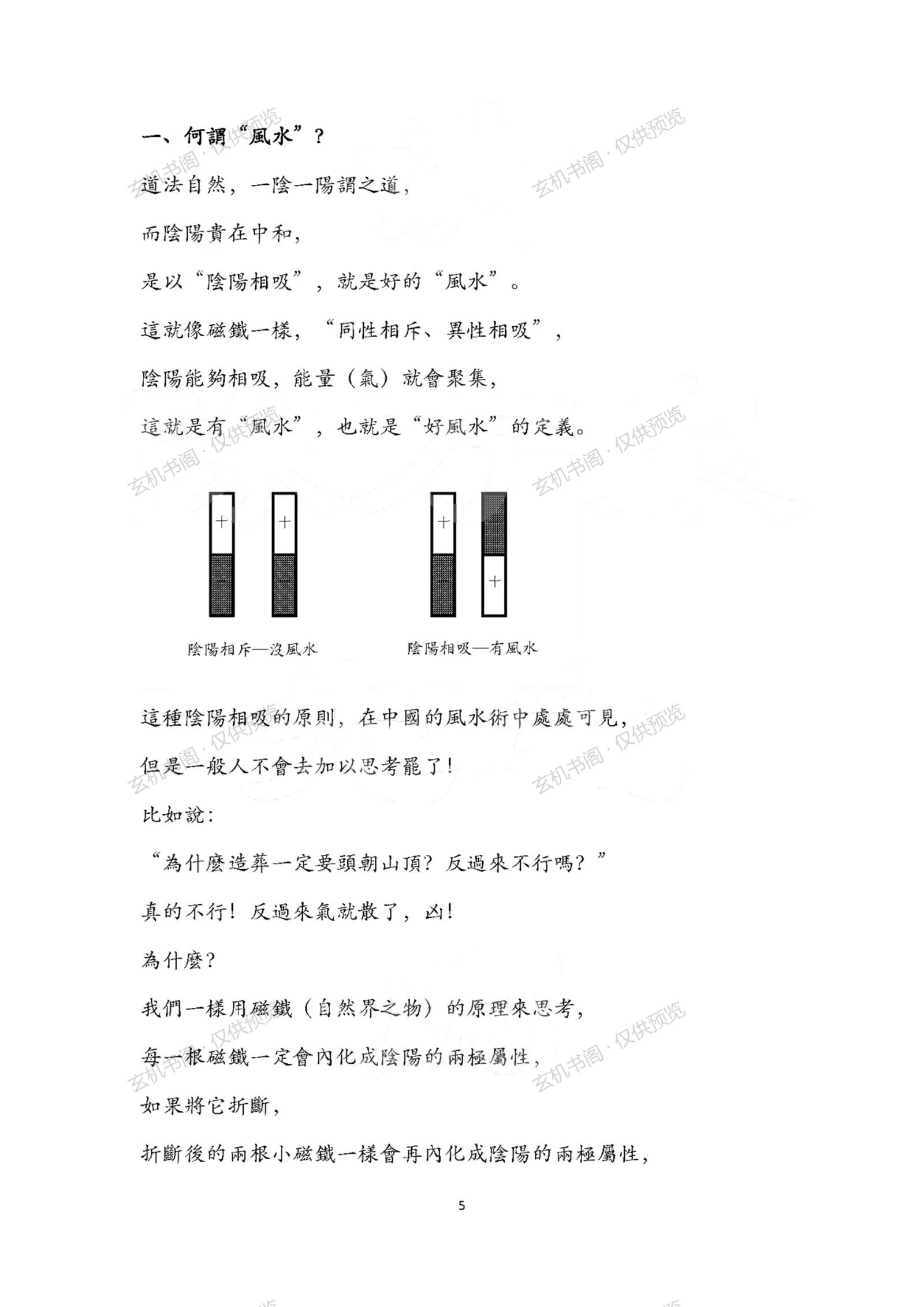
This is a lecture handout for a one-on-one apprenticeship class in the Yin-Yang Method of form-school feng shui. The visible pages include a preface and the opening of the first chapter. In the preface the author recounts studying Zhouyi bagua liqi kanyu with Yu Fengchun, later learning of the Changyan method through Huang Jinbao, eventually becoming a fourth-generation disciple of that lineage, and also studying dragon-seeking and point-selection with Zhu Huazhu. The author argues that the various form-school methods share a common framework in yin-yang theory, and names his own system the Yin-Yang Method. The main text begins by defining feng shui as the attraction of yin and yang: when yin and yang attract, qi gathers and the site has good feng shui; when they repel, it does not. Using the analogy of a magnet that always retains two poles, the author explains why graves must face the mountain top and why reversing the orientation scatters qi. The style is plain and diagram-assisted, aimed at readers with some prior knowledge of form-school feng shui who want a physical, intuitive approach to siting and judgment.
Contents
Preface: from liqi study to the Changyan method
Naming the Yin-Yang Method; feng shui as physics
What is feng shui: yin-yang attraction and qi gathering
Magnet analogy: like poles repel, opposite poles attract
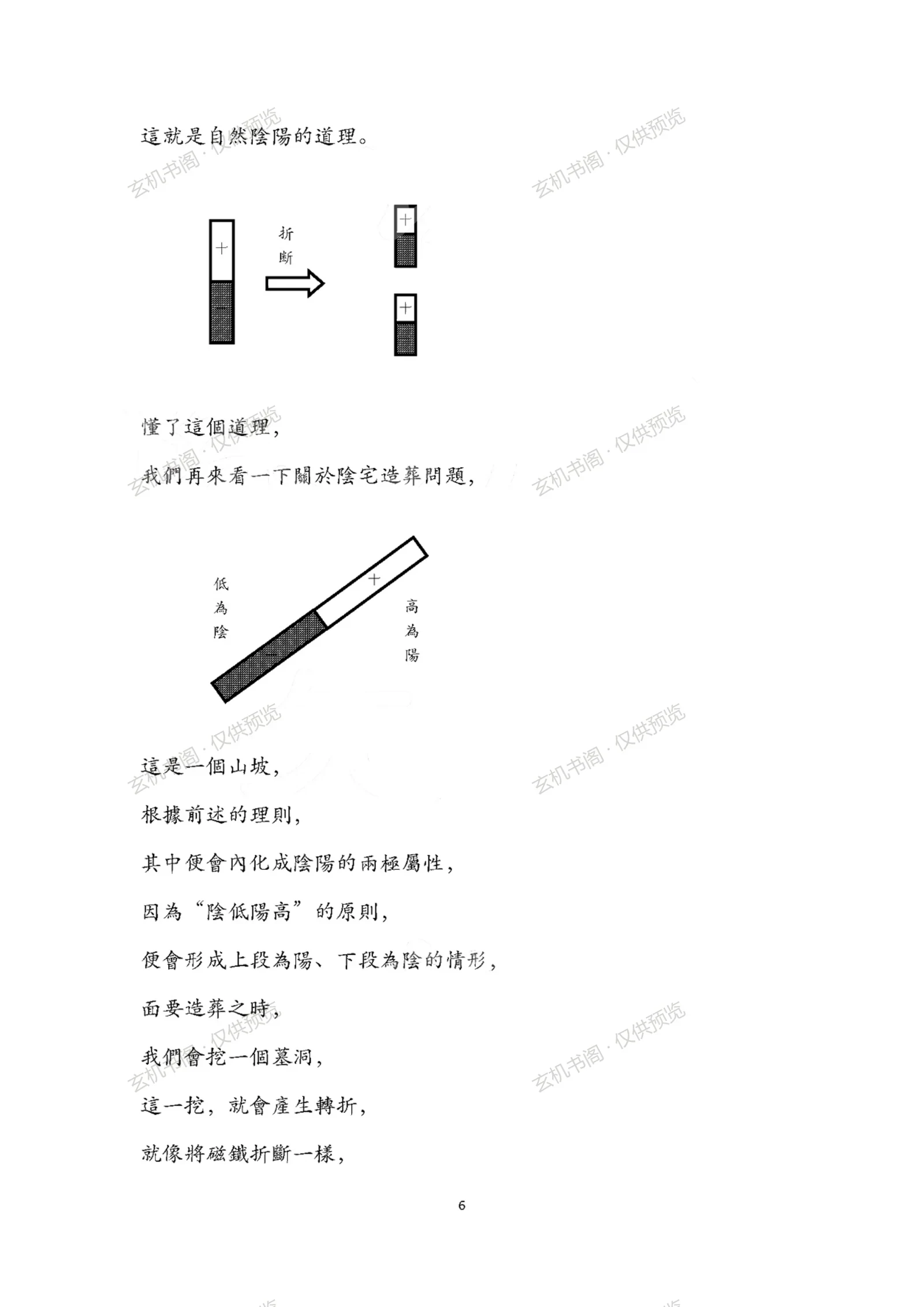
Grave orientation and the high-yang, low-yin principle
Key Points
Good feng shui defined as yin-yang attraction; repulsion means no feng shui
Magnet polarity used as an analogy for natural yin-yang
Graves should face the mountain top; reversing scatters qi and brings misfortune
Feng shui explained through simple physical phenomena and direct judgment
Combines liqi, Changyan method and dragon-point selection perspectives