Reading guide
Content guideOverview
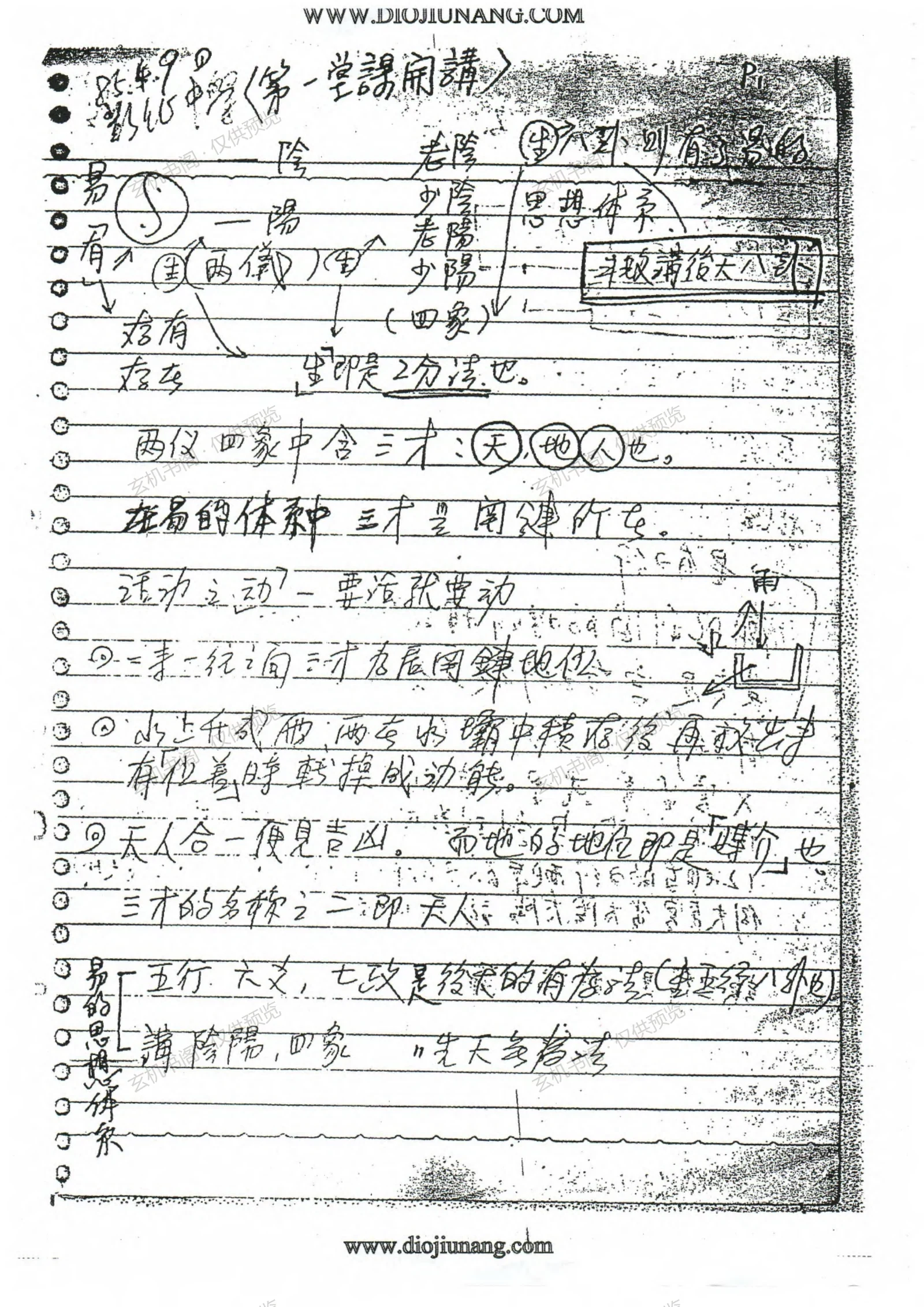
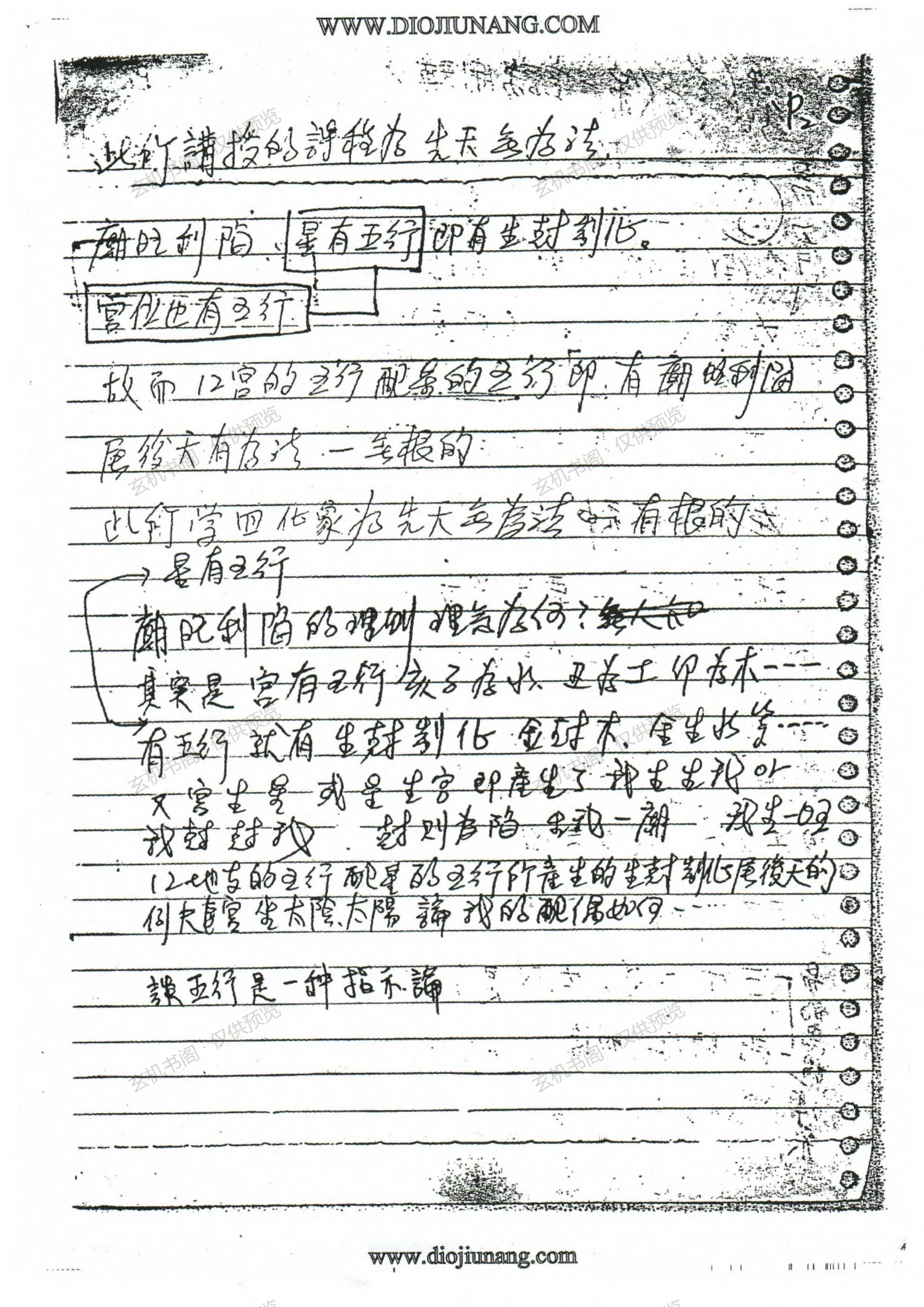
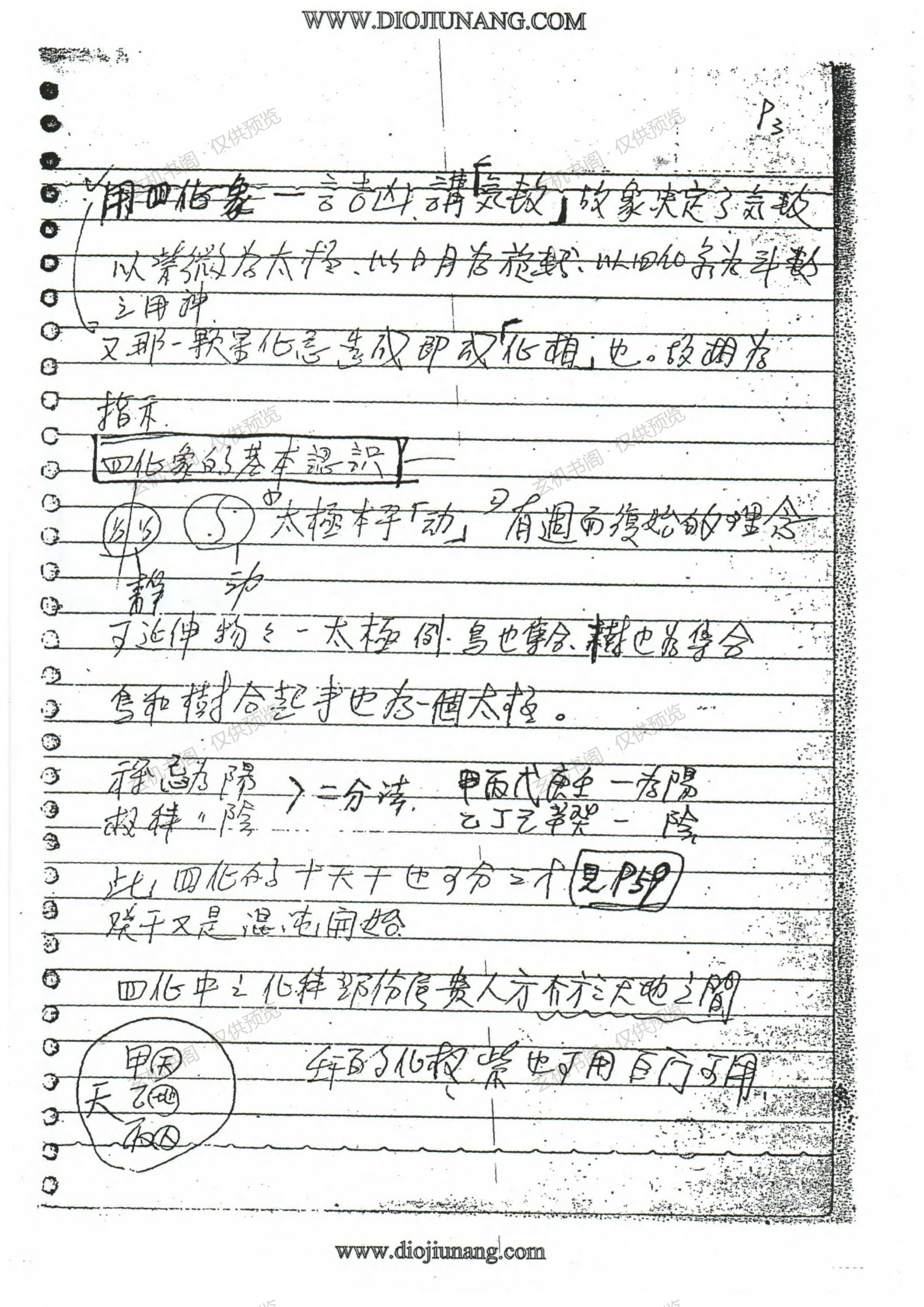
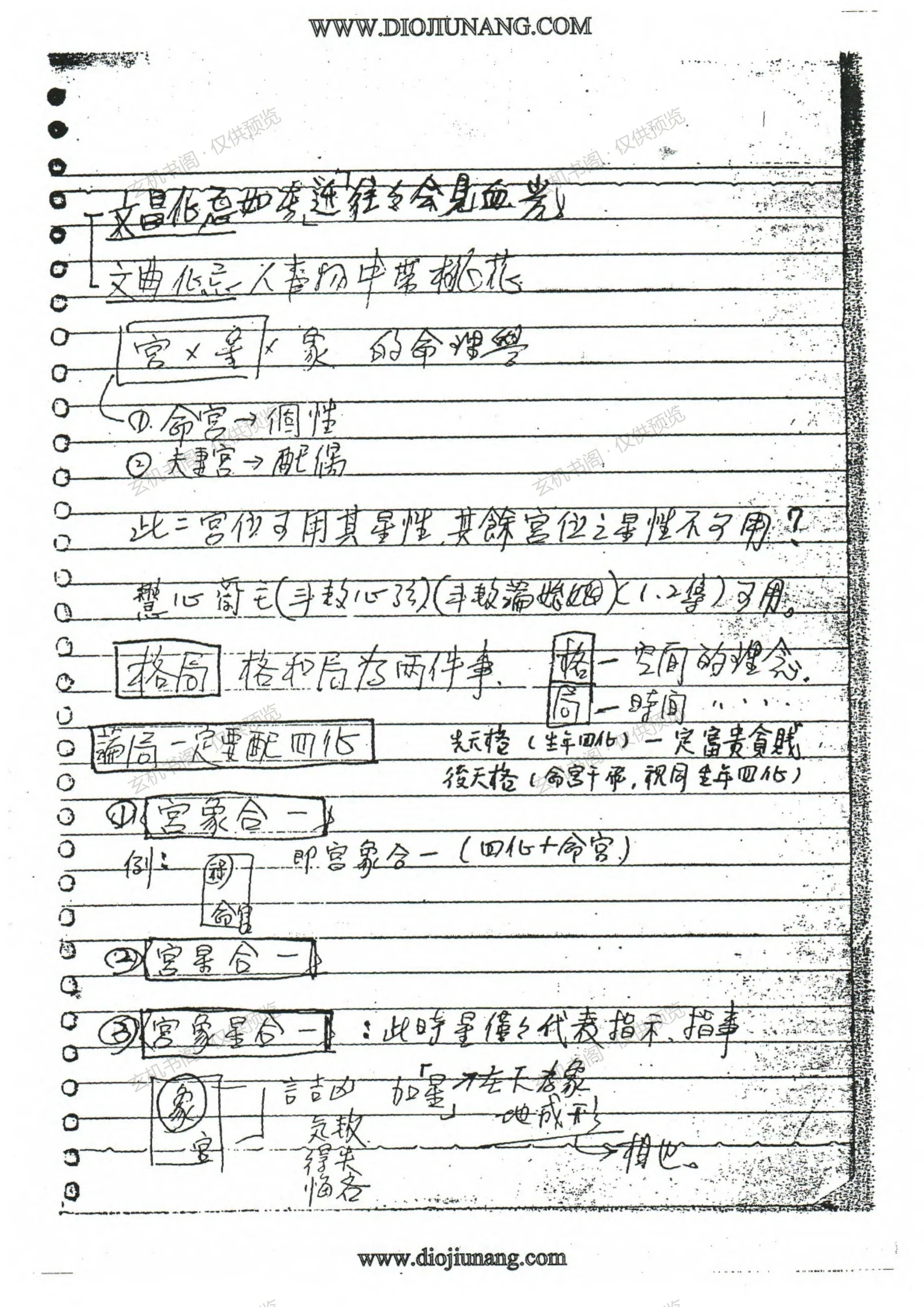
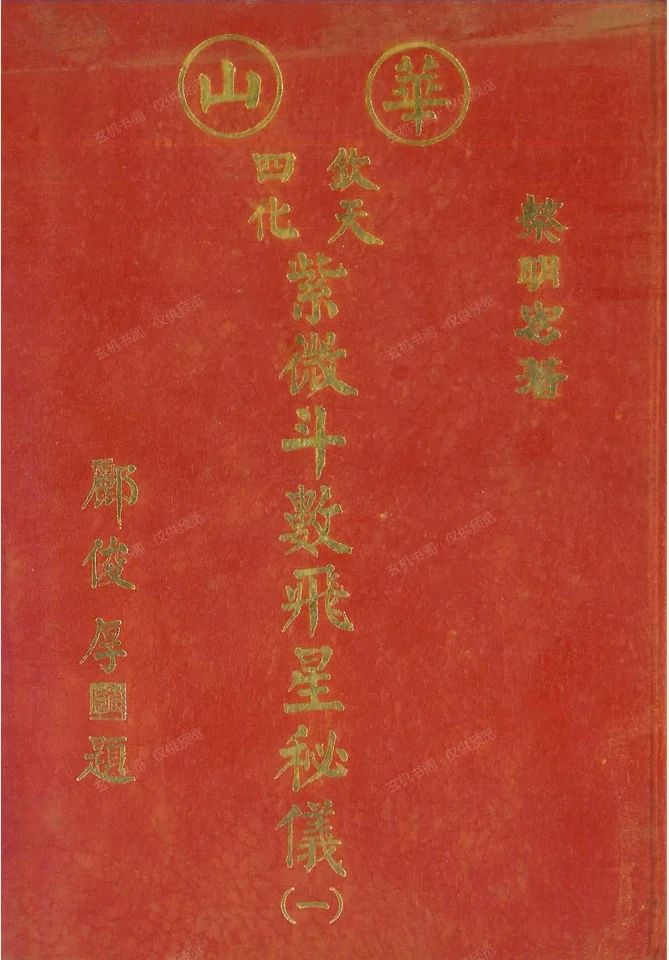
This is a scanned copy of handwritten class notes from Xu Quanren's advanced Zi Wei Dou Shu course. The cover shows only the vertical title, and the inner pages are handwritten on grid paper. After two blank pages, the first lesson begins with Yi learning and yin-yang: Tai Chi gives rise to the two modes, the two modes to the four images, and the four images contain the Three Powers of heaven, earth and humanity, discussed alongside the Zi Wei thought system and the Later Heaven bagua. The notes then turn to the 'innate Ji' and the question of substance and function, examining the generating and restraining relations between the five elements of the twelve palaces and those of the stars, the basic understanding of the Four Transformations (Tai Chi's inherent stillness and movement, division into two, the yin-yang division of the ten heavenly stems), and the framework of palace, star and image. Topics include the Life Palace and personality, the Spouse Palace, patterns combined with the Four Transformations, innate and acquired patterns, and the unity of palace-image and palace-star-image. The text is conversational and handwritten, an internal advanced handout suited to readers who already know basic Zi Wei Dou Shu and want to understand the Qintian Four Transformations approach.
Contents
Lesson one: Yi learning, yin-yang, two modes and four images
The Three Powers and the Zi Wei thought system
Innate Ji, substance and function, generating and restraining
Five elements of the twelve palaces and the stars
Basic understanding of the Four Transformations and division into two
The palace-star-image framework of chart reading
Patterns with Four Transformations, innate and acquired patterns
Key Points
Uses Tai Chi, the two modes, four images and Three Powers as the philosophical base of Zi Wei Dou Shu.
Stresses generating and restraining relations between palace elements and star elements.
Explains the Four Transformations through Tai Chi's stillness, movement and division into two.
Proposes levels of palace-image, palace-star and palace-star-image unity.
Patterns must be read with the Four Transformations, distinguishing innate and acquired patterns.