Reading guide
Content guideOverview
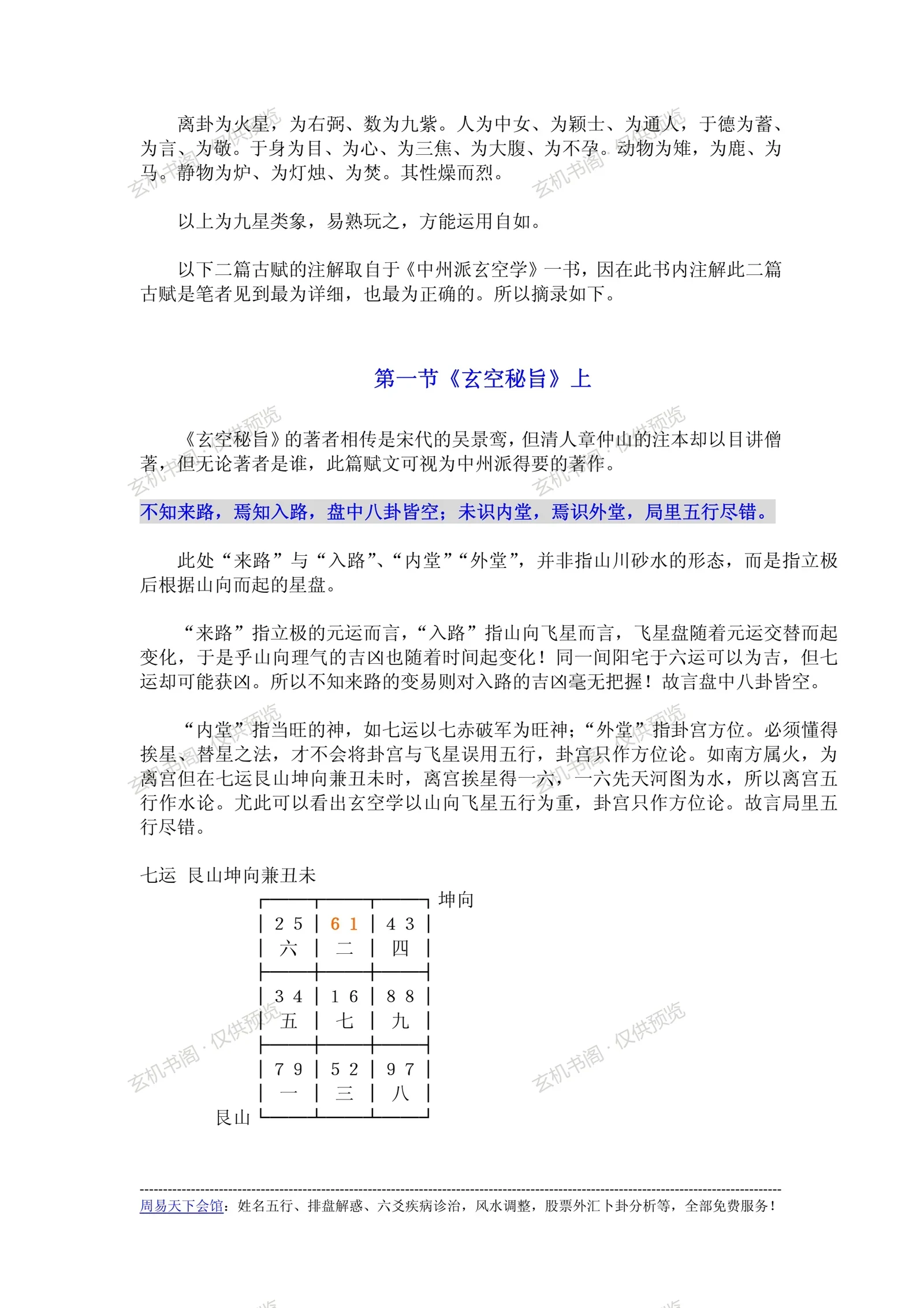
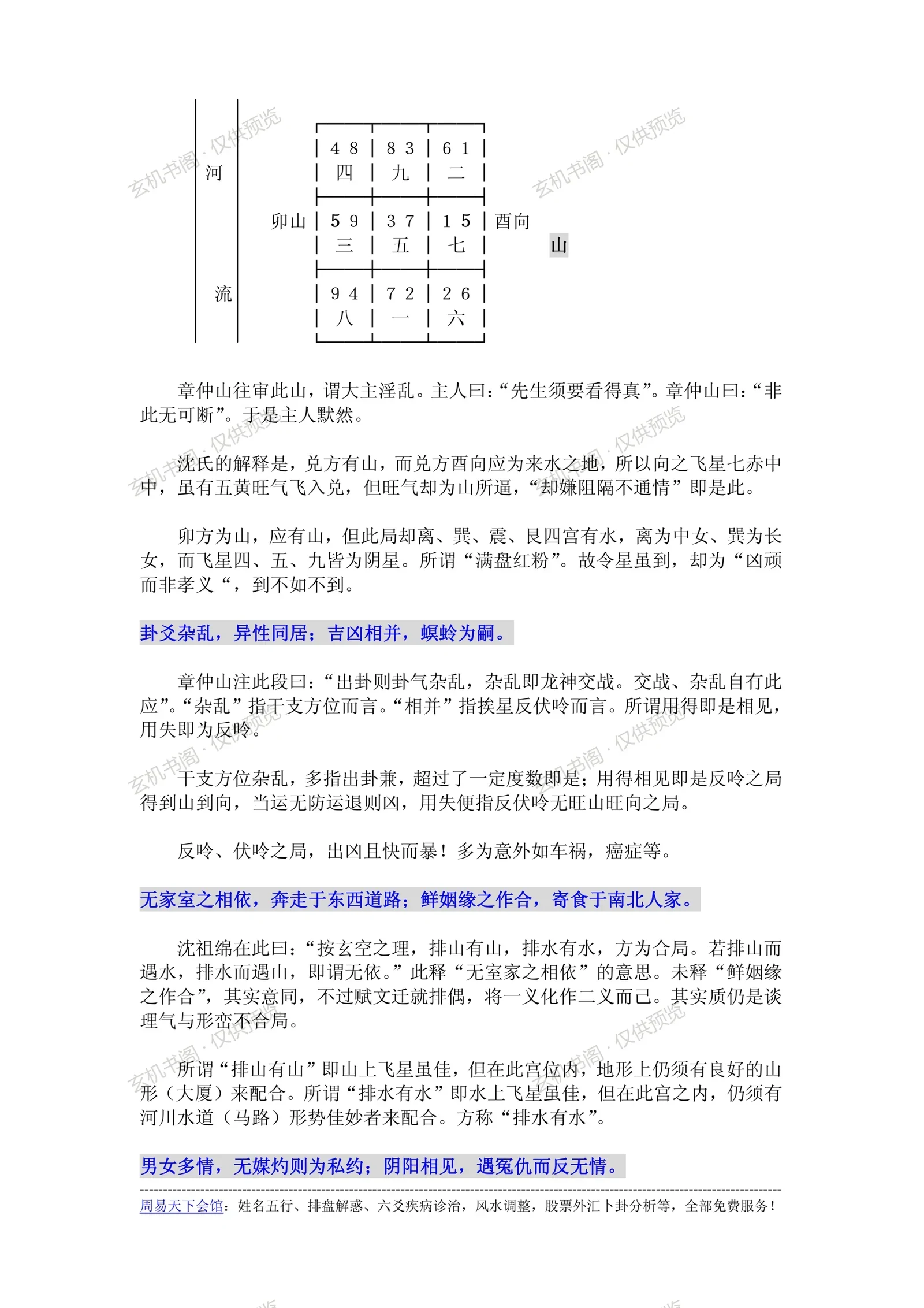
This is Part Four of the Zhongzhou school's Xuankong (Flying Star) feng shui series, built around classical “ancient odes.” It first explains how the facing star is taken as the upper trigram and the mountain star as the lower, forming one of the sixty-four hexagrams, and gives a full table of these star combinations. It then sets out the nine stars' trigram correspondences and the four production–conquest relations (sheng ru, ke ru, sheng chu, ke chu), noting that these are judged differently at the facing palace and the sitting palace. The main body annotates two odes: the Hetu–Luoshu Fortune and Misfortune Judgments, listing the auspicious and inauspicious imagery of the five elements and nine stars in strength and decline; and the Earlier and Later Heaven Trigram Imagery, cataloguing each trigram's human, bodily, animal and object associations. It then begins Section One on the Xuankong Mizhi, quoting old commentaries alongside the editor's notes on lines about “incoming and entering paths,” “inner and outer halls,” “riding qi and shedding qi,” and the central palace, illustrated with flying-star charts for a seventh-period Gen-sitting Kun-facing house and a fifth-period Mao-sitting You-facing house. The book suits readers who already know Flying Star basics.
Contents
Star combinations: mountain and facing stars as hexagrams
Nine stars, trigrams, and the four production–conquest relations
Hetu–Luoshu judgments: five-element imagery
Luoshu nine stars in strength and decline
Earlier and Later Heaven trigram imagery
Section One: line-by-line notes on the Xuankong Mizhi
Chart examples: 7th-period Gen–Kun, 5th-period Mao–You
Key Points
Facing star as upper trigram, mountain star as lower, read as hexagrams
The four production–conquest relations reverse between facing and sitting
Nine-star imagery must be matched with landform to be valid
Old commentaries on the Xuankong Mizhi disagree; both are quoted
Chart examples show form and qi reasoning must work together