Reading guide
Content guideOverview
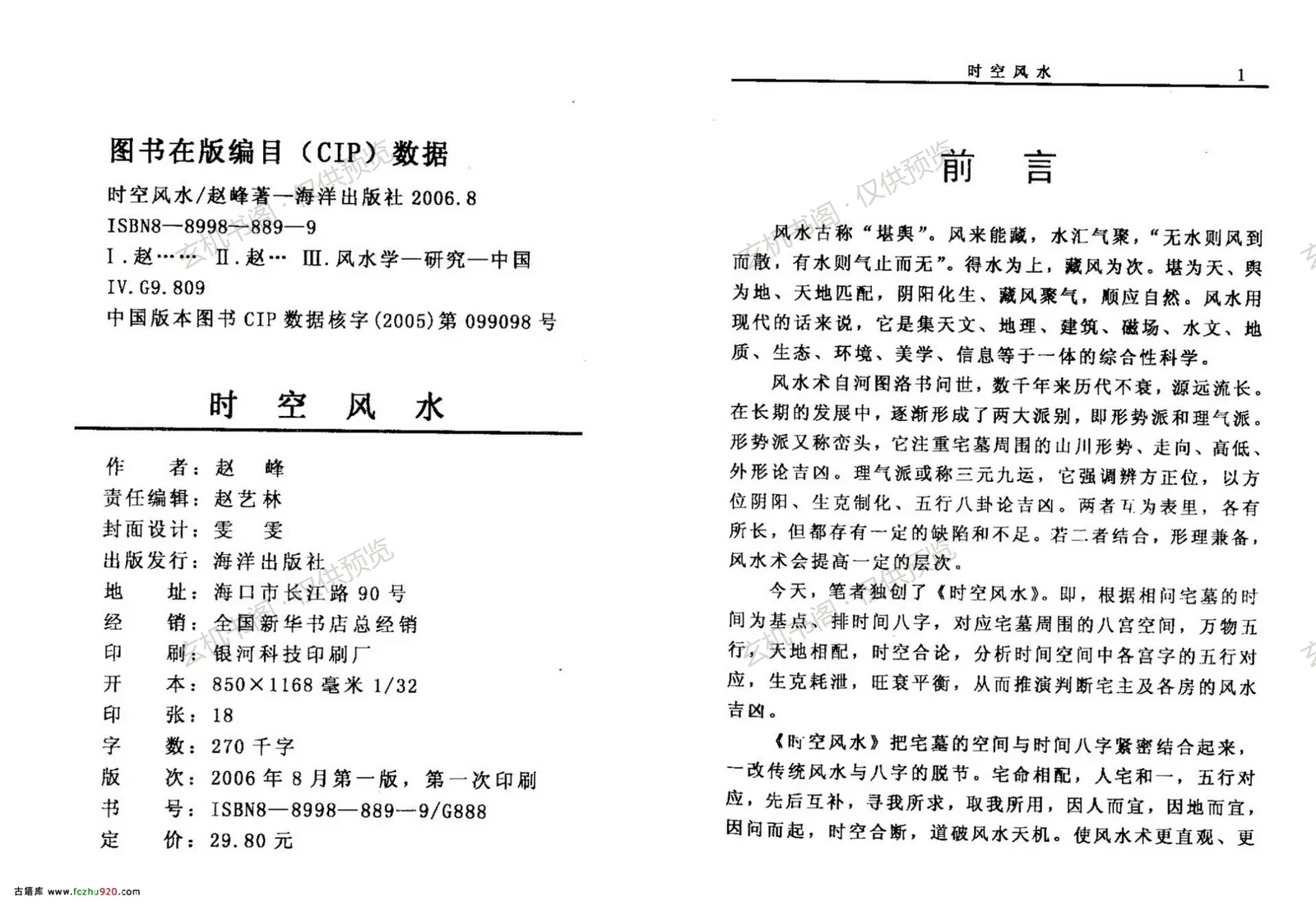
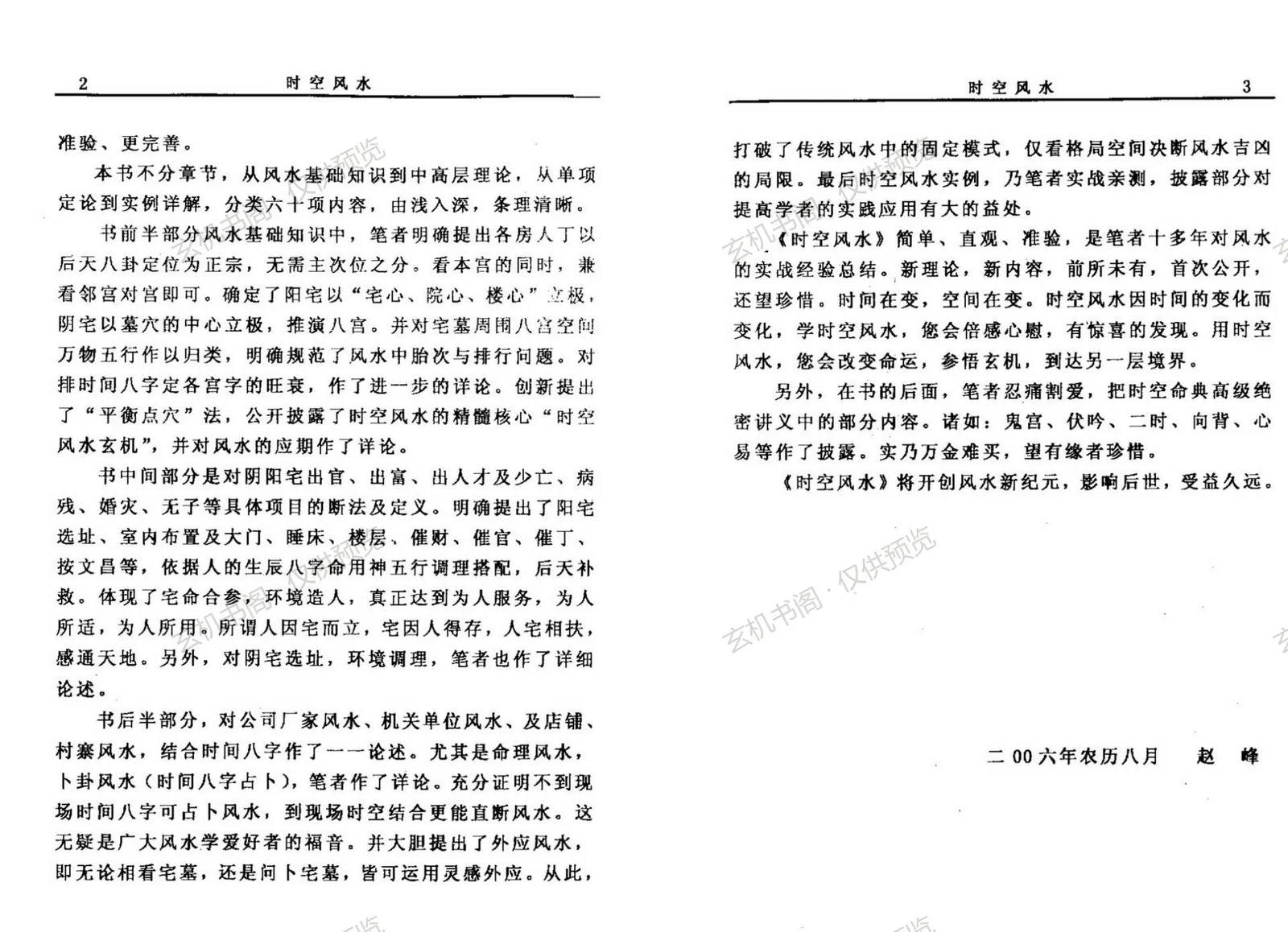
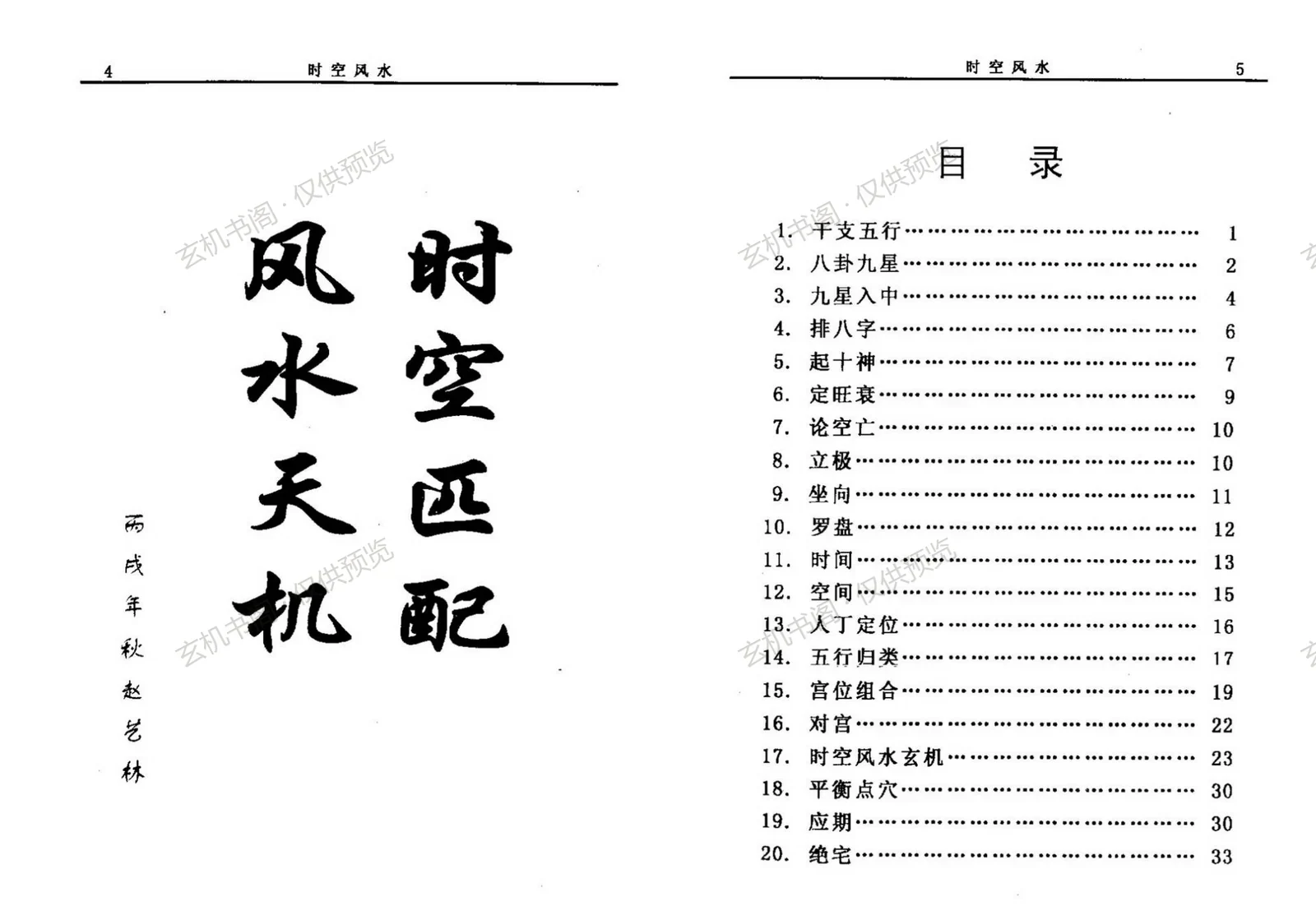
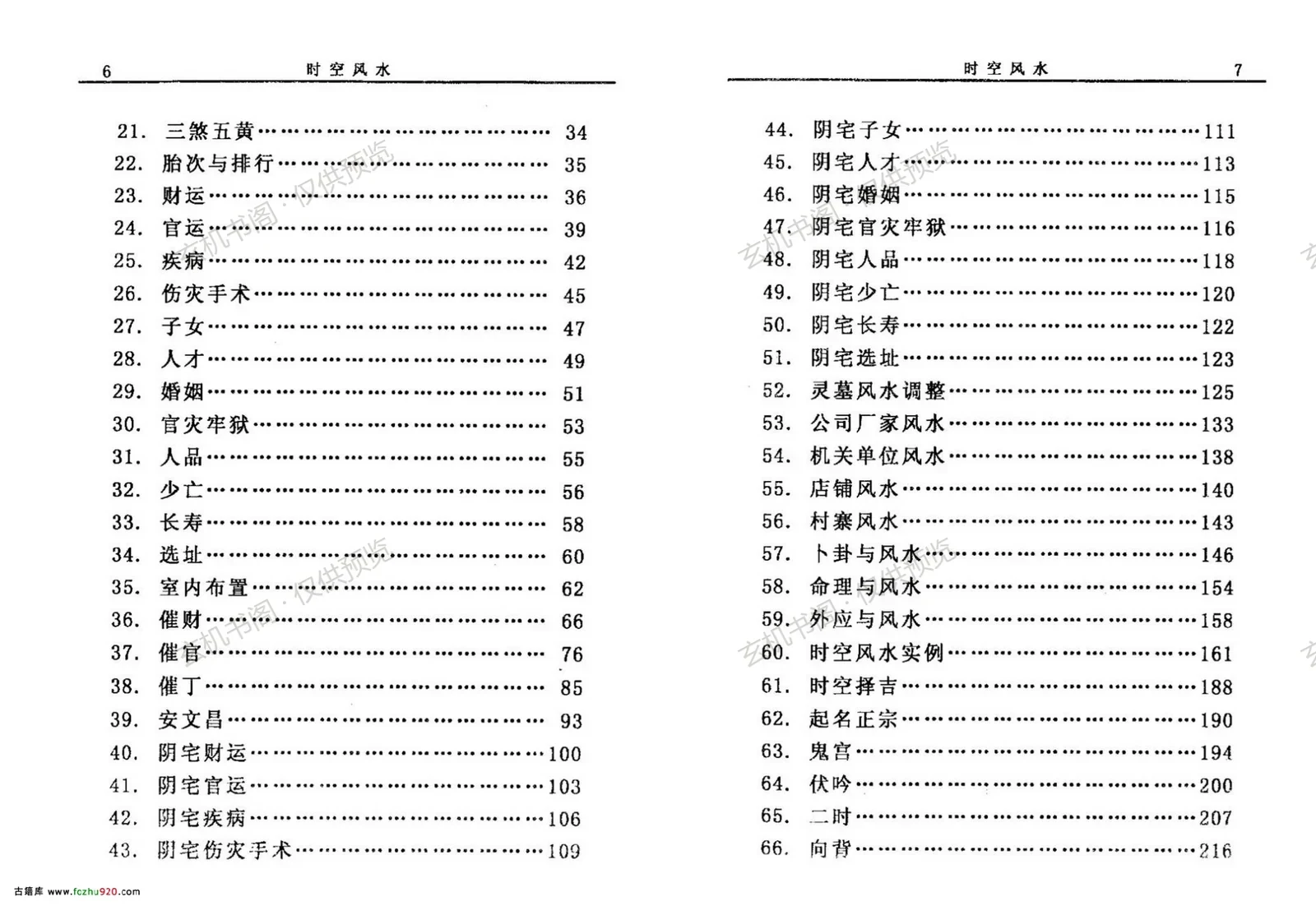
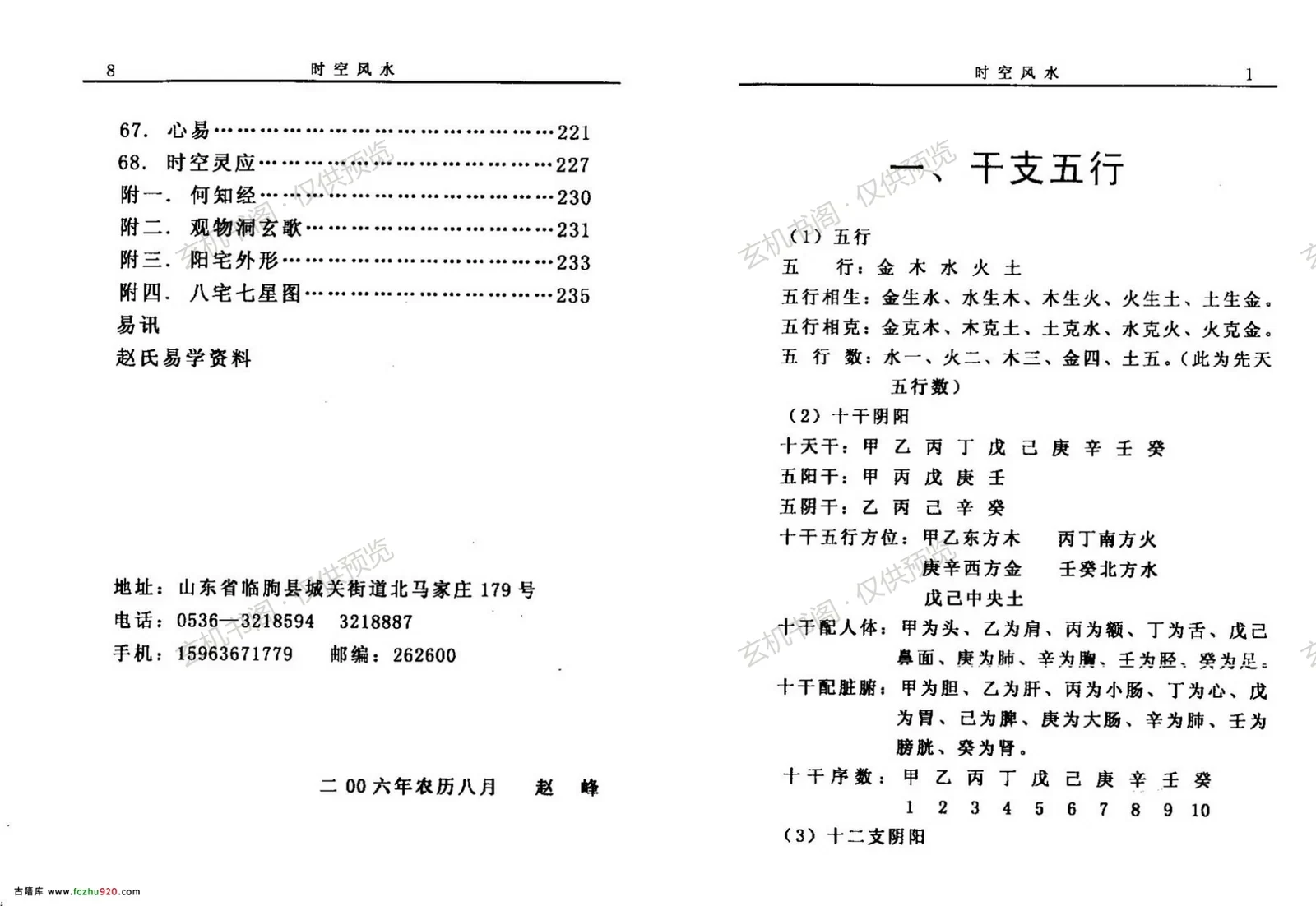
Published by Ocean Press in 2006, Zhao Feng's Space-Time Feng Shui proposes combining the time dimension of a site with its spatial layout. A BaZi chart is cast from the dwelling's or grave's timing and mapped onto the eight surrounding palaces; the five-element qualities, generation and restriction, and rise-and-fall balance of each palace are then used to judge fortune for the household and its individual branches. The book is organized as more than sixty short topics rather than formal chapters. The opening section covers stems and branches, the five elements, the eight trigrams and nine stars, casting BaZi, ten gods, determining strength, establishing the center, sitting and facing, the luopan, time and space, human-position assignment, five-element classification, palace combinations and opposite palaces. The middle section addresses specific outcomes for yang dwellings, such as career, wealth, talent, illness, marriage, childlessness and premature death, along with site selection, interior arrangement, doors, beds, floors, and methods to activate wealth, office, offspring and scholarship. The later section moves to yin dwellings and extends the method to factories, offices, shops and villages, ending with divination-based feng shui, fate-based feng shui, external correspondences, time selection, and appendices including the Hezhi Jing and Guanwu Dongxuan Ge.
Contents
Stems, branches, five elements, trigrams and nine stars
Casting BaZi, ten gods, strength assessment
Center, sitting-facing, luopan and space-time positioning
Human positions, five-element classes, palace combinations
Yang-dwelling readings: wealth, career, illness, marriage
Site selection, interior layout, activation methods
Yin-dwelling judgments and site adjustment
Commercial, shop and village feng shui; case studies
Key Points
The core method maps a time-based BaZi chart onto eight spatial palaces.
Basics come first, yang-dwelling readings next, yin dwellings later.
The author introduces a "balance point" method and discusses timing.
Appendices preserve classical mnemonic verses for reference.
Non-residential settings such as shops and offices are also covered.