Reading guide
Content guideOverview
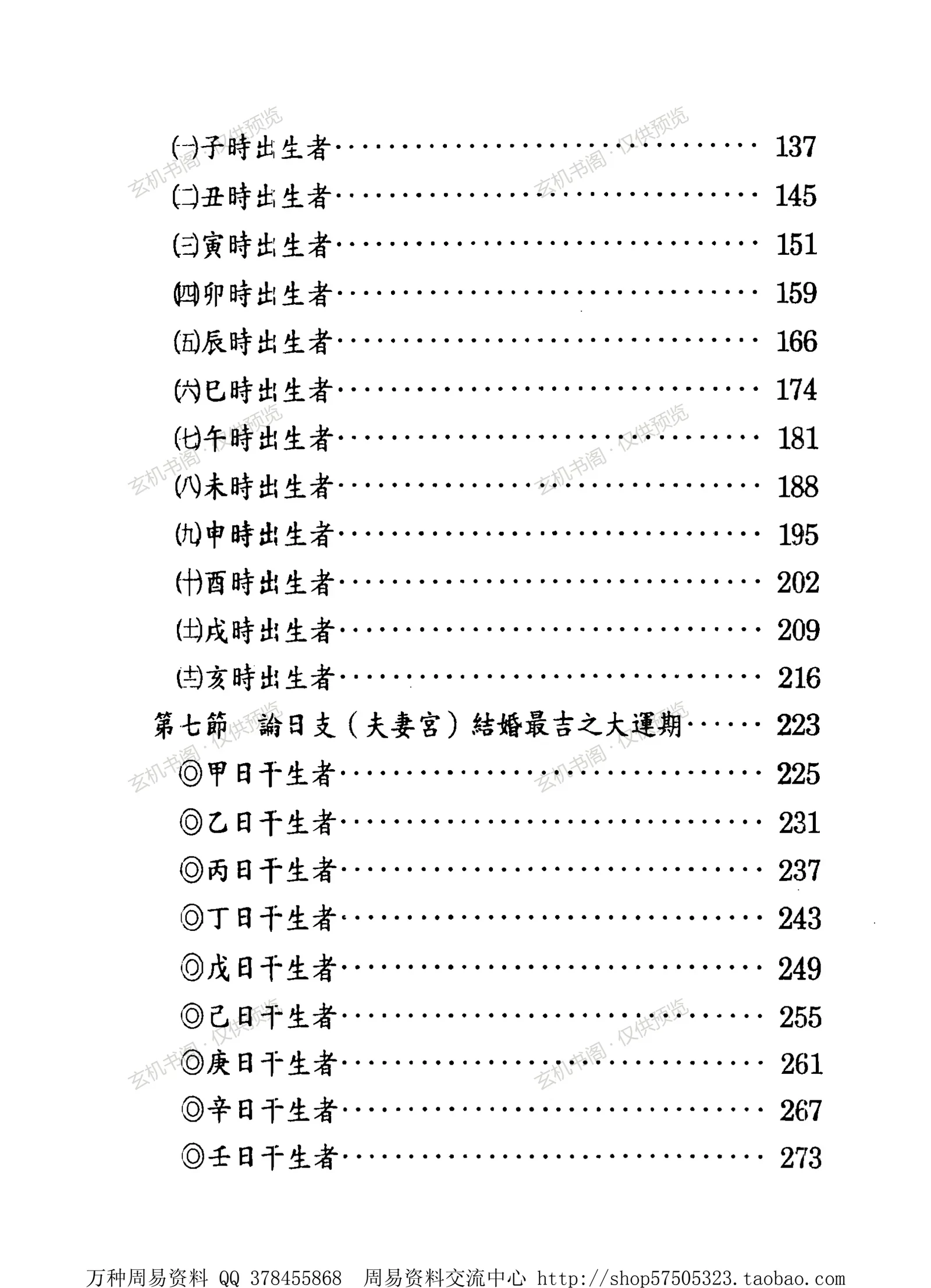
Authored by Zhang Qinghe, this book builds a destiny-analysis system that integrates Yijing qi-theory with traditional Four Pillars (Bazi). The table of contents shows Chapter One covering the origins and qi-theory of Bazi, including scientific rationale, the归纳 of year, month, day, and hour influences, formulas for calculating the start of major luck cycles, and the five-element nature of the ten heavenly stems. It focuses on the responses of five combinations, six clashes, six harmonies, and three harmonies, as well as control-transformation and the judgment of chart strength. A review of shensha discusses perspectives from Yuanhai Ziping, New Discussions on Destiny, and the Chinese Ten-Thousand-Year Calendar. The book then analyzes day-master destinies by birth month and by each of the twelve hours, and treats the day branch (spouse palace) as the key to the most auspicious major-luck period for marriage, with examples for the ten stems. Chapter Two provides case studies, and Chapter Eight discusses modern topics such as naming, marriage, and destiny supplementation. The structure moves from theory to formulas to examples, making it a reference for serious Bazi students.
Contents
Preface
Ch.1 Origins and qi-theory of Four Pillars
Bazi as natural science and chart structure
Yi-qi theory and combination/clash responses
Review of shensha perspectives
Day master by birth month and hour
Spouse palace and marriage luck periods
Chart and luck-cycle analysis; case examples
Key Points
Explains ten stems' two qi-parties and day-master analysis via Yijing qi-theory
Details responses of five combinations, six clashes, six harmonies, and three harmonies
Analyzes day-master destiny by each of the twelve months and twelve hours
Reviews shensha views in Yuanhai Ziping, New Discussions on Destiny, and calendars
Uses the day branch (spouse palace) to infer optimal marriage luck periods with examples