Reading guide
Content guideOverview
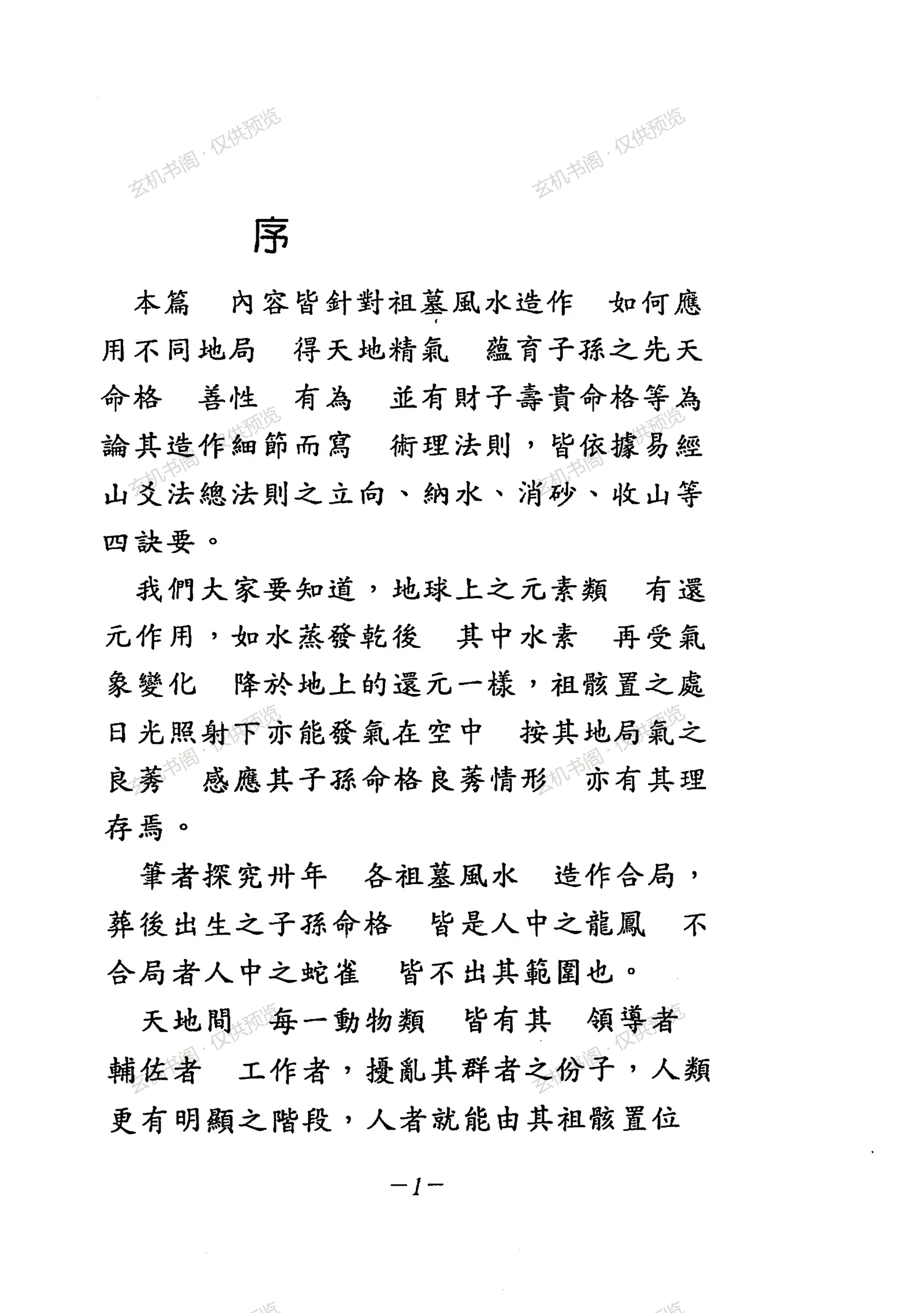
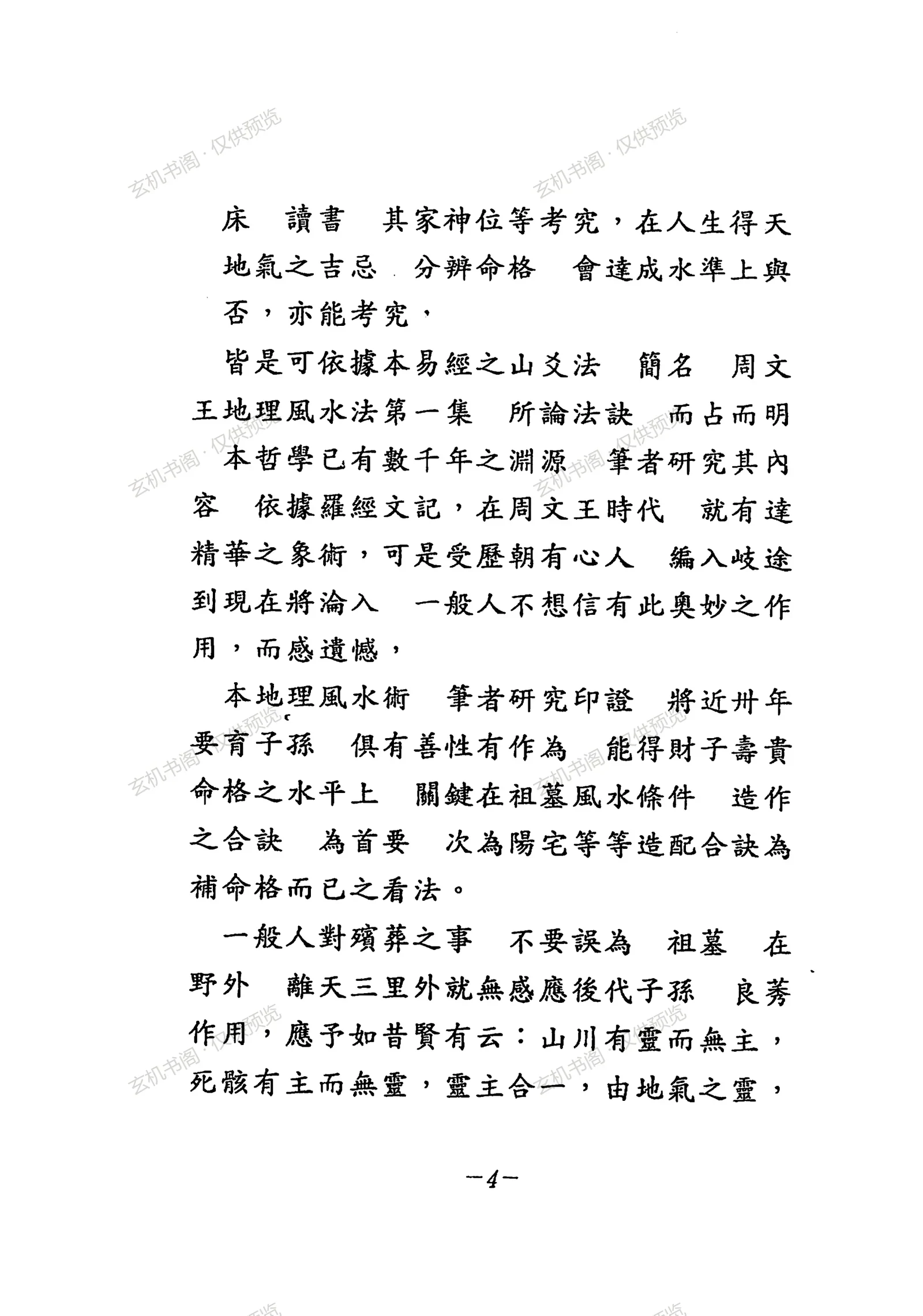
Written by Zhang Qinghe in spring 1999 in Changhua, this is a practical work on yinzhai (tomb) feng shui. The preface states that the book addresses ancestral tomb construction: how different land configurations are thought to gather vital energy and nurture descendants' innate fate, temperament and prospects for wealth, children, longevity and honor. The method follows the Yijing mountain-line approach, organized around four essentials: setting orientation, receiving water, dissipating sand and collecting mountains. Chapter One covers general theories of ancestral tomb resonance, including terrain types, house-branch fortunes, sand-body responses, the pros and cons of burial customs, boundary-water construction, public cemeteries and ossuary towers, distinguishing mountain and plain configurations. Chapter Two explores the favorable and flawed layouts of famous ancestral tombs, with cases such as the Wu family garden tomb, Houzai Cave, Yangmingshan, Changhua Seventh Public Cemetery, Daxi Guiren Tomb, and sites in Nantou, Pingtung, Chiayi and Taichung. Chapters Three and Four record teaching history and field construction notes from public cemeteries in Tongxiao, Yuchi, Wufeng, Dongshi, Jiji, Zhushan, Chiayi and Changhua, plus ritual procedures for tomb construction. The book is suited to readers with basic yinzhai knowledge who want practical insight into Taiwanese folk tomb-making.
Contents
Preface: on ancestral tombs and their resonance with descendants
Ch.1 General theory of ancestral tomb resonance (mountain/plain layouts, house branches, sand bodies, water methods)
Ch.2 Favorable and flawed layouts of famous ancestral tombs (Taiwan cases)
Ch.3 History of teaching
Ch.4 Field construction notes after advanced classes (public cemetery cases)
Appendix: ritual procedures for tomb construction
Key Points
Four essentials as the framework: orientation, water intake, sand dissipation, mountain reception
Emphasis on how land energy resonates with descendants' fate and fortune
Distinguishes mountain-site and plain-site methods
Numerous field cases of famous Taiwanese tombs and public cemeteries
Discusses modern burial forms such as public cemeteries and ossuary towers