Reading guide
Content guideOverview
The cover reads 'Yang Gong's Jade Box Formula' with the note 'Study materials for the Xuanming feng shui face-to-face class' and the name Liao Minsheng, indicating a compiled lecture handout rather than an old printed edition. The first six pages open with the idea that one must first know the nine palaces and then push the yuan periods to judge dragons and water. A sexagenary table follows with notes on the starting points of the middle and lower periods. The main text, under headings such as 'Distinguishing Yin and Yang Conjunction in the Hetu' and 'Four Configurations of Nine-Palace Dragons', explains how the white, black, green, crimson, and purple dragons each obtain water and configuration, illustrated with Hetu dot diagrams and a Luoshu nine-palace circle. The last page takes 'early heaven as substance, later heaven as function' and presents the two trigram arrangements with their mutual conjunction. The book mixes verses, diagrams and examples, focusing on the calculation of yuan periods and dragon-water matching; it requires some grounding in Sanhe feng shui and Hetu-Luoshu nine-palace theory.
Contents
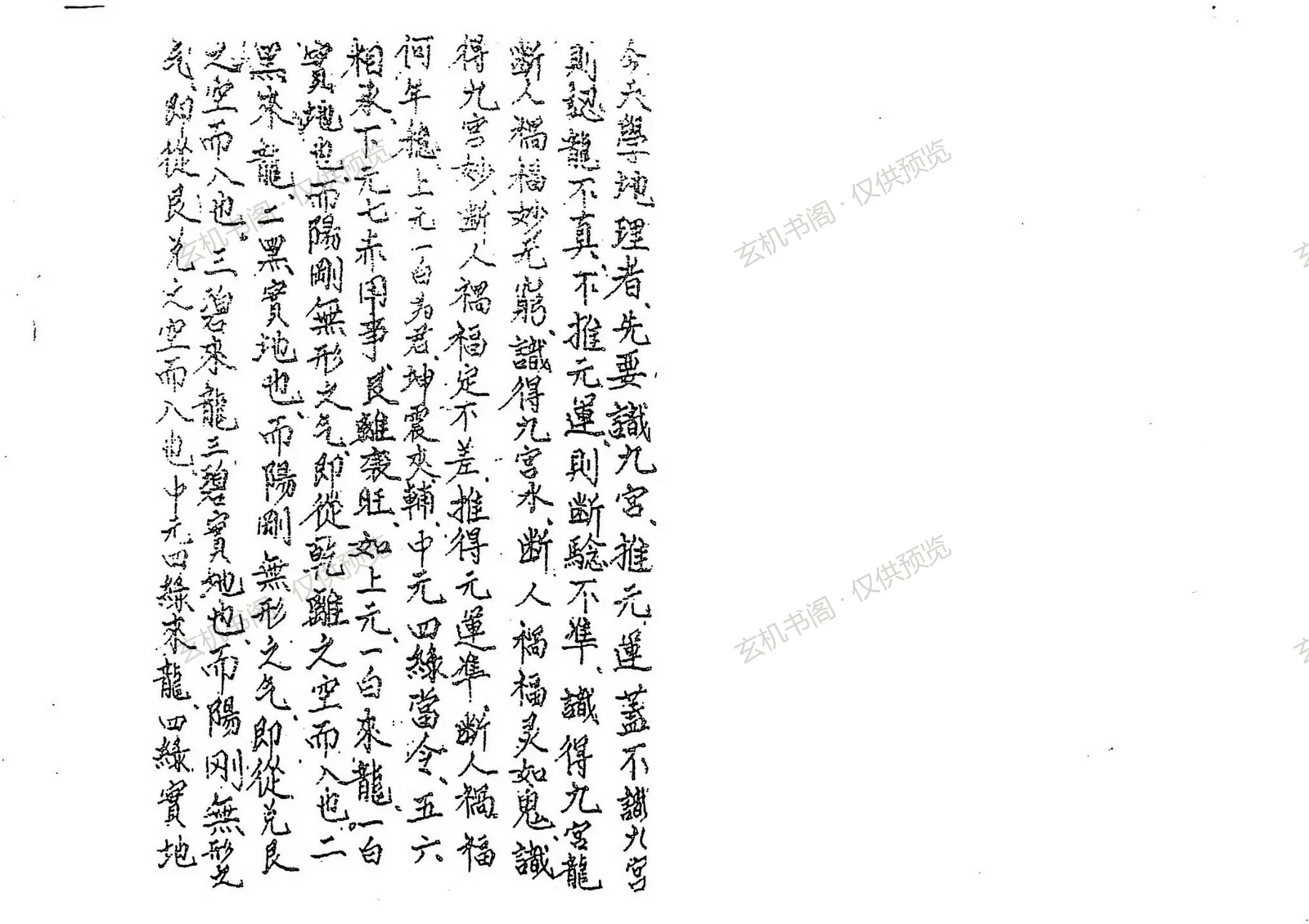
General introduction: know the nine palaces, push yuan periods, judge dragons and water
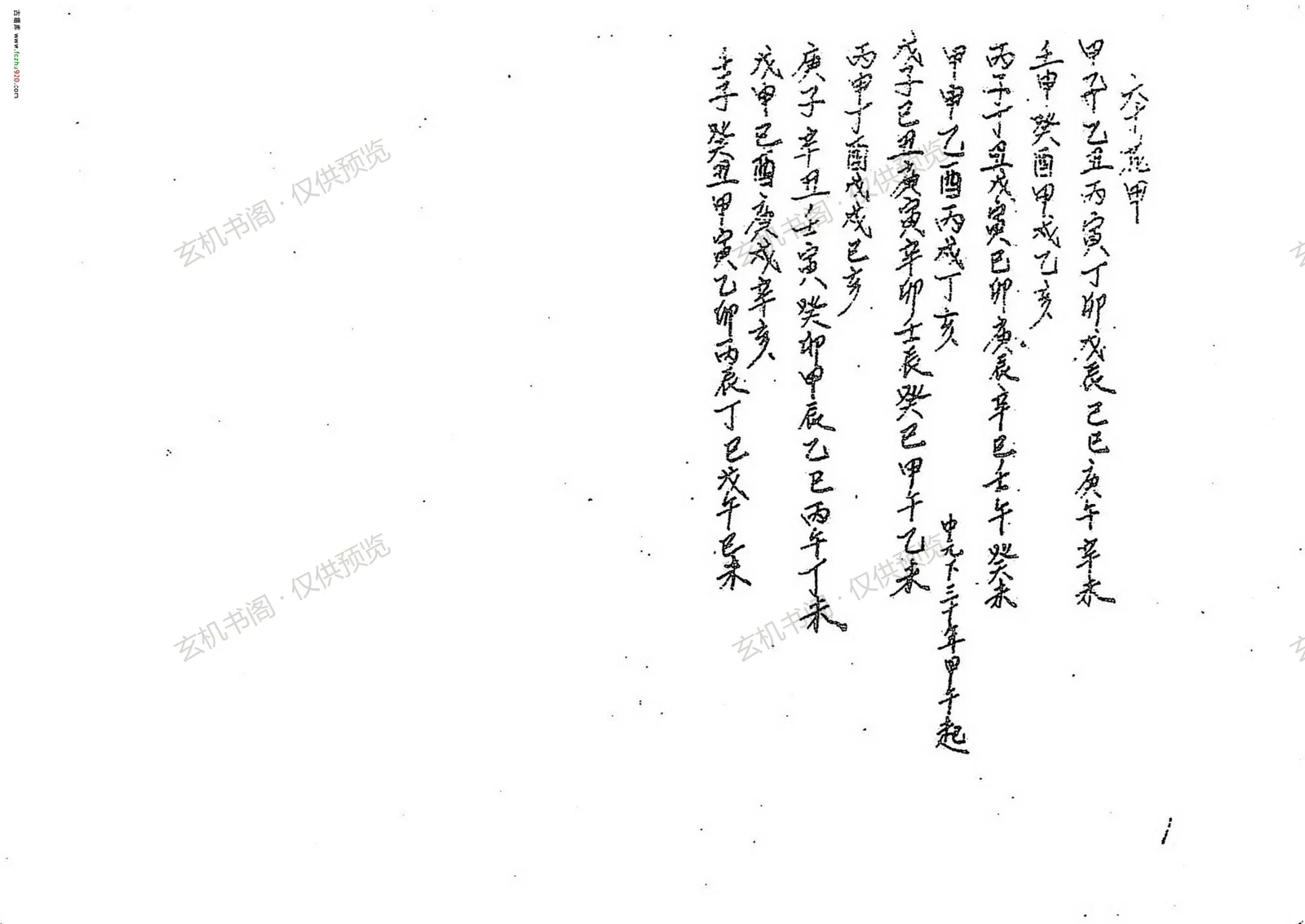
Sexagenary cycle and yuan-period starting table
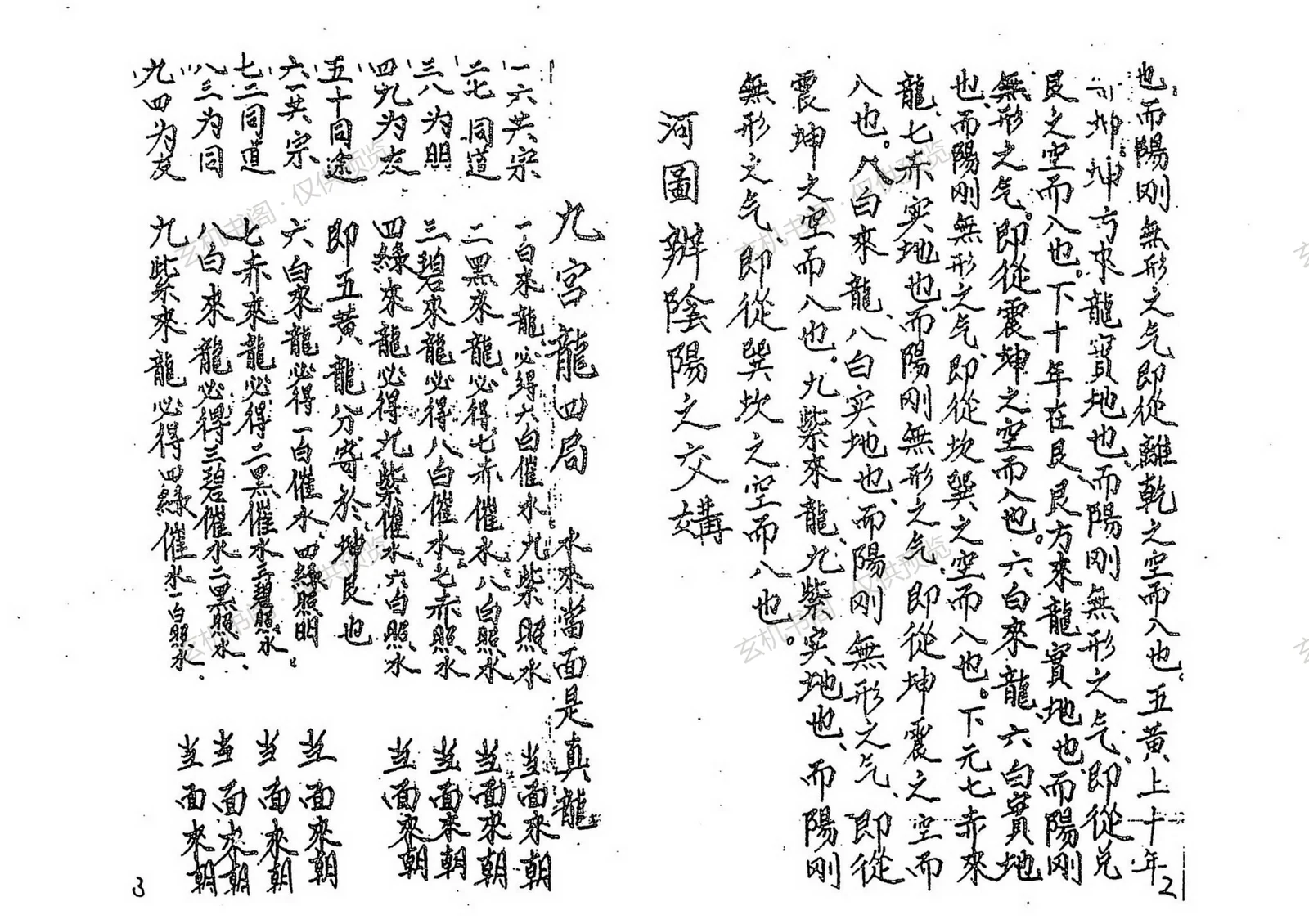
Distinguishing yin-yang conjunction in the Hetu
Four configurations of nine-palace dragons, from one white to nine purple
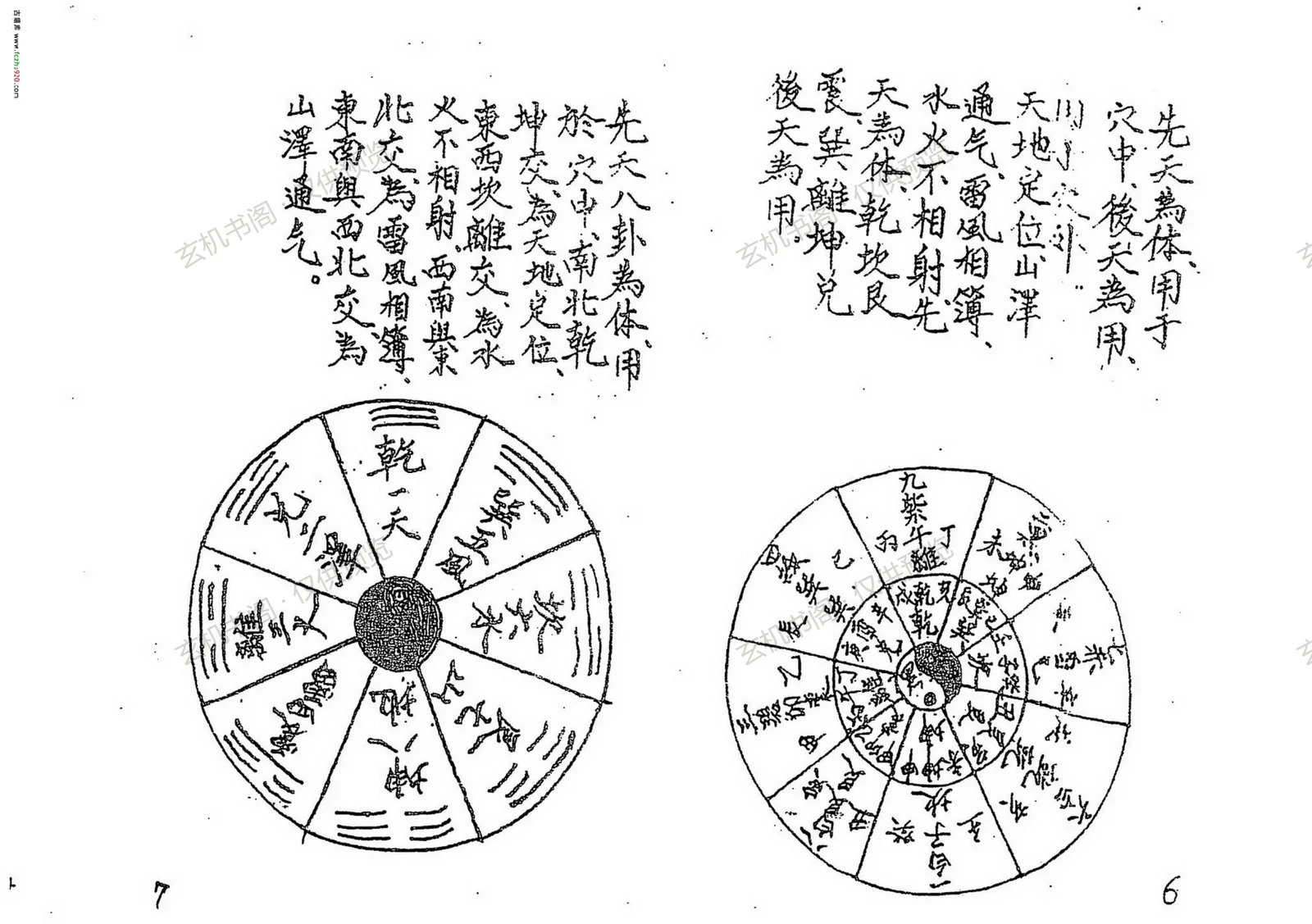
Hetu dot diagram and Luoshu nine-palace diagram
Early and later heaven trigrams as substance and function
Key Points
Takes nine-palace yuan periods as the overall framework for judgment
Lists sexagenary cycles and upper, middle and lower period starting rules
Explains step by step how each nine-palace dragon obtains water and configuration
Uses Hetu and Luoshu diagrams to explain yin-yang conjunction with the two trigram arrangements