Reading guide
Content guideOverview
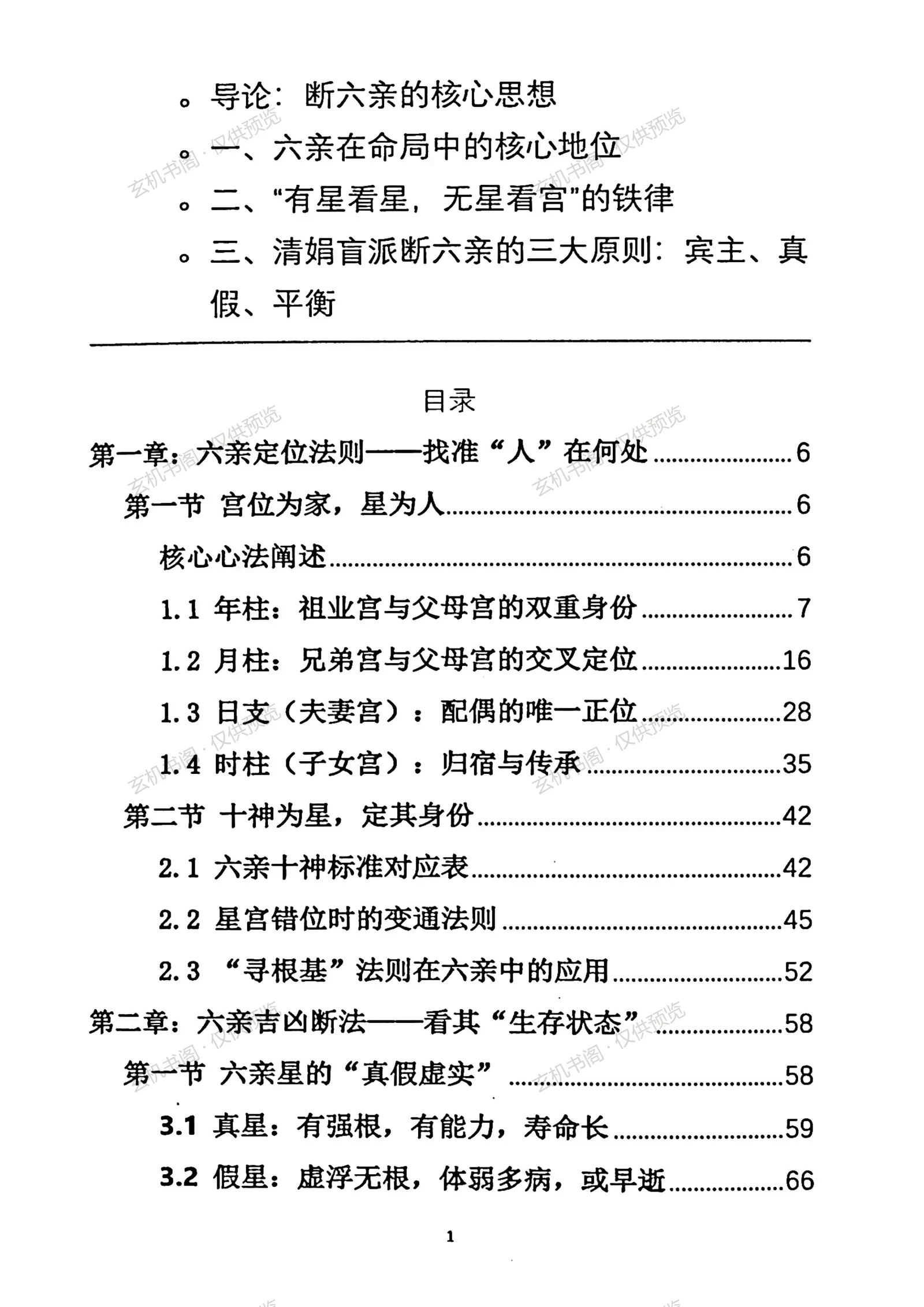
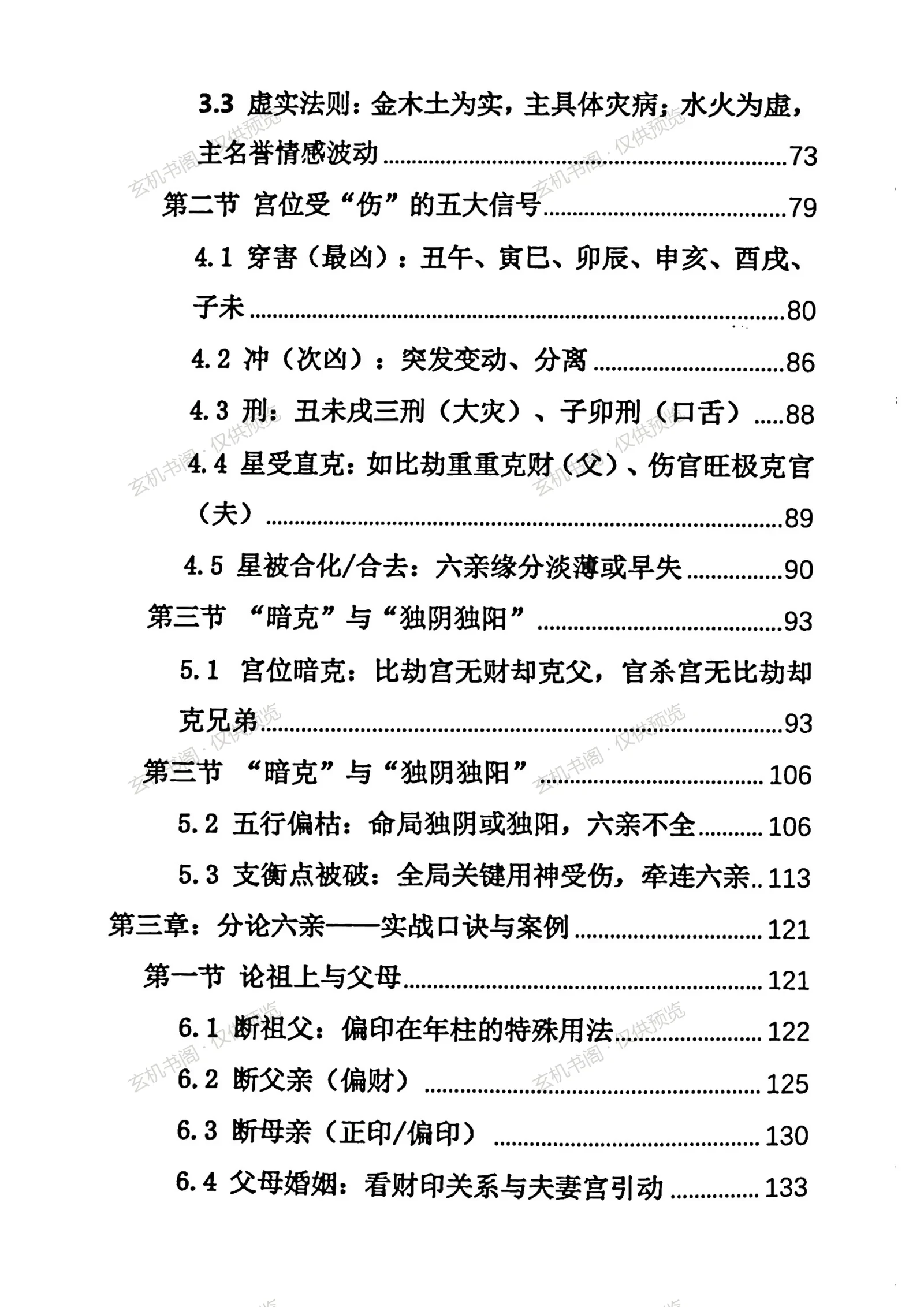
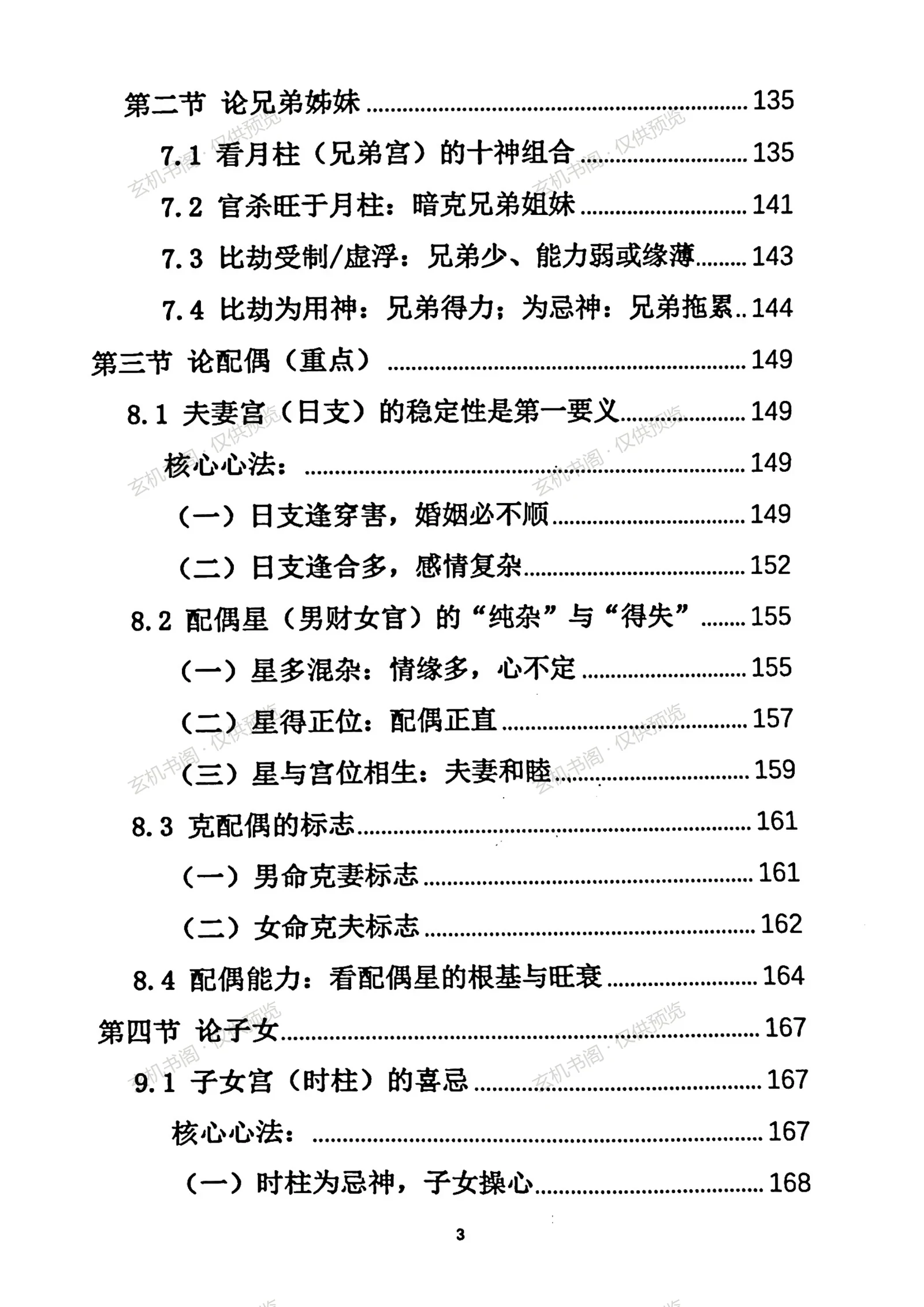
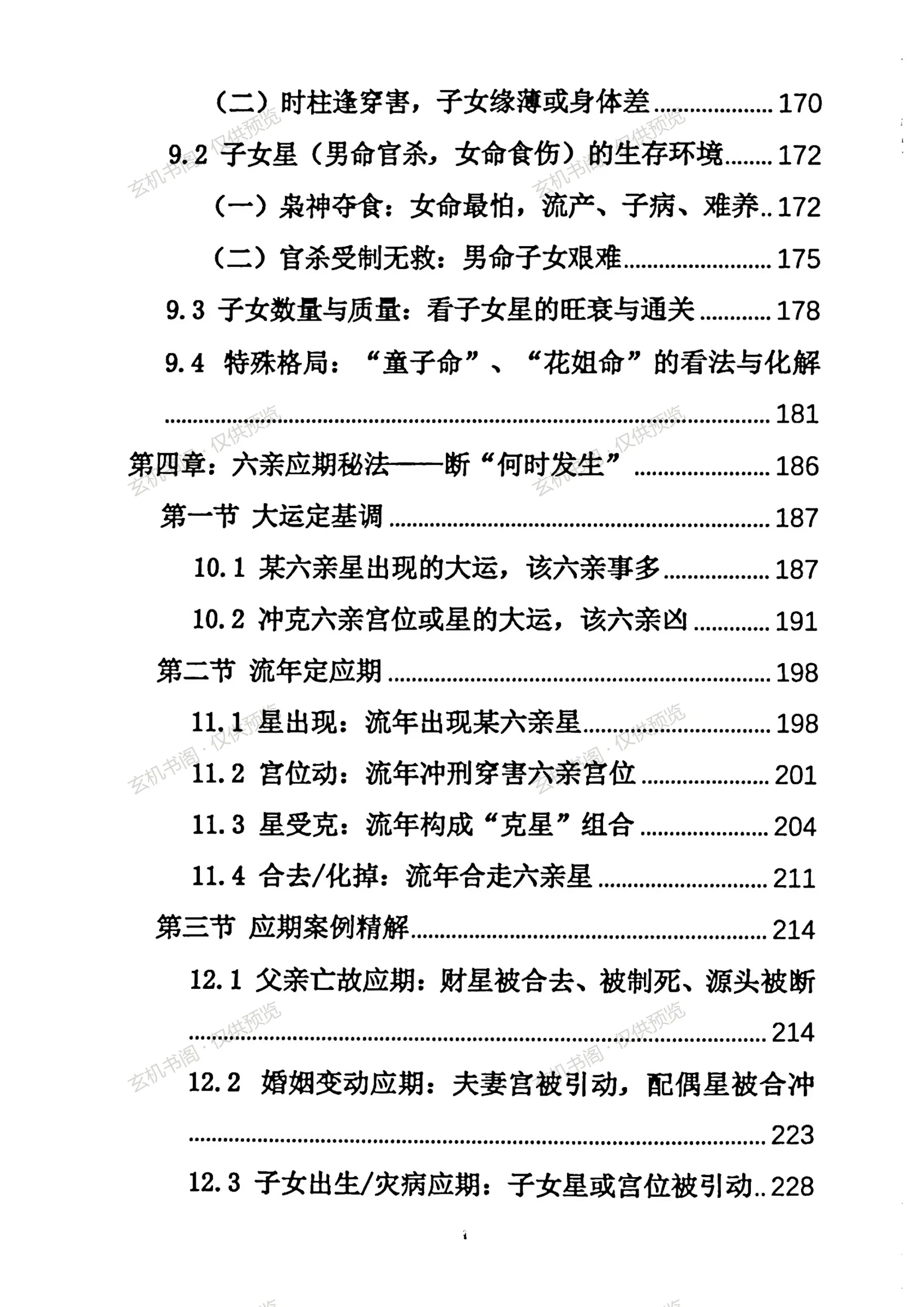
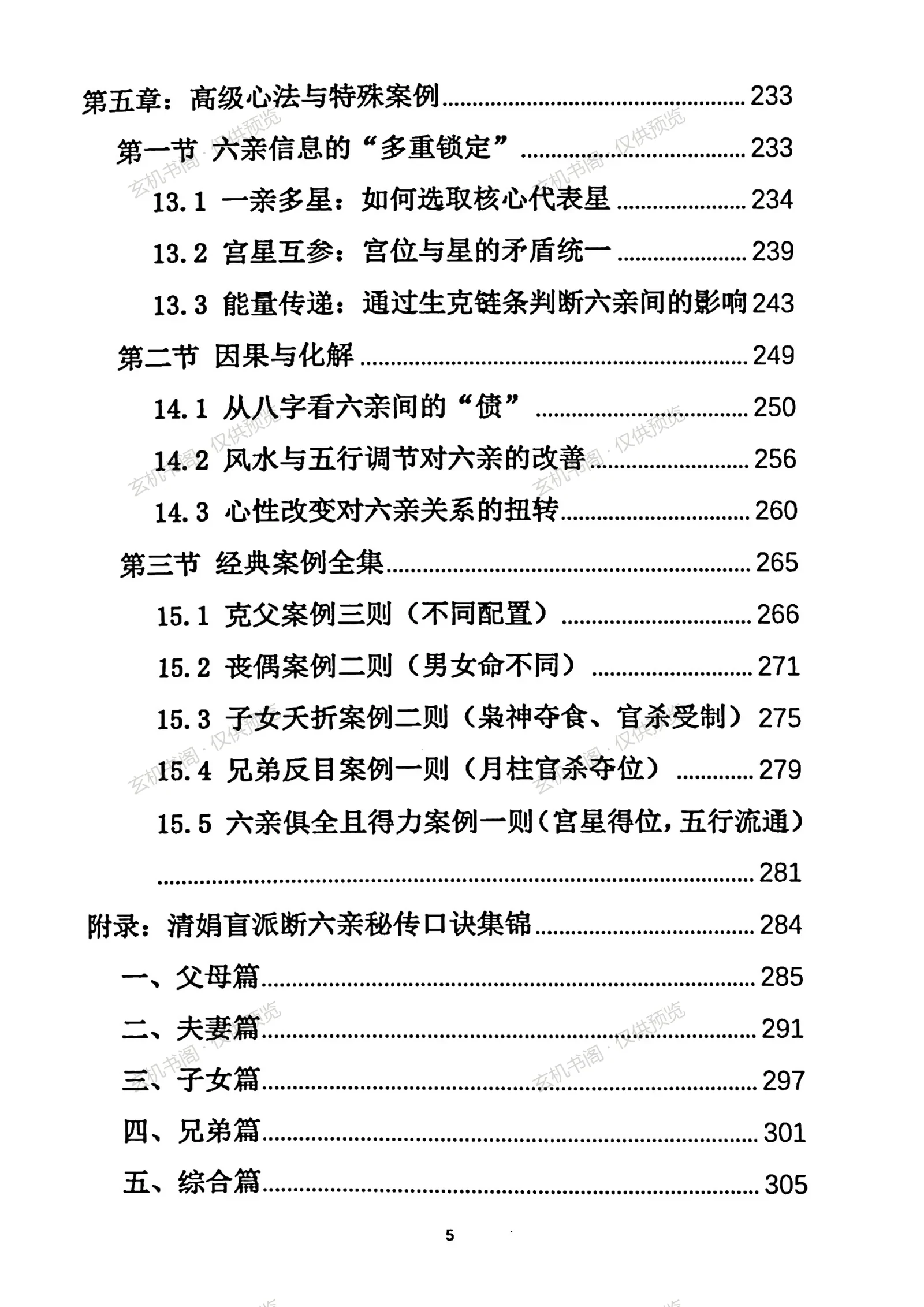
This book focuses on judging close relatives in Bazi charts. The table of contents is organized into five chapters: locating relatives through palace positions and Ten Gods; assessing their fortune through true-false strength, clashes, punishments, direct control, and combinations; discussing parents, siblings, spouse, and children with practical formulas and cases; determining timing through major luck cycles and annual pillars; and advanced methods with special cases. An appendix collects oral formulas from the Qingjuan blind school for reading relatives.
Contents
Locating relatives: palaces as homes, Ten Gods as people
Judging fortune: true-false strength and palace damage
Relatives in detail: parents, siblings, spouse, children
Timing: major cycles set the tone, annual pillars mark events
Advanced methods and special cases
Appendix: Qingjuan blind-school oral formulas
Key Points
Palace positions locate the person; Ten Gods define the identity.
The rule 'look at the star if present, at the palace if absent' runs throughout.
Clash, punishment, harm, direct control, and combination are key damage signals.
Timing first reads the major cycle, then the annual pillar for specific events.
Practical formulas are grouped by parents, spouse, children, and siblings.