Reading guide
Content guideOverview
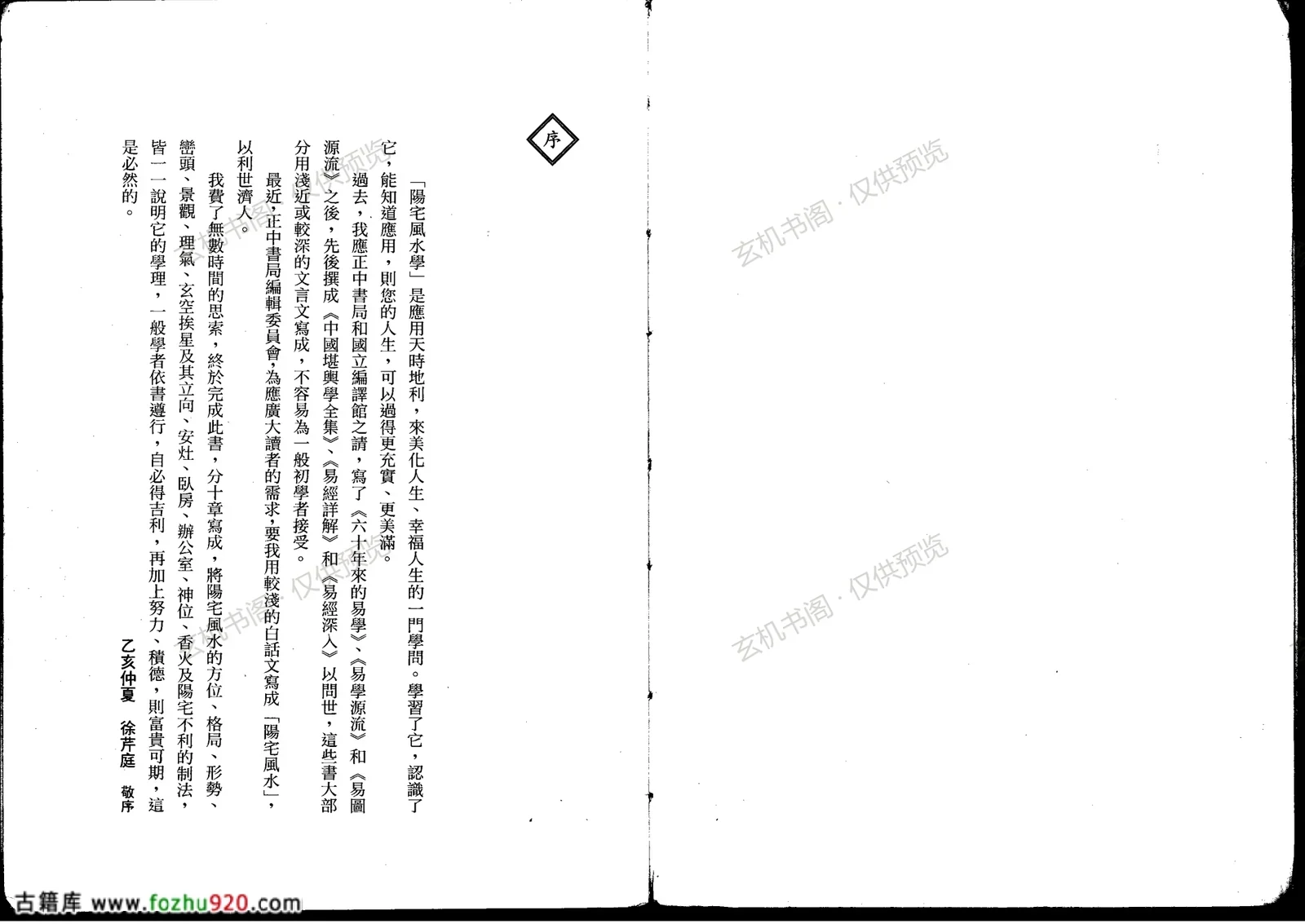
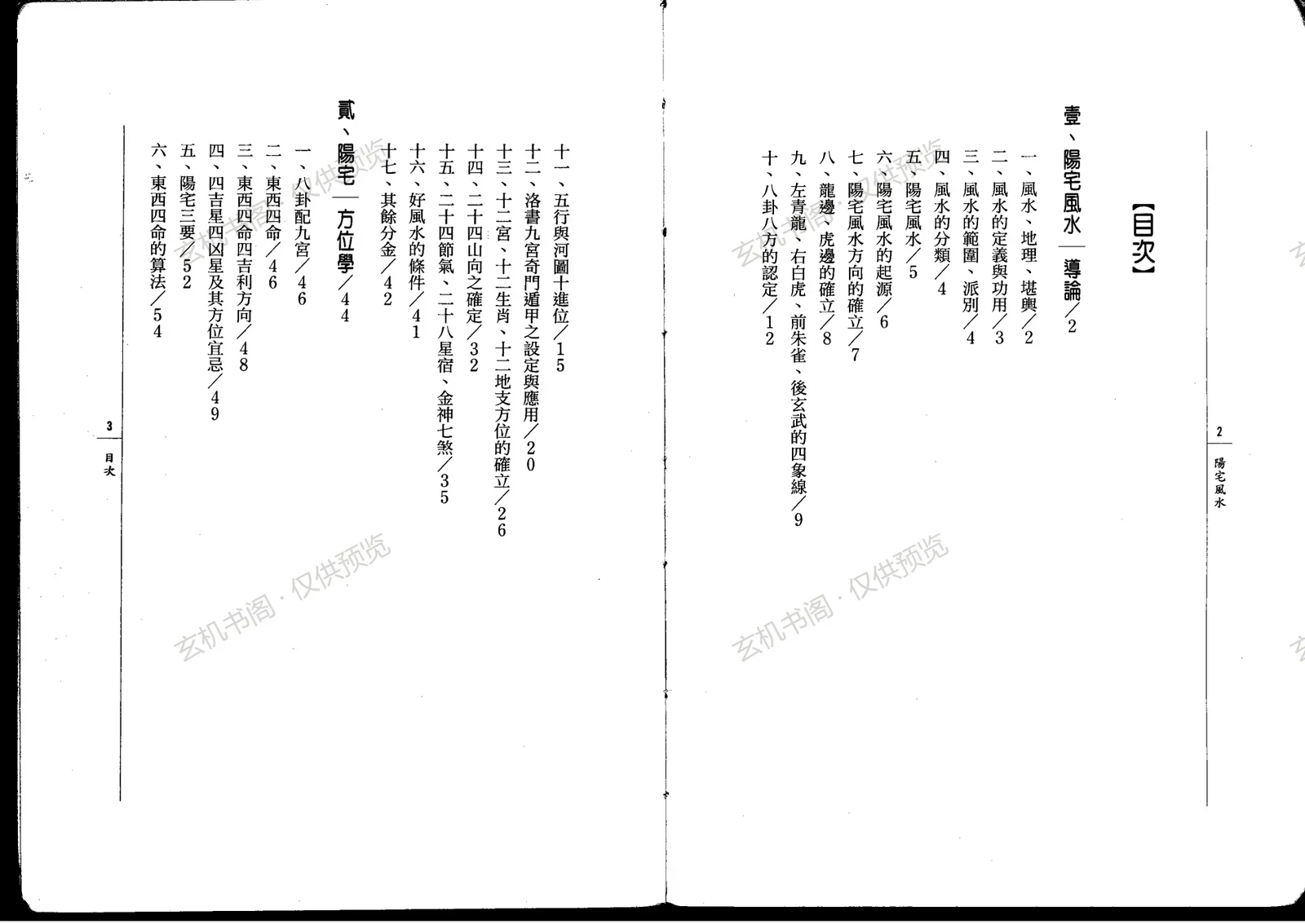
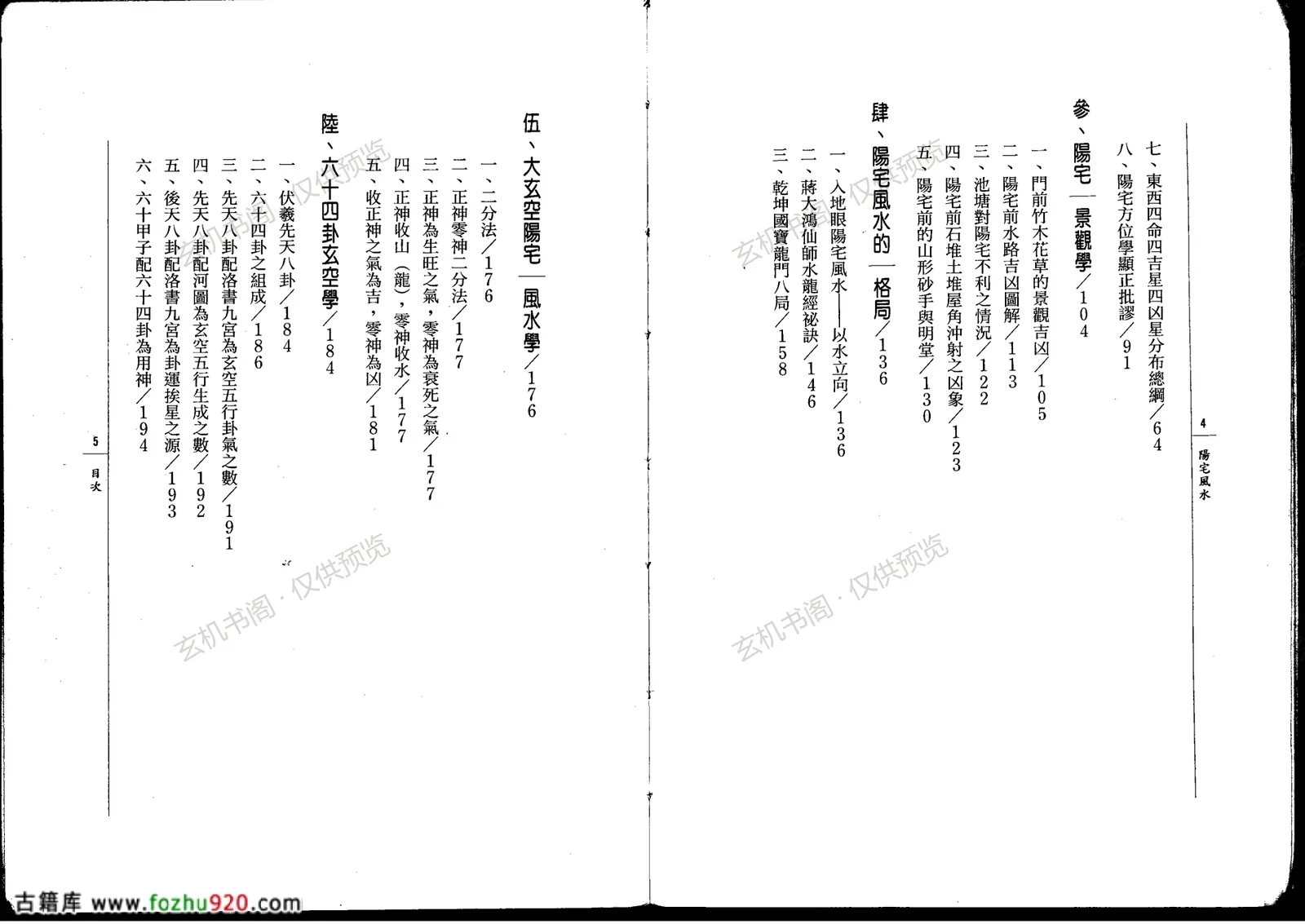
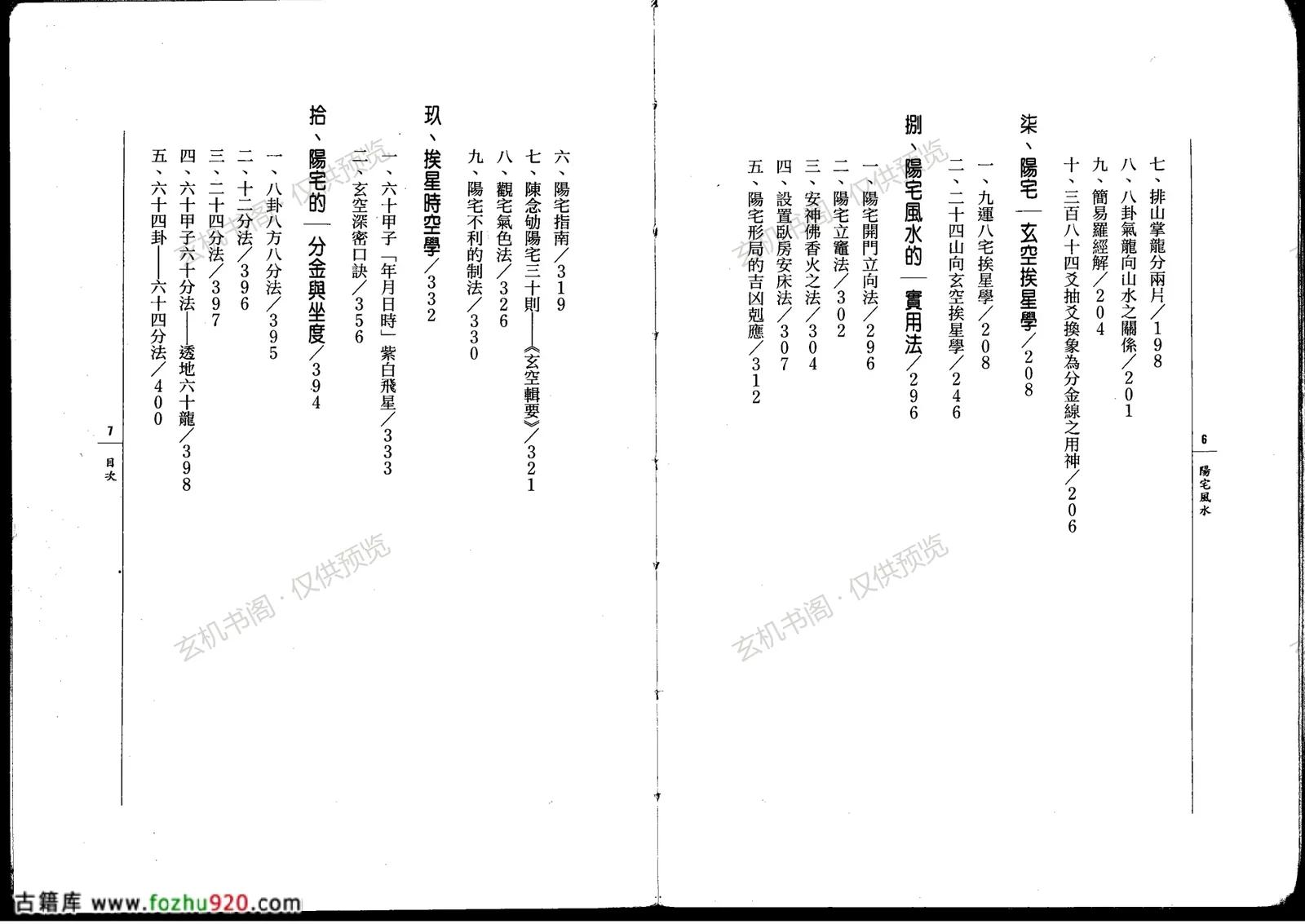
This is Xu Qinting's book on yangzhai (dwelling) fengshui, part of the Fujia astrology and divination series. The preface frames dwelling fengshui as the art of aligning with time and place to improve life, and notes that the author wrote in plainer vernacular for beginners. The ten chapters move from general introduction—definitions, schools, origins, orientation, the four symbols, eight trigrams and Hetu-Luoshu—to direction methods such as the East-West four lives and the four auspicious and inauspicious stars. Later chapters turn to form: landscape features like gate vegetation, water courses, ponds, sand and bright hall; configuration methods drawing on classical water-dragon texts; and the Great Xuankong approach of zero and positive spirits. The final chapters cover the sixty-four hexagram xuankong, flying-star time-space methods, practical rules for doors, shrines and beds, and the fineness of sitting degrees. It suits readers with some grounding in Sanyuan xuankong.
Contents
Ch.1 Introduction: definitions, schools, eight directions
Ch.2 Direction methods: four lives and nine palaces
Ch.3 Landscape: plants, water, ponds, sand
Ch.4 Configuration: classical water-dragon methods
Ch.5 Great Xuankong: zero-positive spirits
Ch.6-8 Hexagrams, flying stars, xuankong stars
Ch.9 Practical rules: doors, shrines, beds
Ch.10 Sitting degrees and minute divisions
Key Points
Sanyuan xuankong is the main theoretical spine, with form-school material included
Detailed treatment of four lives, auspicious stars and palace trigram matching
Cites Jiang Dahong's water-dragon classic and Chen Nianqu's xuankong anthology
Practical sections on doors, shrines, beds and reading qi
Final chapter on sitting degrees and sexagenary matching