Reading guide
Content guideOverview
Published by Yulin Publishing House and written by Wang Xiang'an, this book presents Yangzhai (dwelling) feng shui as a practical study of how environment affects people, rather than mere superstition. Opening with a general discussion of Yangzhai feng shui, it examines the relationship between feng shui and science, then moves to the categories of 'spontaneous movement' and 'spontaneous stillness,' explaining how orientations are classified as dynamic or static and applied in dwellings. A further section compares the cycles of heaven and earth, touching on Hetu-Luoshu and the three-yuan-nine-yun system, while another chapter discusses 'storing wind and gathering qi' in relation to ethical and practical choices of residence. The final chapter addresses annual auspicious and inauspicious influences, including the three sha and the nine stars. With a table of contents and prefaces, the book aims to organize traditional feng shui theory systematically and is suited to readers interested in Yangzhai kanyu.
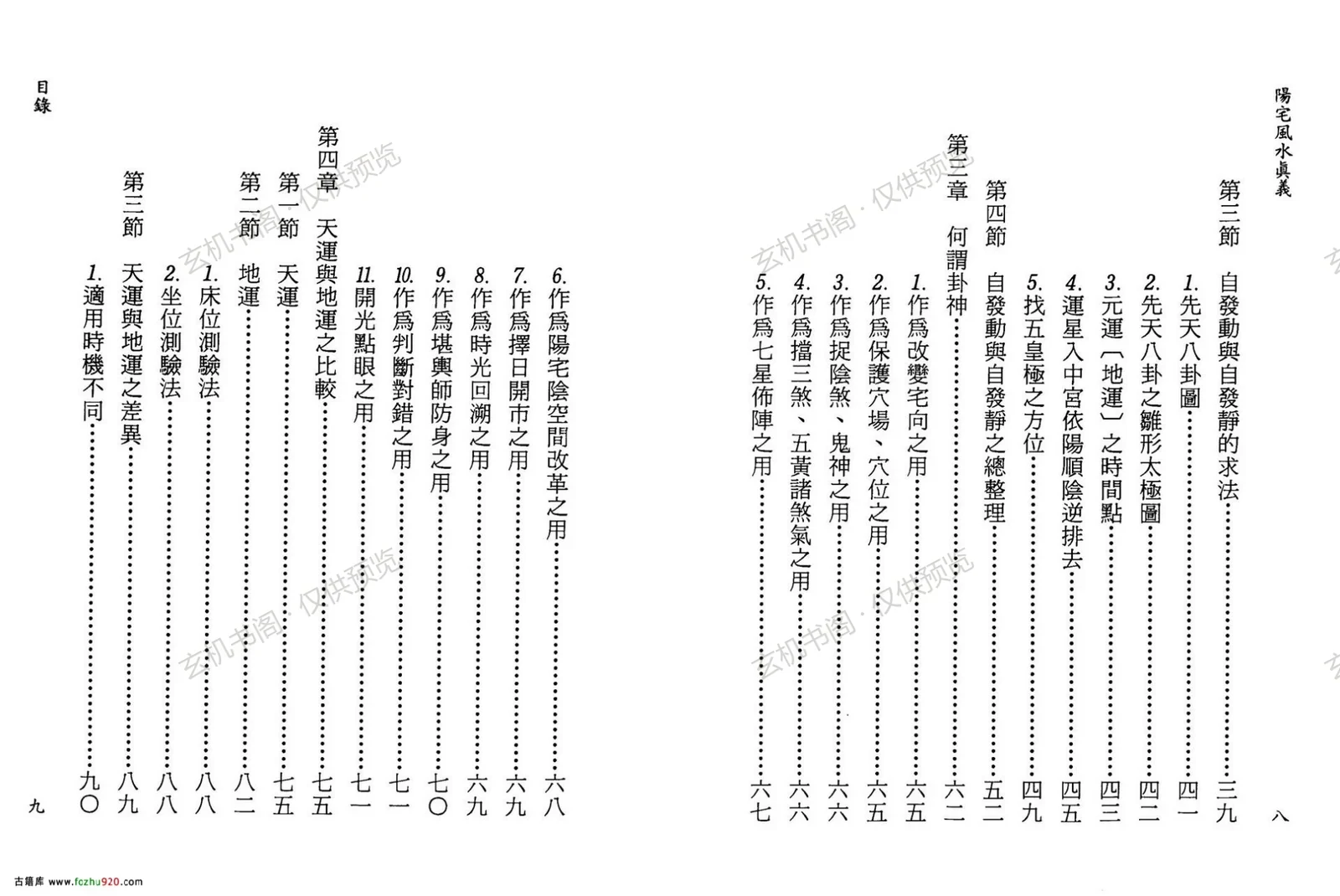
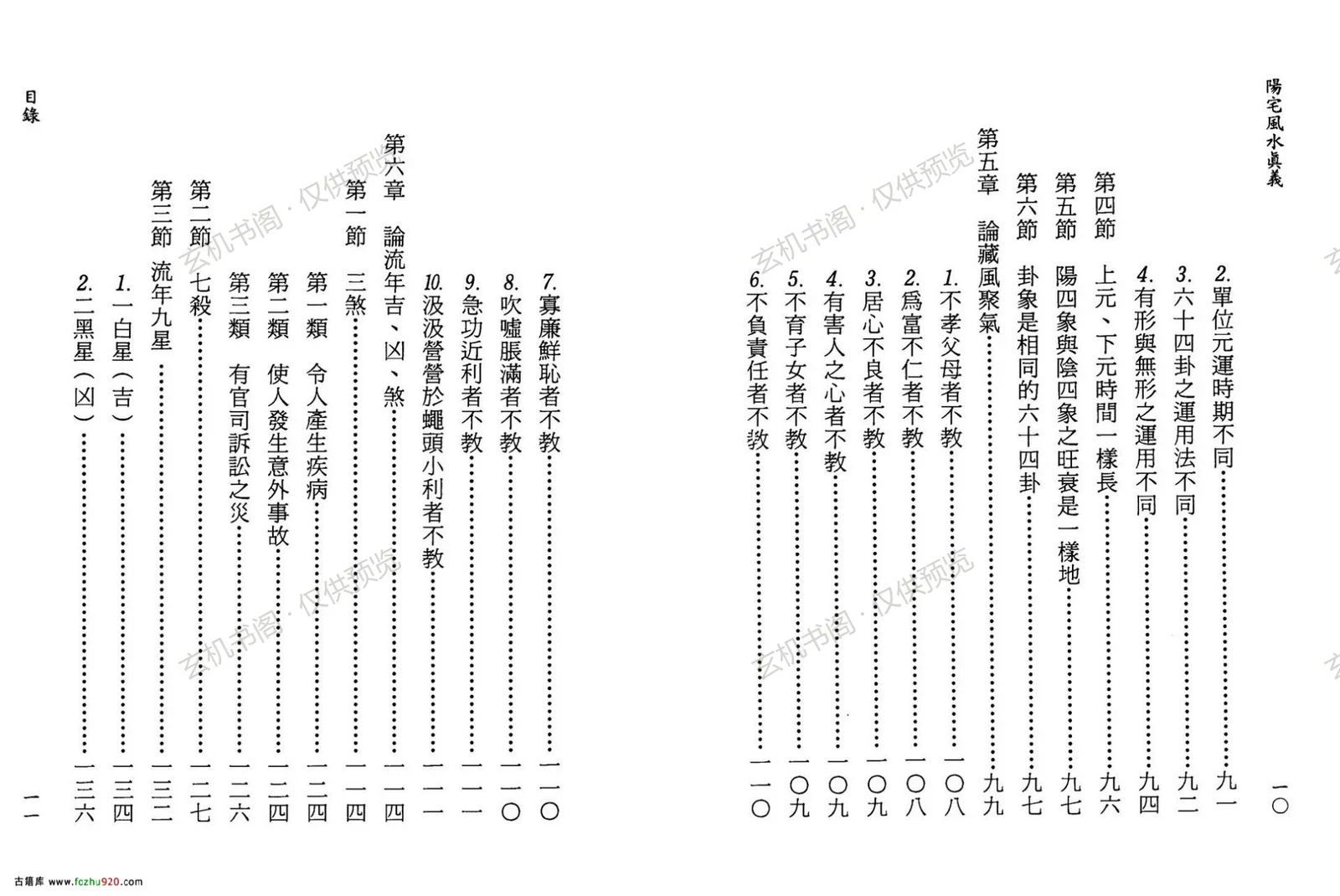
Contents
Chapter 1: General principles of Yangzhai feng shui
Chapter 2: Spontaneous movement and stillness, dynamic and static orientations
Chapter 3: Methods for deriving movement and stillness: earlier/later heaven trigrams, cycles, five-yellow positions
Chapter 4: Comparing heavenly and earthly cycles, seat-position testing
Chapter 5: Storing wind and gathering qi, ethical choice of residence
Chapter 6: Annual auspicious and inauspicious influences: three sha, seven killings, nine stars
Key Points
Explains feng shui qi-field and environmental effects from a modern scientific angle
Distinguishes dynamic and static orientations and gives dwelling applications
Discusses heavenly and earthly cycles, yuan-yun and five-yellow positions
Covers storing wind and gathering qi with practical and ethical judgment
Concludes with annual influences, including three sha and nine stars