Reading guide
Content guideOverview
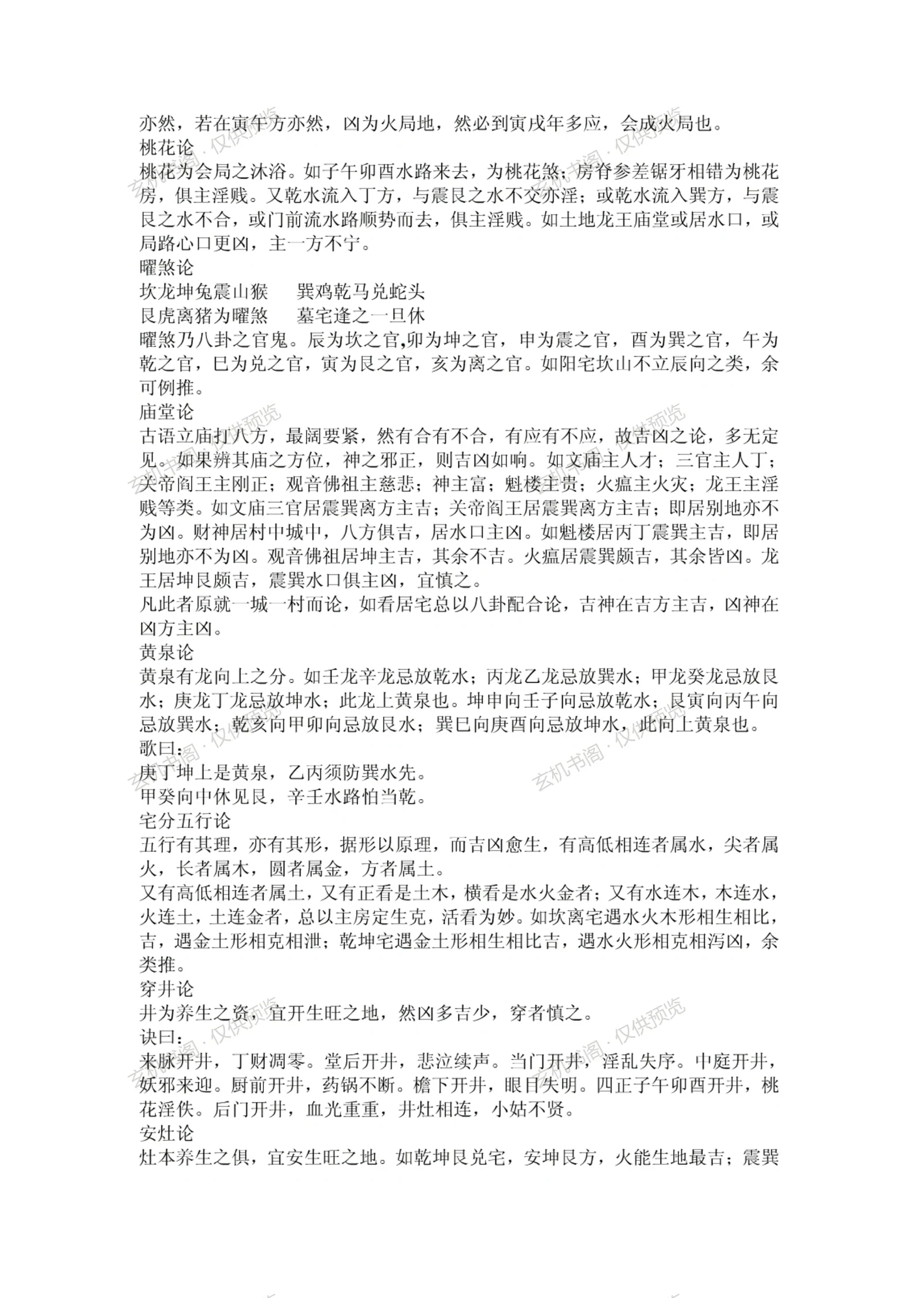
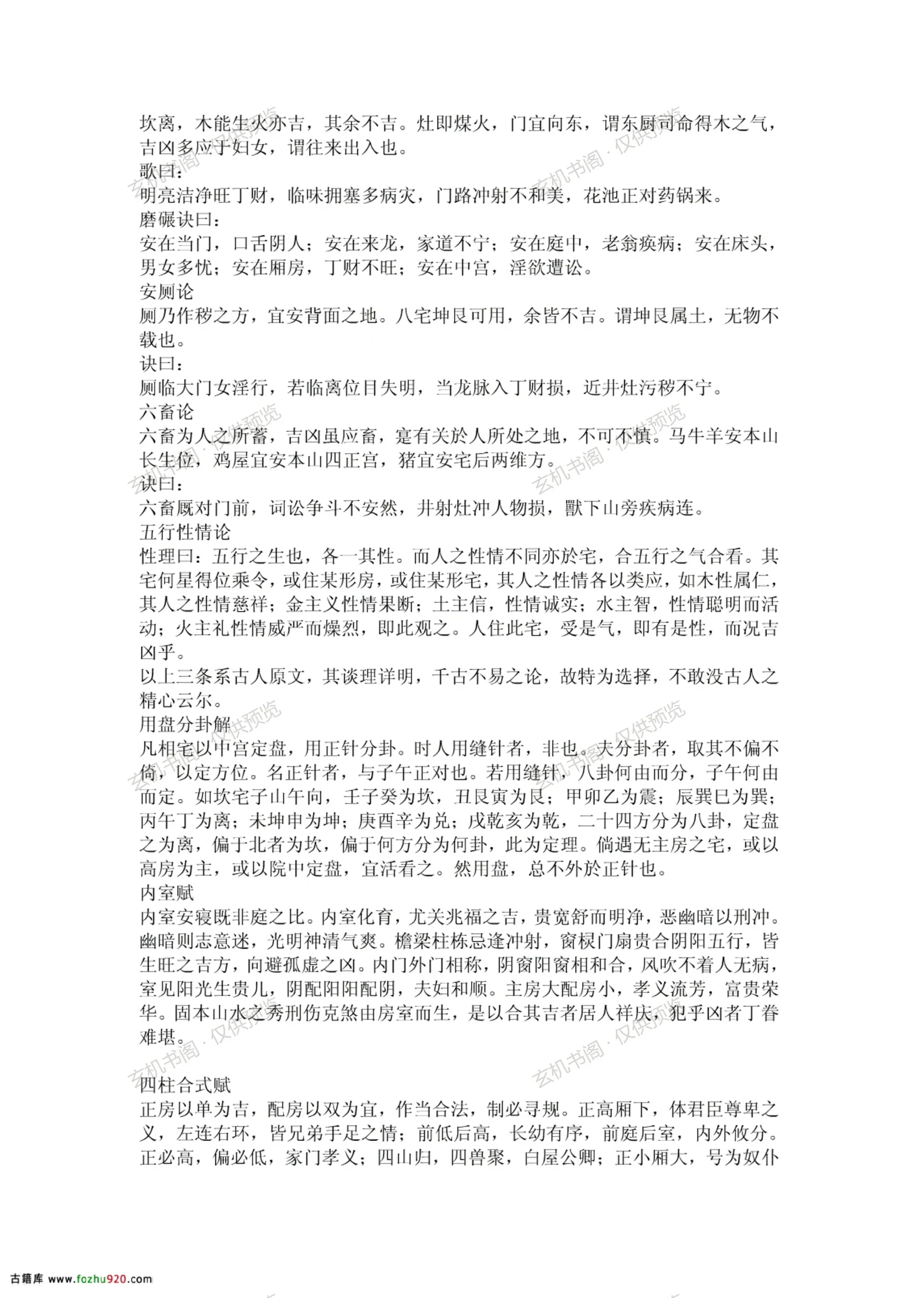
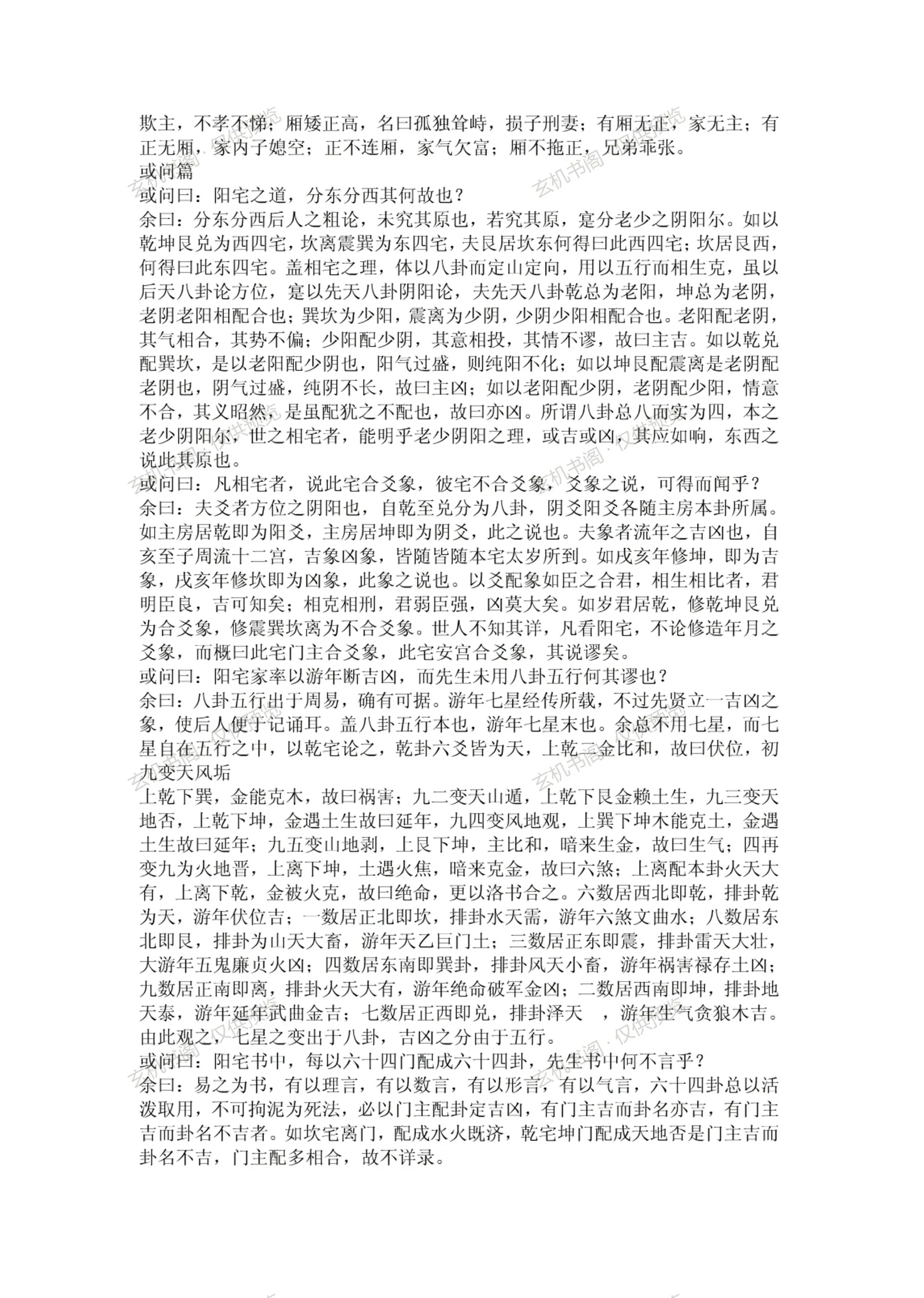
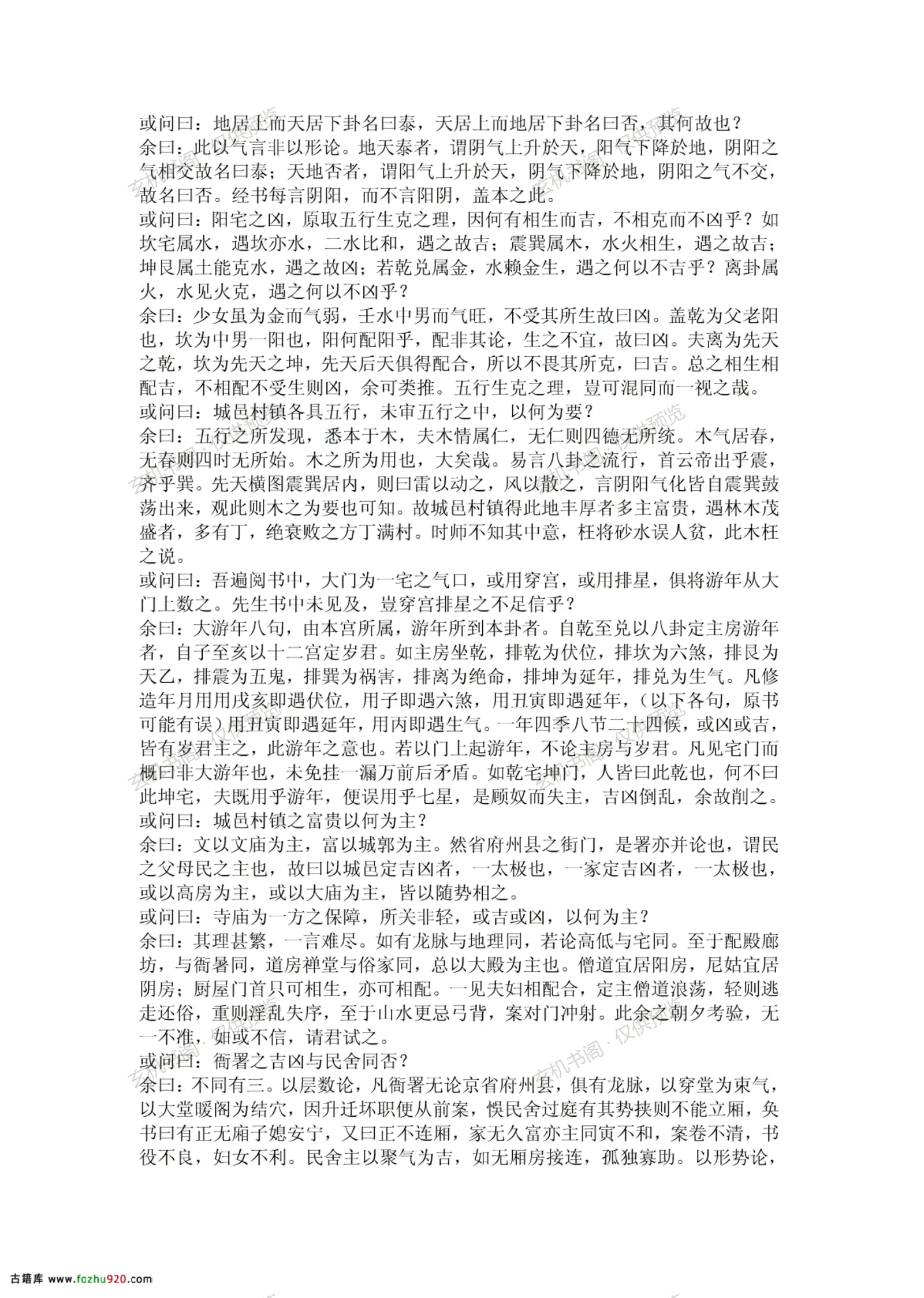
Yangzhai Huiyi is a traditional Chinese feng shui text focused on evaluating residential dwellings through trigram orientations and the Five Elements. Its table of contents shows sections organized by the eight dwelling trigrams, with diagrams for the eight gates and nine palaces of Qian, Kan, Gen, Zhen, Xun, Li, Kun and Dui houses. The book includes discussions on misfortunes such as injury to men and women, offenses against superiors, theft, hanging, fire and sexual impropriety, as well as methods for assessing auspicious and inauspicious locations like peach blossom, yaosha, temples and yellow springs. It also covers the Five Elements of house forms, well digging, stove placement, toilet placement, livestock, inner chambers and a question-and-answer section on yin-yang pairing, wandering year stars and differences between urban, official, temple, study and market buildings. The text reflects popular feng shui practice and is useful for studying traditional architectural divination and the transmission of mantic literature.
Contents
Eight dwelling trigram diagrams: Qian, Kan, Gen, Zhen, Xun, Li, Kun and Dui gates and palaces
Discussions of misfortunes: injury, offenses, theft, hanging and fire
Auspicious and inauspicious locations: peach blossom, yaosha, temples and yellow springs
Five Elements of house forms, wells, stoves, toilets and livestock
Plate division, inner chambers and four-pillar matching
Question-and-answer section on yin-yang pairing, Five Elements and building types
Key Points
Uses trigram orientations and Five Elements as the basic framework for judging dwellings
Emphasizes the height and form relationships between main and secondary buildings
Includes eight dwelling trigram diagrams for checking gates, stoves, wells and toilets
The question-and-answer section addresses yin-yang pairing, wandering year stars and urban-rural differences
Contains concrete misfortune judgments such as fire, theft, hanging and sexual impropriety