Reading guide
Content guideOverview
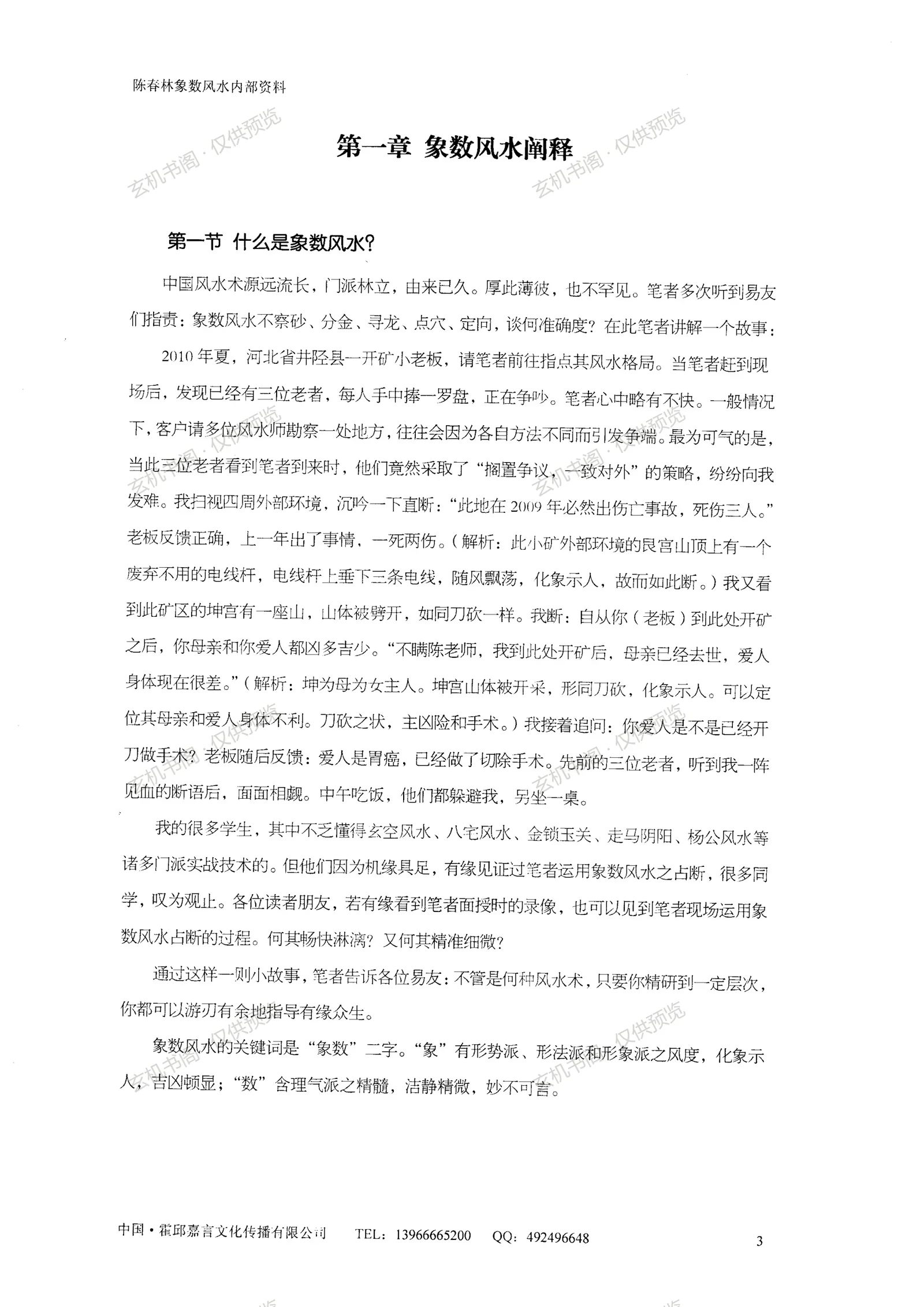
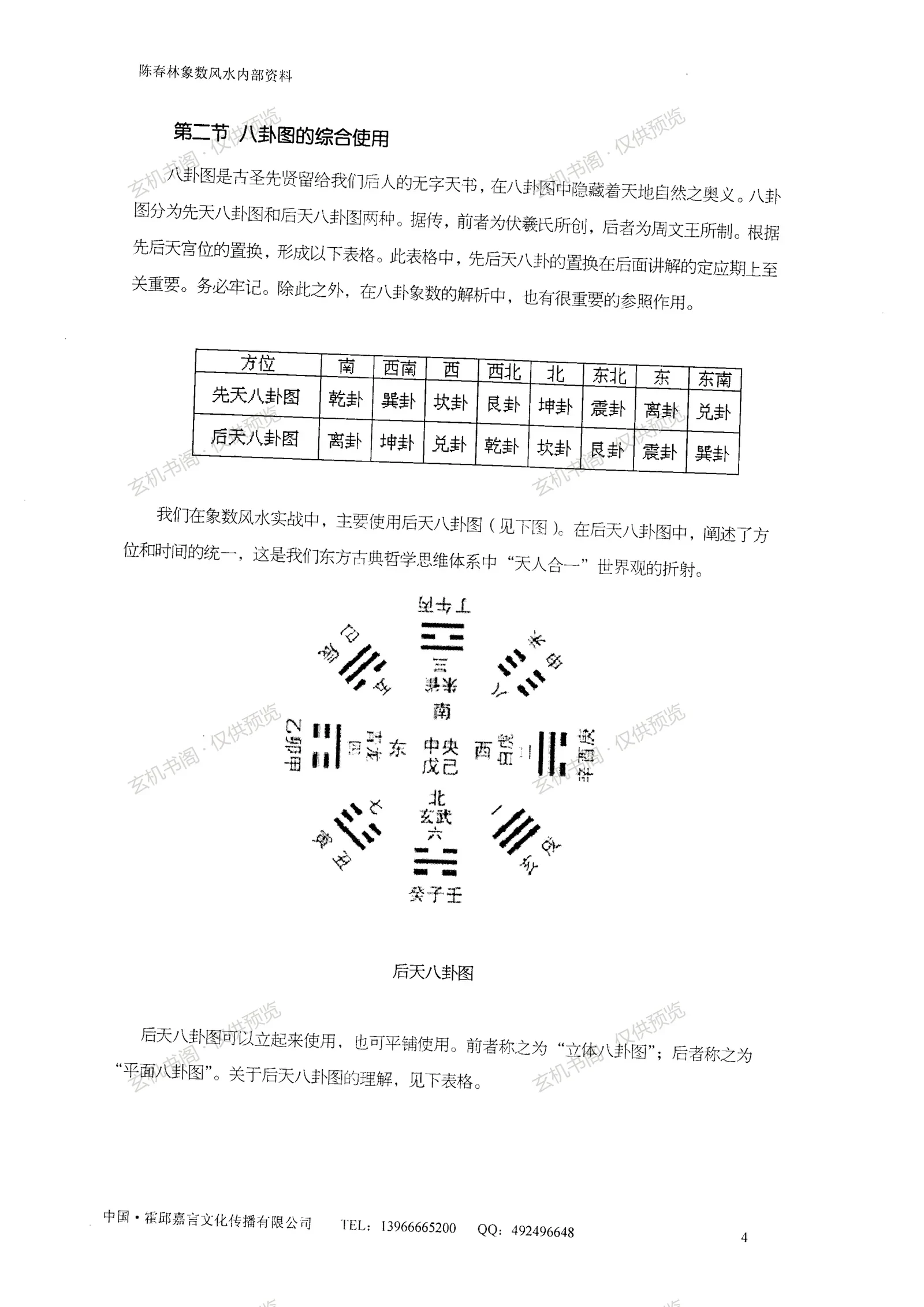
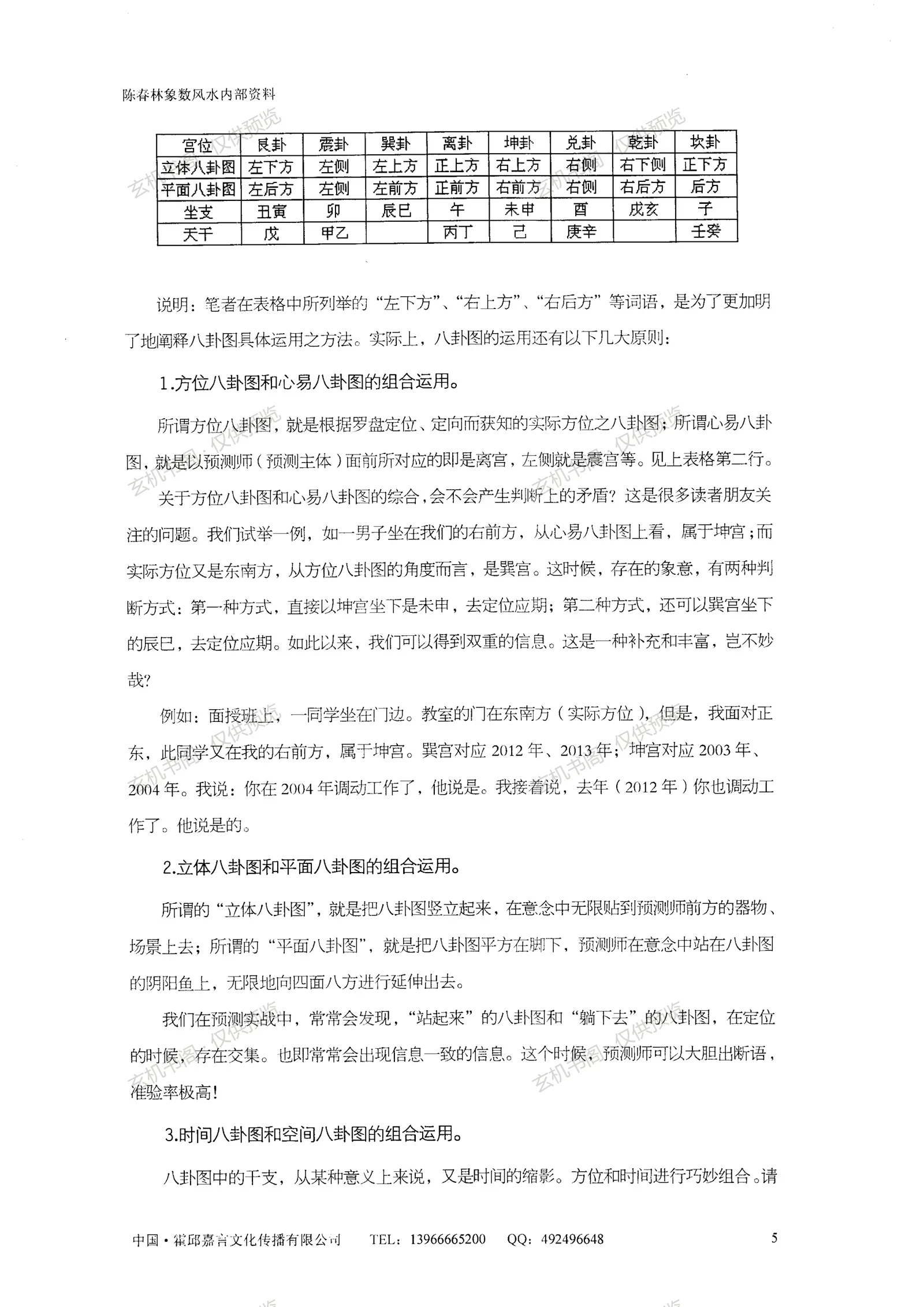
This is an internal teaching text on Xiangshu (image-number) feng shui by Chen Chunlin, conceived as a companion to his earlier volume on yinzhai (burial sites). According to the preface, the author spent over eight months from late 2012 compiling notes, references and years of practical case records, completing the draft in May 2013. The method rests on two ideas: 'xiang', drawing on the form and image schools to read omens directly from what is seen, and 'shu', drawing on the liqi school's precise numerological reasoning. Chen argues that accurate judgments of ordinary residential layouts need not depend on elaborate sand-water, dragon-seeking procedures. The opening chapter illustrates this with a case in Jingxing, Hebei, where a dangling power line and a mountain split like a knife were read as signs of fatal accidents, illness and surgery. The text then sets out the bagua charts, tabulating the earlier-heaven and later-heaven directions, and explains standing versus flat uses of the later-heaven chart, along with combined application of directional and mind-yi charts, three-dimensional and planar charts, and time and space charts. Only the first chapter's opening sections are visible in the preview.
Contents
Preface: origins and aims of the book
Chapter 1: Explaining Xiangshu feng shui
Section 1: What is Xiangshu feng shui
Section 2: Combined use of bagua charts
Earlier and later heaven direction tables
Later-heaven chart: standing and flat uses
Combining directional charts with mind-yi charts
Key Points
Reads events through images while reasoning through numbers
Relies on field omens such as poles and hill shapes
Earlier/later heaven direction tables underpin timing judgments
Later-heaven chart used both standing and laid flat
Directional and mind-yi charts cross-check each other