Reading guide
Content guideOverview
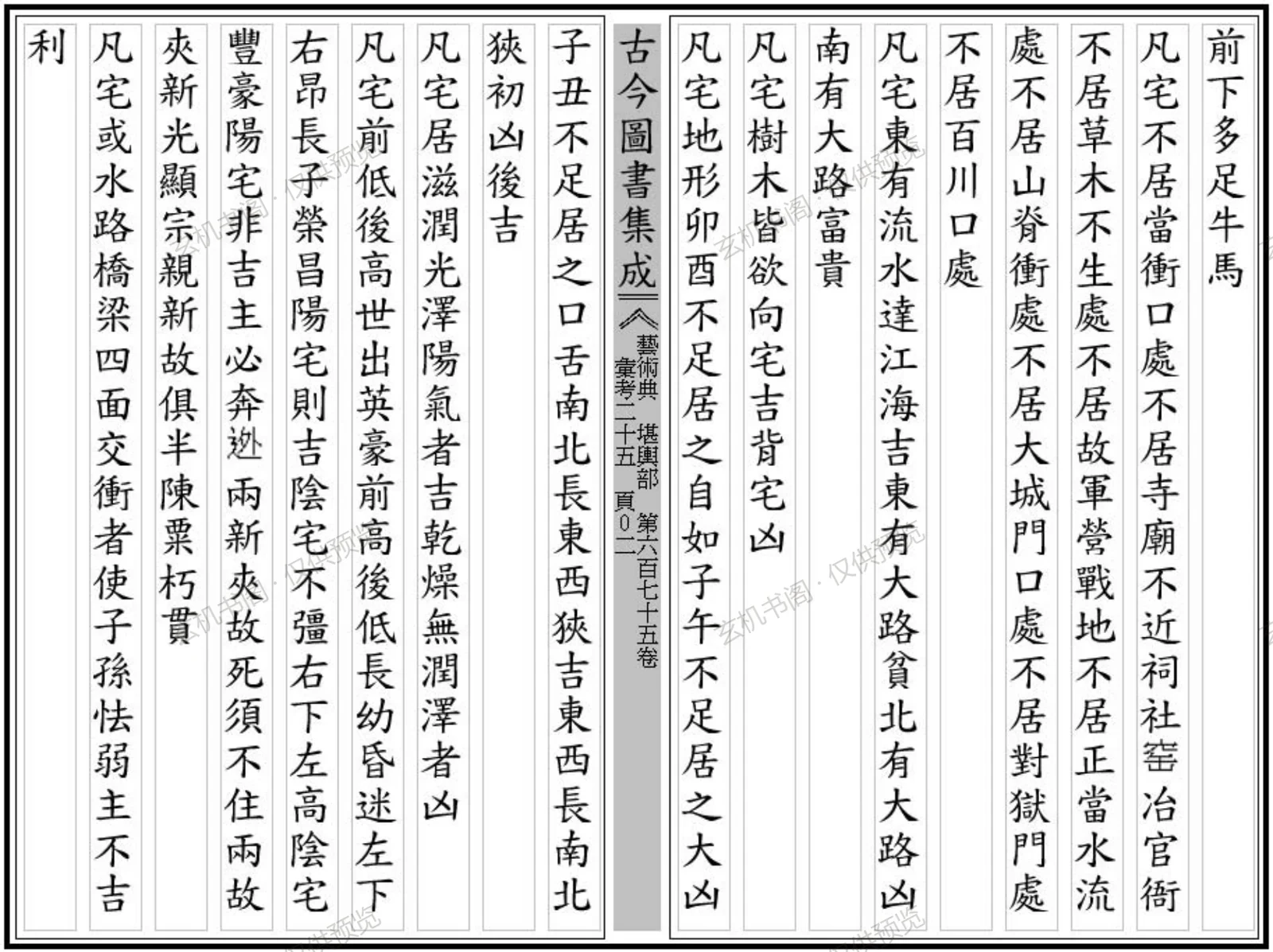
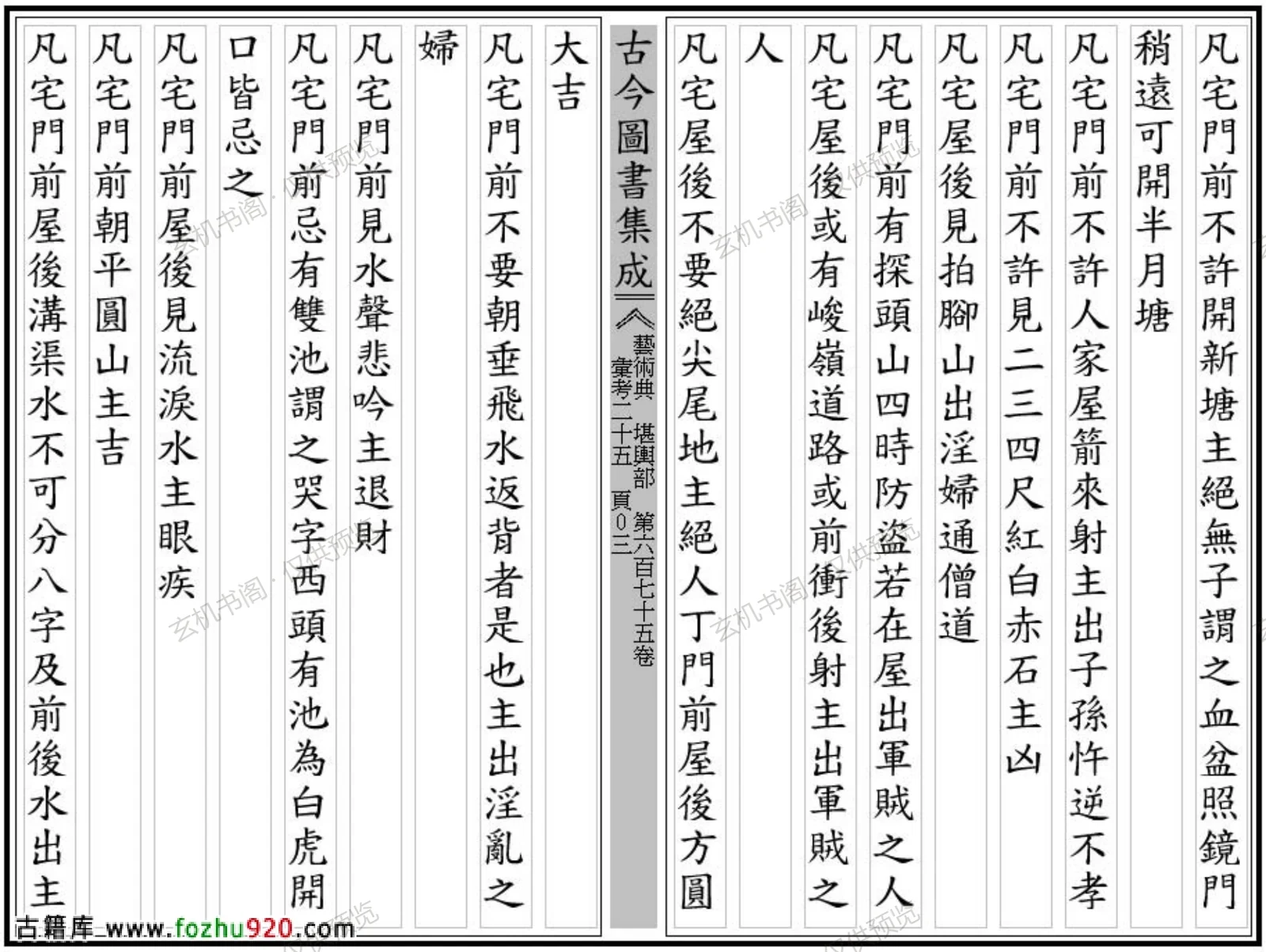
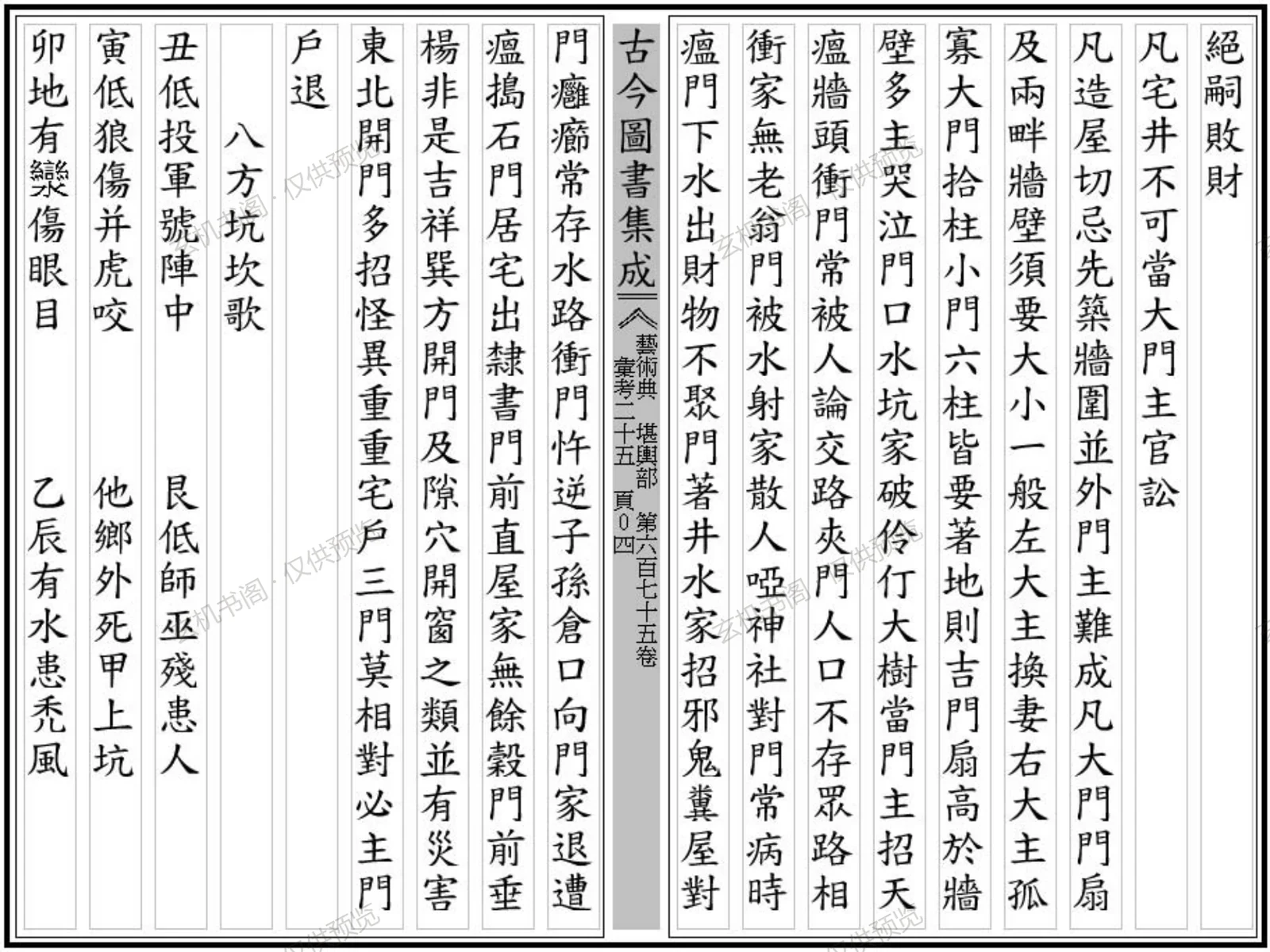
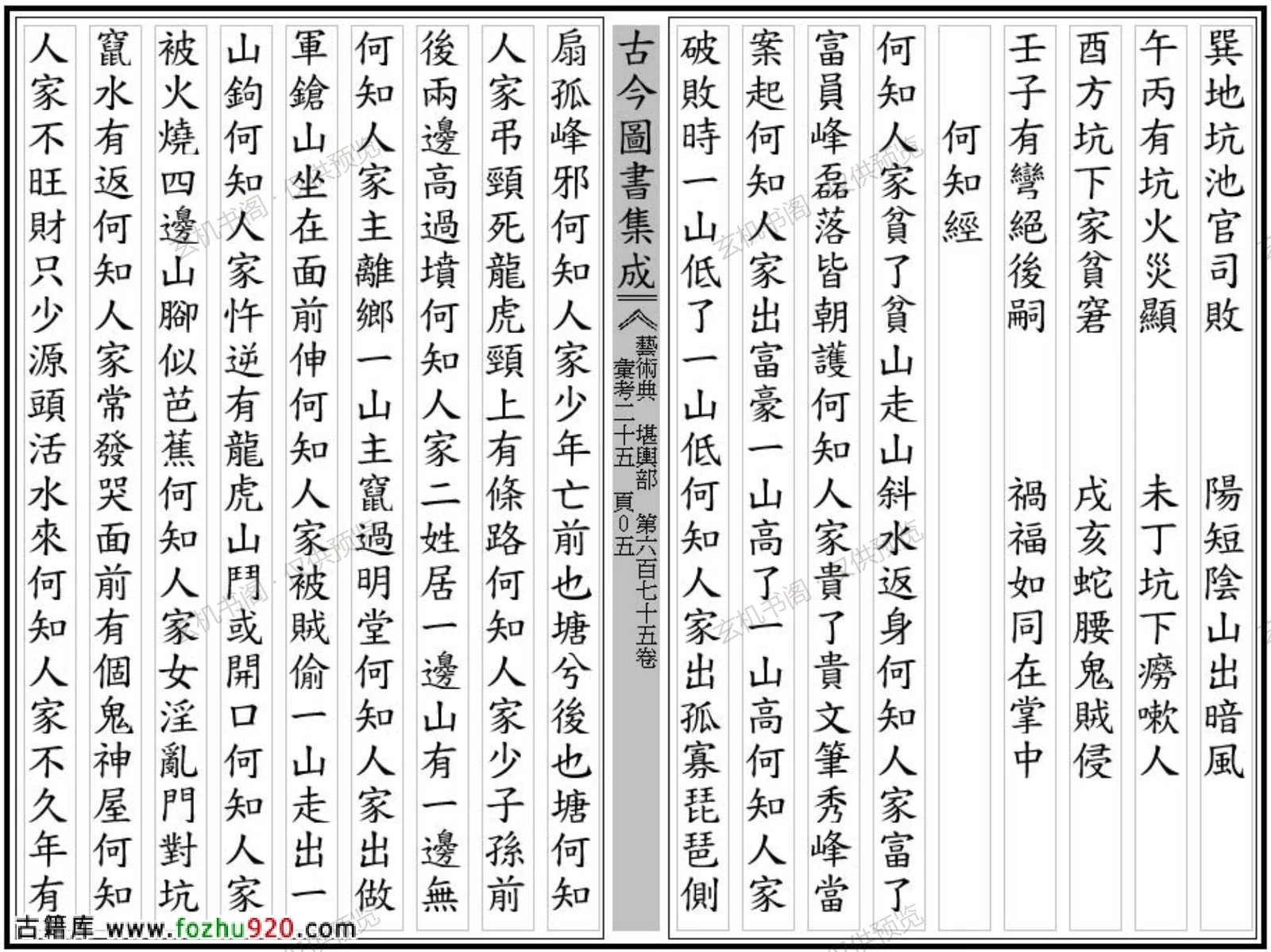
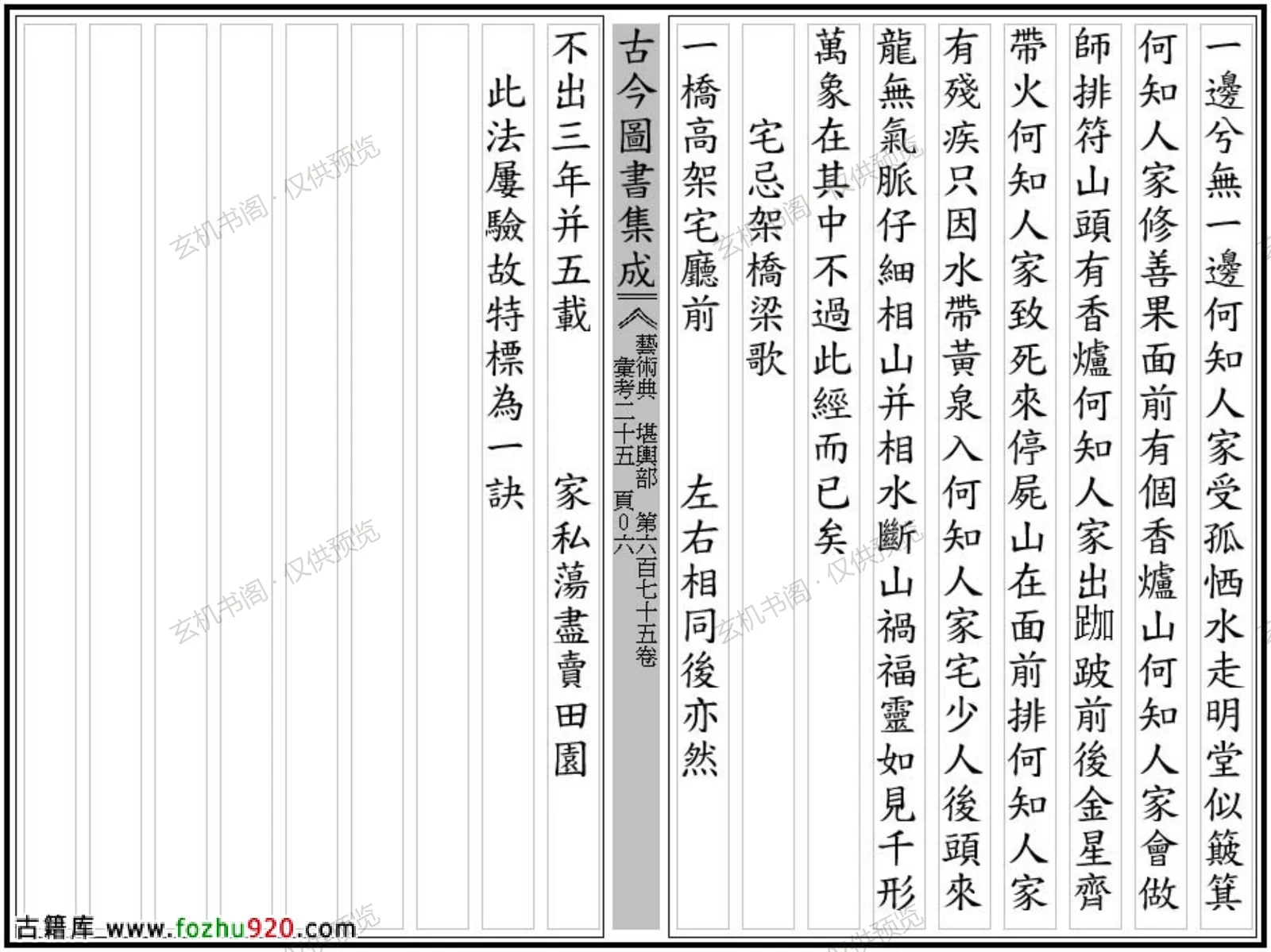
This excerpt comes from the Kanyu section of the Gujin Tushu Jicheng and presents the first part of Yangzhai Shishu, titled 'On the Outer Form of a Dwelling, Part One.' The text first establishes that human dwellings should be judged chiefly by the surrounding mountains, rivers, and the incoming pulse of terrain; interior arrangement matters, but a dwelling cannot be fully auspicious if its outer form is poor. It then lists, item by item, the conditions of the site's surroundings—mountains, terrain, waterways, roads, trees, neighboring houses, temples, and bridges—with formulaic judgments such as 'auspicious,' 'inauspicious,' 'greatly inauspicious,' 'brings ruin to the household,' or 'brings wealth and honor.' The text also includes verses such as the 'Song of the Eight Directions' Pits and Mounds,' the 'Scripture of How One Knows,' and the 'Song on the Taboo of Building Bridges over a Dwelling,' covering ponds before the gate, ditches behind the house, gate orientation, well placement, wall heights, and raised bridges. It emphasizes that these are broad principles of site selection, with finer distinctions to be made separately. The excerpt is useful for readers studying traditional yangzhai form-based divination and the Kanyu compilations of the Gujin Tushu Jicheng.
Contents
On the Outer Form of a Dwelling: general principles
Site and landscape: incoming pulse, bright hall, four animals
Waterways and roads: front and rear water, road clashes, bridges
Gates and walls: gate orientation, door leaves, wells, wall heights
Song of the Eight Directions' Pits and Mounds
Scripture of How One Knows: judgments from mountains and water
Song on the Taboo of Building Bridges over a Dwelling
Key Points
The surrounding landscape and incoming terrain pulse are the root of a dwelling's fortune; outer form is discussed first.
Conditions of mountains, waters, roads, trees, neighbors, and temples are listed one by one.
Formulaic judgments such as 'auspicious,' 'ruins the household,' and 'brings wealth' are tied to specific forms.
Includes verses: the Eight Directions' Pits and Mounds, the Scripture of How One Knows, and the bridge taboo song.
Emphasizes broad site principles; form-based judgments predominate over directional theory.