Reading guide
Content guideOverview
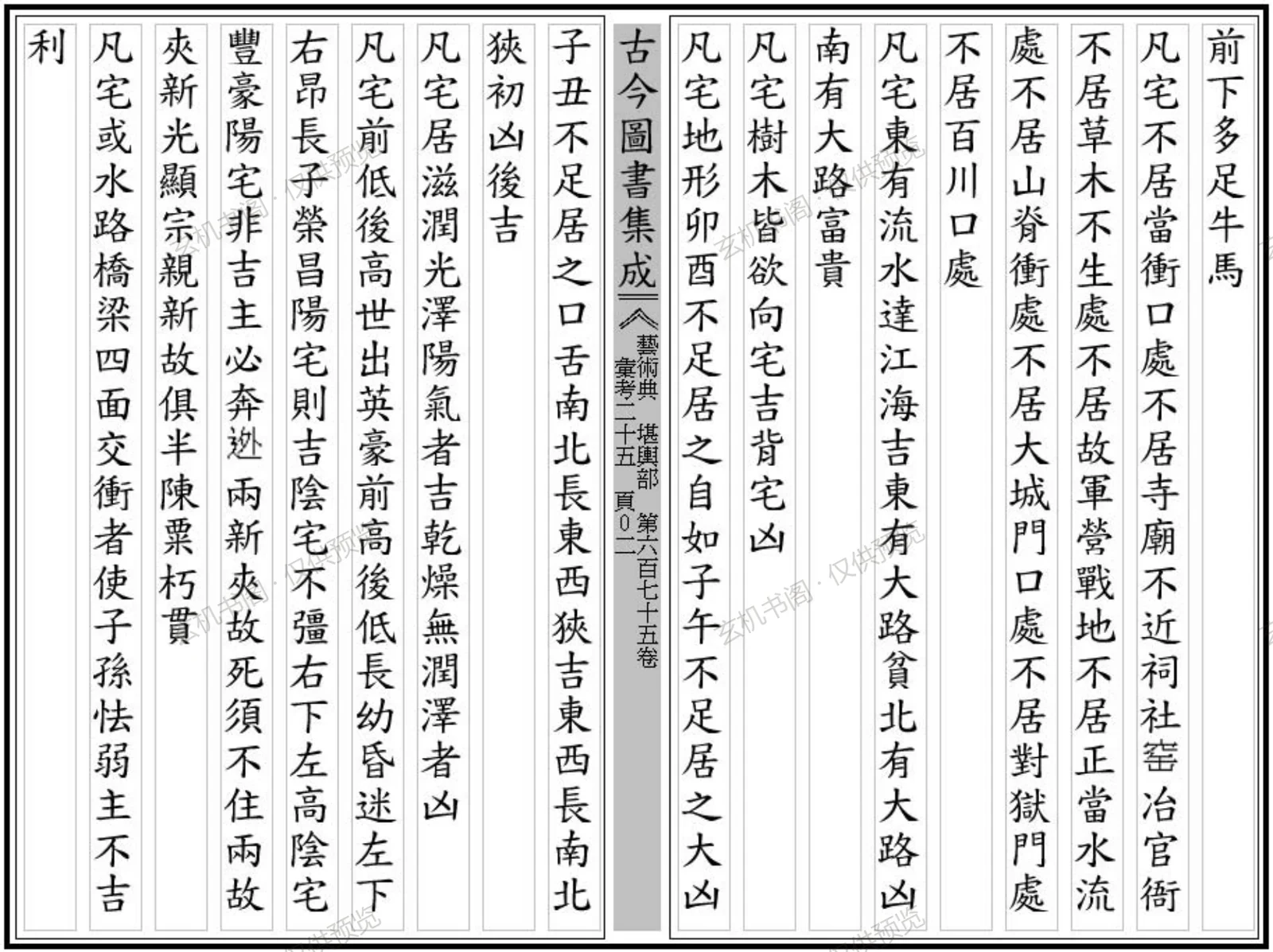
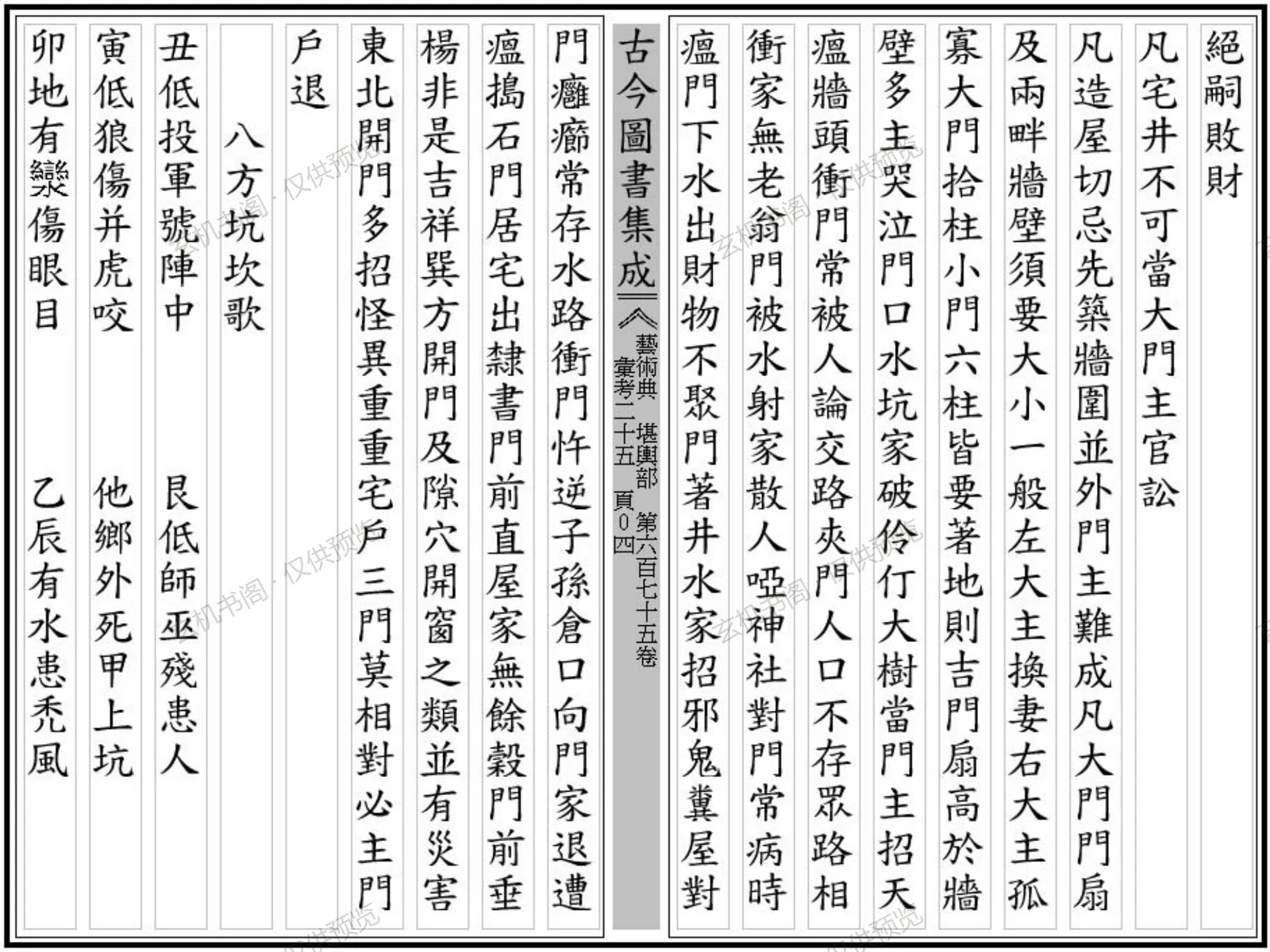
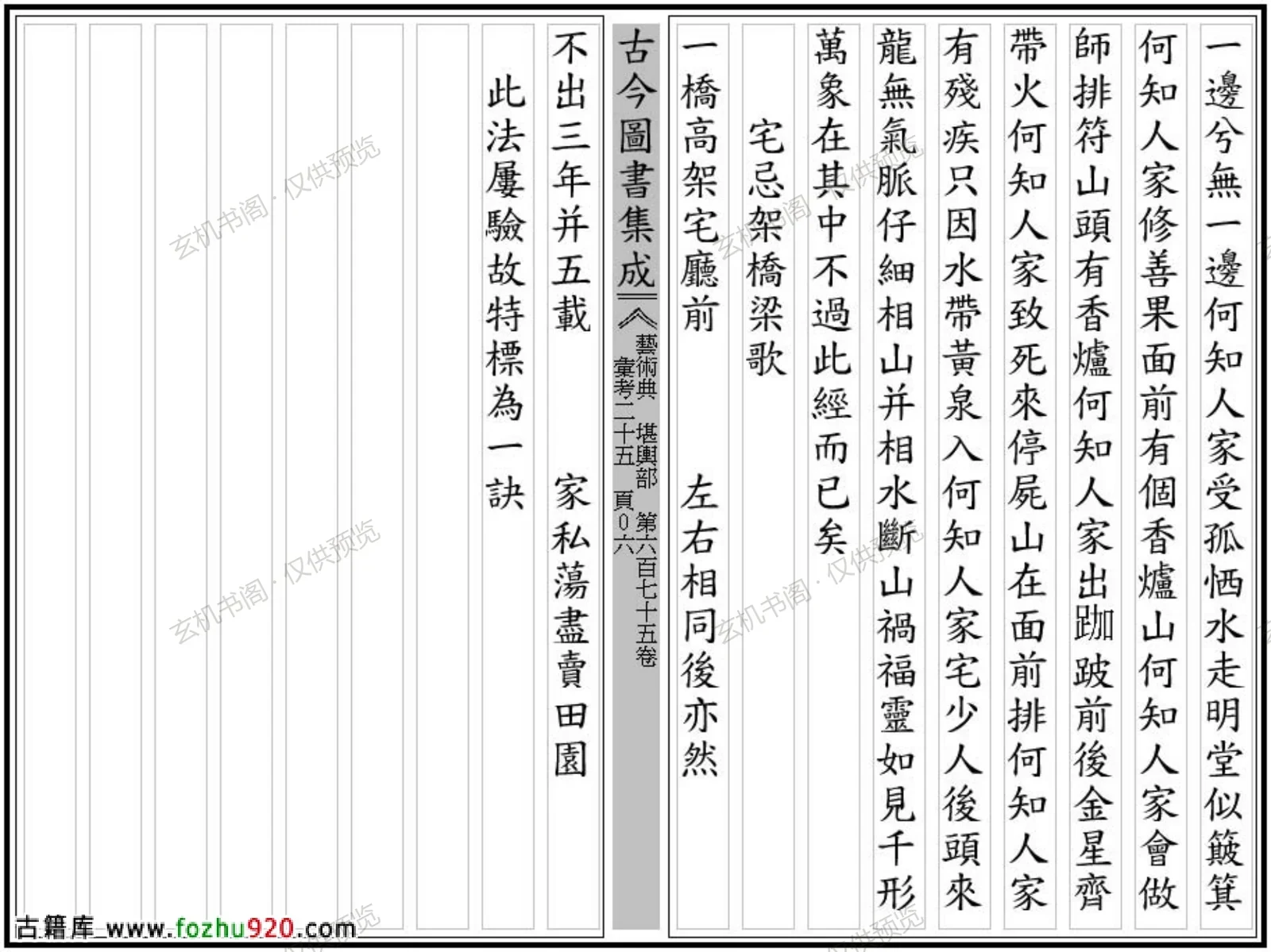
These pages present the opening section of Ten Books on Yangzhai as included in the Kanyu section of the Gujin Tushu Jicheng. Titled "On Dwelling Exterior Form, Part One," the text sets out rules for judging a house by its external landscape: dragon veins, bright halls, side rooms, gates, roads, water outlets, ponds, bridges, neighbors, temples, barracks, kilns, lanes and pits. Short classical entries state which configurations bring wealth, poverty, illness, lawsuits or lack of heirs, and the section includes mnemonic verses such as the "Eight Directions Pit Song," the "How Do We Know Classic" and the "Song on Avoiding Bridges over the Hall." The style is direct and empirical, reflecting the formalist school of yangzhai geomancy. This facsimile is useful for studying kanyu literature, vernacular architecture and the textual structure of traditional house-divination manuals.
Contents
Title and general introduction to exterior form
Overall landscape, dragon vein and bright hall
Gates, roads, water, ponds and their omens
Eight directions pit song and gate openings
How Do We Know Classic: landscape and household fortune
Song on avoiding bridges and closing notes
Key Points
Landscape setting is primary; exterior form comes before interior layout.
Gates, roads, water, ponds, bridges and pits each carry explicit omens.
Mnemonic verses such as the pit song and How Do We Know Classic aid recitation.
Omens map directly onto wealth, poverty, illness, lawsuits and lineage.