Reading guide
Content guideOverview
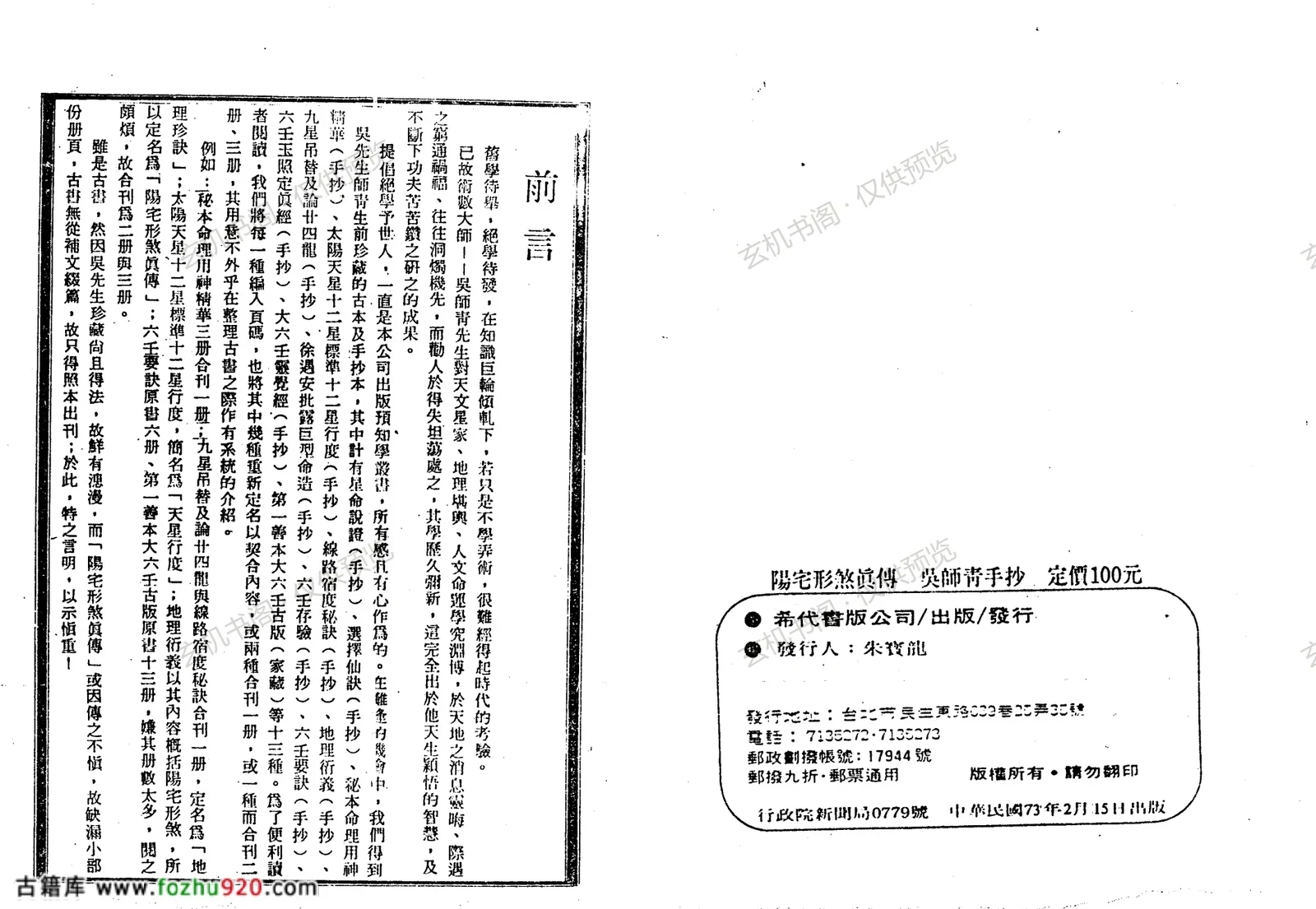
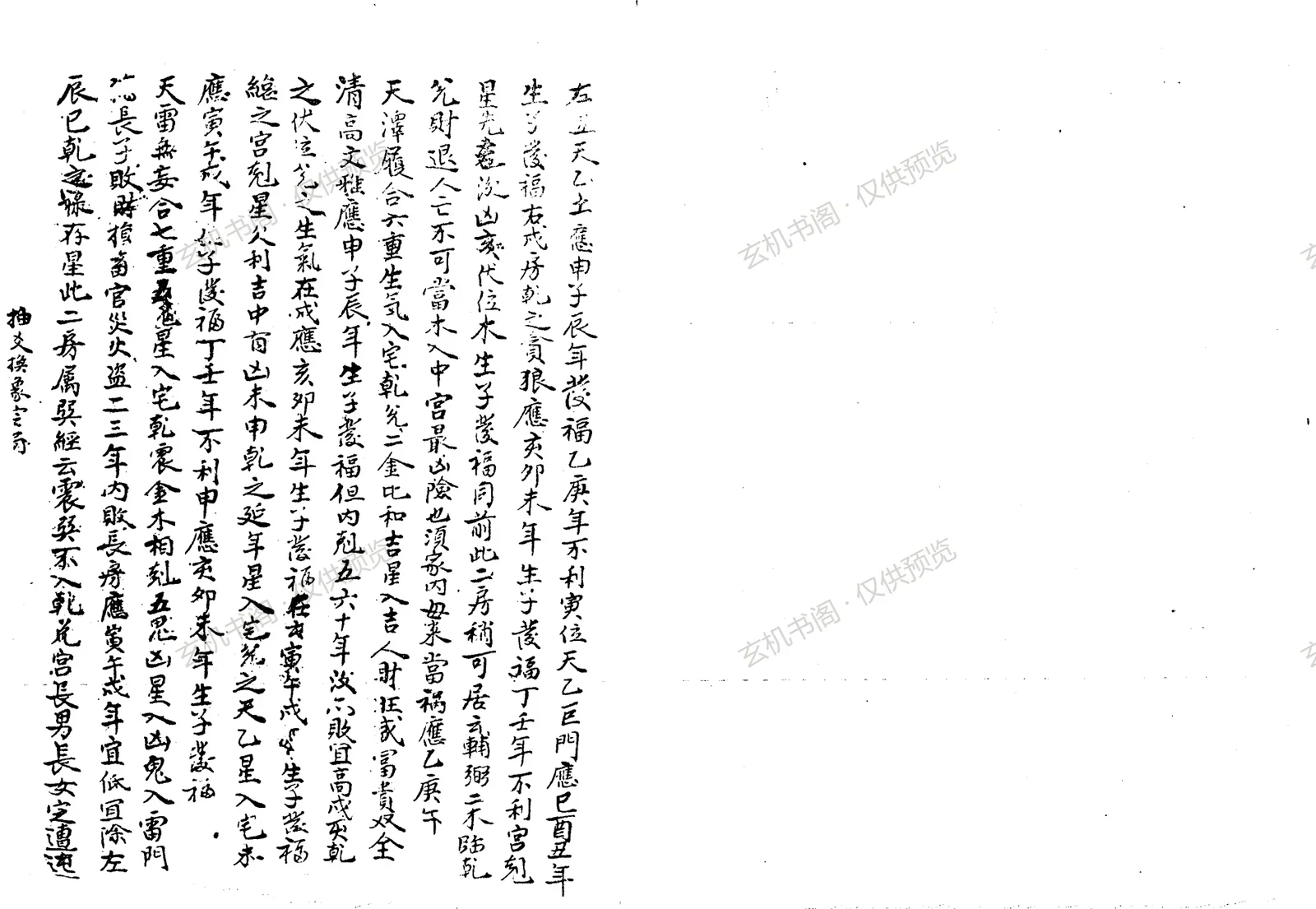
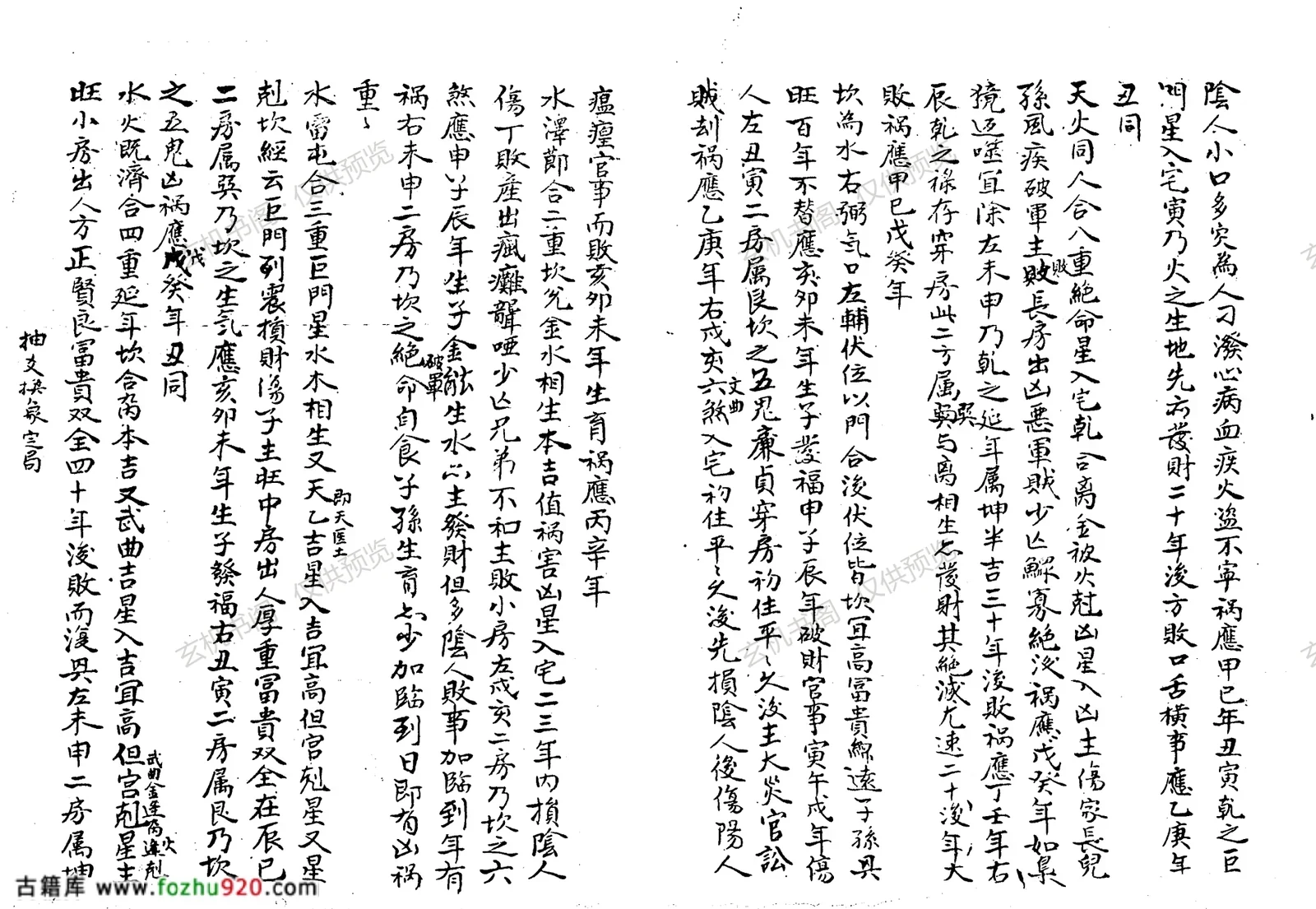
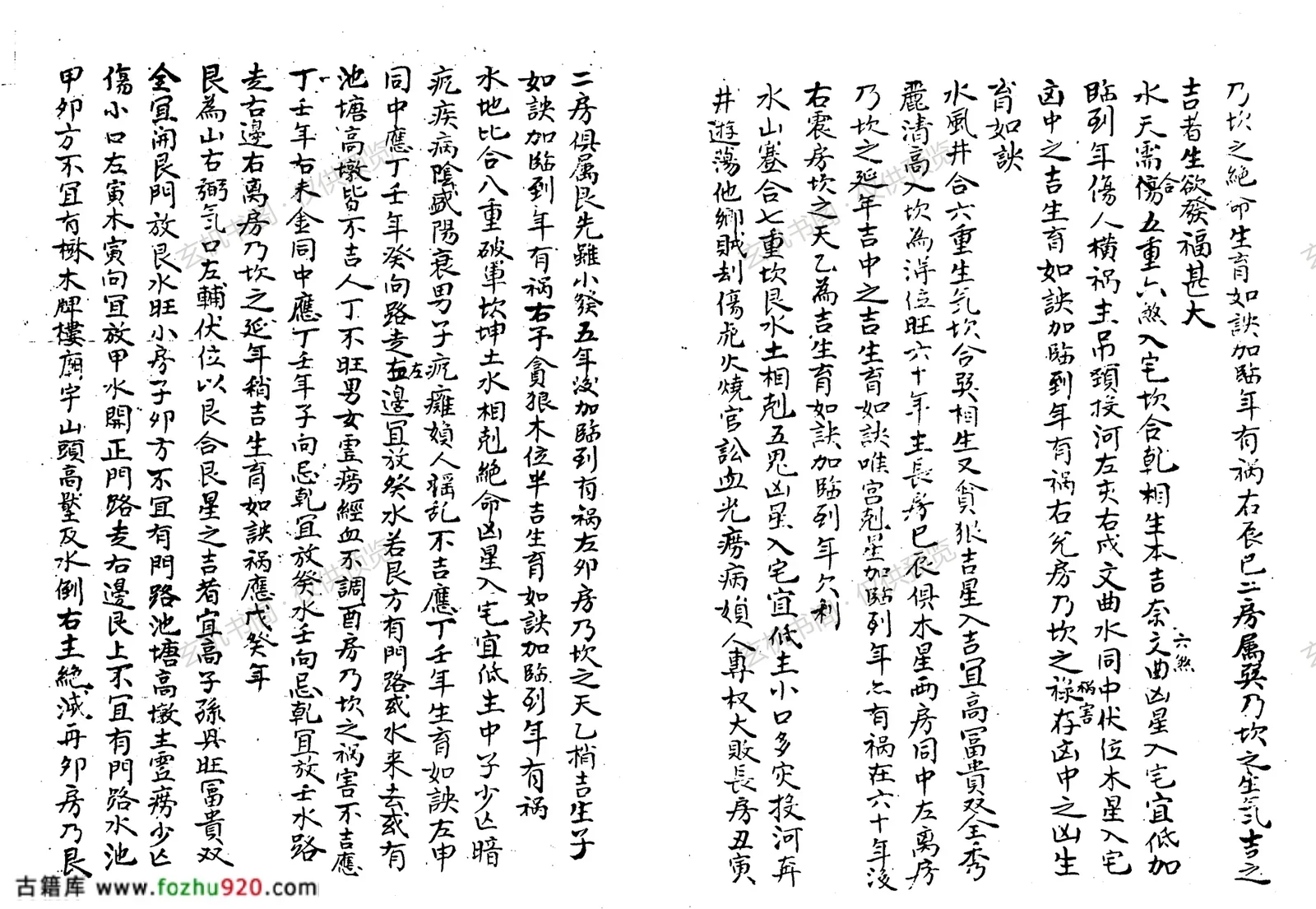
This is a hand-copied Feng Shui text attributed to Wu Shiqing, focusing on yang dwellings (living houses). According to the preface, Wu was skilled in celestial patterns, geography and fate calculation, and his manuscripts preserved rare methods. The book combines exterior form and sha with interior nine-star and twenty-four dragon logic to judge a house's fortune, the fate of different family branches, and the years in which effects manifest. The main text is handwritten and lists combinations of hexagrams and stars, such as Shui Lei Tun and Tian Shui Song, explaining what a certain direction's water, door, height or depression indicates, and which year, branch or person will be affected. It also discusses celestial selection, Lu Cun Huang Quan, robber sha, lawsuits, illness, fire and loss of members, quoting oral formulas from the text. It is a form-and-principle approach to yang dwelling assessment and is useful for studying the celestial-school Feng Shui tradition and hand-copied transmission since the Republican era.
Contents
Preface: origin and editing notes of Wu Shiqing's manuscript
General theory of yang dwelling form and sha with nine stars
Twenty-four dragons, Lu Cun Huang Quan and sha judgments
Hexagram-based judgments such as Shui Lei Tun and Tian Shui Song
Family branch fortune and year timing
Celestial formulas and remedies for form and sha
Key Points
Judges yang dwellings by combining nine stars with twenty-four dragons and hexagrams
Emphasizes both physical form and directional logic with timing
Distinguishes fortunes of different family branches
Contains many year-specific judgments such as 'responds in Jia-Ji years'
Preserves oral-formula style judgments in handwritten form