Reading guide
Content guideOverview
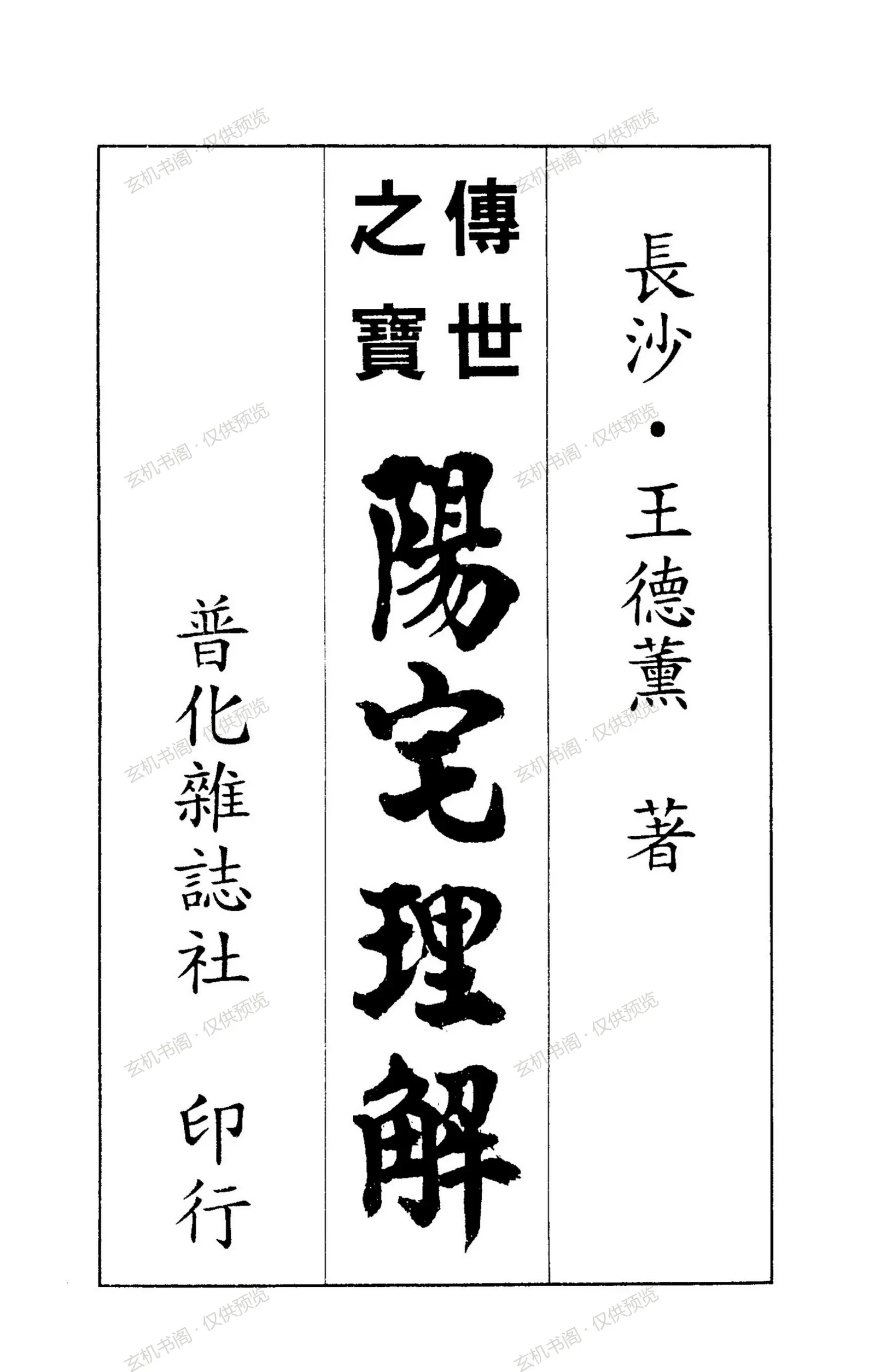
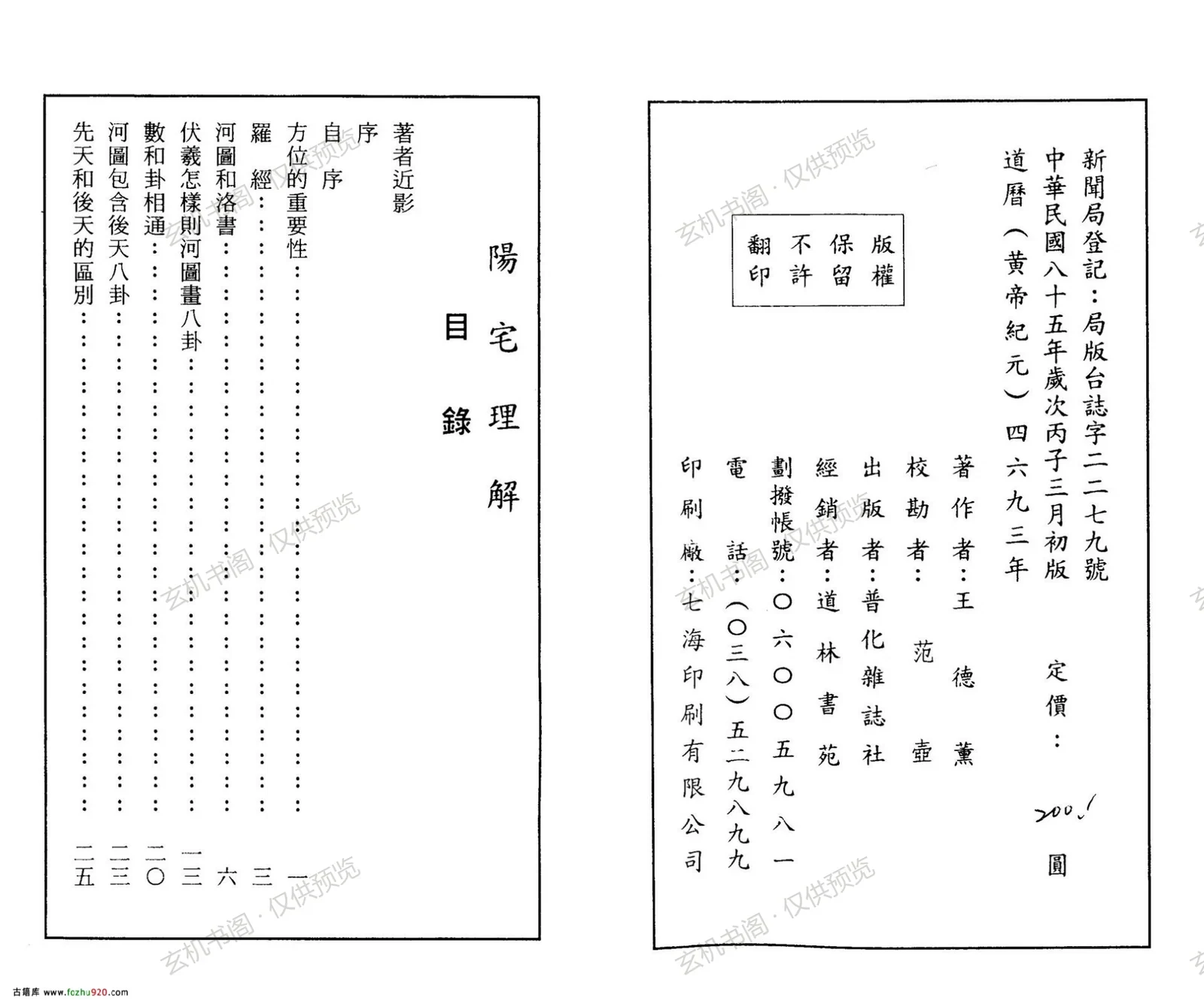
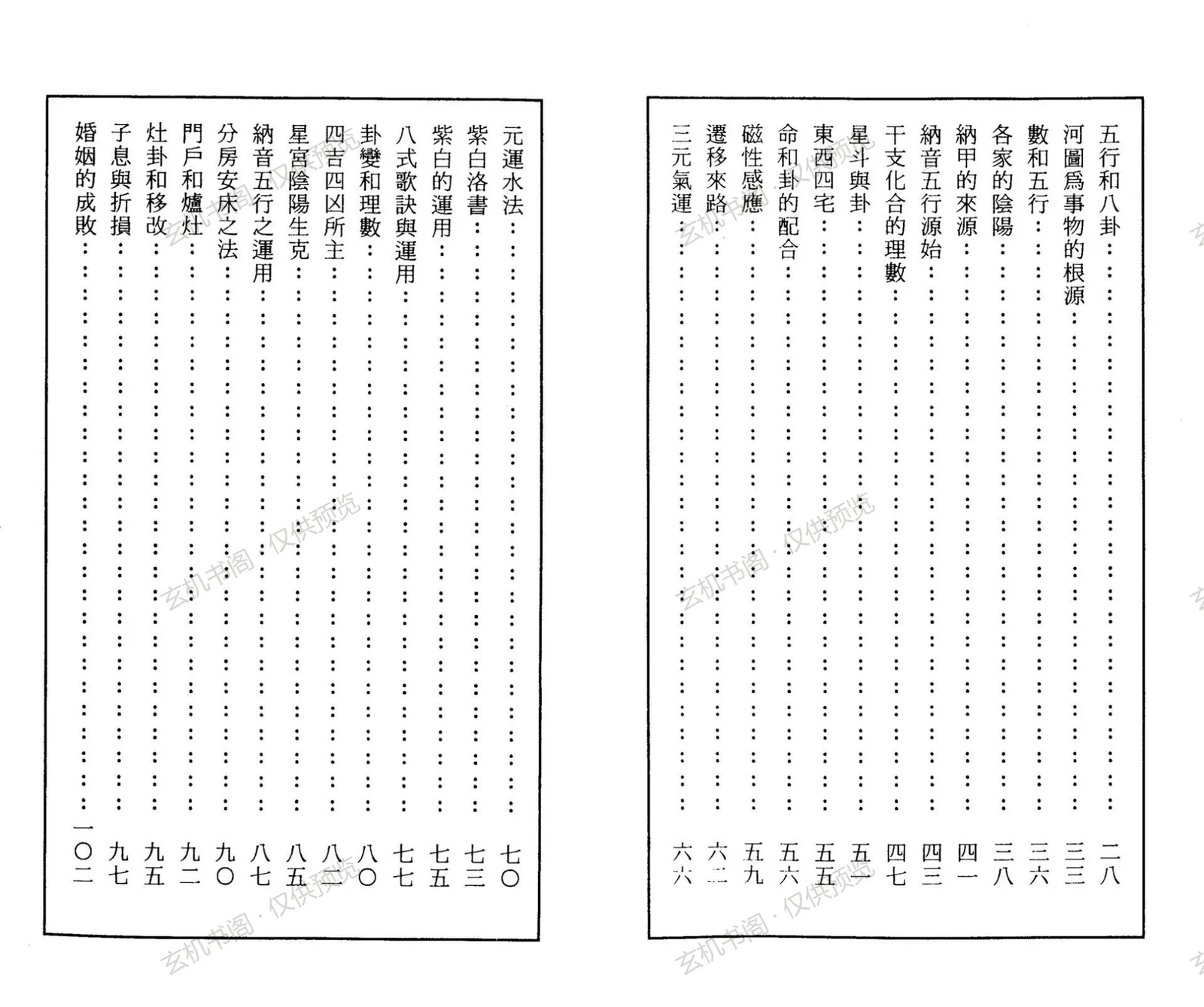
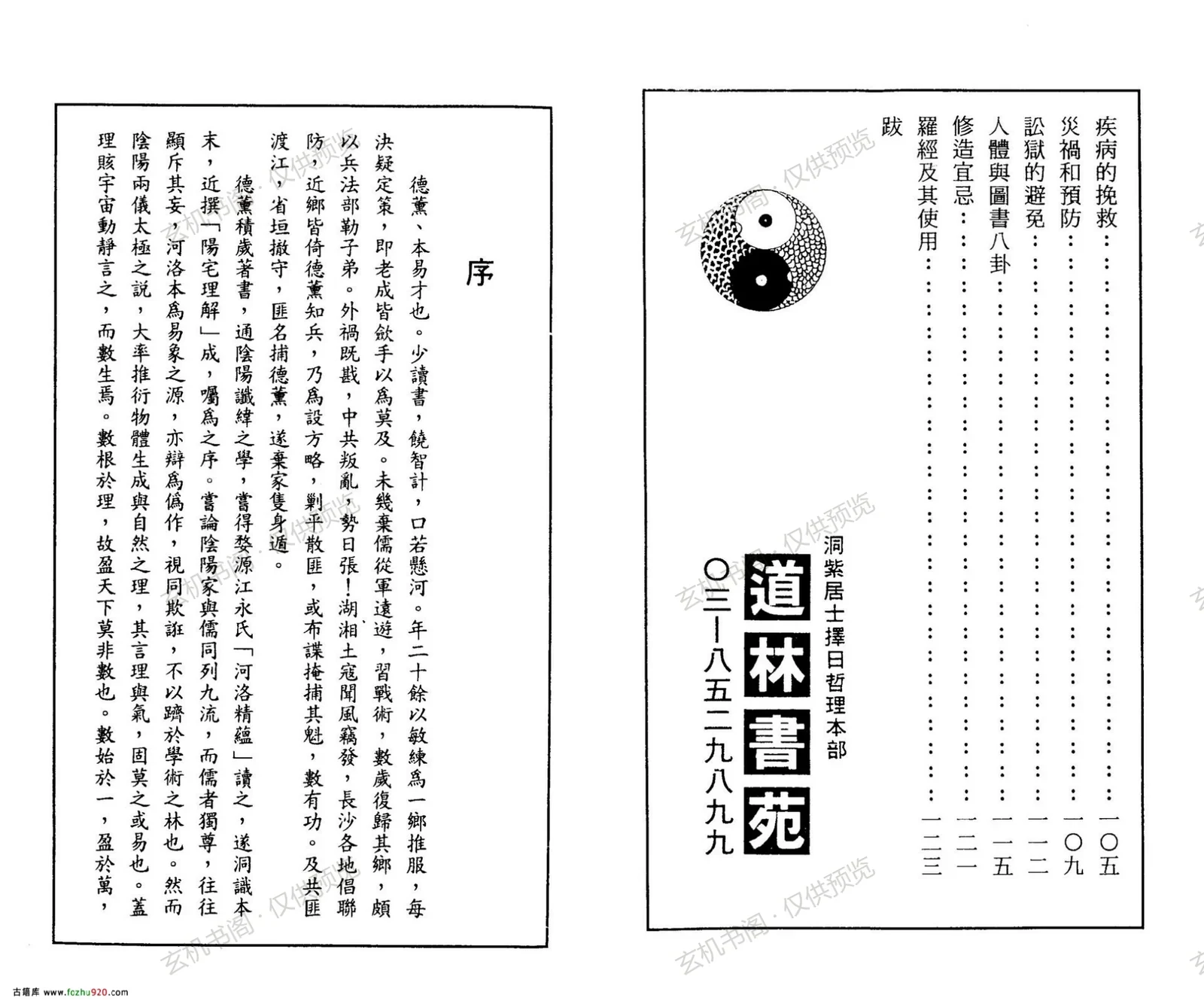
This is Wang Dexun's Yangzhai Lijie, a work on dwelling fengshui. The cover is inscribed by Zhao Hengyu, and the inner title reads 'A Treasure Handed Down Through Generations: Yangzhai Lijie,' attributed to Wang Dexun of Changsha and issued by the Puhua Magazine Society. According to the copyright page, this is the first edition of the third month of the 85th year of the Republic of China (1996). The book begins with prefaces and builds from Hetu-Luoshu, Fuxi's bagua, and the former-and-later heaven sequences into Sanyuan cycles, Zibai Luoshu, eight-style mnemonic verses, gua transformations and numerical principles, star-palace yin-yang interactions, nayin five phases, and the four auspicious and four inauspicious positions. It then applies these to east-west four dwellings, room allocation and bed placement, doors, stoves, and stoves' gua changes, as well as judgments on children, marriage, illness, and misfortune. The table of contents shows roughly 120-plus pages, moving from foundational Yijing theory to Sanyuan Zibai and then to practical yangzhai rules and judgments. It suits readers with some Yijing and fengshui background who want a systematic study of Sanyuan yangzhai methods.
Contents
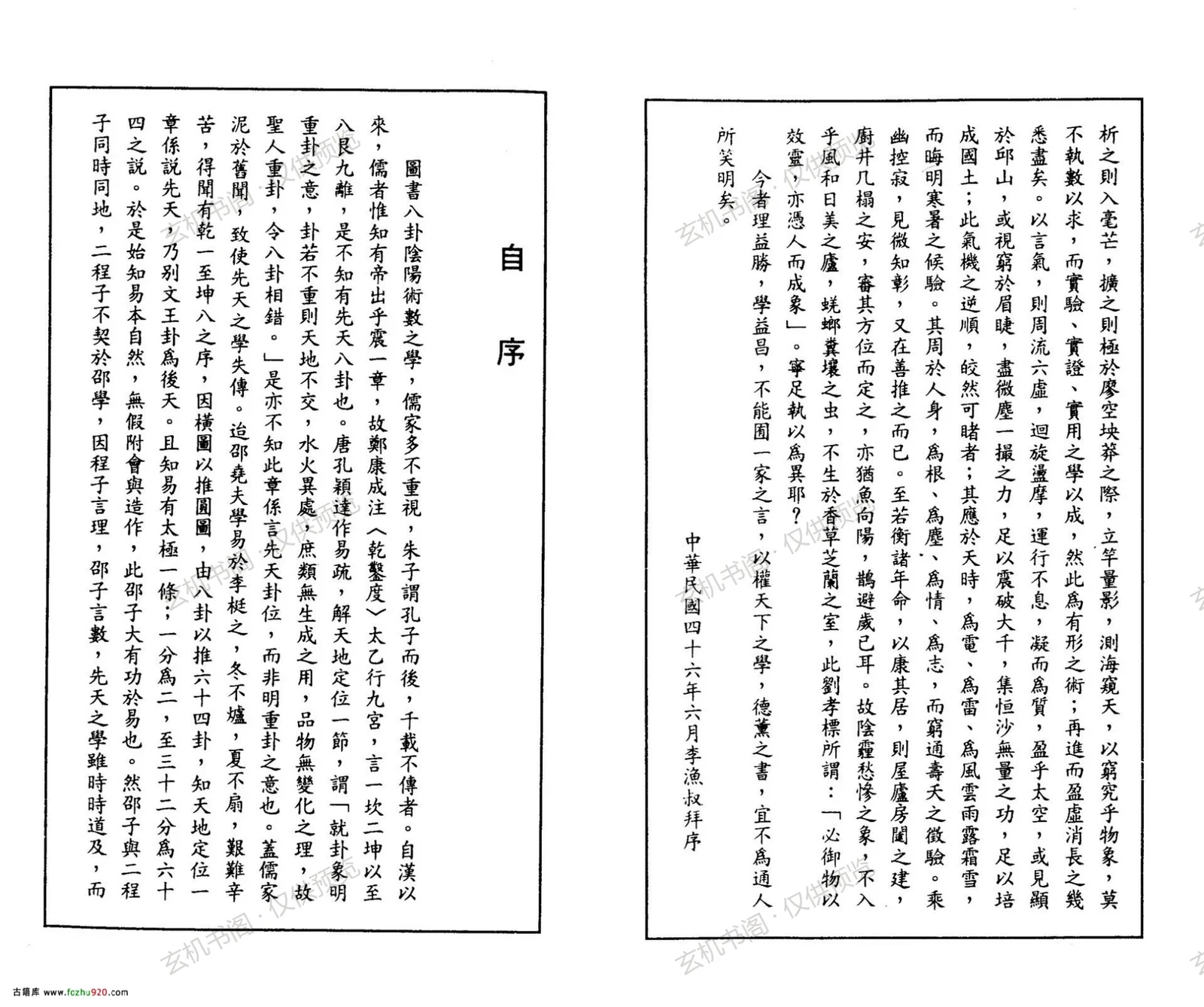
Author's portrait, preface, and author's preface
Hetu-Luoshu and former/later heaven bagua
Five phases, stems-branches, nayin, and cycles
Zibai Luoshu and eight-style verses
Star-palace interactions and four auspicious/inauspicious
Room allocation, beds, doors, and stoves
Marriage, children, illness, and misfortune
Key Points
Uses Hetu-Luoshu and bagua as the theoretical foundation, prioritizing substance before application.
Sanyuan nine cycles and Zibai Luoshu form the core of the qi calculations.
Eight-style verses, gua transformations, and numerical principles are key to judgment.
Room allocation, bed placement, doors, and stove changes are applied concretely.
Also discusses judgments on marriage, children, illness, and misfortunes.