Reading guide
Content guideOverview
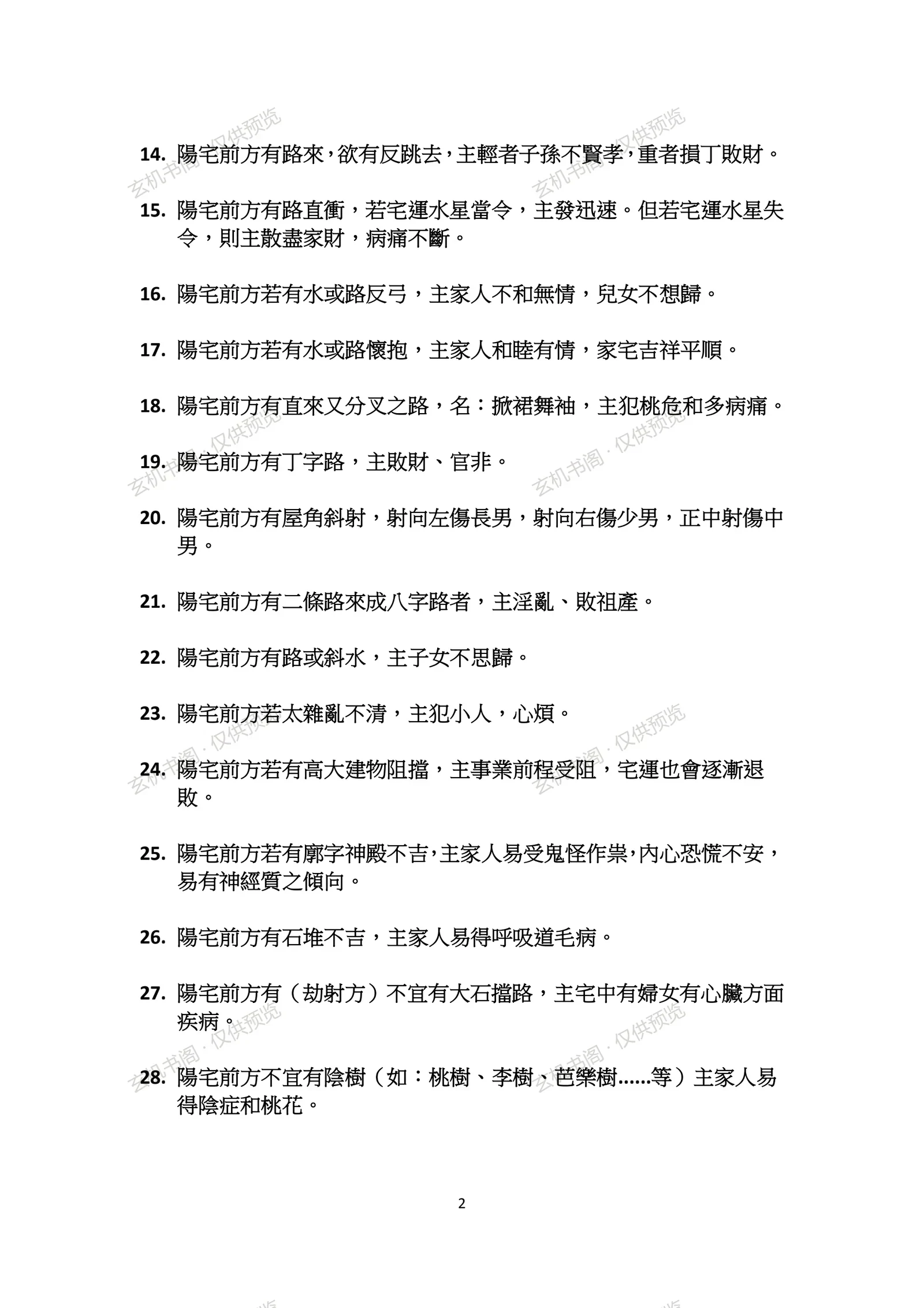
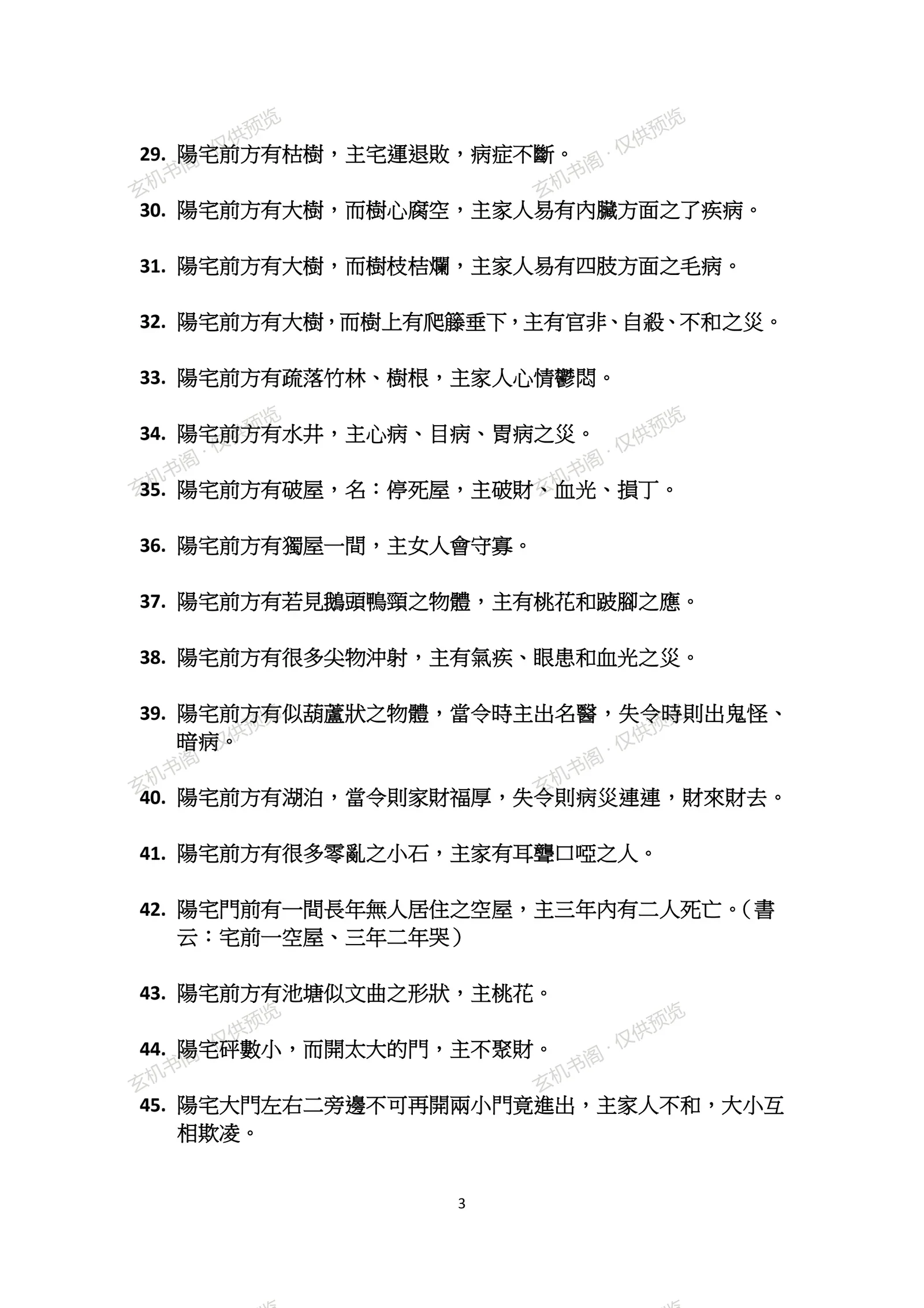
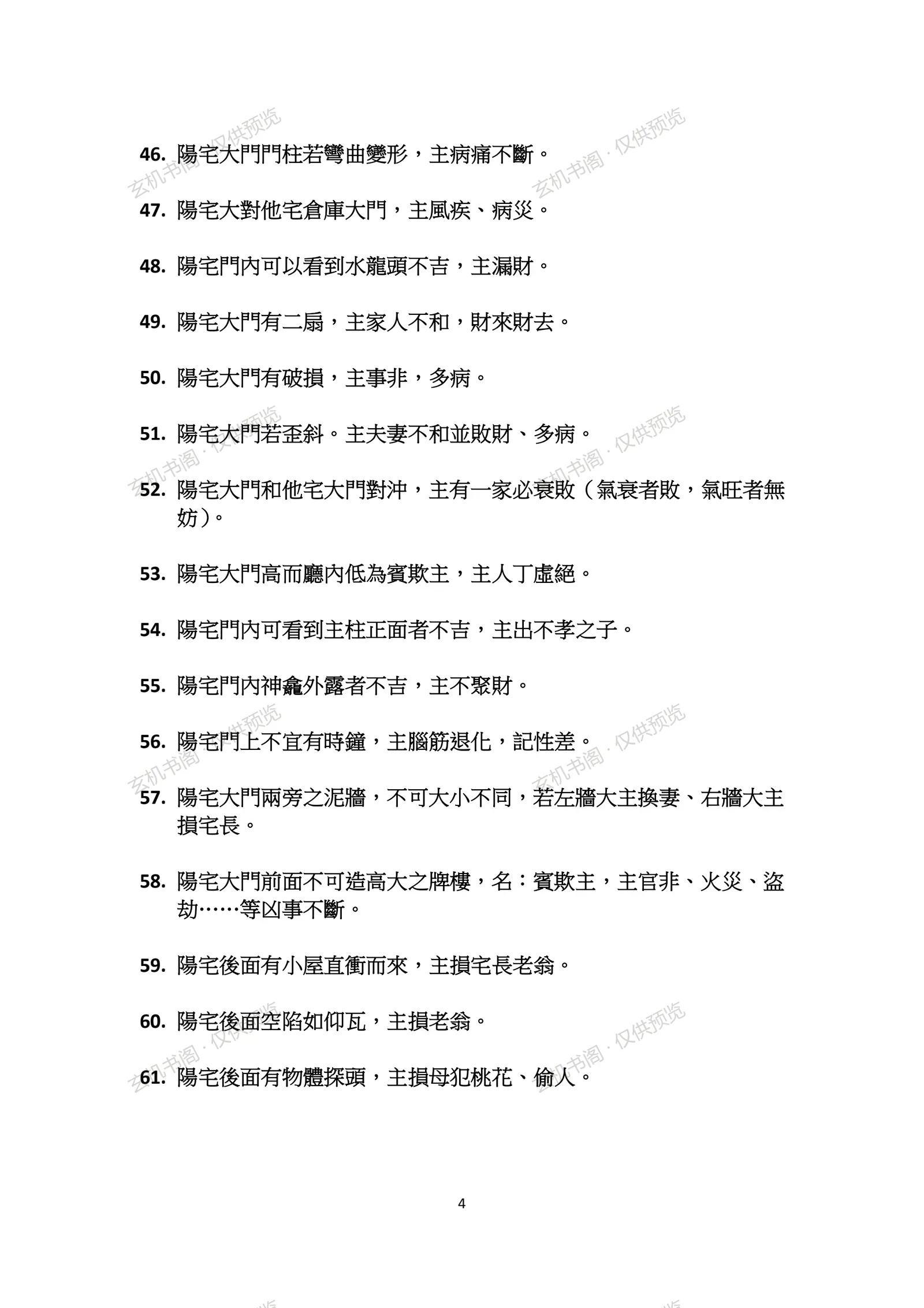
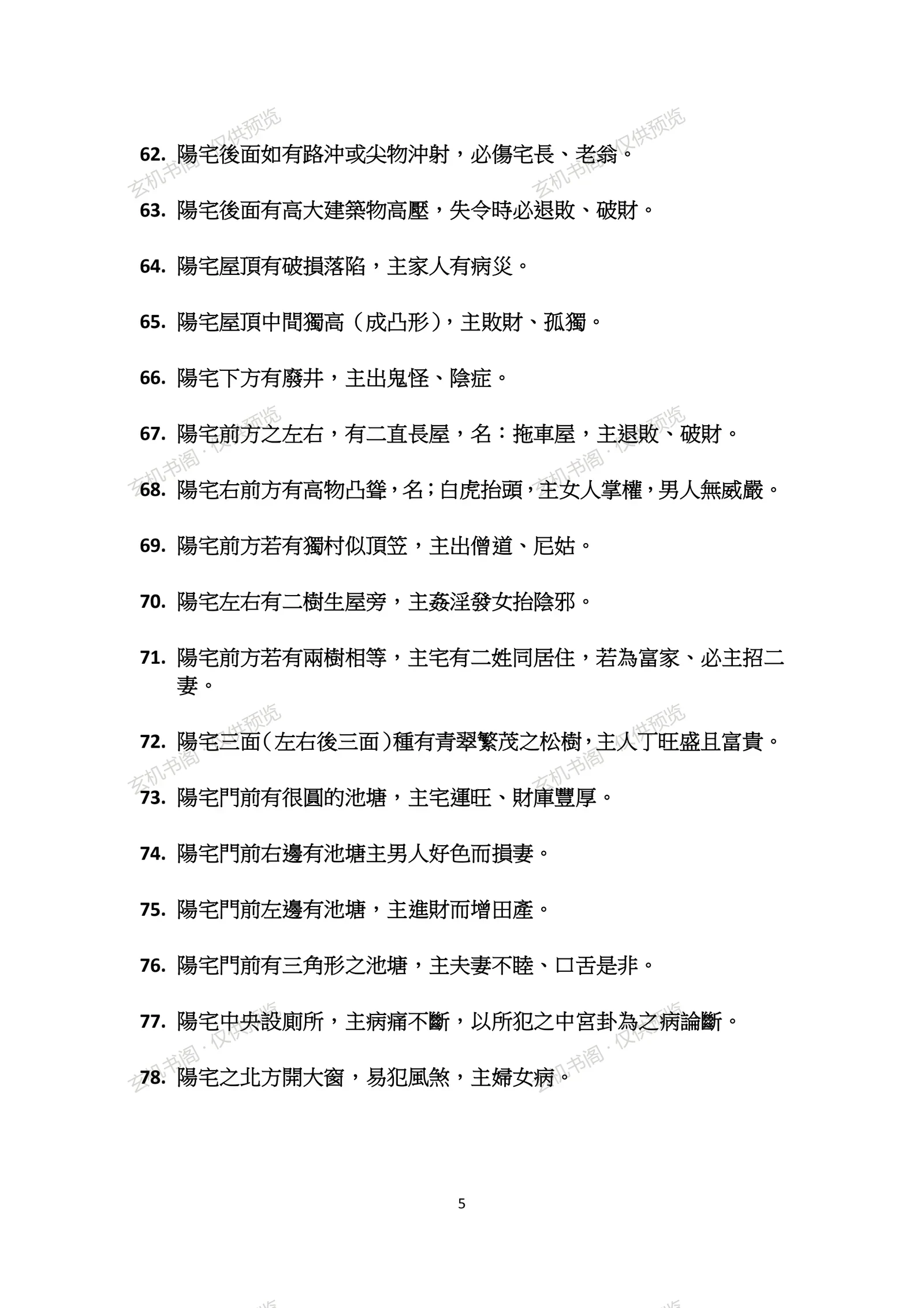
This is a compact form-school (xingluan) reference for yang dwellings, arranged as one hundred and twenty numbered judgments. The opening section deals with house shape: square and regular forms, narrow front with broad rear, north-south orientation, depth-to-width ratios, triangular and tapering shapes, and external features such as triangular objects, projecting roof corners, utility poles, towers, and peeping forms. The middle section concentrates on roads and water before the house—straight roads, reverse bows, splayed and T-shaped paths, diagonal water, clutter, temples, stone piles, trees, dead trees, wells, ruined houses, and vacant houses—linking each to outcomes such as loss of wealth, official trouble, bloodshed, illness, or marital discord. The later section turns to gates, gate pillars, shrines, archways, rear emptiness, roof damage, ponds by position and shape, central toilets, bedrooms, beams, mirrors, beds, and stove placement. Mostly form-based, it occasionally invokes triple-combination clashes, trigram positions, and the ruling/declining water star of the house period, making it a practical lookup text rather than a systematic treatise.
Contents
House shape, front-rear proportions, depth and width
Roof corners, towers, poles, and peeping objects
Roads and water: reverse bows, splayed and T-junctions
Temples, stone piles, trees, wells, ruined and vacant houses
Gates, gate pillars, shrines, archways, rear conditions
Roofs, ponds, central rooms, bedrooms, beds, and stoves
Key Points
Numbered entries allow quick lookup of form-school judgments.
Emphasizes regular shape, narrow front with broad rear, and depth over width.
Roads and water before the house determine wealth, harmony, disputes, and bloodshed.
Trees, wells, ruined houses, vacant houses, and stone piles are all judged.
Gates, beds, stoves, and toilets are linked to illness, loss, and quarrels.
Occasionally uses triple-combination clashes, trigrams, and water-star timing.