Reading guide
Content guideOverview
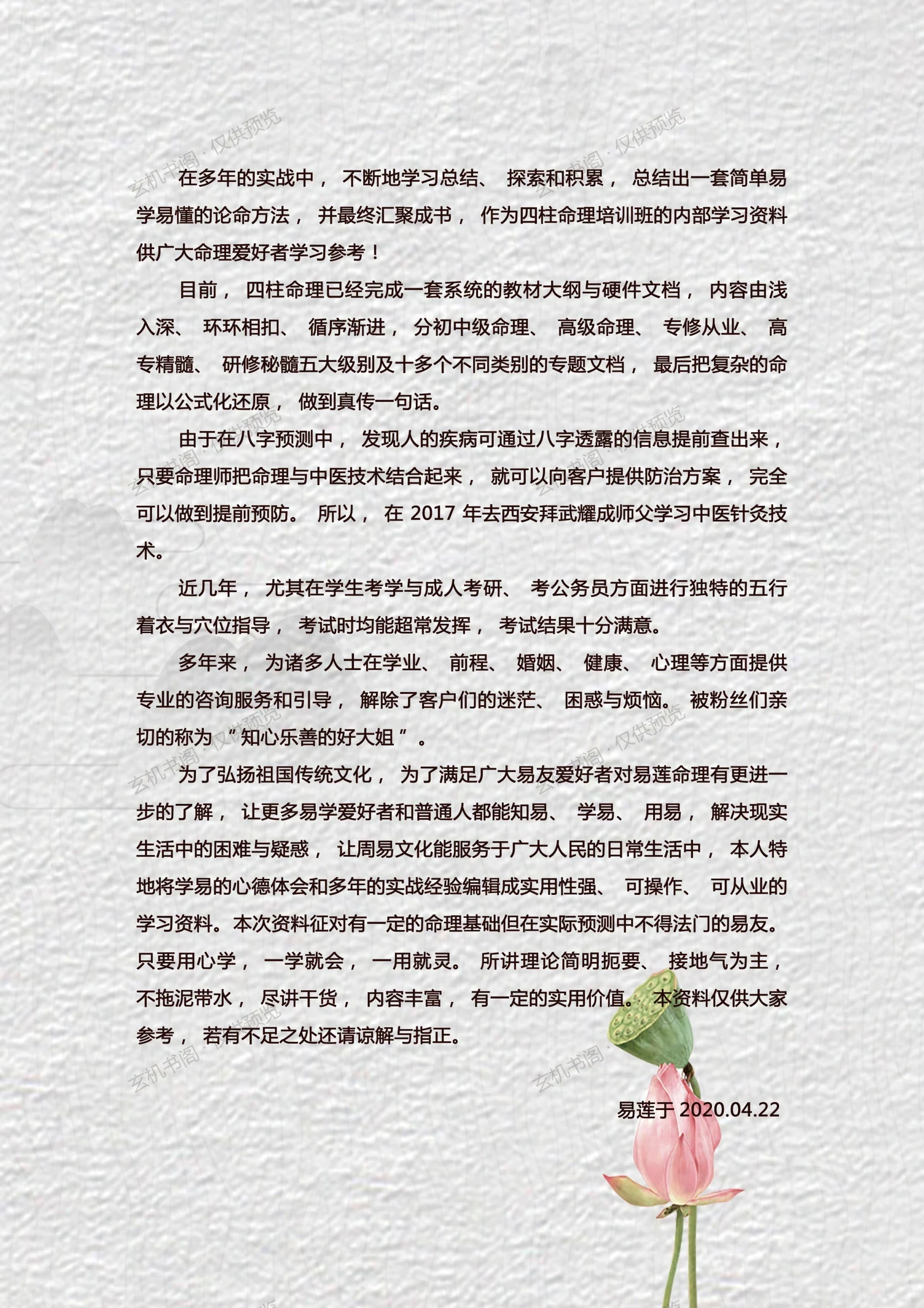
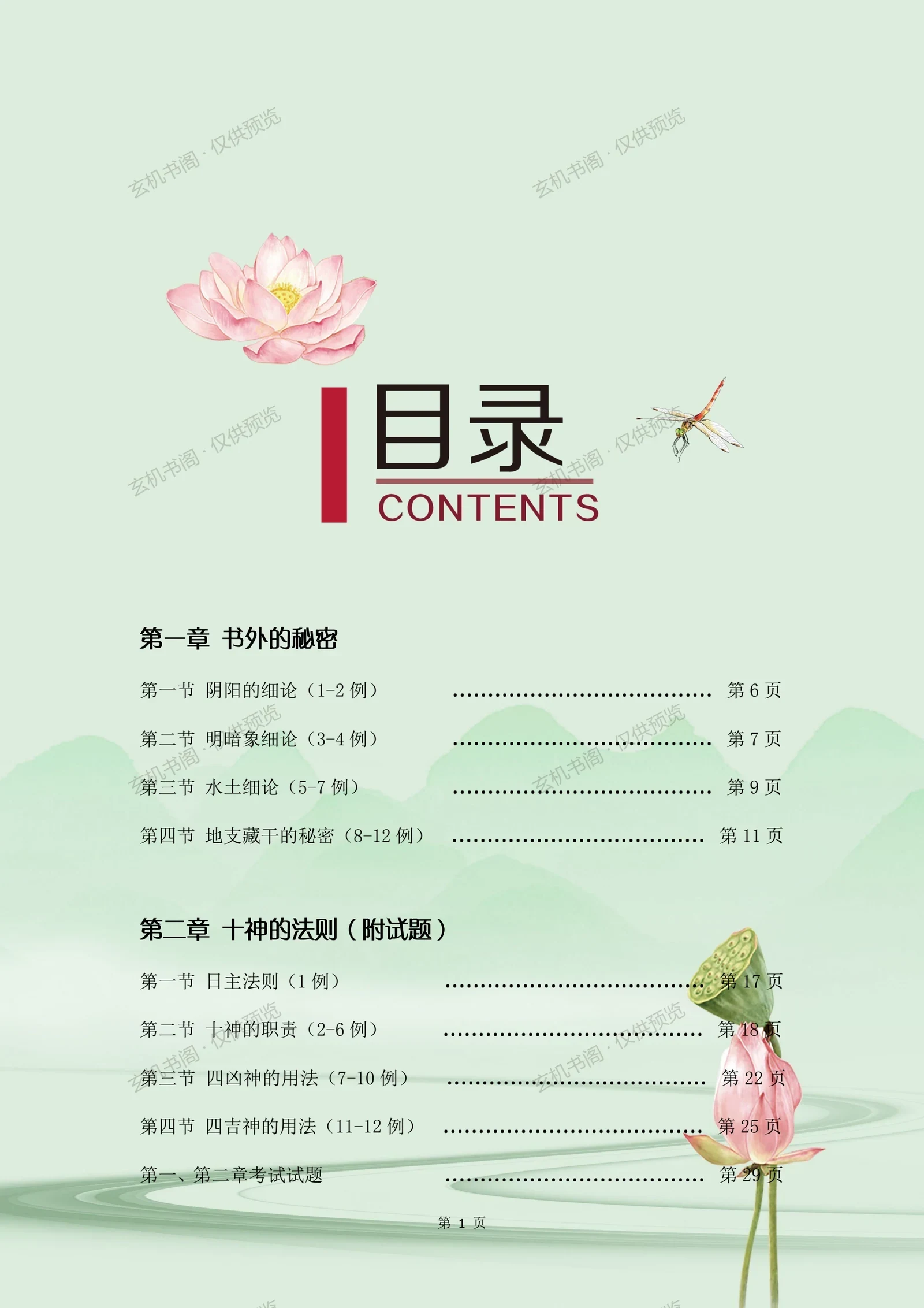
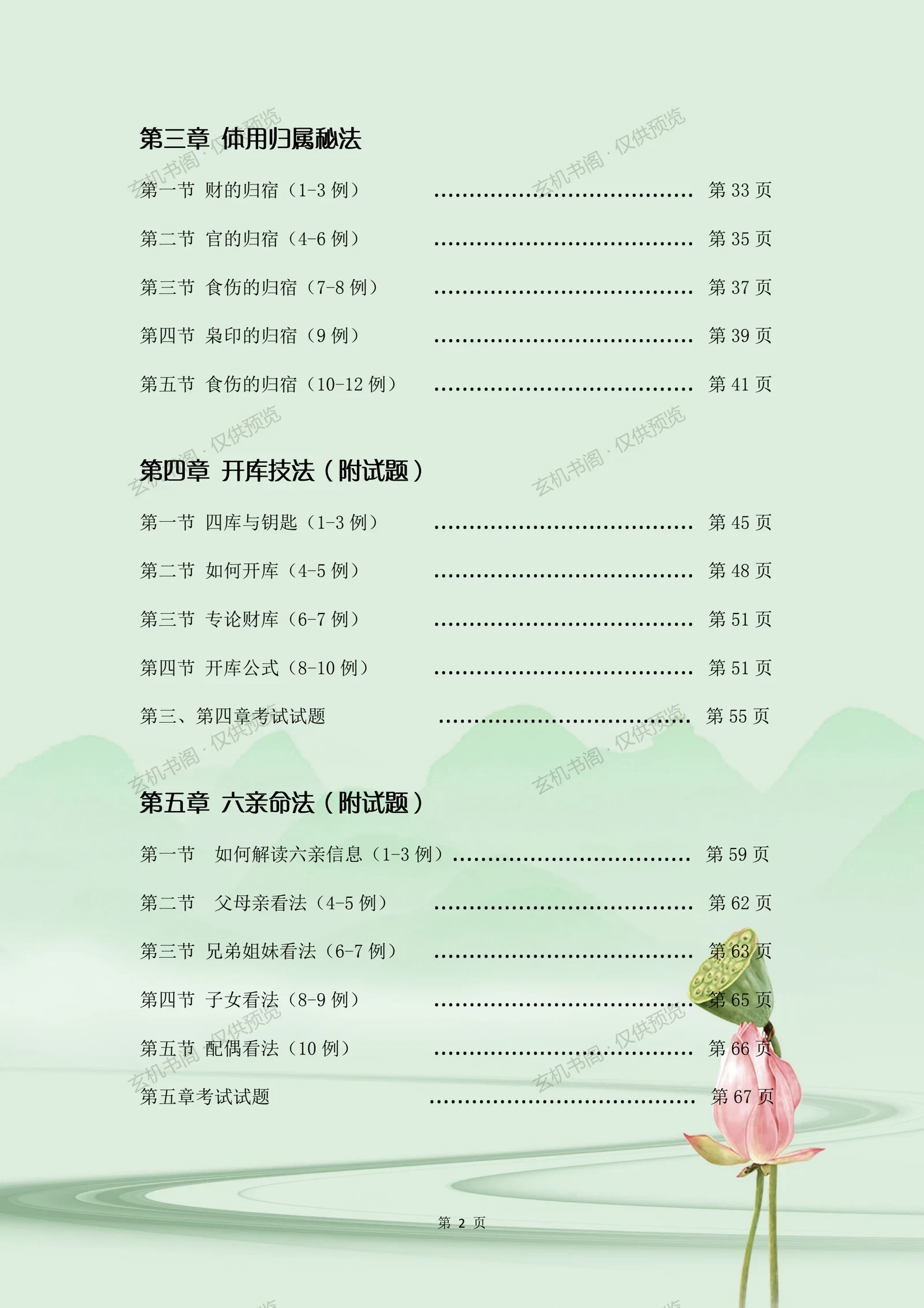
This is the third-round internal course material for Wu Yulian's (style name Yilian) 2020 practitioner class on Yilian Destiny Studies. Centered on Four Pillars (Bazi) astrology, it is aimed at readers with some foundation and distills years of practical experience into a concise, operable reference for practitioners. The visible contents outline five training chapters: Chapter 1, 'Secrets Beyond the Book,' starts from basic details such as yin-yang, explicit and hidden images, water-earth relations, and earthly branch hidden stems; Chapter 2, 'Rules of the Ten Gods,' explains the day-master rule, duties of the Ten Gods, and the use of the four inauspicious and four auspicious gods, with exam questions; Chapter 3, 'Secret Method of Ti-Yong Attribution,' discusses the attribution of wealth, officer, output, and seal gods; Chapter 4, 'Storehouse-Opening Techniques,' focuses on the four storehouses and their keys, opening methods, wealth storehouses, and formulas; Chapter 5, 'Six-Relations Destiny Method,' covers parents, siblings, children, and spouse. Each chapter includes numbered examples and chapter-based exam questions, reflecting a training-and-testing approach. The preface also mentions combining destiny analysis with Chinese medicine, acupuncture, five-element dressing, and acupoint guidance for consultations on study, health, marriage, and other life areas.
Contents
Ch.1 Secrets Beyond the Book: yin-yang, hidden images, water-earth, hidden stems
Ch.2 Rules of the Ten Gods: day master, duties, four inauspicious and four auspicious gods
Ch.3 Ti-Yong Attribution: attribution of wealth, officer, output, and seal
Ch.4 Storehouse-Opening Techniques: four storehouses, keys, wealth storehouse, formulas
Ch.5 Six-Relations Method: parents, siblings, children, spouse
Examples and chapter exam questions throughout
Key Points
Starts from yin-yang, explicit/hidden images, water-earth, and hidden stems to capture tacit image-taking experience.
Ten Gods section distinguishes four inauspicious and four auspicious gods and discusses duties with day-master strength.
Ti-Yong attribution assigns wealth, officer, output, and seal to concrete practical use.
Storehouse-opening techniques focus on the four storehouses and keys, with formulas and wealth-storehouse judgment.
Six-relations method treats parents, siblings, children, and spouse separately with examples and exam questions.