Reading guide
Content guideOverview
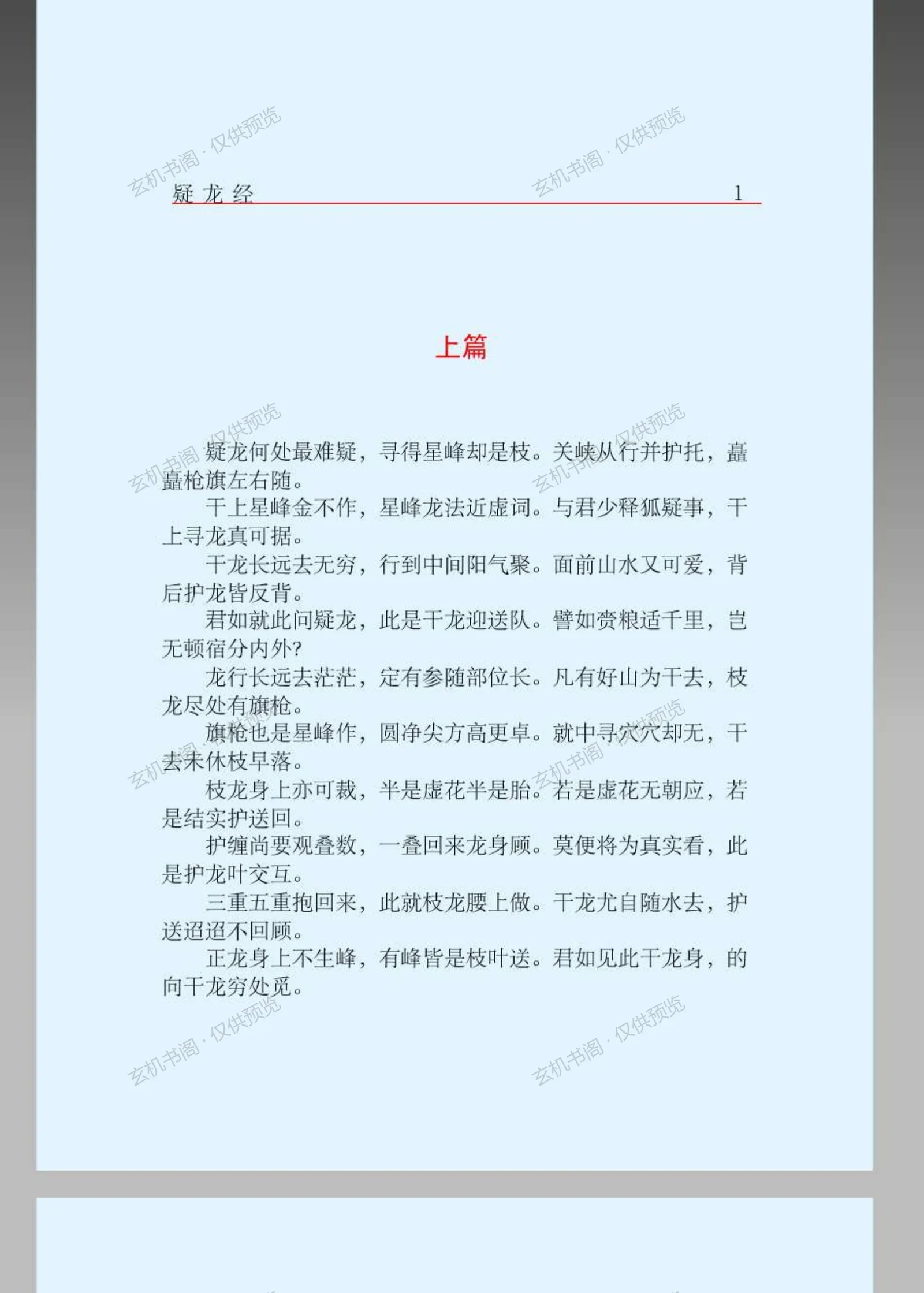
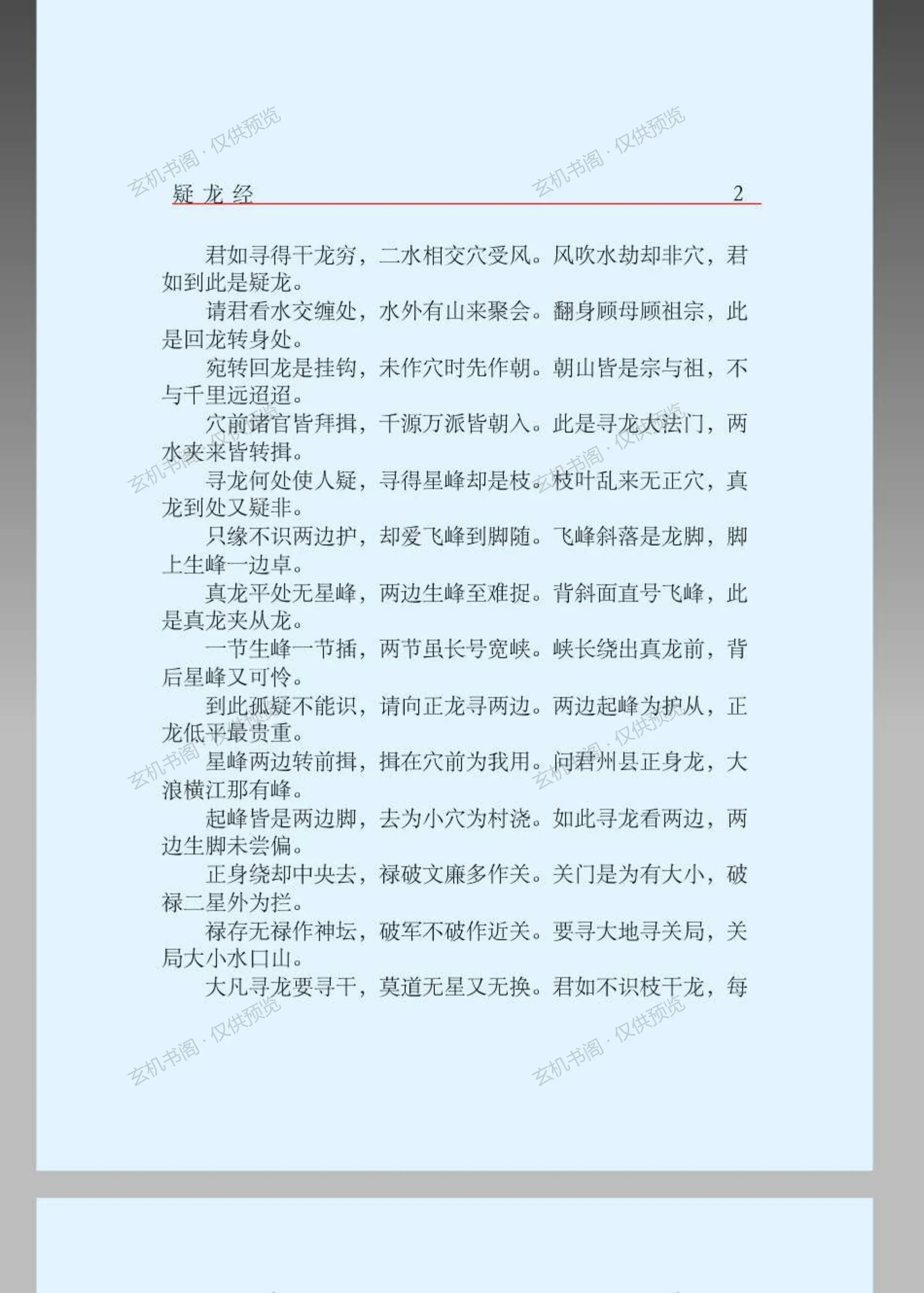
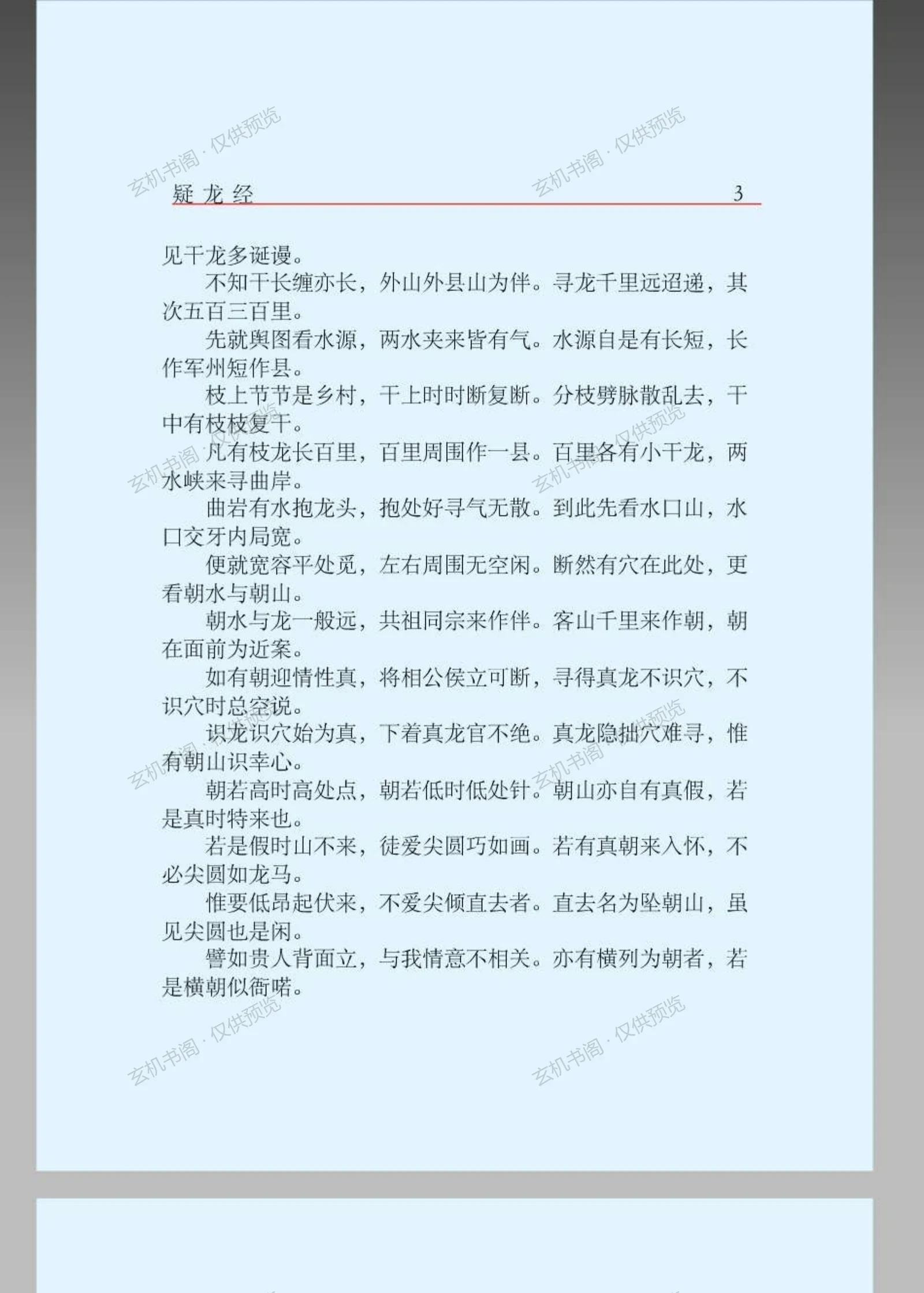
Attributed to the Tang master Yang Yunsong, the Yilong Jing is a core text of the xingshi (landscape) school of feng shui. Written in seven-character verse, it tackles the central problem of telling a true dragon from a false one. The upper chapter sets out the method: judge dragons by their accompanying ridges, protective hills, encircling ranges and water courses, and separate barren outgrowths from real nodes. The middle and lower chapters discuss the dragon's movement, its neck crossings and transformations, and the role of facing mountains and water outlets. Appendices include the Ten Questions on Doubting the Dragon in dialogue form, the Weaving Dragon chapter on surrounding protection, and the Transforming Stars chapter on the changing shapes of peaks. Terse and rhymed, it is a key source for Yang-school feng shui and best read by those with some groundwork in landscape analysis.
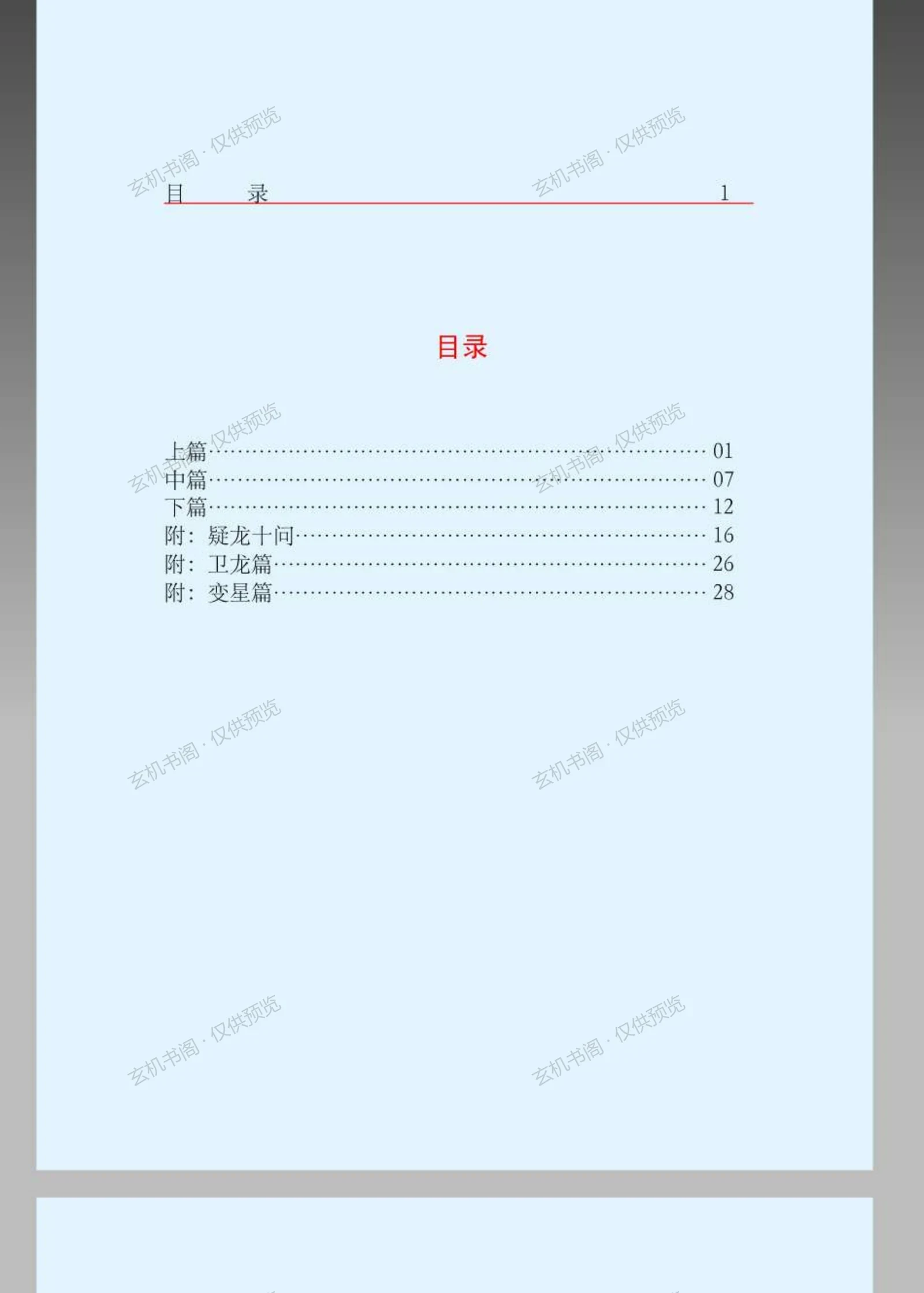
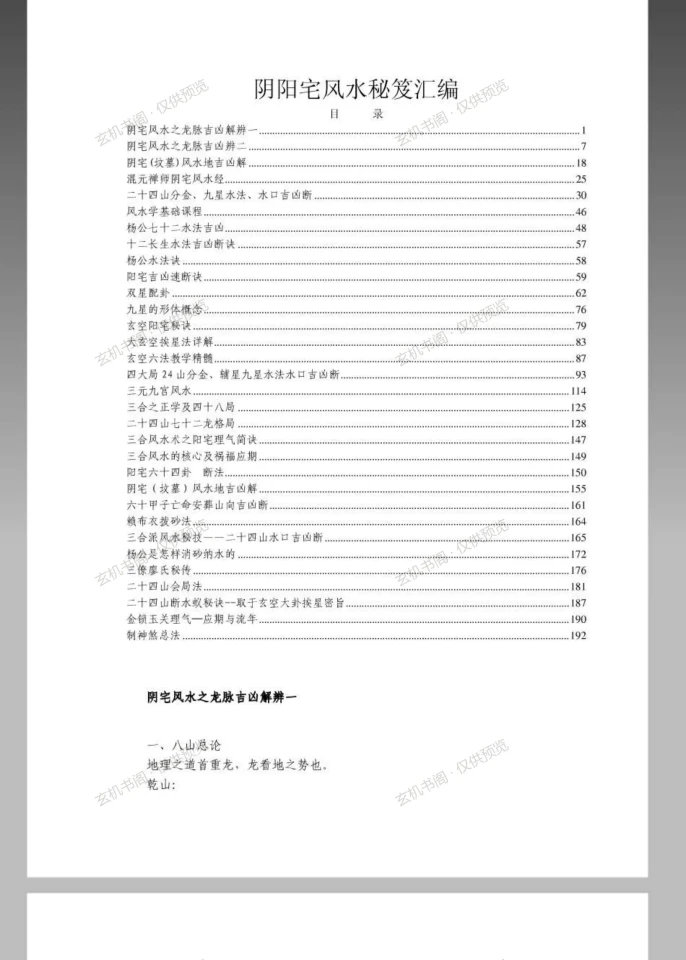
Contents
Upper chapter: true vs. branch dragons and protective peaks
Middle chapter: dragon movement, neck crossings and transformation
Lower chapter: facing mountains, water outlets and node location
Appendix: Ten Questions on Doubting the Dragon
Appendix: Weaving Dragon on surrounding protection
Appendix: Transforming Stars on peak forms
Key Points
Verse-form discussion distinguishing true dragons from branch dragons
Stresses accompanying ridges, protective hills and encirclement as the key to finding dragons
Notes that a prominent peak is not necessarily the true node
Confluence of waters and turning dragons mark where nodes form
Appendices answer common puzzles in dialogue form