Reading guide
Content guideOverview
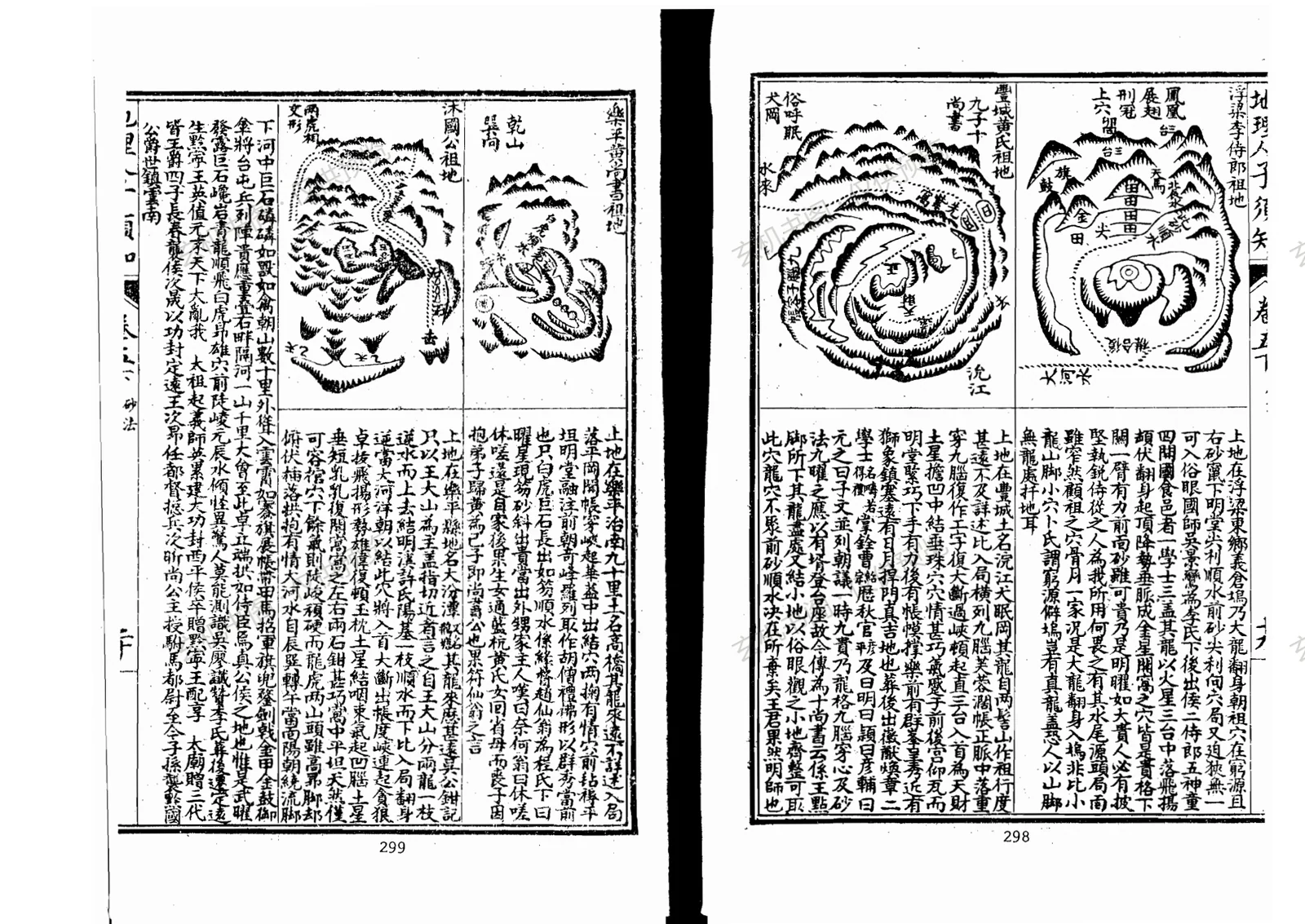
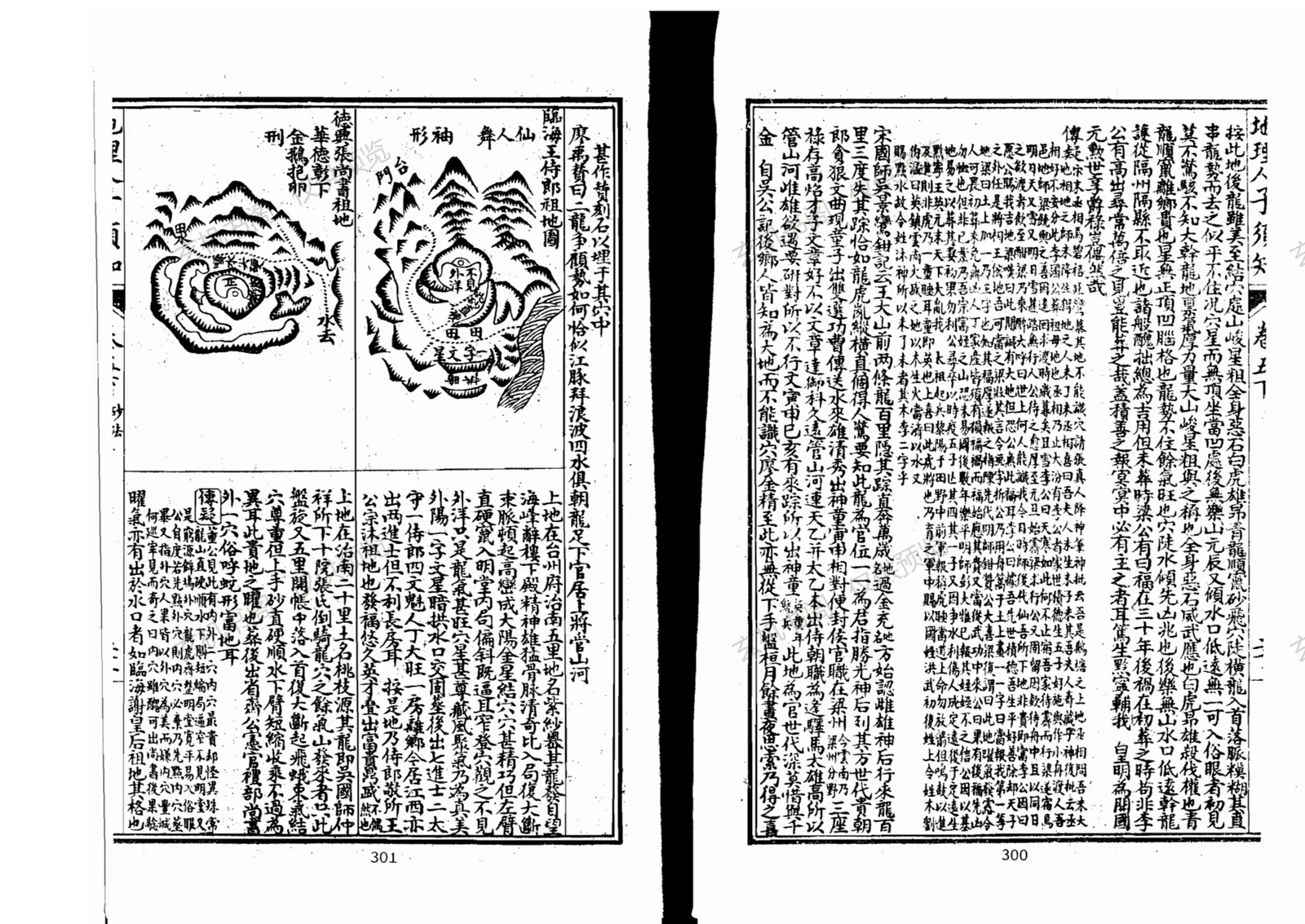
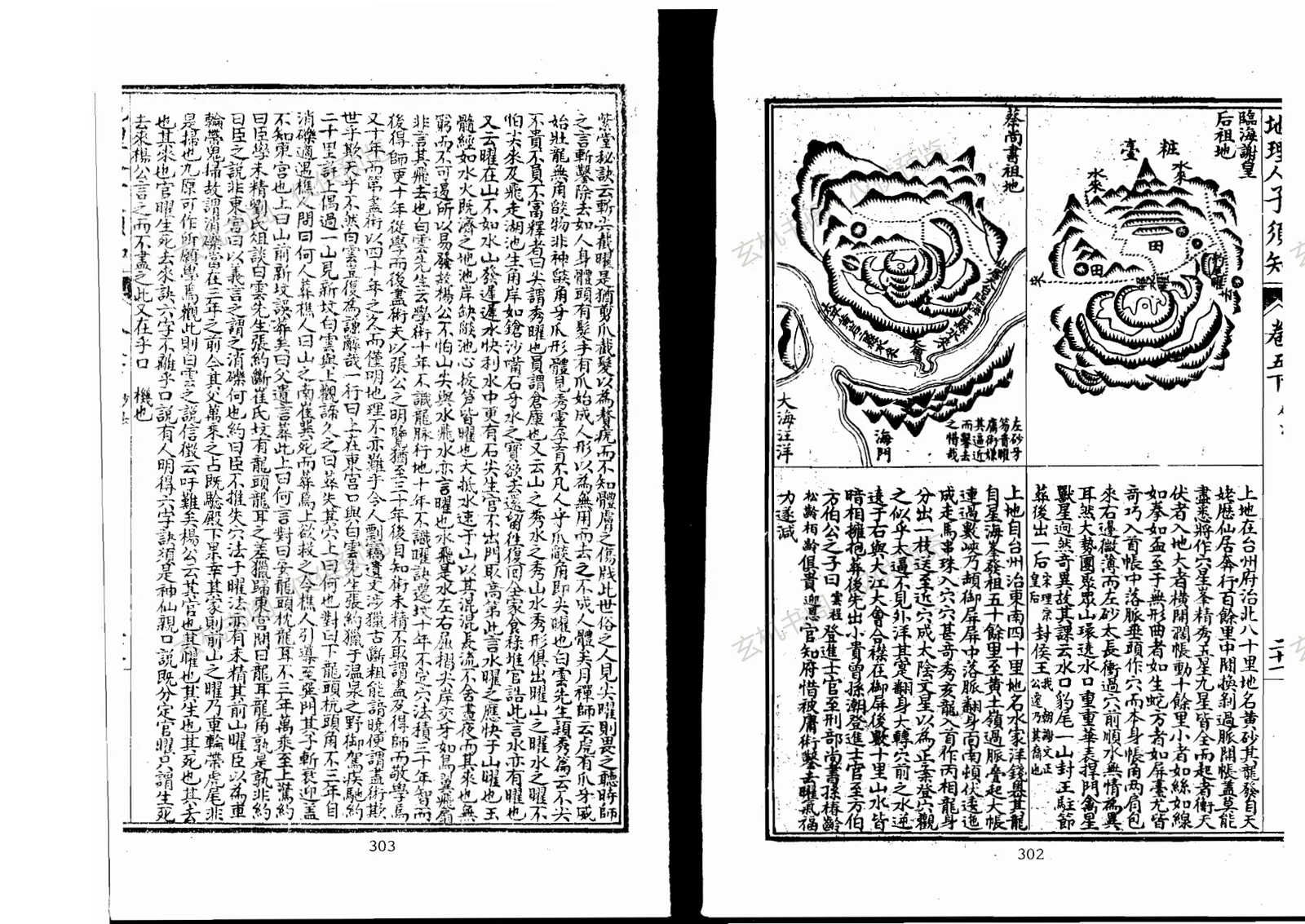
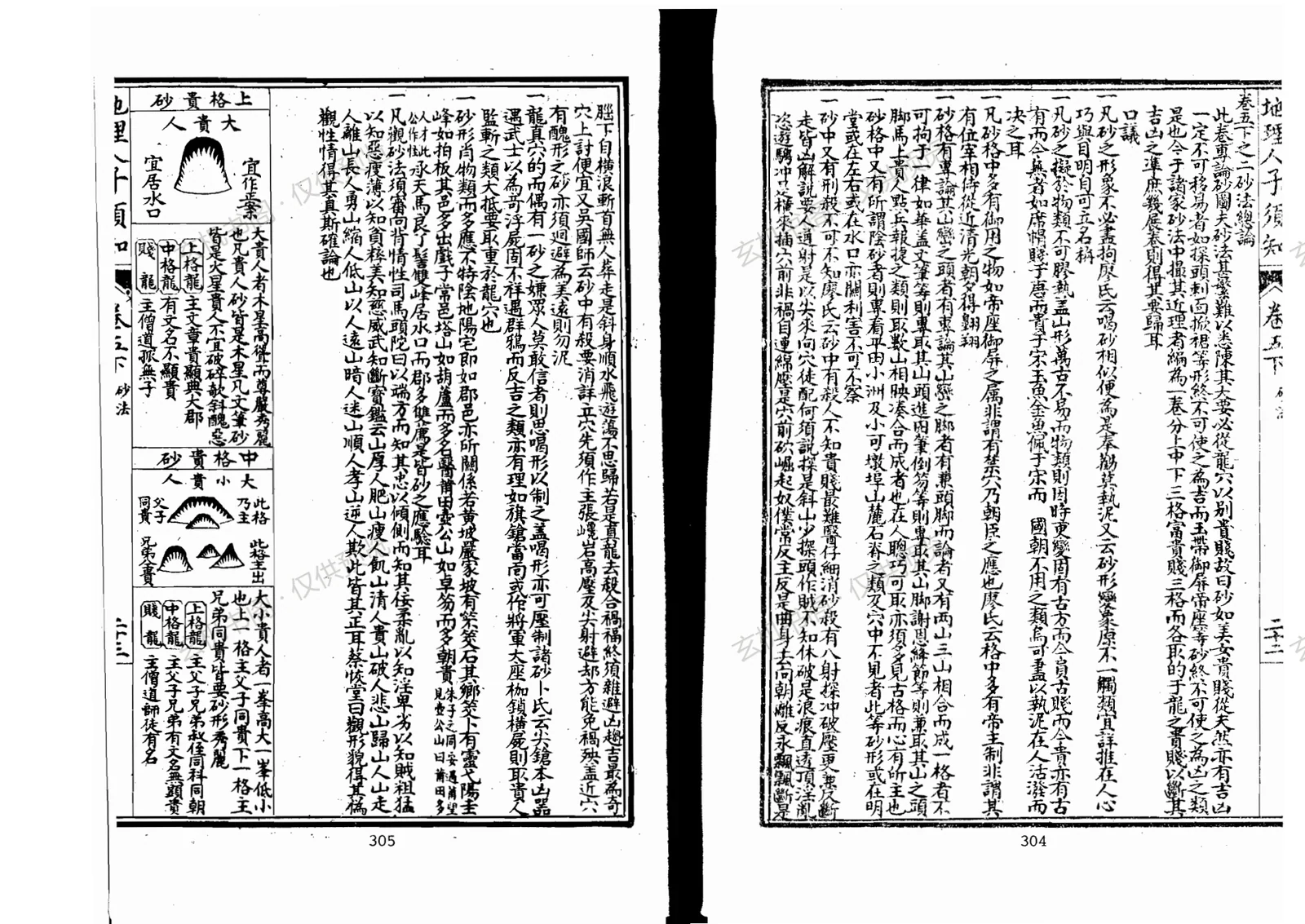
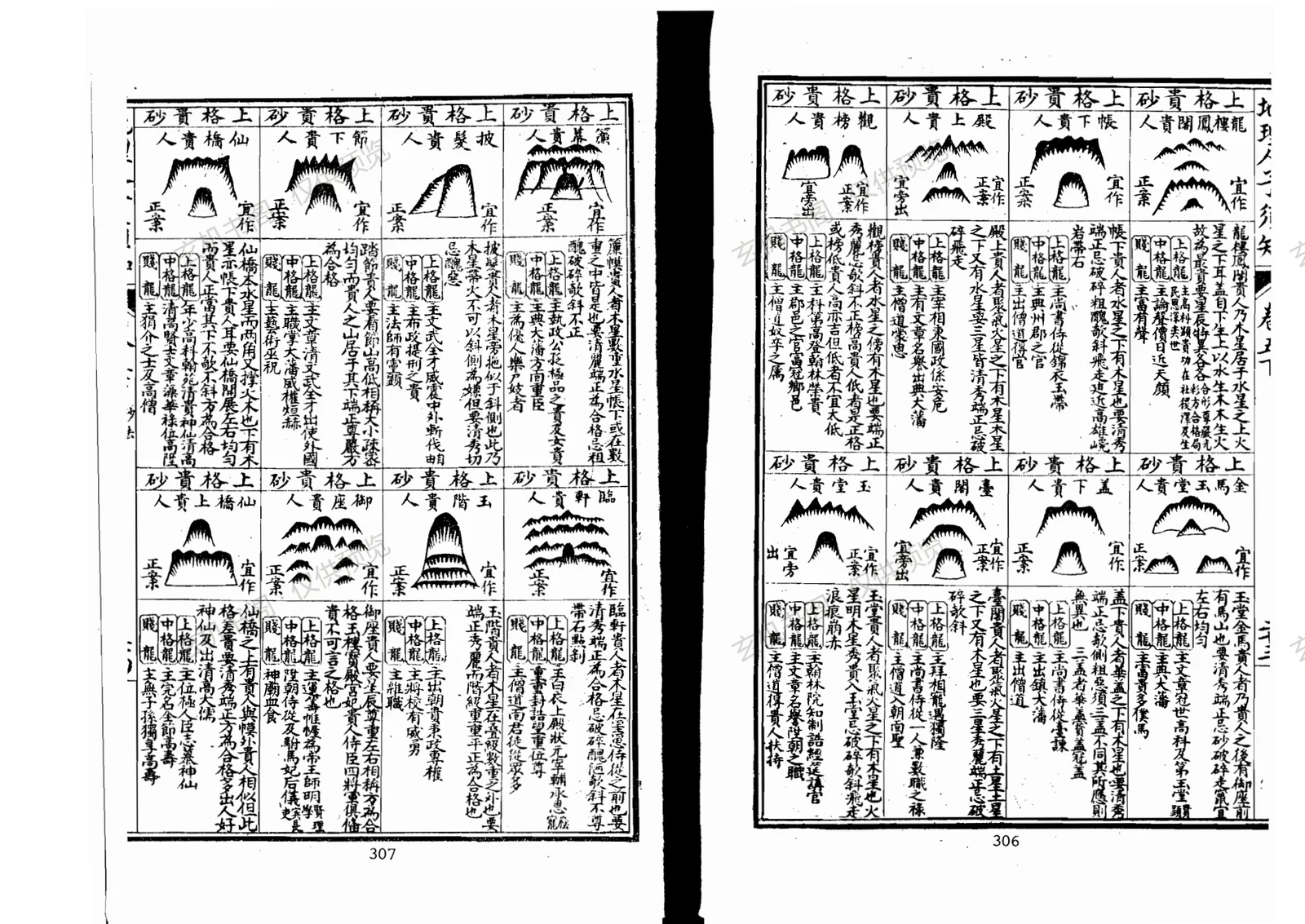
This is a collated edition of a traditional form-school fengshui text, Geogrraphy for the Son. The visible portion opens with editorial principles and general remarks, then proceeds to the second part of Volume Five, which focuses on sand (shan) formations and acupoint methods. It lists numerous sand patterns named after the Five Stars and Nine Stars, such as Tanlang, Jumen, Lucun, Wenqu, Lianzhen, Wuqu and Pojun, and pairs each with an illustration and a verdict on fortune or misfortune. The book also includes illustrated ancestral-site cases attributed to famous families and cites earlier authorities like Yang Junsong, Liao Yu and Lai Wenjun, alongside contemporary opinions. Because text and diagrams are meant to be read together, the volume is useful for studying traditional form-school fengshui and historical diagram conventions, though its condensed drawings require prior familiarity with the terminology.
Contents
Editorial principles and reprint conventions
General discussion of sand methods
Five-Star sand diagrams and judgments
Auspicious sand forms: halls, phoenix gates, immortal bridges, imperial seats
Inauspicious sand forms and signs of decline
Illustrated ancestral sites and land assessments
Sand methods in the second part of Volume Five
Key Points
Centers on form-school sand methods and classifies sand shapes by fortune.
Pairs diagrams with text; drawings mark acupoints, sand, water and facing mountains.
Cites older authorities such as Yang, Liao and Lai while adding contemporary views.
Includes several ancestral-site cases with both diagrams and judgments.
Editorial notes explain sources of quotations and diagrams.