Reading guide
Content guideOverview
This six-page handout records a session of Yiting's Zi Wei Dou Shu systematic class. The opening pages announce the lesson and introduce the Chessboard Formula (Qipan Jue), described as a signature method of the author's school. Three passages from the Tai Wei Fu are then quoted and unpacked: the warning that star qualities cannot be judged uniformly, the statement that stars spread over twelve walls and thirty-six positions with 'entering the temple' as auspicious and 'losing degree' as void, and the need to understand mutual generation and restraint along with favorable or unfavorable placement. The instructor explains star domains, the restraining interplay of stars such as Lian Zhen and Xiang, the twelve walls as twelve basic charts and six patterns multiplied by six Zi Wei positions giving thirty-six, the link between temple/fallen status and the twelve stages of growth, and finally the holistic view that no single palace or star can establish a fate on its own, illustrated by Po Jun in Zi versus Chen or Xu. The tone is conversational classroom transcript.
Contents
Course opening and the role of the Chessboard Formula
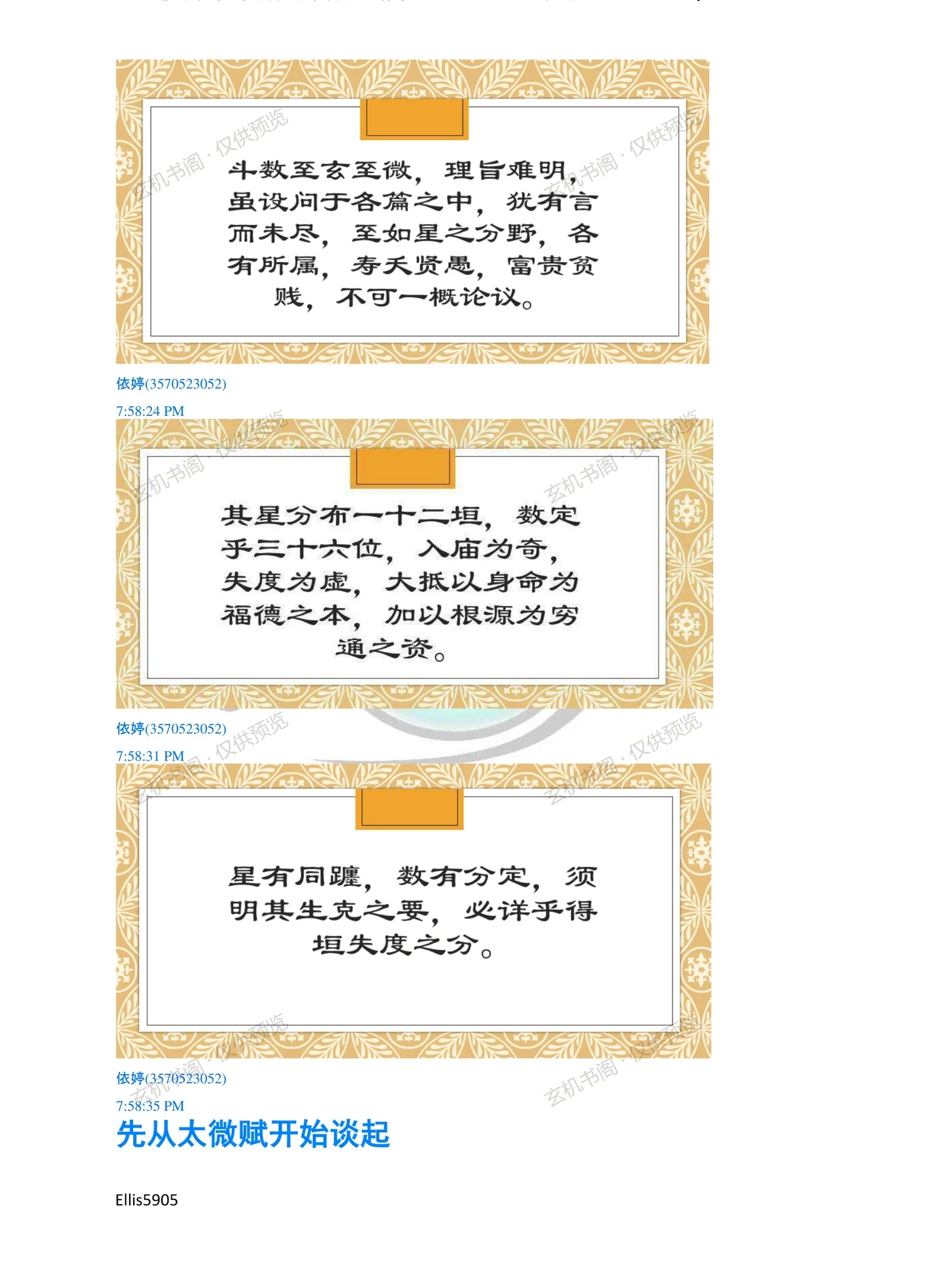
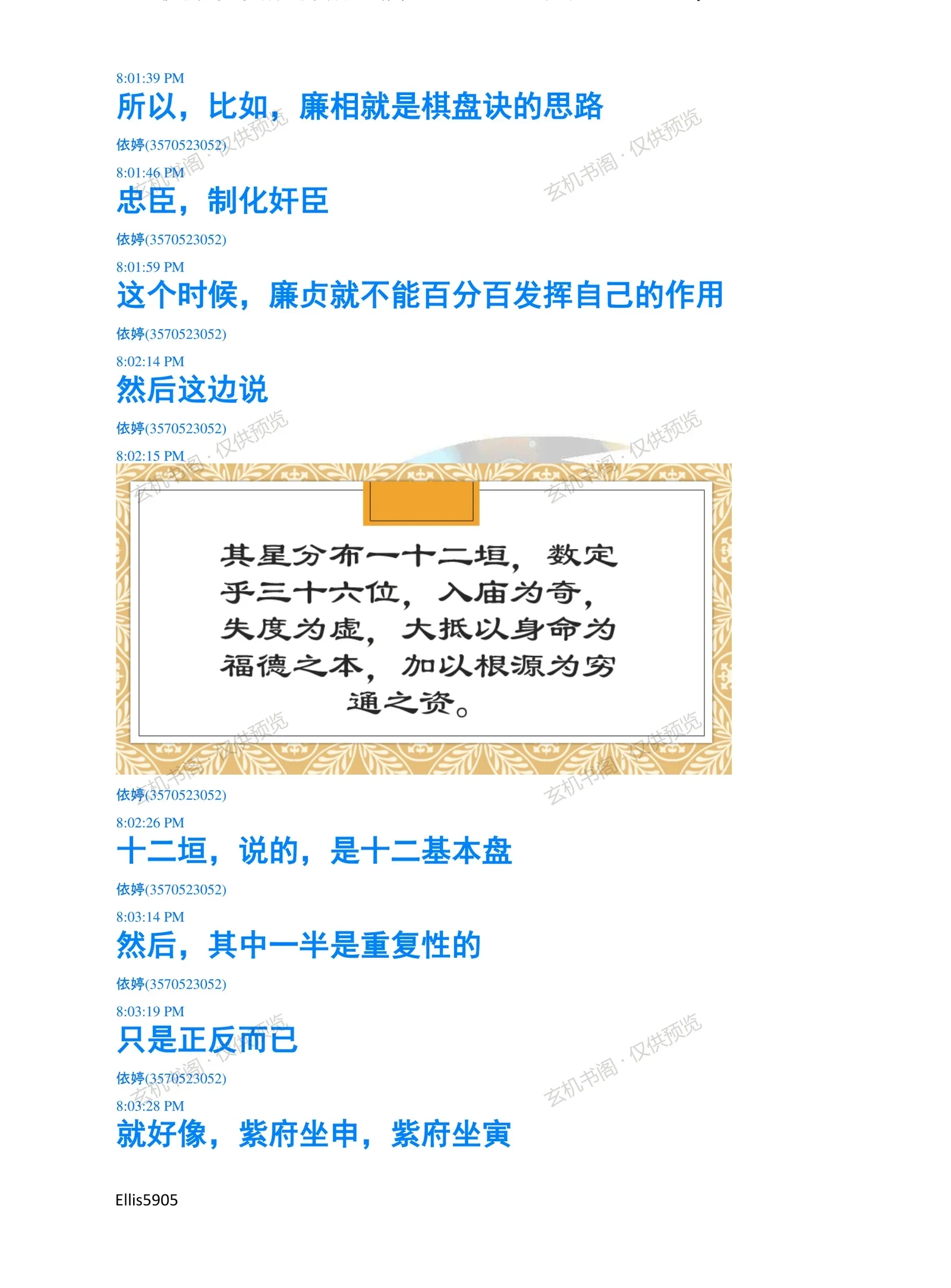
Three passages from the Tai Wei Fu
Star domains and why no uniform judgment applies
Lian-Xiang restraint: loyal minister checks the villain
Twelve walls and thirty-six basic positions
Temple/fallen status, twelve stages and star energy
Mutual star involvement and the holistic board view
Key Points
The Chessboard Formula is presented as a signature, standalone technique
A star's fortune is not fixed but depends on domain and chart layout
Twelve walls equal twelve basic charts; six patterns times six Zi Wei positions give thirty-six
Entering the temple versus losing degree maps to brightness and the twelve stages
Charts must be read as a whole; no single palace or star stands alone
The Tai Wei Fu is regarded as the most important Zi Wei text