Reading guide
Content guideOverview
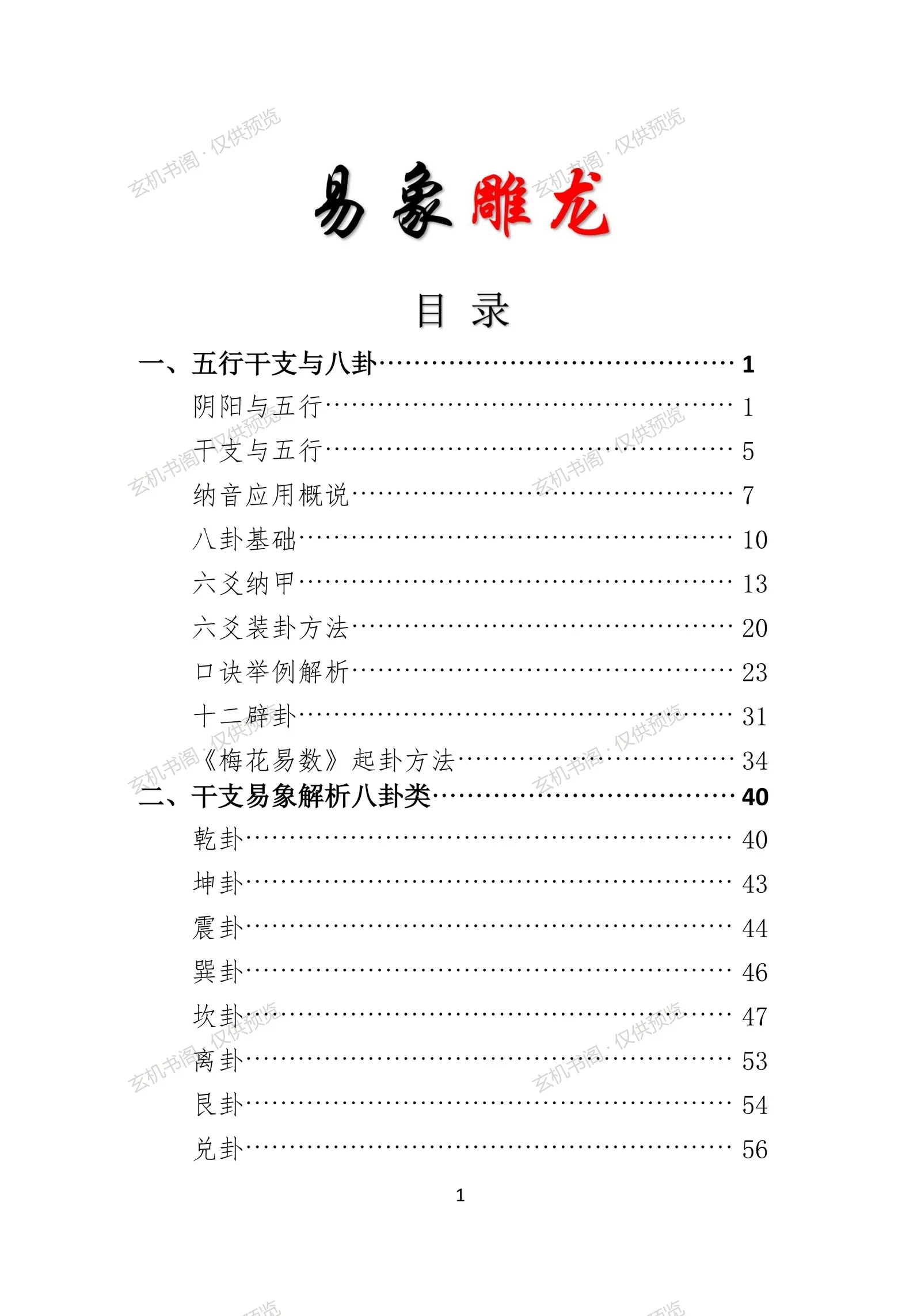
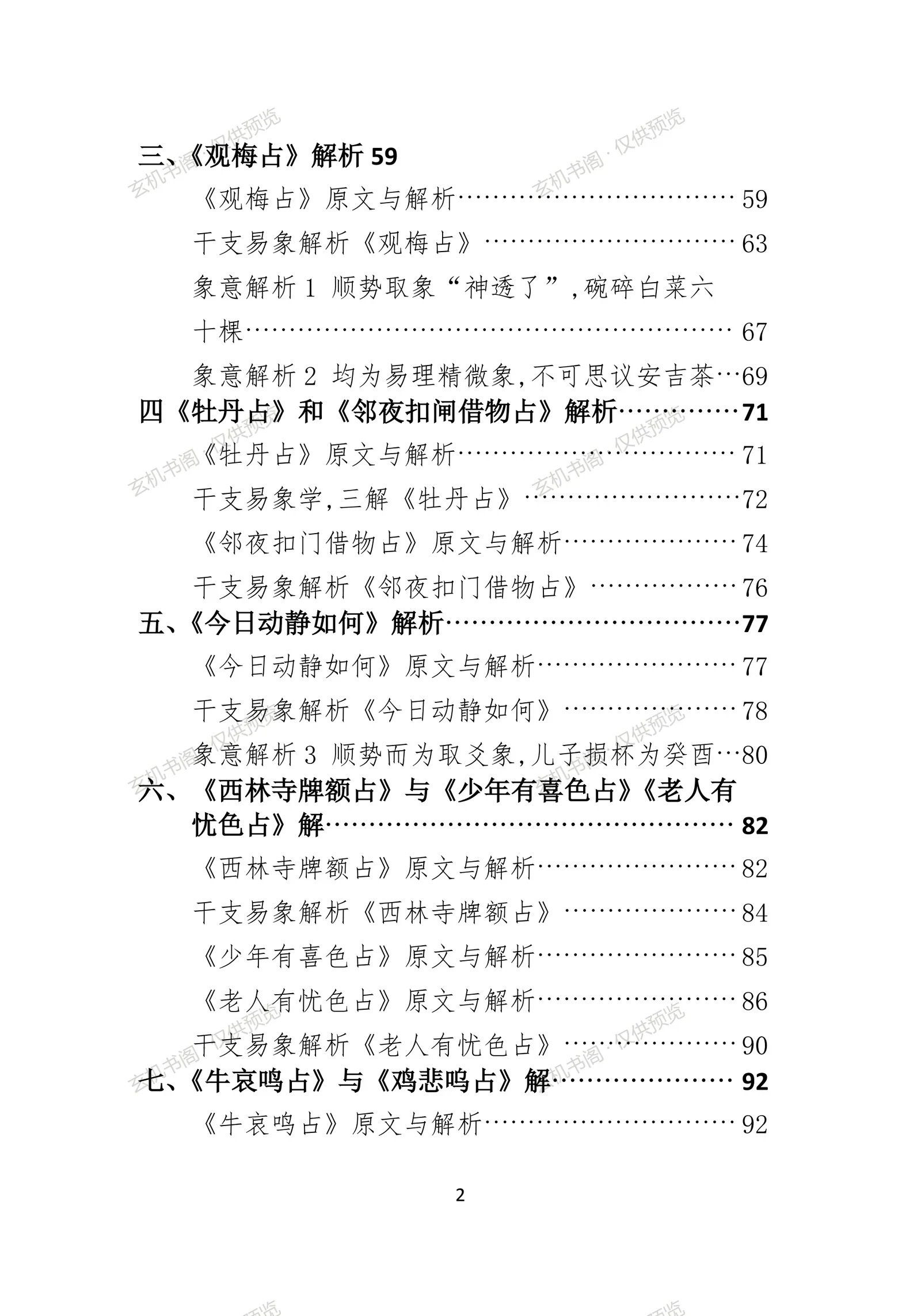
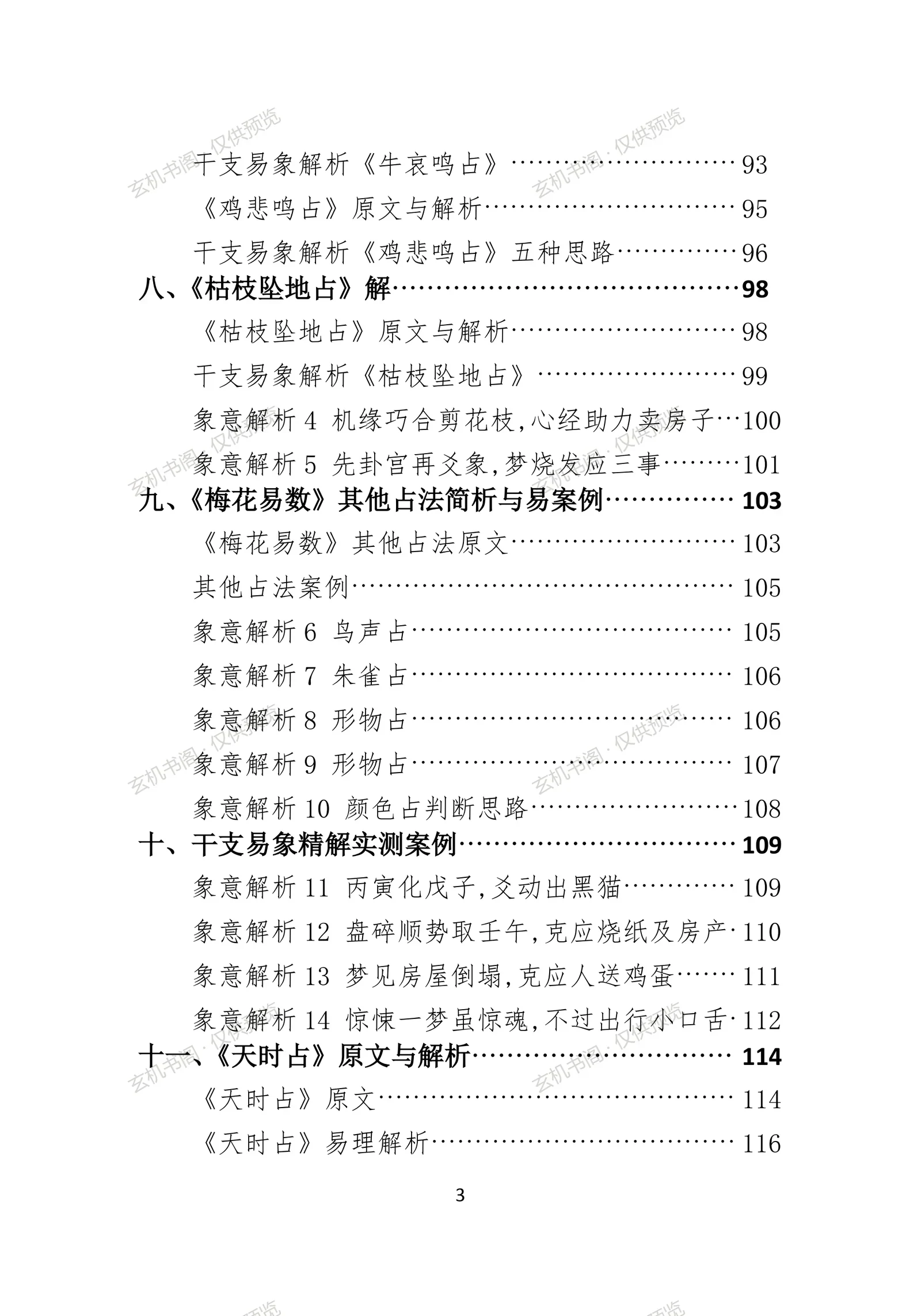
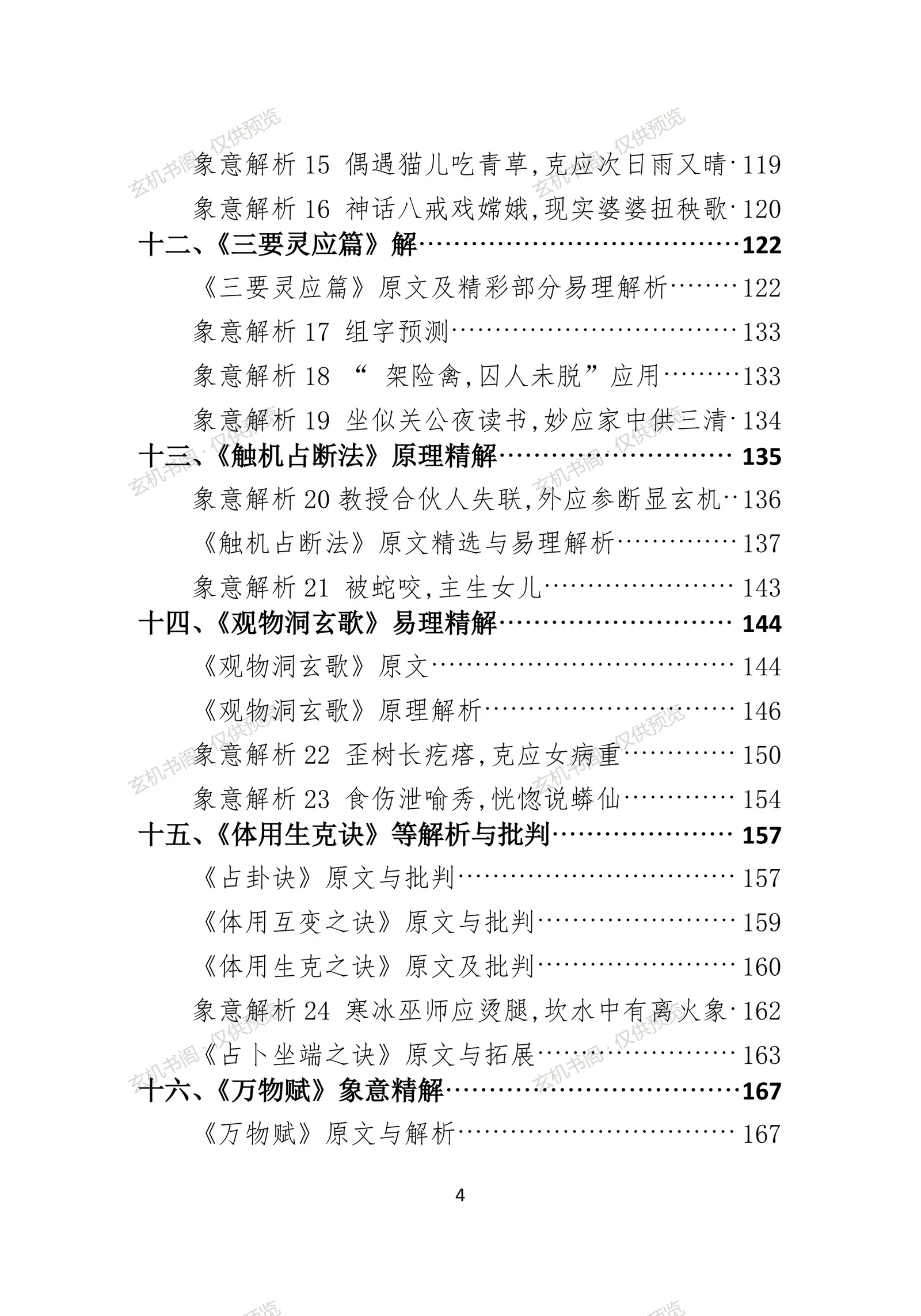
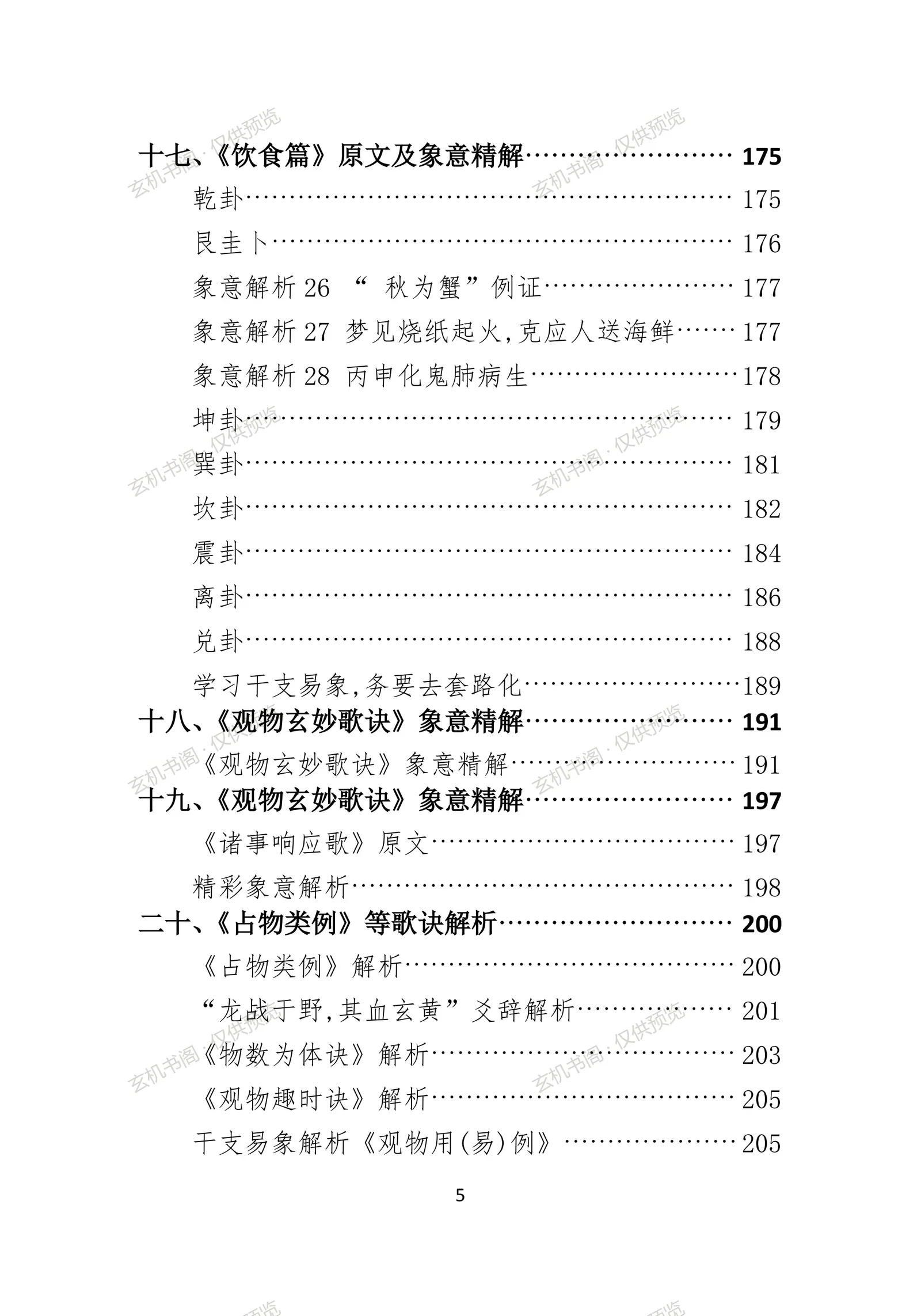
Yi Xiang Diao Long by He Yunfei takes stem-branch image-numerology (ganzhi yixiang) as its organizing framework. The opening chapters cover yin-yang and the Five Phases, stems and branches, naying, the eight trigrams, six-yao najia and hexagram installation, and the Plum Blossom method of casting a gua. The main body then analyzes the eight trigrams in turn and works through classic divination cases such as Observing the Plum Blossom, The Peony Divination, Borrowing an Object at Night, and How Are Things Today, along with the Western Temple Plaque, the Boy with a Joyful Look, the Old Man with a Worried Look, the Ox's Lowing, the Chicken's Sad Cry, the Withered Branch Falling, and Heavenly Timing. Later sections explain the San Yao Ling Ying Pian, the method of seizing the moment, the Dongxuan Song on observing things, the rules of body and function, the Ten Thousand Things Fu, the Dietary Chapter, and other mnemonic verses on divining objects. Numbered image-analysis cases run throughout, illustrating how the author reads dreams, omens, sounds, colors, and shapes. The book stresses flexible image-taking over fixed formulas and is suited to readers who already know the basics of six-yao or Plum Blossom divination.
Contents
Five Phases, stems and branches, and the eight trigrams
Stem-branch image analysis of the eight trigrams
Classic cases: Observing the Plum Blossom and others
San Yao Ling Ying Pian and seizing the moment
Songs on observing things and body-function rules
Ten Thousand Things Fu, Dietary Chapter, and case studies
Rules and verses for divining objects
Key Points
Reinterprets classic Plum Blossom cases through stem-branch images
Builds from basic cosmology and hexagram installation to case analysis
Includes many numbered real-life readings showing omen-based image-taking
Critiques and extends older mnemonic rules such as body-function relations
Advocates flexible image-taking instead of memorized verdicts