Reading guide
Content guideOverview
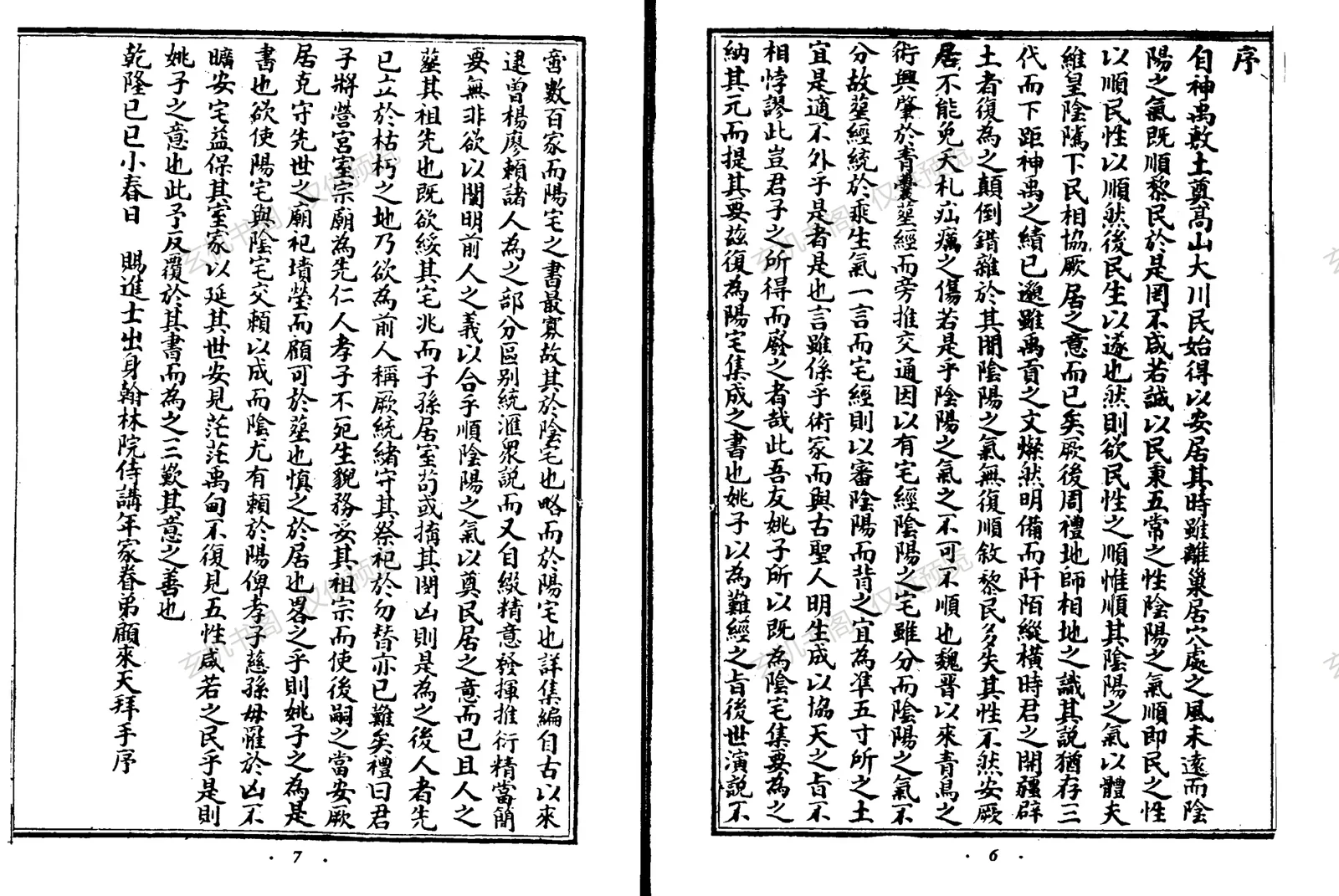
This is a Qing-era geomantic compilation attributed to Yao Tingluan, styled Canxia Daoren. The opening pages preserve his own preface, a general preface, and a note on editorial principles, stating that the work takes the Eight Dwellings system as its basis while drawing on San Yuan theory and form-school methods. The main body is organized into four sections: dragons, acupoints, sand, and water. The dragon section covers ancestral peaks, qi veins, branches, yin-yang, forms, and the Five Stars; the acupoint section discusses placement, verification, and facing water; further sections treat sand formations and water mouths. The book is a useful reference for readers with some background in traditional Chinese siting and burial lore.
Contents
General and author's prefaces on the compilation's purpose
Editorial principles for selecting and reconciling sources
Section 1: Dragons—ancestors, veins, branches, forms, Five Stars
Section 2: Acupoints—placement, verification, water and bright hall
Section 3: Sand—auspicious and inauspicious formations
Section 4: Water—mouths, water cities, and prognostic methods
Key Points
Takes the Eight Dwellings system as its core, with San Yuan and form-school methods
Prefaces and editorial notes explain the compilation's scope
Four-part structure: dragons, acupoints, sand, and water
Reconciles earlier sources and adds the author's judgments
Combines burial and dwelling siting in one collection