Reading guide
Content guideOverview
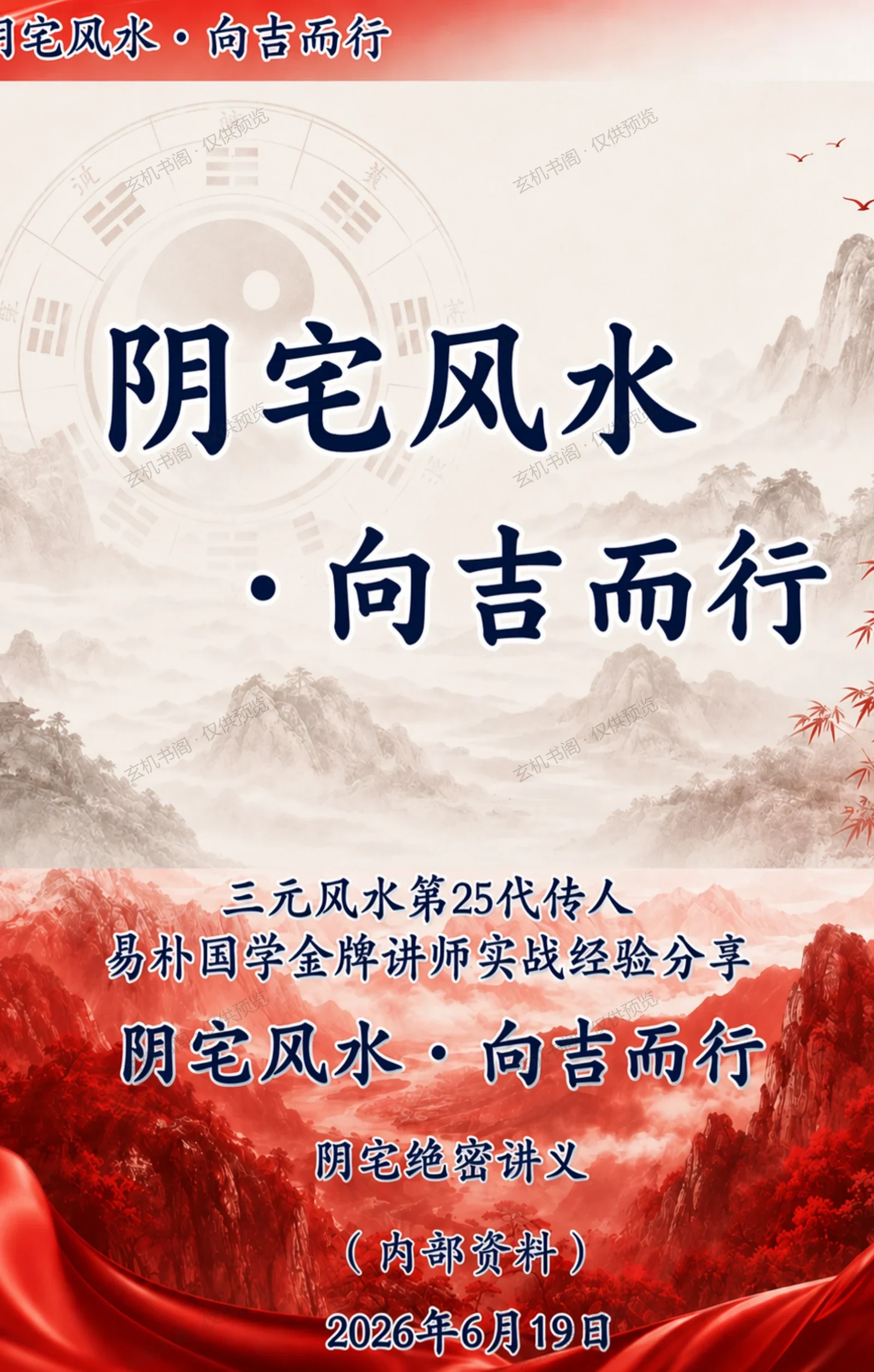
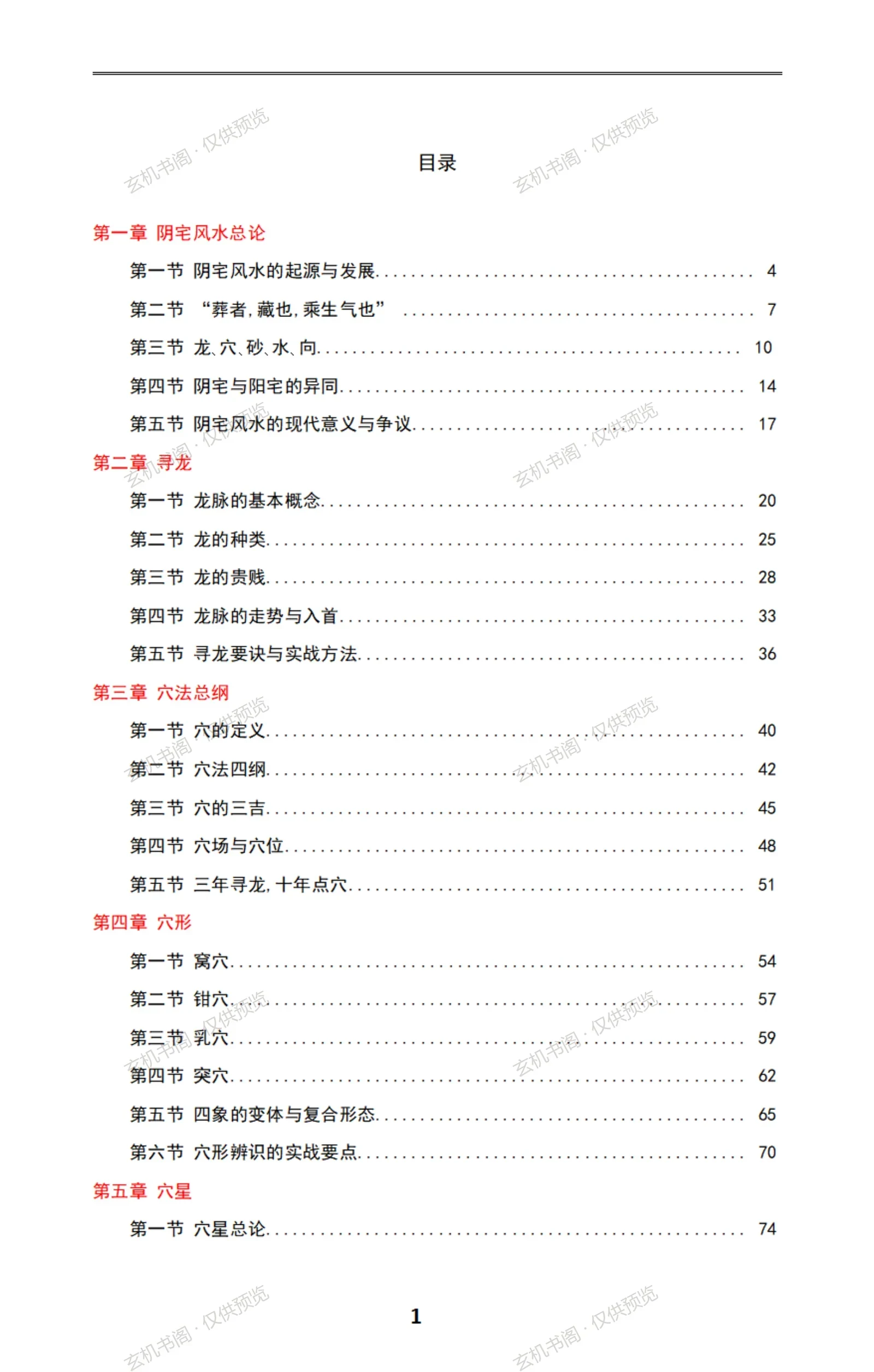
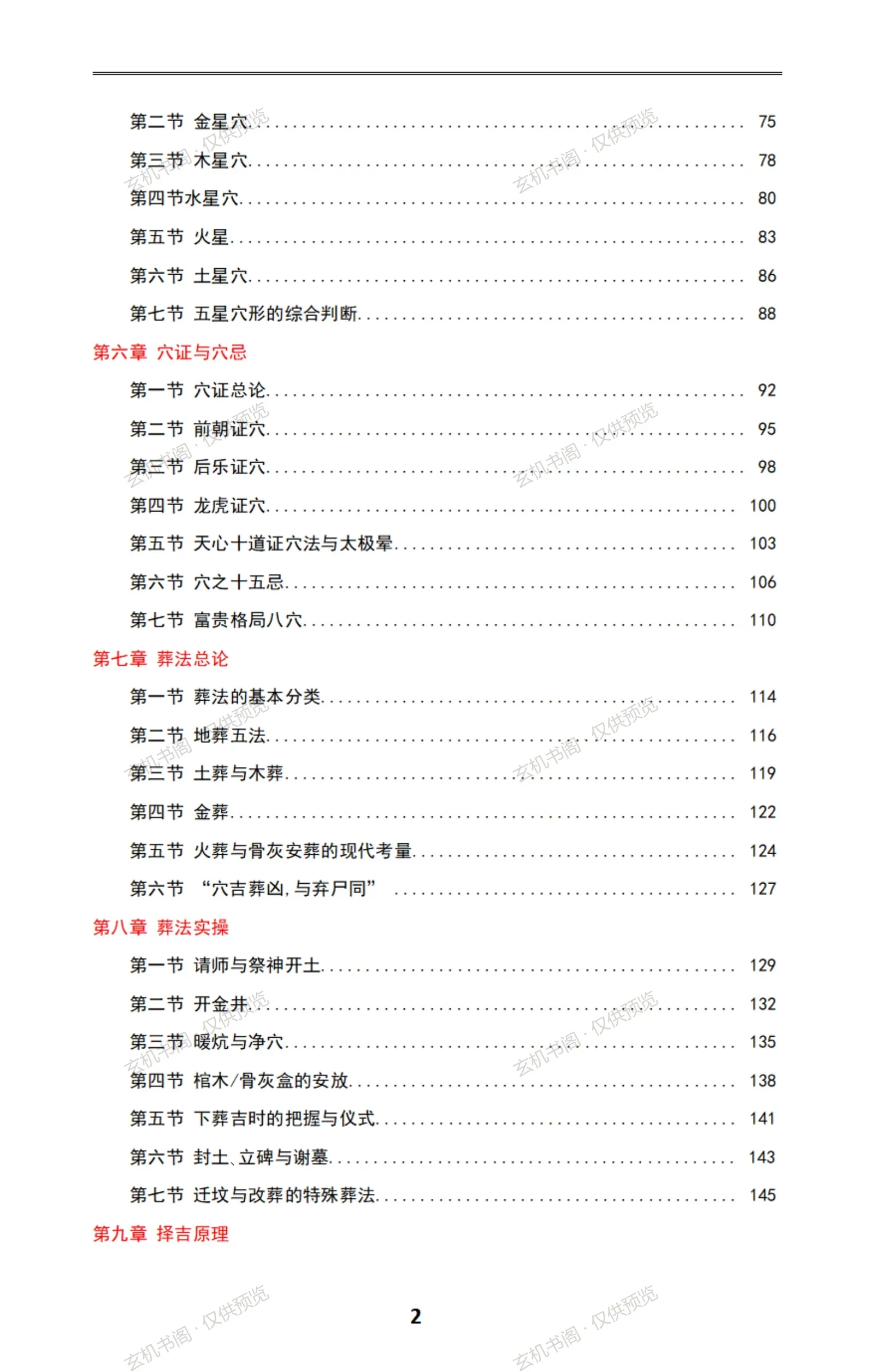
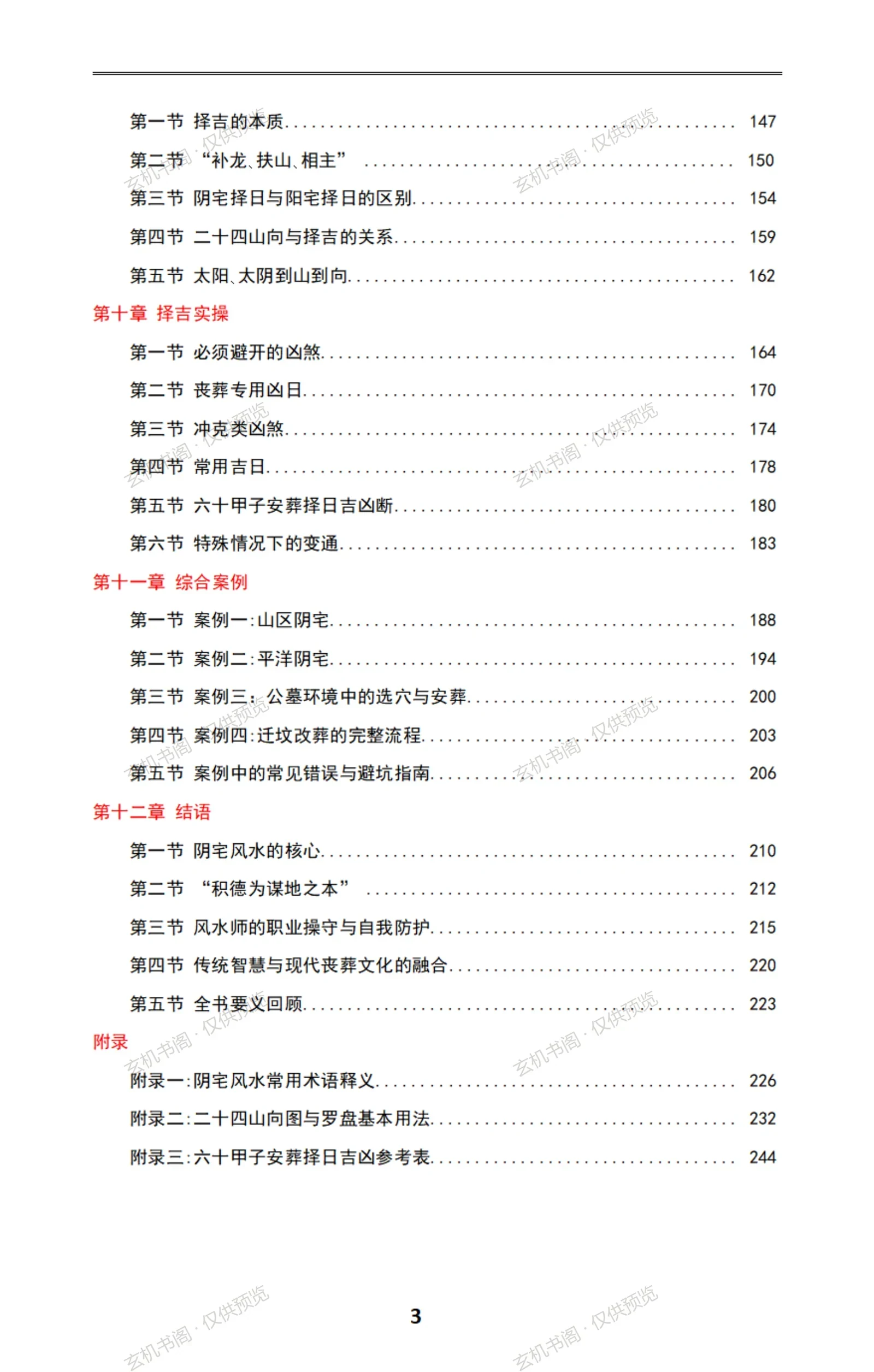
This is an internal lecture-notes volume on yinzhai fengshui compiled by Shui Mu, identified on the cover as a 25th-generation transmitter of San Yuan fengshui. The main text runs twelve chapters plus three appendices and follows the practical sequence of burial fengshui. The first five chapters cover foundations and site selection: the origins of yinzhai fengshui, dragon vein concepts, types and quality of dragons, approach and entry points, the definition of the xue (site), the four guidelines of site method, the four basic forms of窝, 钳, 乳 and 突, and the five-element star forms. Chapters six and seven discuss site verification and taboos, including front, rear, dragon-and-tiger verification, the celestial ten-path method and taiji halo, fifteen site taboos, eight auspicious configurations, and classifications of burial methods such as earth, wood, metal and cremation. Chapters eight to ten turn to practice: opening the grave pit, warming and purifying the pit, placing the coffin or urn, timing the burial, sealing the mound and erecting the stele, relocation and reburial, plus principles and practice of date selection with inauspicious days and sexagenary cycle judgments. Chapter eleven presents cases for mountain sites, flatland sites, public cemeteries and reburial, and the final chapter discusses the core of yinzhai fengshui, professional conduct and modern funeral culture. Appendices give terminology, a twenty-four mountain chart with basic luopan usage, and a sixty-jiazi burial date reference table. It suits readers with some fengshui background who want a structured view of yinzhai practice.
Contents
General introduction: origins, dragon-site-sand-water-facing, yin versus yang houses
Dragon hunting: concepts, types and quality, movement and entry
Site method and forms: four guidelines, three auspicious signs, four basic shapes
Site stars: five-element forms and combined judgment
Site verification and taboos: celestial ten paths, taiji halo, fifteen taboos
Burial methods: classifications, five methods, cremation, practical steps
Date selection: avoiding inauspicious forces, funeral days, sixty-jiazi judgments
Case studies and appendices: luopan usage and date reference tables
Key Points
Organized in practical order: dragon hunting, site selection, form verification, burial, date selection, cases
Site forms classified by the four basic shapes and five-element star forms
Date selection stresses avoiding inauspicious forces and funeral-specific bad days
Includes twenty-four mountain chart and basic luopan instructions
Covers modern situations such as public cemeteries and reburial