Reading guide
Content guideOverview
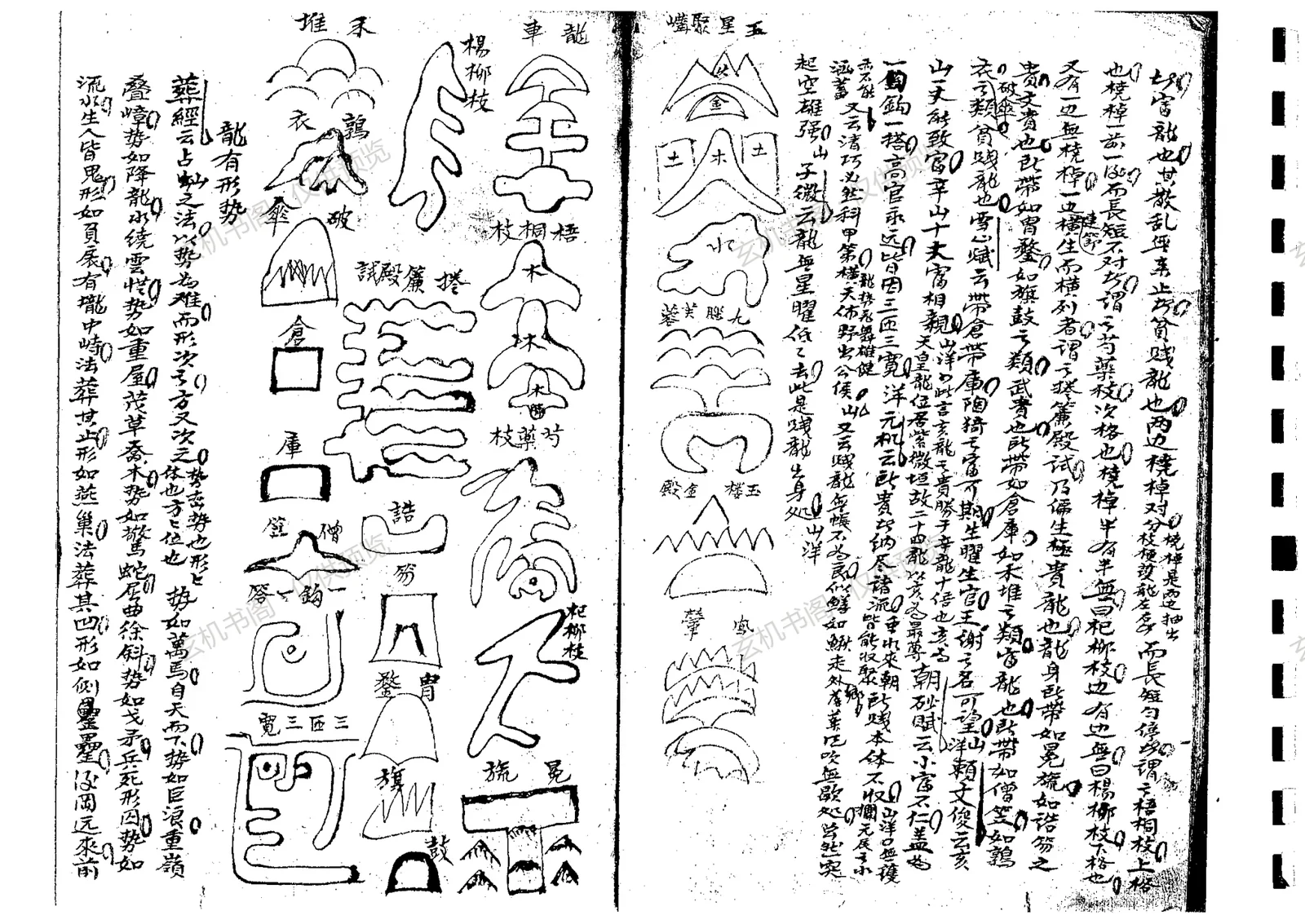
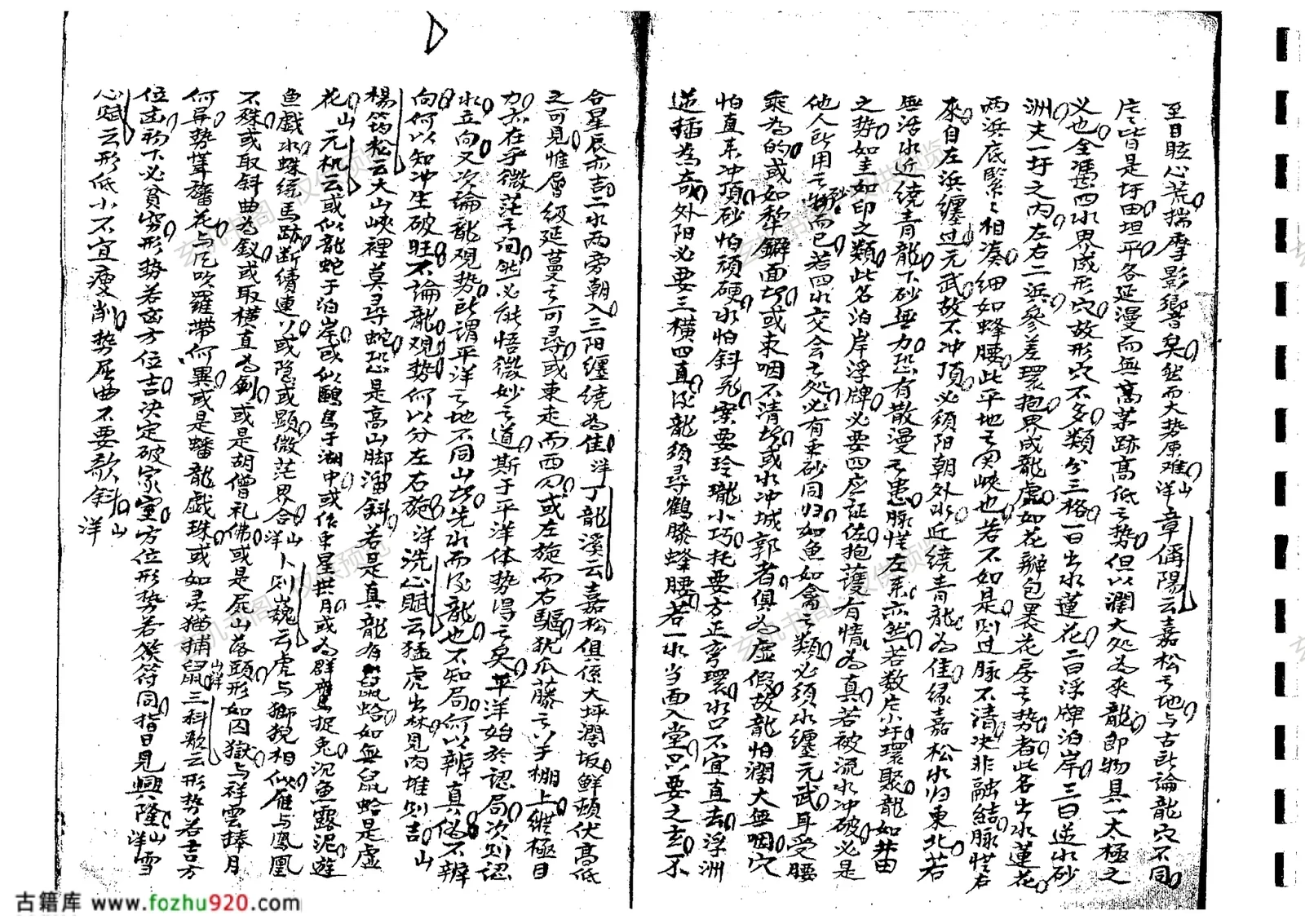
This is Volume Two of a hand-copied fengshui manual on yin-dwelling (burial) siting. It centers on the forms and movements of dragon veins, pairing simple line drawings with explanatory text and verses. The pages first present diagrams distinguishing living from dead dragons and strong from weak dragons, then discuss the veins' origins, branches, passes, transformations, and energy-gathering points. The author repeatedly cites the Zangshu (Book of Burial) and earlier masters, insisting that a true site must be supported by surrounding hills, guardian mountains, facing peaks, and proper water flow; otherwise the site is false. The work is useful for studying the form school of fengshui and the transmission of popular manuscript traditions.
Contents
Diagrams of living, dead, strong, and weak dragons
Discourse on dragon veins, branches, passes, and energy gathering
Landform analysis: nest, clamp, breast, and突穴 shapes
Five-element body forms and mountain assemblies
Excerpts and verses from Yang Gong's Dragon Classic
Water methods, facing peaks, and site auspiciousness
Key Points
Uses diagrams and verses to distinguish living from dead and strong from weak dragons.
Stresses that a true site needs encircling hills, guardians, facing peaks, and matching water.
Repeatedly invokes the Zangshu principle of 'riding the vital energy' for burial.
Focuses on passes, energy gathering, and transformation as prerequisites for a site.
Judges site authenticity through five-element shapes and nest/clamp/breast/突 features.