Reading guide
Content guideOverview
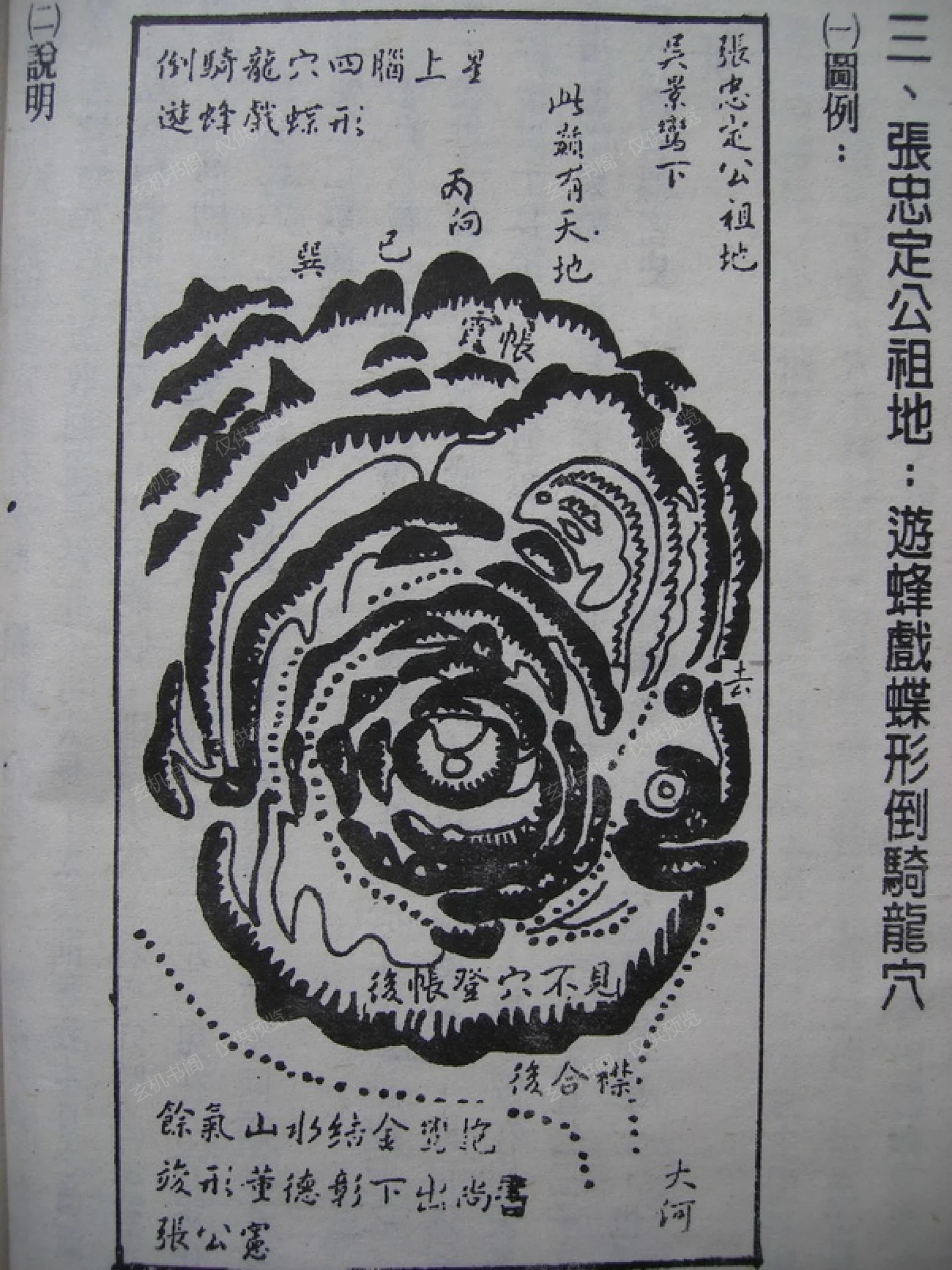
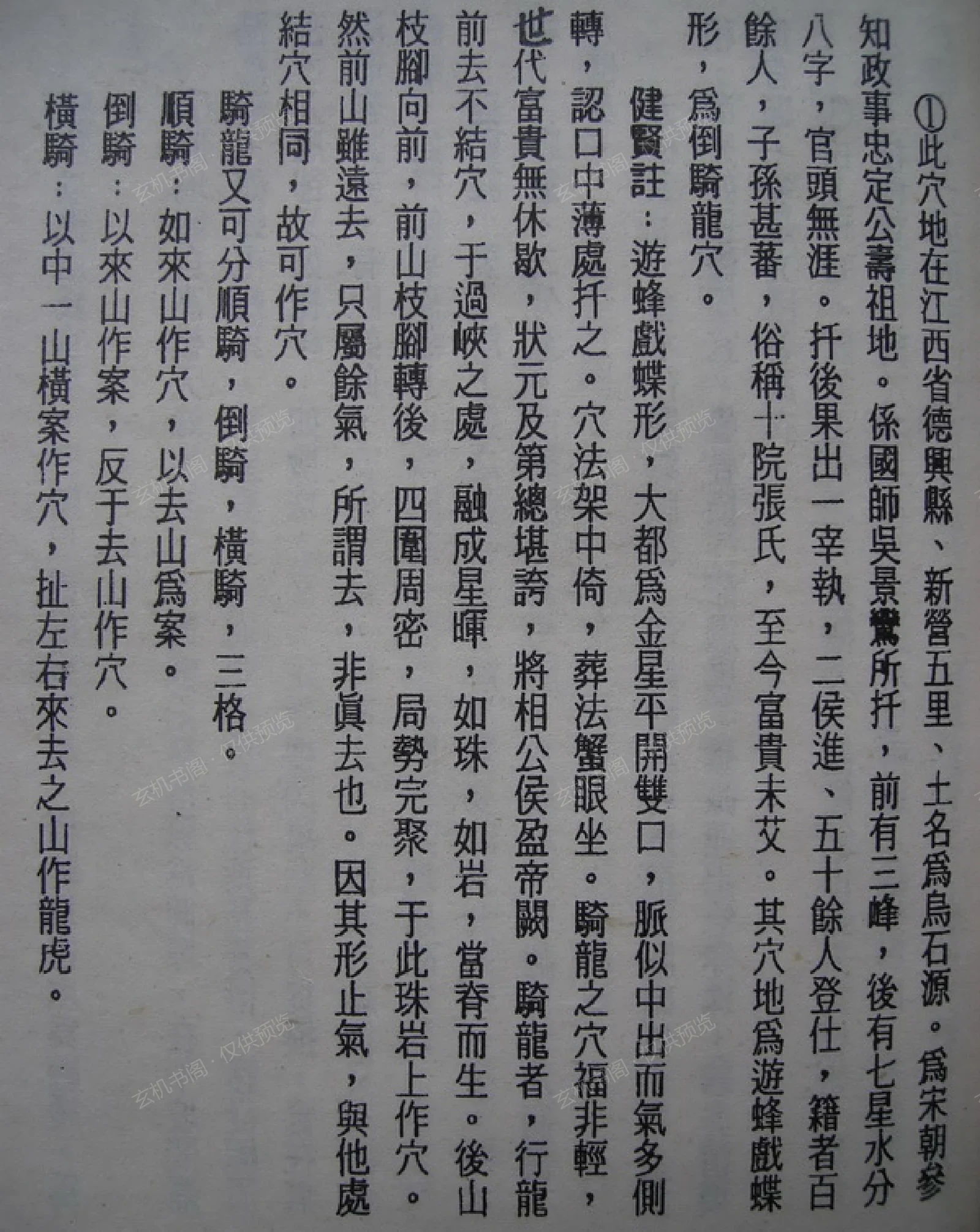
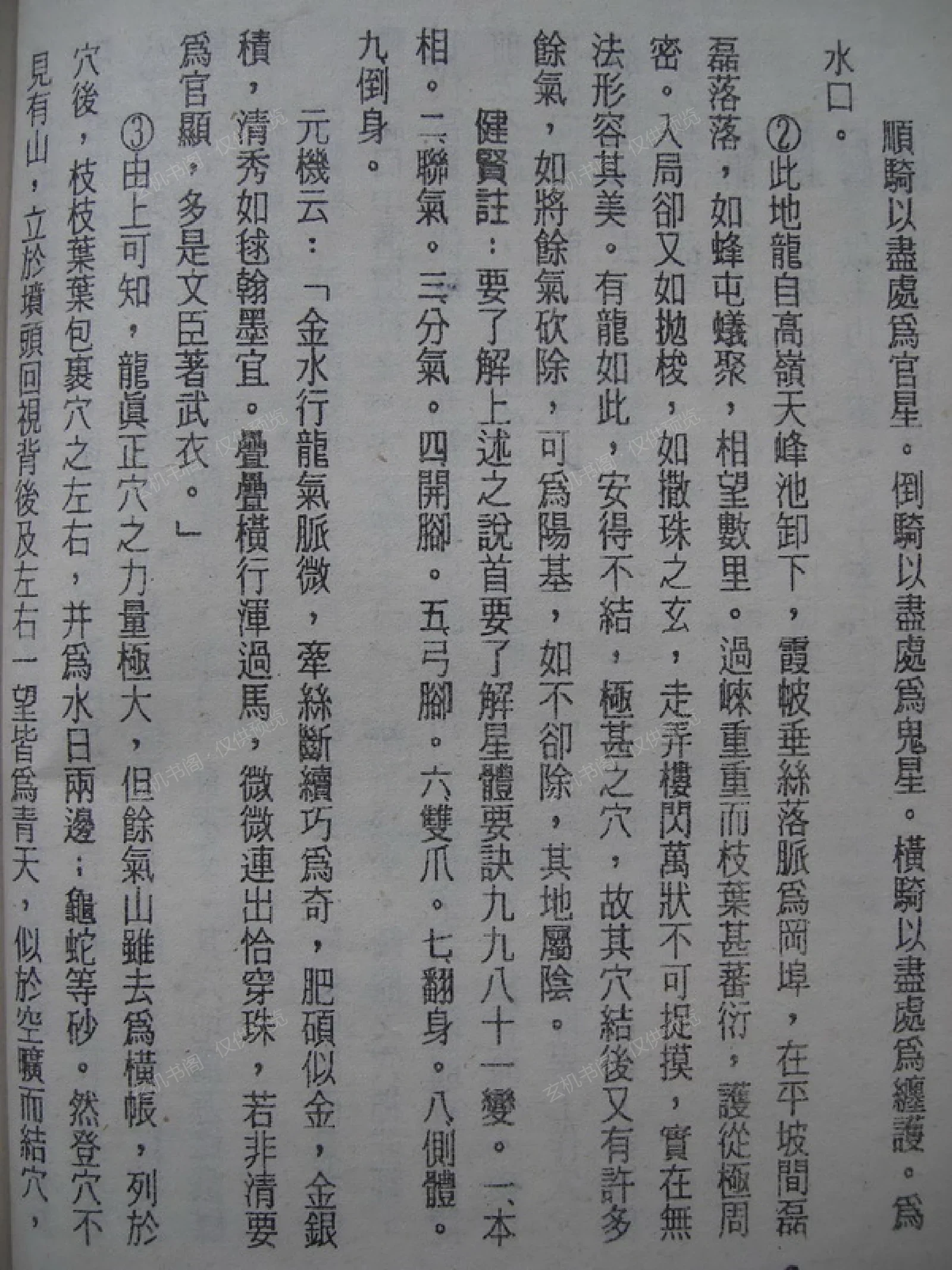
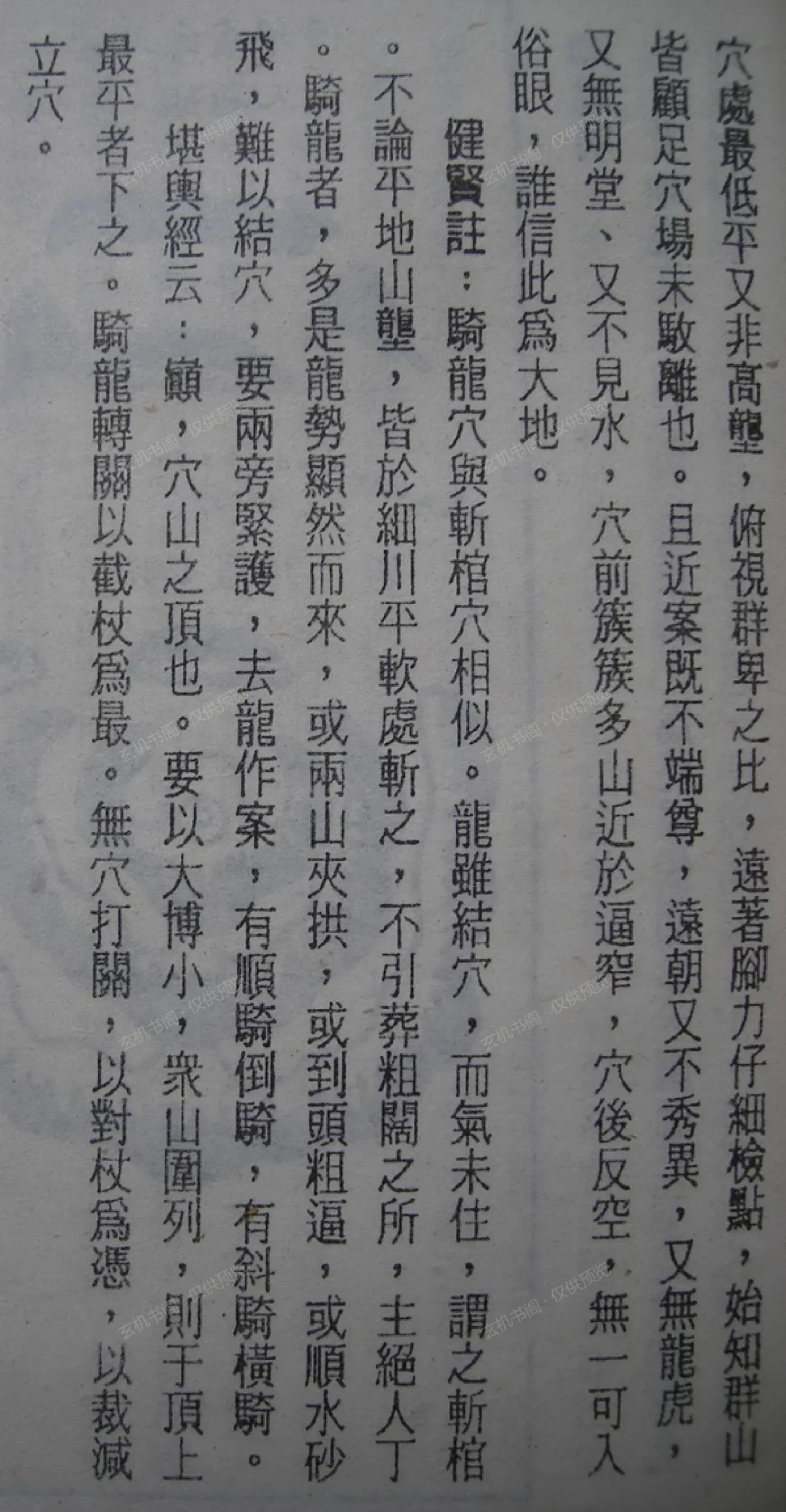
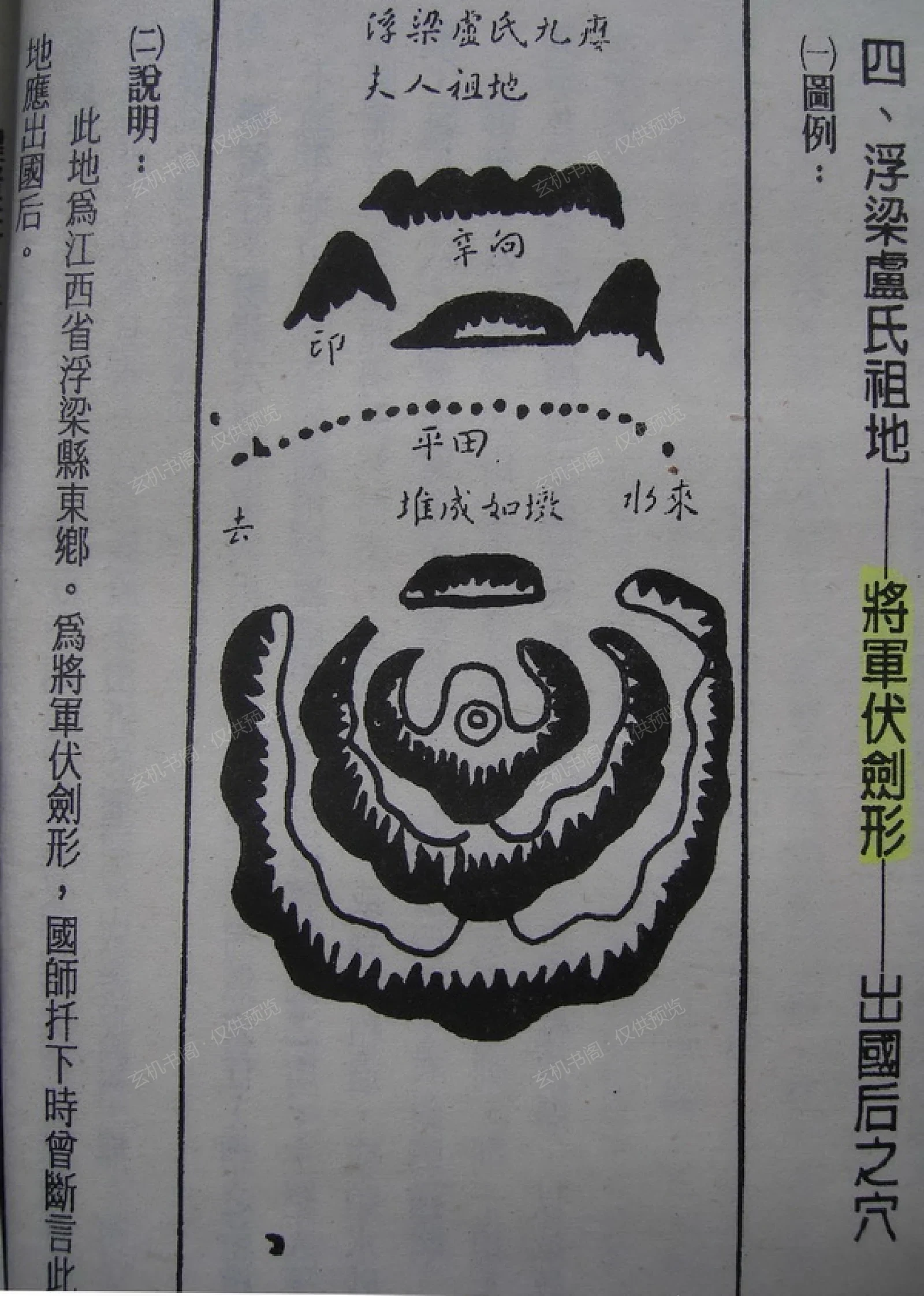
This is a specialized manual on site selection in the xingshi (form-and-configuration) tradition of Feng Shui, attributed to Wu Jingluan. The visible pages present case studies of famous graves, such as the ancestral tomb of Zhang Zhongding with its 'swarming bees and playing butterflies' formation and a 'riding dragon' acupoint, and the Lu family tomb of Fuliang with its 'general hiding his sword' formation. Each case begins with a schematic landscape drawing marking the dragon vein, acupoint star, bright hall, water mouth and facing peaks, followed by explanatory notes. The text classifies riding-dragon acupoints into three types—forward-riding, reverse-riding and cross-riding—and judges whether a site truly holds qi by examining the coming and departing mountains, surrounding enclosure and protective hills. It also distinguishes the 'beheading coffin' cavity, which resembles a riding-dragon site but lacks settled qi and is said to bring ruin to descendants. Quotations from older formulas discuss metal-water dragon veins, star-body essentials and the handling of surplus qi. The book is useful for studying the terminology, diagram conventions and famous-tomb cases of the xingshi school, though its classical prose demands prior knowledge of Feng Shui.
Contents
Chapter 1: Zhang Zhongding's ancestral tomb, swarming-bees-and-butterflies riding-dragon site
Diagram notes on dragon vein, bright hall and water mouth
Three types of riding-dragon acupoints
Distinguishing beheading-coffin cavities from riding-dragon sites
Quoting Yuanji yun on metal-water dragons and star bodies
Lu family tomb of Fuliang: general-hiding-sword formation
Key Points
Uses famous tomb cases with diagrams and explanatory text
Divides riding-dragon acupoints into forward, reverse and cross types
Warns that beheading-coffin cavities resemble true sites but lack settled qi
Discusses dragon veins, surplus qi and protective hills via old formulas
Includes the Lu family tomb case of the general-hiding-sword formation