Reading guide
Content guideOverview
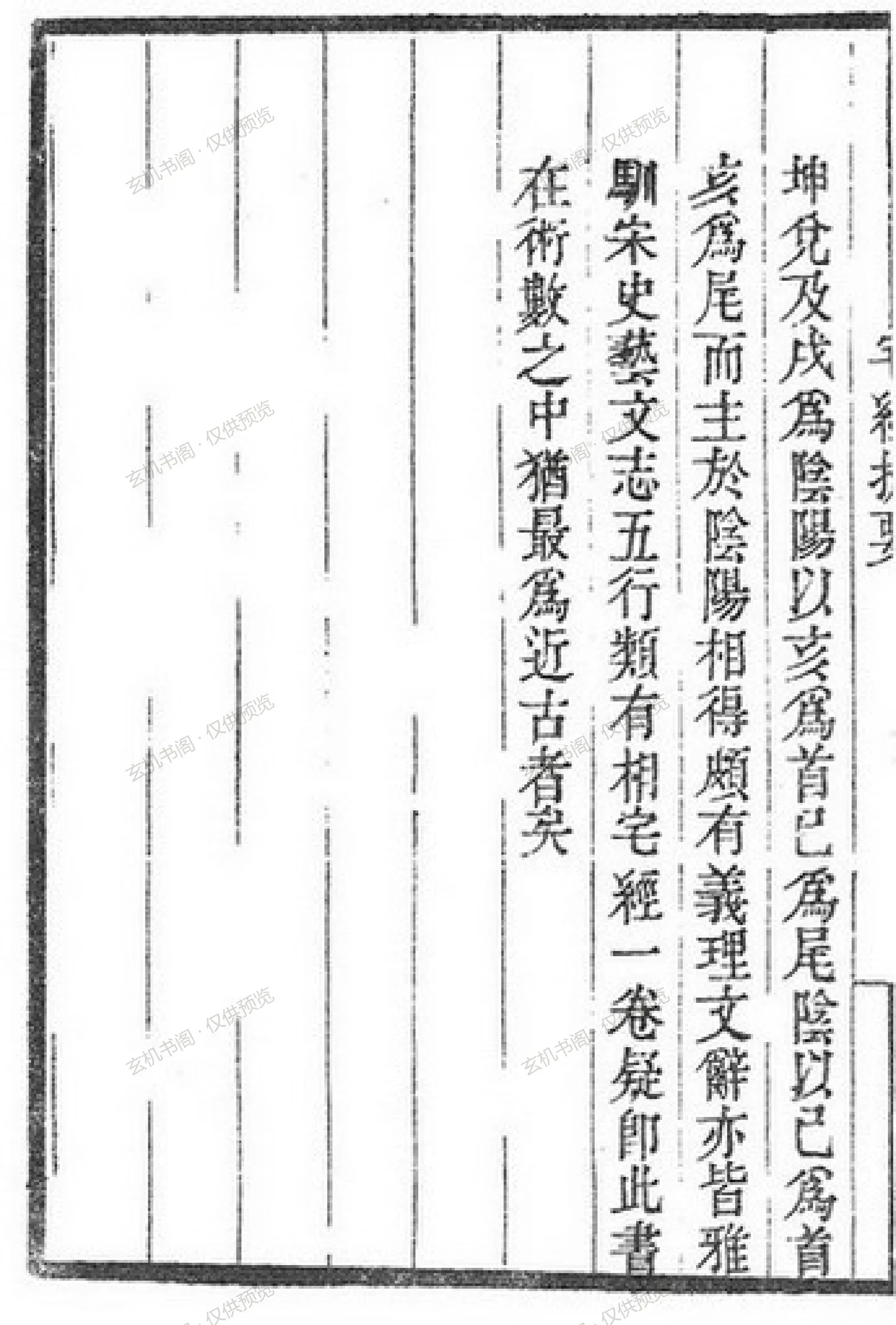
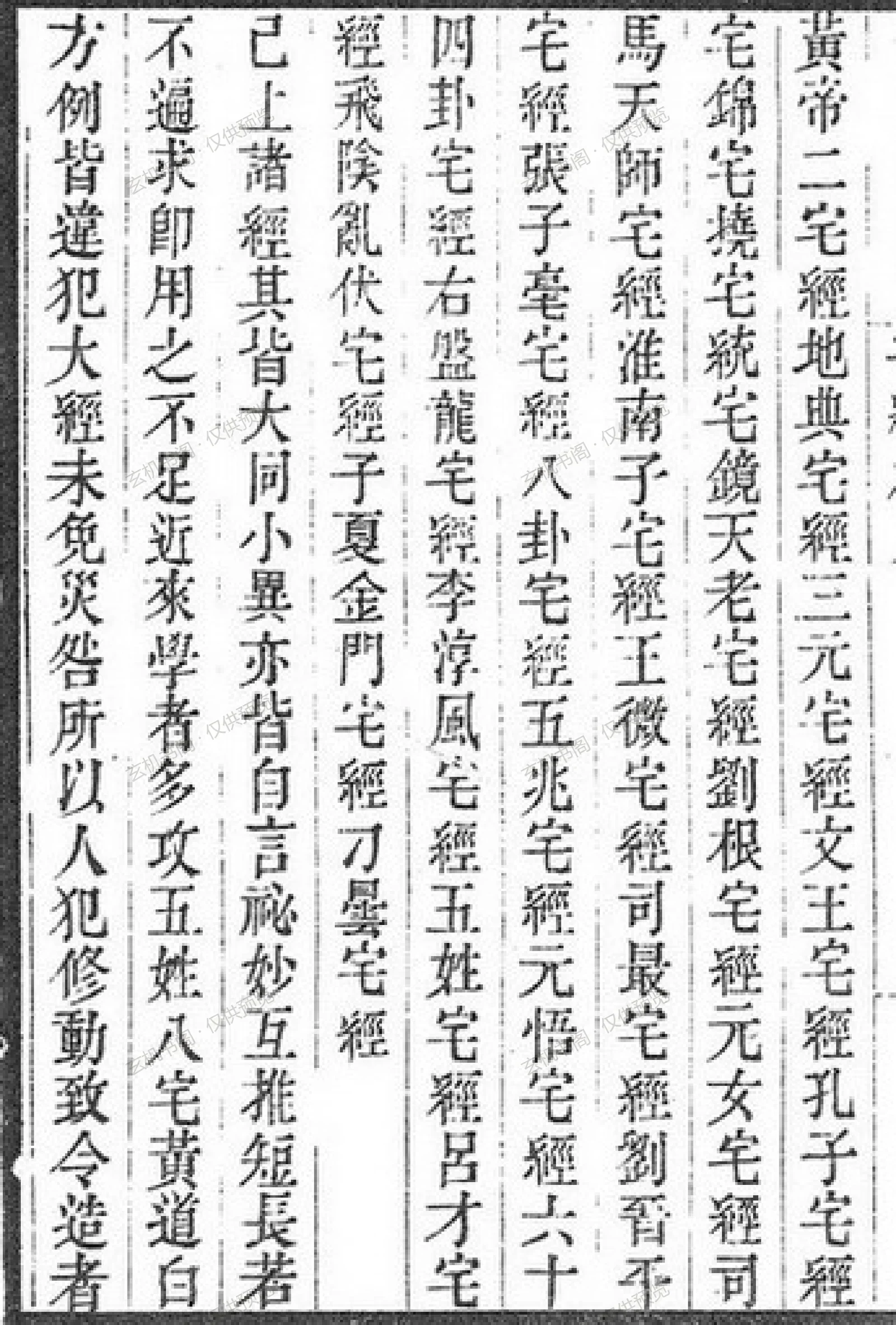
Zhai Jing (Classic of Dwelling) is a representative ancient text on the siting and auspiciousness of houses. It discusses how a dwelling's location, orientation, yin-yang balance and bagua directions (Qian, Kan, Gen, Zhen, Xun, Li, Kun, Dui) determine fortune, arguing that the house is fundamental to human life: a settled dwelling brings prosperity to the family, while an unsettled one brings decline. This electronic copy opens with a cover titled Zhai Jing, followed by the Siku Quanshu abstract (tiyao), which traces the text's attribution to the Yellow Emperor, its relation to the Han-dynasty Xingfa chapter on palace and dwelling terrain, and bibliographic records in the Sui and Tang treatises. The upper juan begins with a general discussion of the dwelling as the pivot of yin and yang and its bearing on human fortune, then lists numerous titles such as the Yellow Emperor's Two Dwelling Classics, the Didian Dwelling Classic, the Sanyuan Dwelling Classic, the King Wen Dwelling Classic, the Confucius Dwelling Classic, the Jiang Taigong Dwelling Classic, and works attributed to Liu Gen, Sima Tianshi, Huainanzi, Wang Wei, Li Chunfeng and Lü Cai. It notes that these texts largely agree while each claims secret subtlety, and criticizes scholars who fixate on the Five Surnames and Eight Dwellings or the Yellow Path and White Direction without understanding the great classic, thereby inviting misfortune. The work is valuable for the study of ancient Chinese dwelling concepts, yangzhai divination and folk geomancy.
Contents
Cover titled Zhai Jing
Siku Quanshu abstract (tiyao)
Bibliographic survey of dwelling classics
Upper juan: dwelling, yin-yang and fortune
List of various dwelling classics
Critique of vulgar Five Surnames and Eight Dwellings methods
Key Points
Siku Quanshu edition preserving the upper juan and abstract
Judges dwellings by bagua directions and yin-yang attributes
Stresses the house as foundation of family fortune
Lists many Han-Tang dwelling classics of bibliographic value
Criticizes rigid use of Five Surnames and Eight Dwellings