Reading guide
Content guideOverview
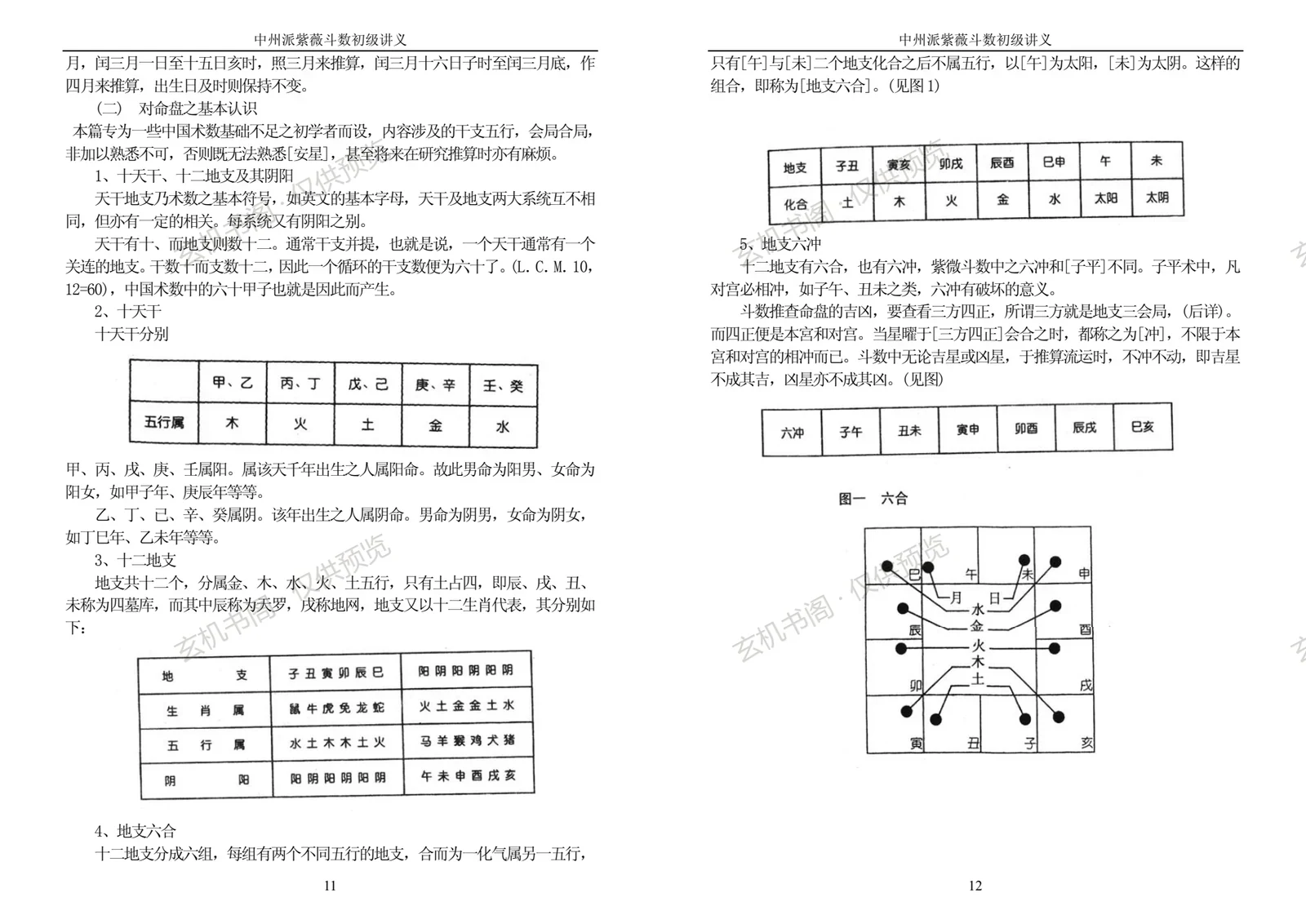
This is Wang Tingzhi's introductory lecture series on Zhongzhou-school Ziwei Doushu. It opens with a historical overview tracing Ziwei Doushu back to the Eighteen Flying Stars and discussing its relationship to other Chinese divination systems. The main body focuses on fundamentals: the star-placement method, leap-month handling, and chart interpretation, stressing that birth times must be converted to Luoyang standard time with adjustments for daylight saving and longitude differences. Later chapters cover the physiognomic and personality traits shown by stars and star groups, judgments of stars in the twelve palaces, appended discussions of auxiliary and malefic stars affecting the six-relation palaces and the wealth, travel, and friend palaces, and finally methods for judging major limits, annual limits, monthly limits, and daily/hourly limits. The book grounds its approach in statistics and practical experiment and serves as an accessible entry point to Zhongzhou-school Ziwei Doushu.
Contents
Introduction: origins of Ziwei Doushu and the Zhongzhou-school stance
Getting started: star placement, leap-month calculation, chart interpretation
Physiognomic and personality traits shown by stars and star groups
Judgments of stars in the twelve palaces
Effects of auxiliary and malefic stars on siblings, children, wealth, travel, and friends palaces
Limit calculation: major limits, annual, monthly, daily and hourly limits
Afterword
Key Points
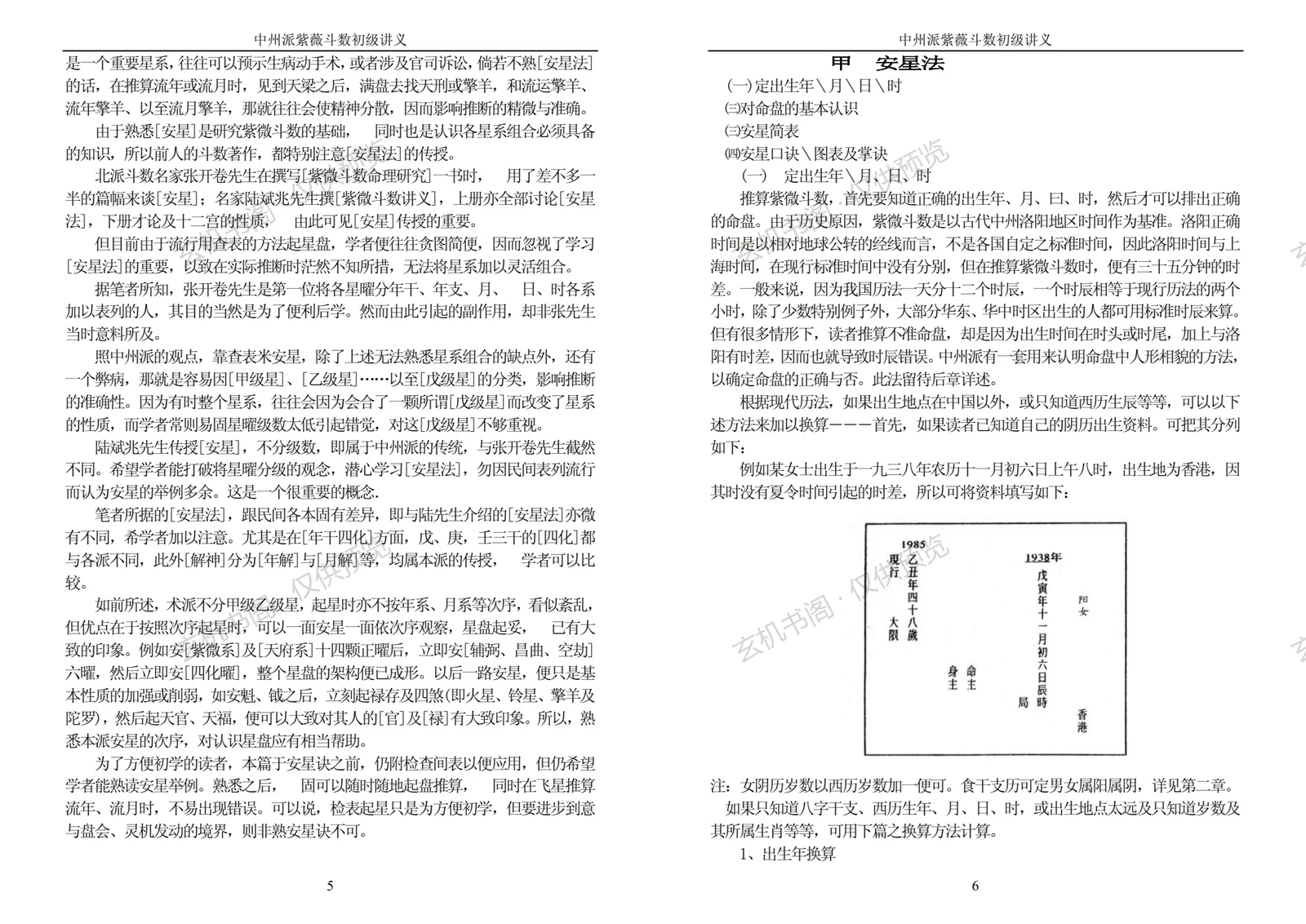
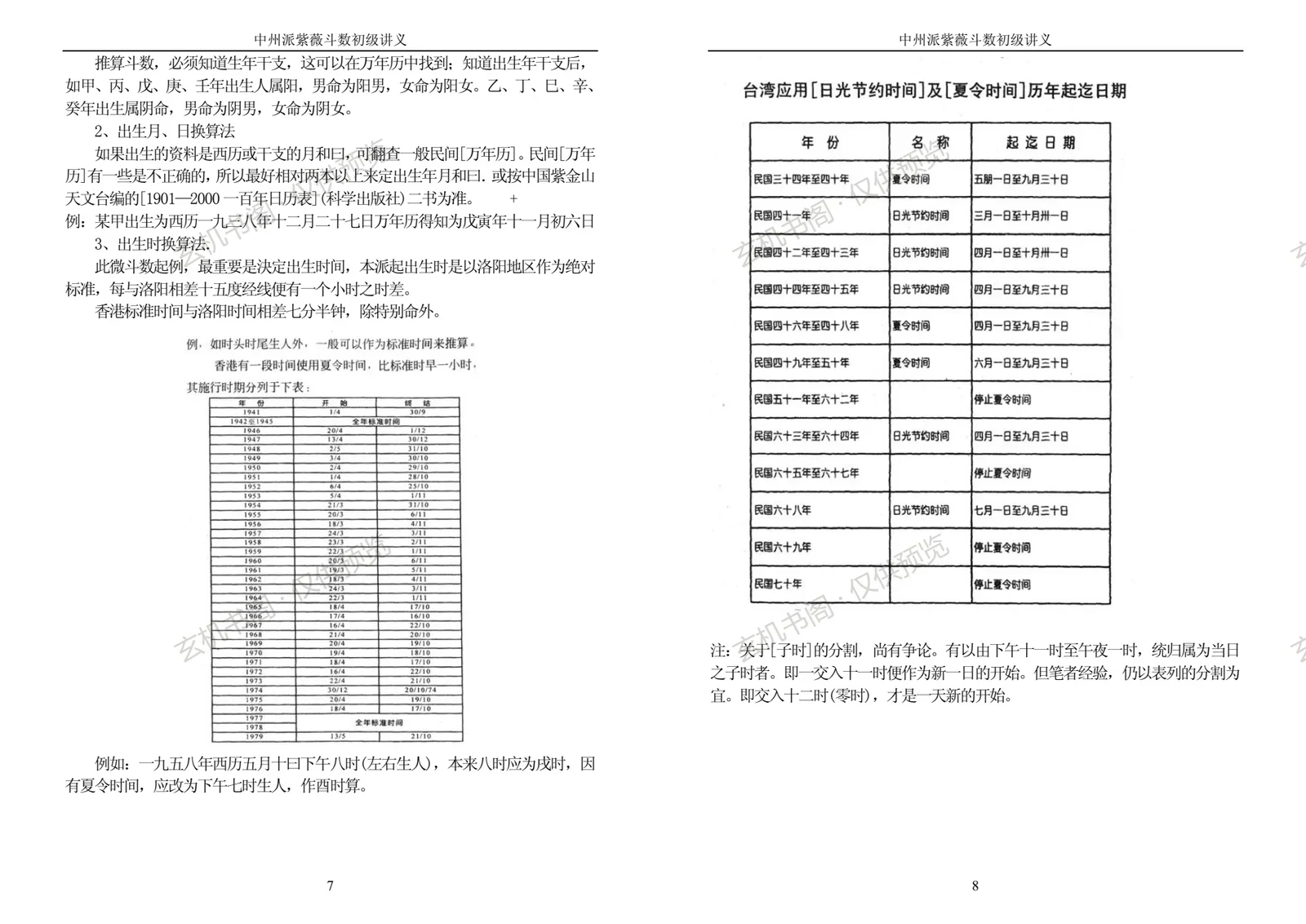
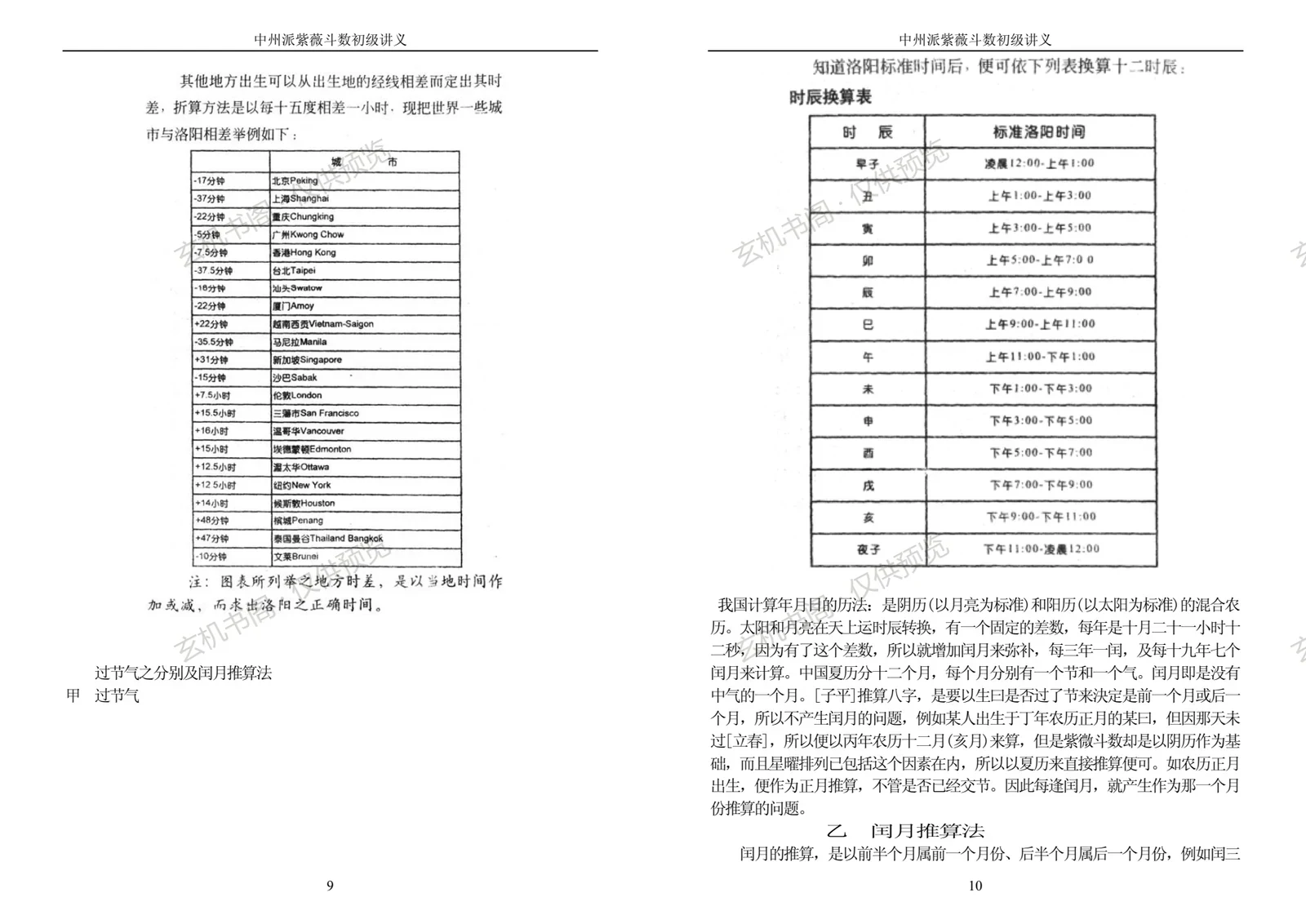
Birth time is converted to Luoyang standard time, adjusting for daylight saving and longitude
Star placement follows a prescribed sequence rather than table-based shortcuts
Basic star qualities and their judgments in each of the twelve palaces
Appended discussion of auxiliary and malefic stars in relation to key palaces
Methods for judging major, annual, monthly, and daily/hourly limits