Reading guide
Content guideOverview
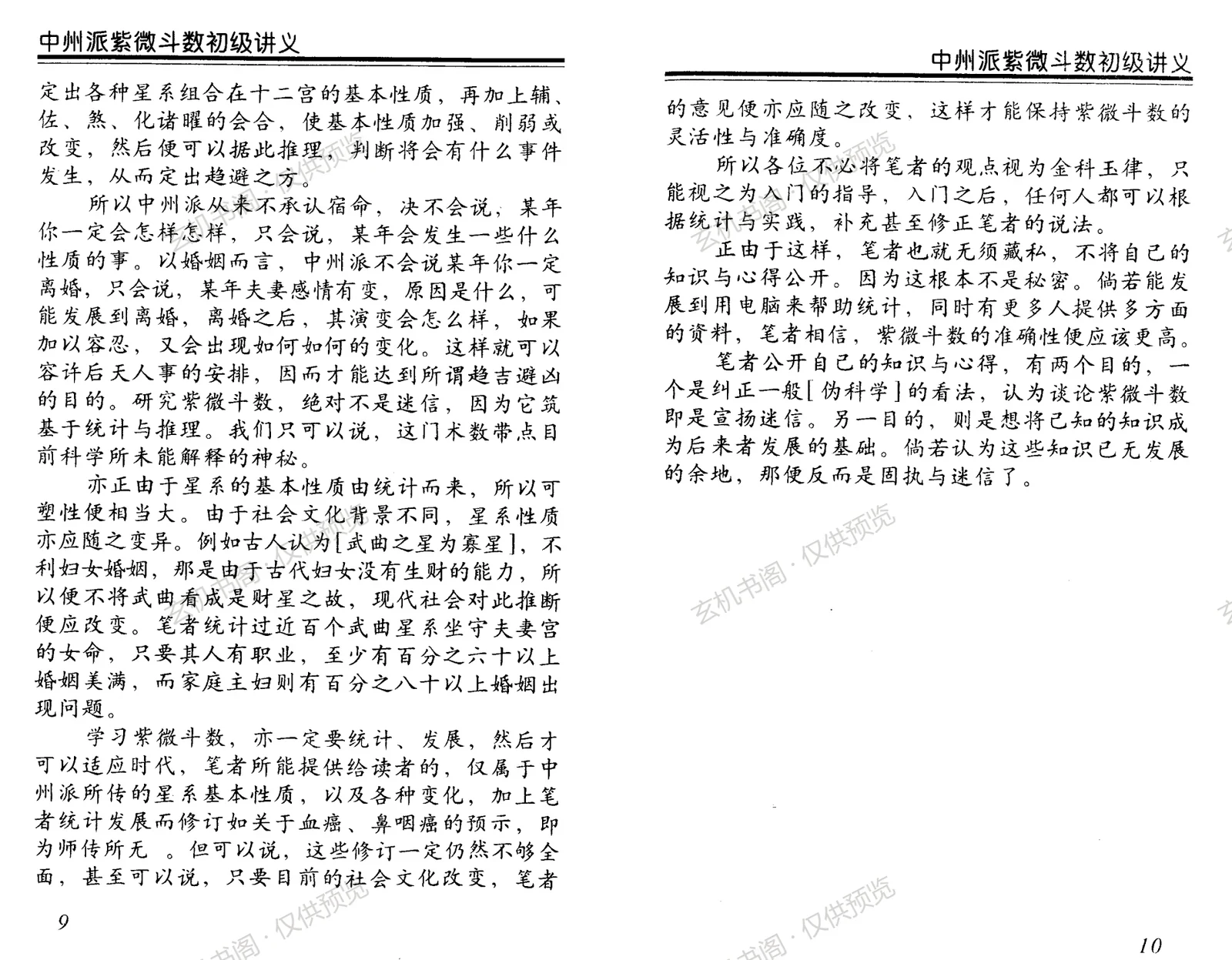
This is Wang Tingzhi's introductory lecture text on Zhongzhou-school Zi Wei Dou Shu. The preface traces the art from the Northern Song Eighteen Flying Stars and the rivalry with Five Planets and Ziping methods, stressing the school's statistical and practical outlook rather than fixed fatalism. The main body first teaches chart construction: fixing birth date and hour, reading the chart, star-placement tables, mnemonic verses, hand formulas, basic terminology, and chart interpretation. It then discusses how stars and star combinations manifest in appearance and character, followed by star-by-star analysis across the twelve palaces, from the Life and Body palaces through Ziwei, Tianji, Taiyang, Wuqu, Tiantong, Lianzhen, Tianfu, Taiyin, Tanlang, Jumen, Tianxiang, Tianliang, Qisha, and Pojun, plus the sibling, spouse, children, wealth, health, travel, friends, career, property, fortune, and parents palaces. The final chapter covers major periods, yearly, monthly, daily, and hourly transits.
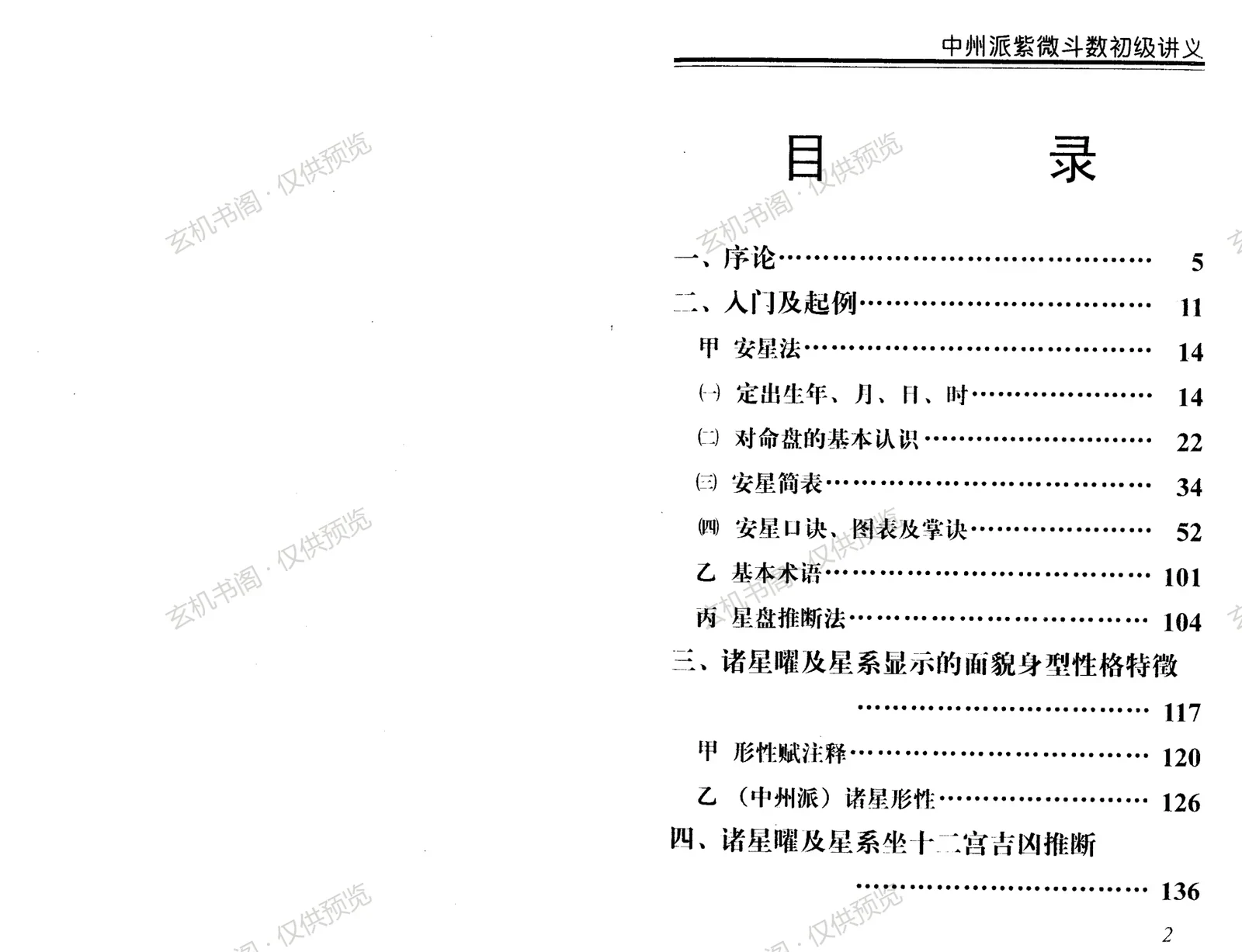
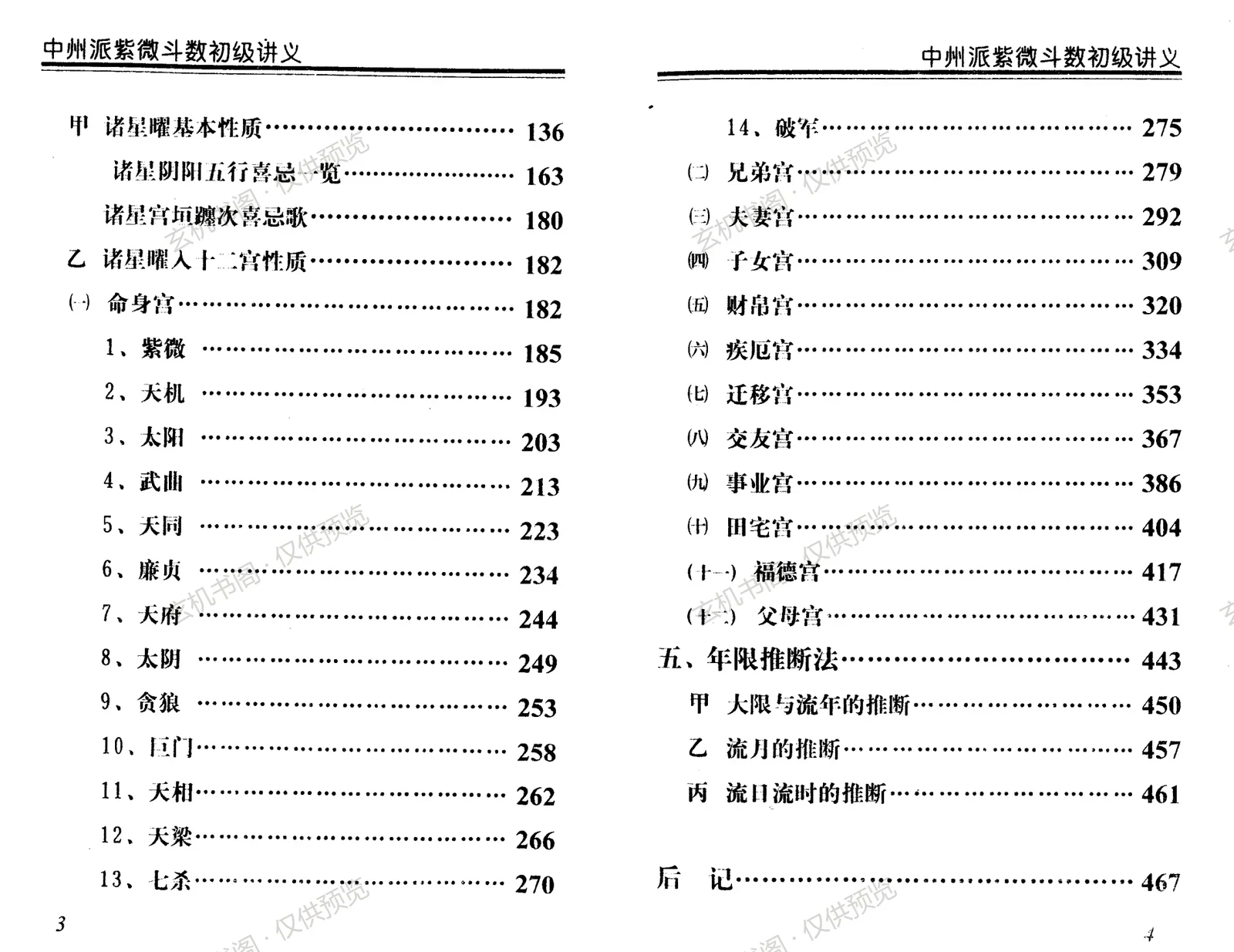
Contents
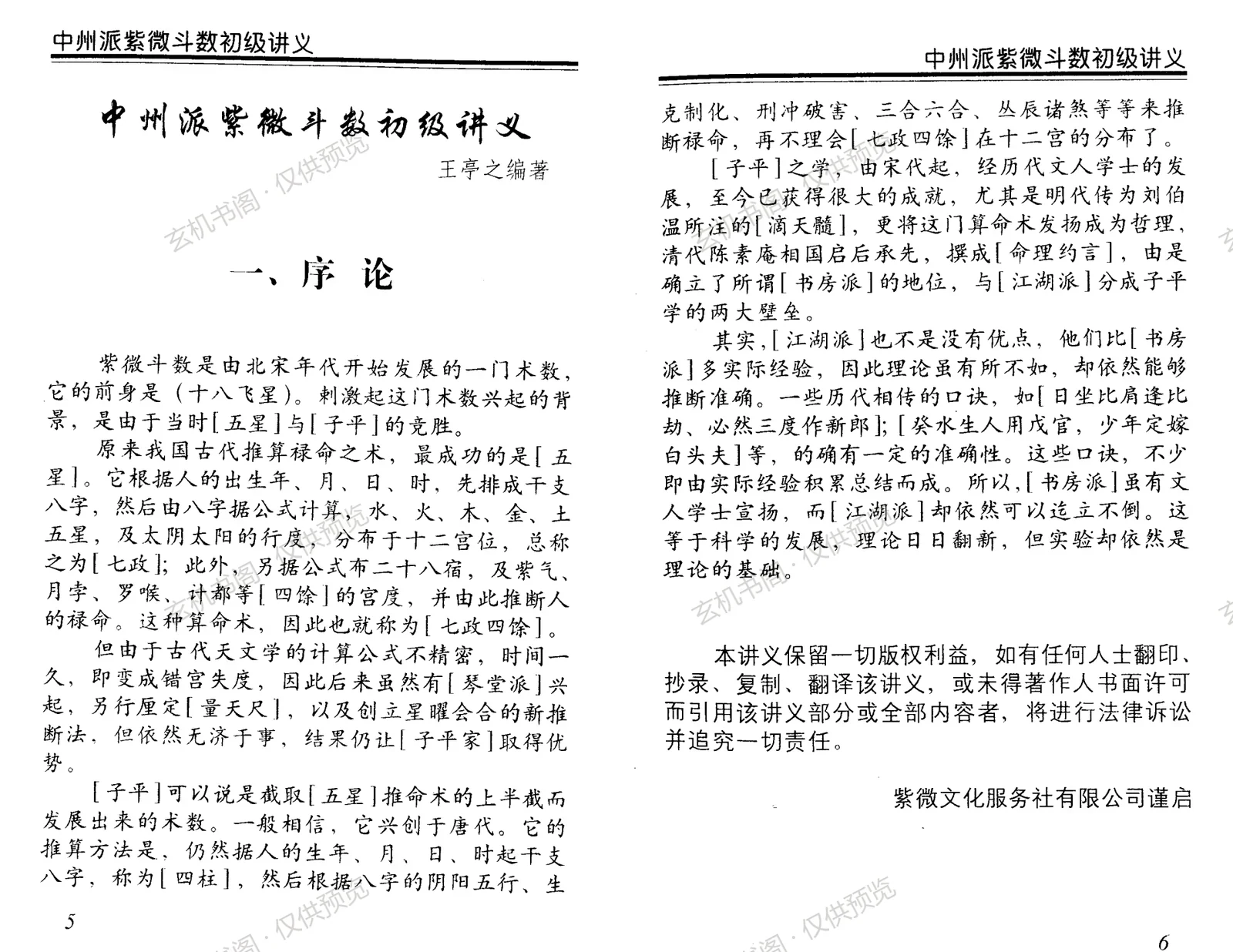
Preface: origins of Zi Wei Dou Shu and the Zhongzhou stance
Getting started: birth data, chart reading, star placement and mnemonics
Basic terminology and chart interpretation
Appearance and character traits of the stars
Star judgments across the twelve palaces
Transit methods: major periods, years, months, days, hours
Key Points
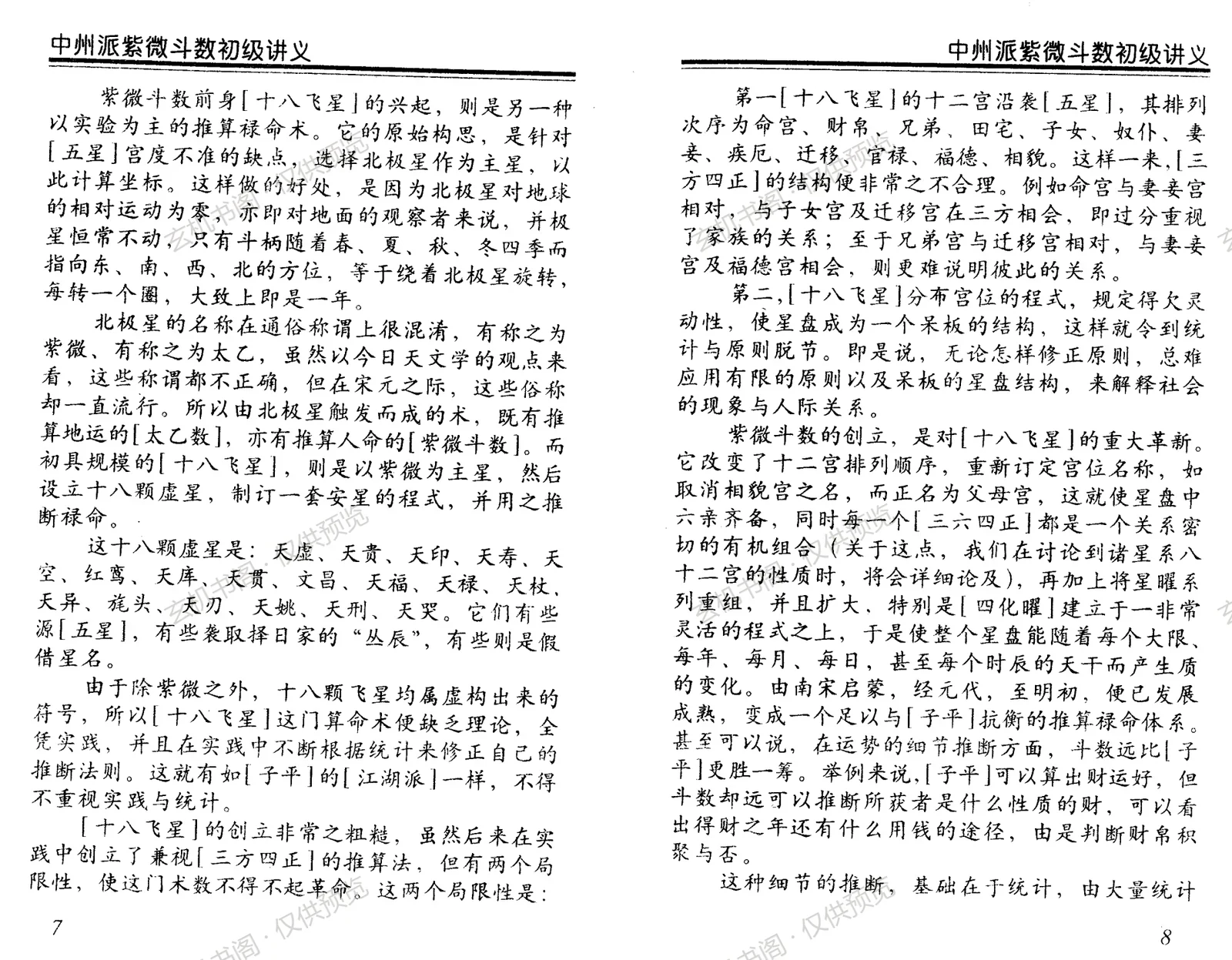
The preface frames the art's development from Eighteen Flying Stars to Zi Wei Dou Shu.
Star placement is taught in detail with tables, verses, charts, and hand formulas.
Fourteen major stars are analyzed palace by palace from the Life Palace onward.
The school stresses statistics and practice, allowing star meanings to shift with society.
Transit analysis extends from major periods and years down to months, days, and hours.