Reading guide
Content guideOverview
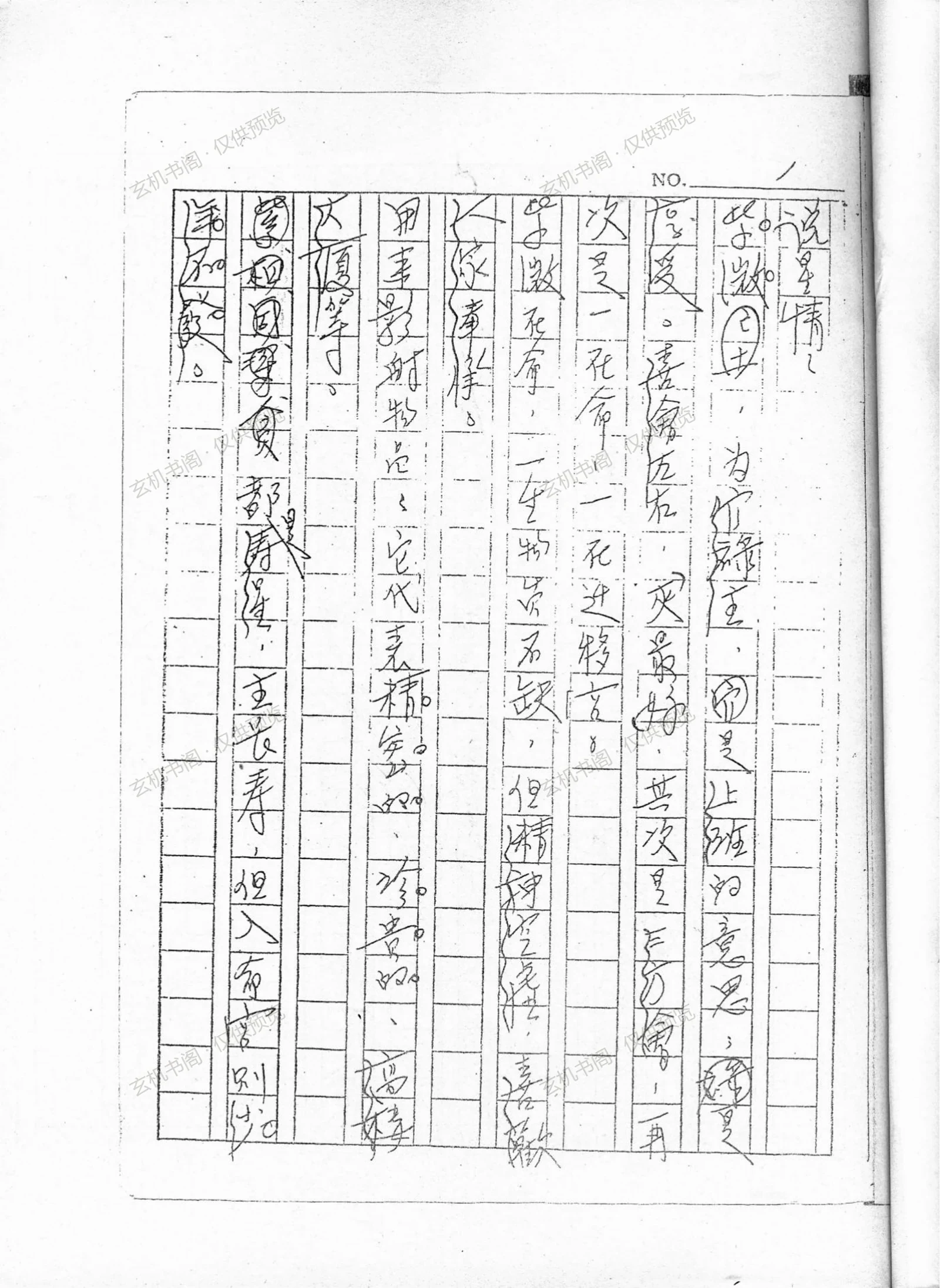
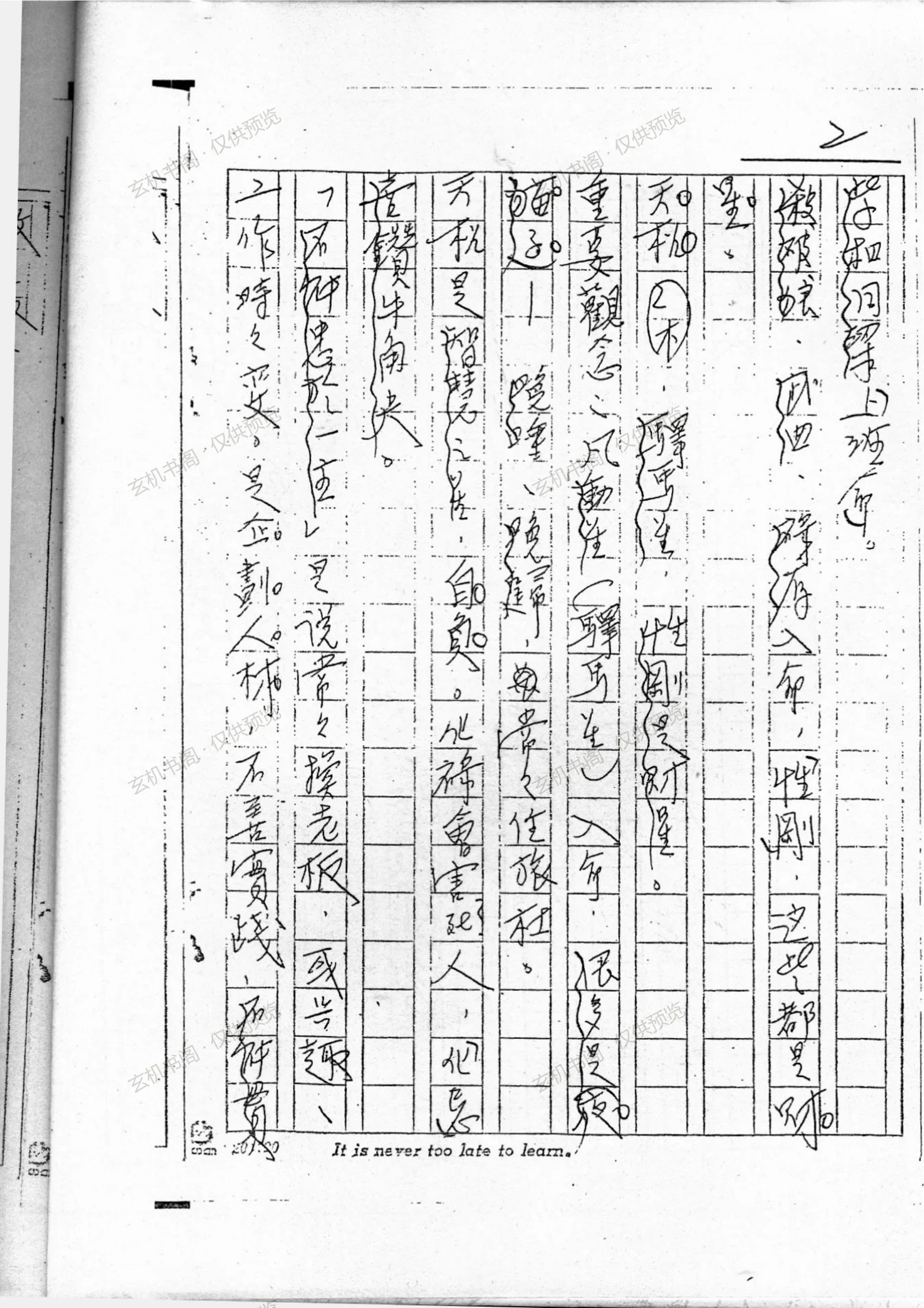
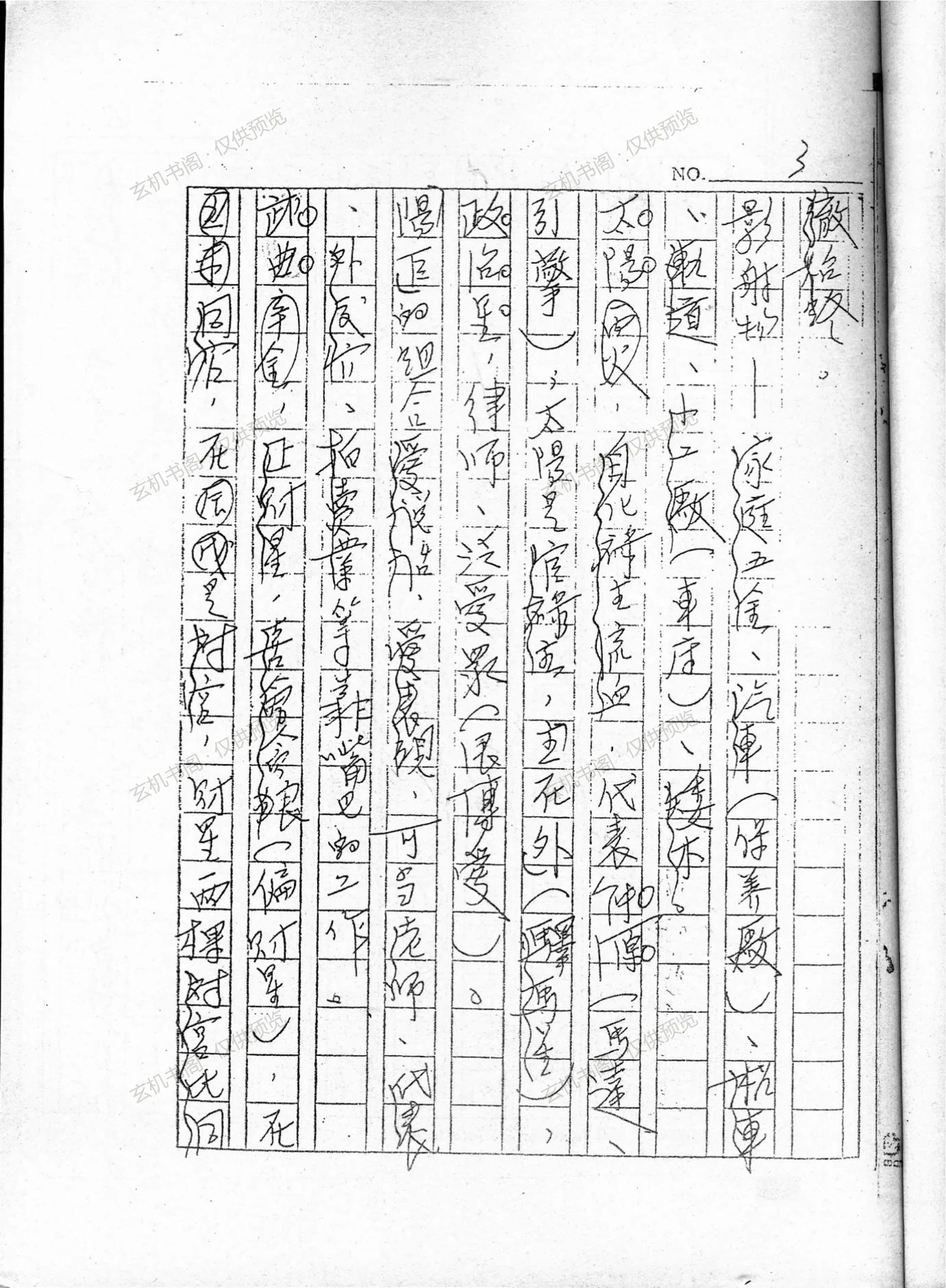
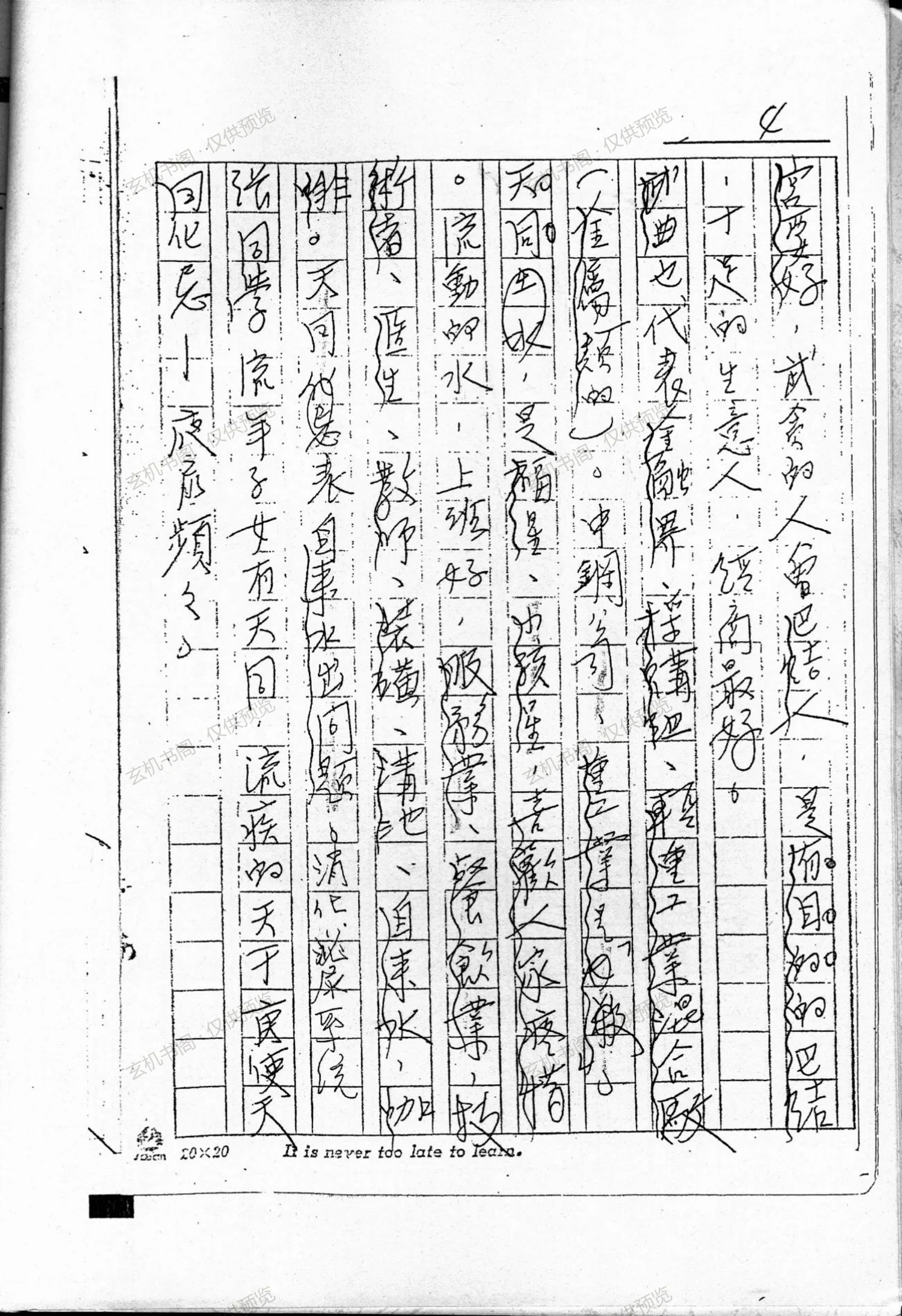
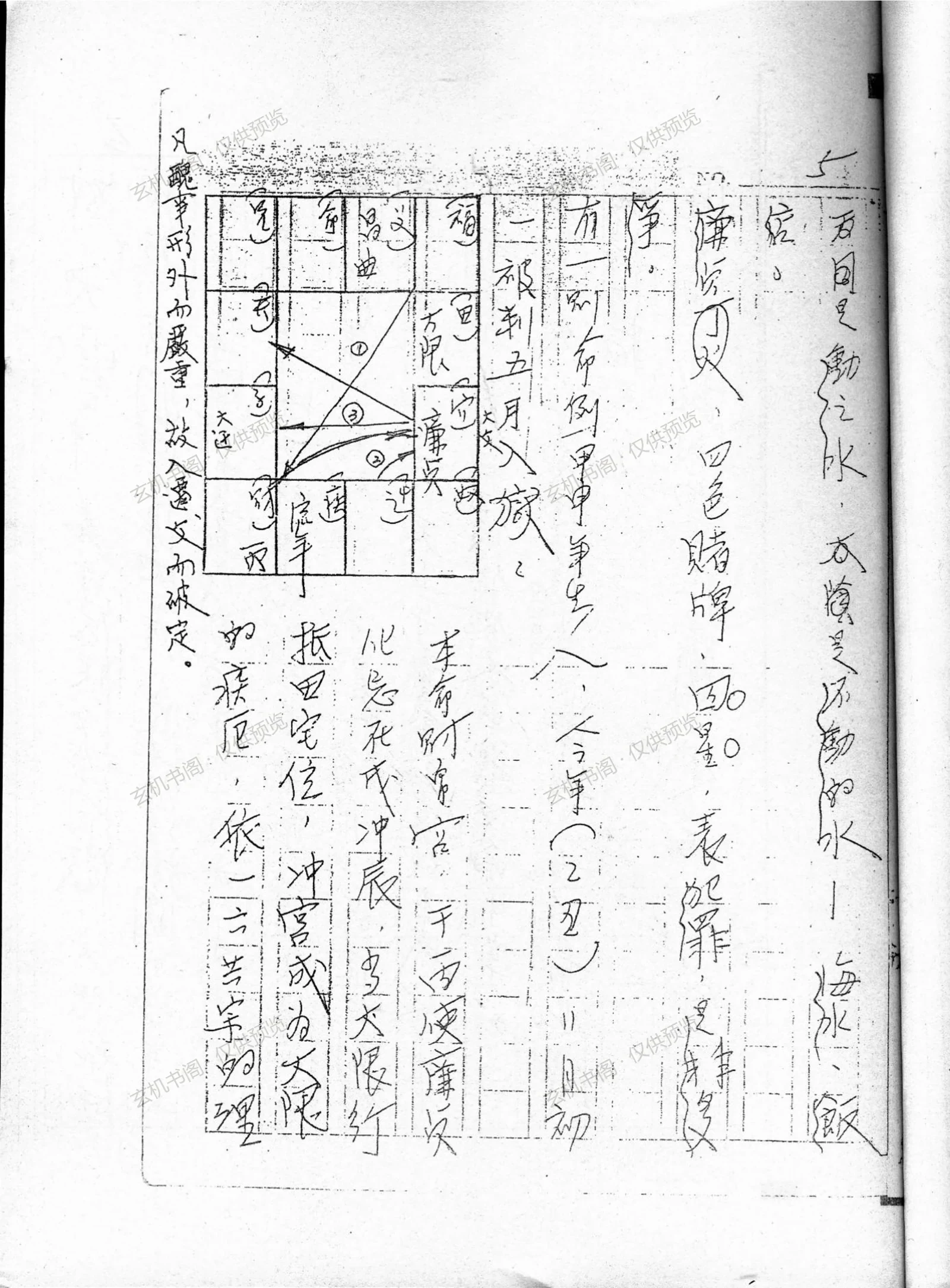
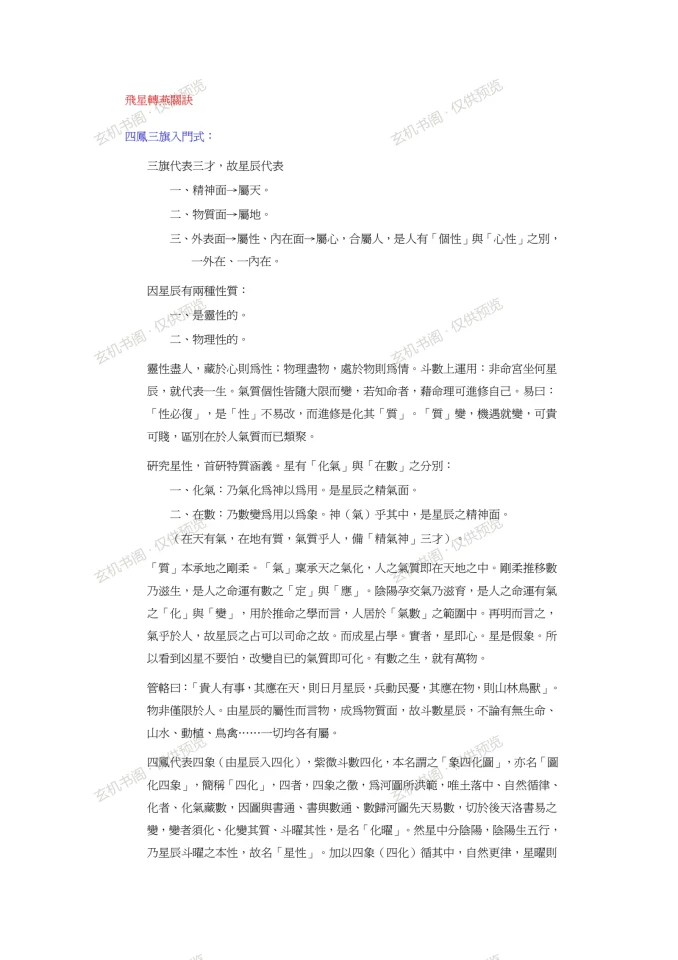
This is a hand-copied notebook of lectures by Zhou Qinghe, transcribed and gifted by Liao Zhihua. Written vertically on squared manuscript paper and running to roughly four hundred single pages, the surviving opening pages introduce the fundamentals of Zi Wei Dou Shu. The lectures first distinguish fate (ming) as the natal pattern from luck (yun) as its later unfolding, then stress that a star's meaning depends on the palace it occupies and on the four transformations moving between palaces. The twelve palaces are treated one by one, with notes on how particular star groups such as Qi Sha-Po Jun-Tan Lang or Tian Ji-Tai Yin-Tian Tong-Liang Tian manifest in character, occupation and family relations. Hand-drawn charts and annual-flow diagrams illustrate how major limits, annual points and transformed stars are layered to judge concrete matters like illness, relocation, examinations and marriage. The style is oral and example-driven rather than scholarly, offering a window into early classroom teaching of the tradition. Because it is a manuscript, the cursive script, abbreviations and corrections require contextual reading.
Contents
Fate and luck: natal pattern versus later unfolding
The twelve palaces and star-palace imagery
Four transformations and inter-palace relations
Star groups: Sha-Po-Lang and Ji-Yue-Tong-Liang
Hand-drawn charts and annual-flow examples
Judging illness, relocation, examinations and more
Key Points
Palaces come first: define the twelve palaces, then read the stars within.
Four transformations link palaces, so no palace should be read in isolation.
Star groups shape character and occupational tendencies.
Hand-drawn charts show how major and annual limits are layered.
Oral classroom style, rich in cases and short verdicts.